 SW-04 · Subfloors & Moisture
ASTM E1155 estimates a floor's FF Flatness and FL Levelness numbers from a random sampling of the surface. 1 The VA resilient tile master specification asks for E1155 testing at existing slabs, with an overall value not to exceed FF30/FL20. 2 Flooring makers typically write tolerance as a gap over a distance, such as 1/8 inch over a 6-foot span. 3 Slab curling at joints can also cause conflicts with some floor coverings in the months after placement. 4
Specifications describe slab flatness with F-numbers. Floor covering instructions describe it as a gap under a straightedge over a set distance.3 These are different measurements. The gap between them is where unbid prep comes from.
This article covers what ASTM E1155 actually measures and what the VA resilient tile master specification asks for. It also covers why a slab can meet its F-number and still miss the floor covering's tolerance. It is written for whoever prices the prep.
What ASTM E1155 measures
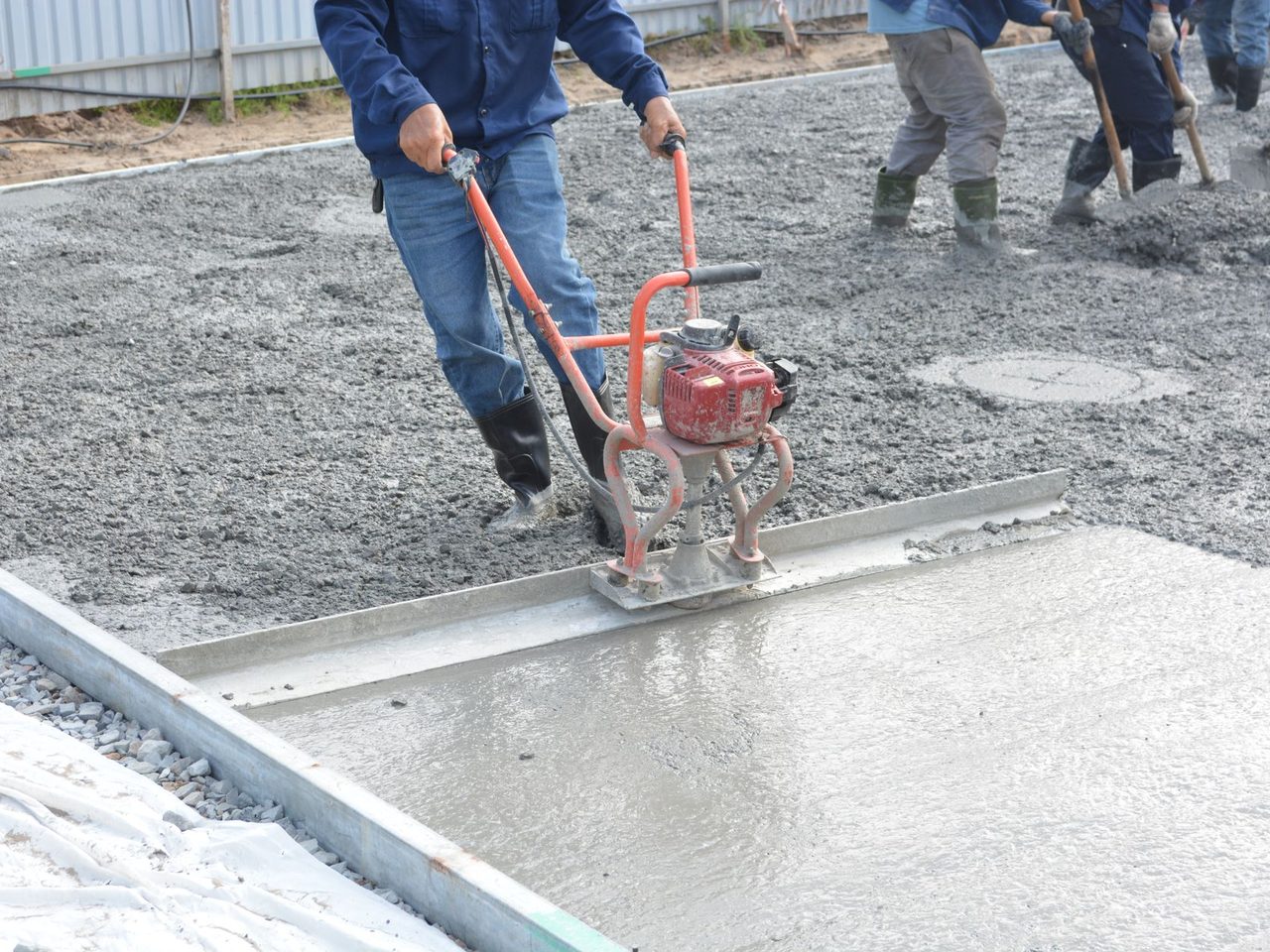
ASTM E1155 is a test method for measuring floor surface profiles. Its output is an estimate of the floor's characteristic FF Flatness and FL Levelness numbers.1 The method provides statistical and graphical information about those profiles.1 It works in inch-pound units, and a separate companion, E1155M, covers metric work.1
ASTM says the results are used primarily for three things:1
- Establishing compliance of randomly trafficked floors with specified FF and FL tolerances.1
- Evaluating how different construction methods affect flatness and levelness.1
- Investigating curling and deflection of floor surfaces.1
The word "random" carries weight. An explanatory note in the standard says a randomly trafficked floor has infinite potential profiles. It says these cannot all be measured, so evaluation necessarily involves a random sampling of the surface.1 The standard says its notes are not requirements of the method.1 The practical point still holds. An F-number describes the floor as sampled. It is not a reading at every spot where a tile or plank will land.
The standard also draws a hard line. Its results shall not be used to enforce contract tolerances on floors primarily intended for fixed-path vehicle systems, such as narrow aisle warehouse floors.1 For those floors, the note says direct measurement of each traffic path with a continuous recording profilometer is far more useful.1 On a mixed job, find out which area the number was written for.
What the VA master specification asks for
The Department of Veterans Affairs master section 09 65 19, Resilient Tile Flooring, ties slab prep to two ASTM standards.2 It asks the installer to verify that concrete slabs comply with ASTM F710.2 At existing slabs, it asks for levelness determined by the F-number method under ASTM E1155. The overall value is "not to exceed FF30/FL20."2 Its reference list names the edition as E1155-20.2
Three details in that paragraph affect a bid. First, the E1155 test is written for existing slabs.2 The paragraph does not say who runs the test.2 Second, the limit is an overall value, not a local one.2 Third, "not to exceed" reads as a ceiling. Get the designer's intent on that wording in writing before pricing against it. An RFI is the usual route.
The section then moves from measuring to fixing. It says to correct conditions that will impair proper installation.2 It says to fill cracks, joints and other irregularities in the concrete with leveling compound.2 It says not to use adhesive for filling or leveling.2 It calls for cementitious leveling products with latex or polyvinyl acetate resins.2 Moisture and pH testing follow the flooring and adhesive makers' recommendations. The spec's default limits apply only where the makers give none.2 For that side of slab prep, see concrete moisture testing before resilient flooring.
One more line matters here. The section says to install in accordance with the manufacturer's instructions.2 That brings the flooring maker's own flatness tolerance in alongside the F-number.
How flooring makers write tolerance
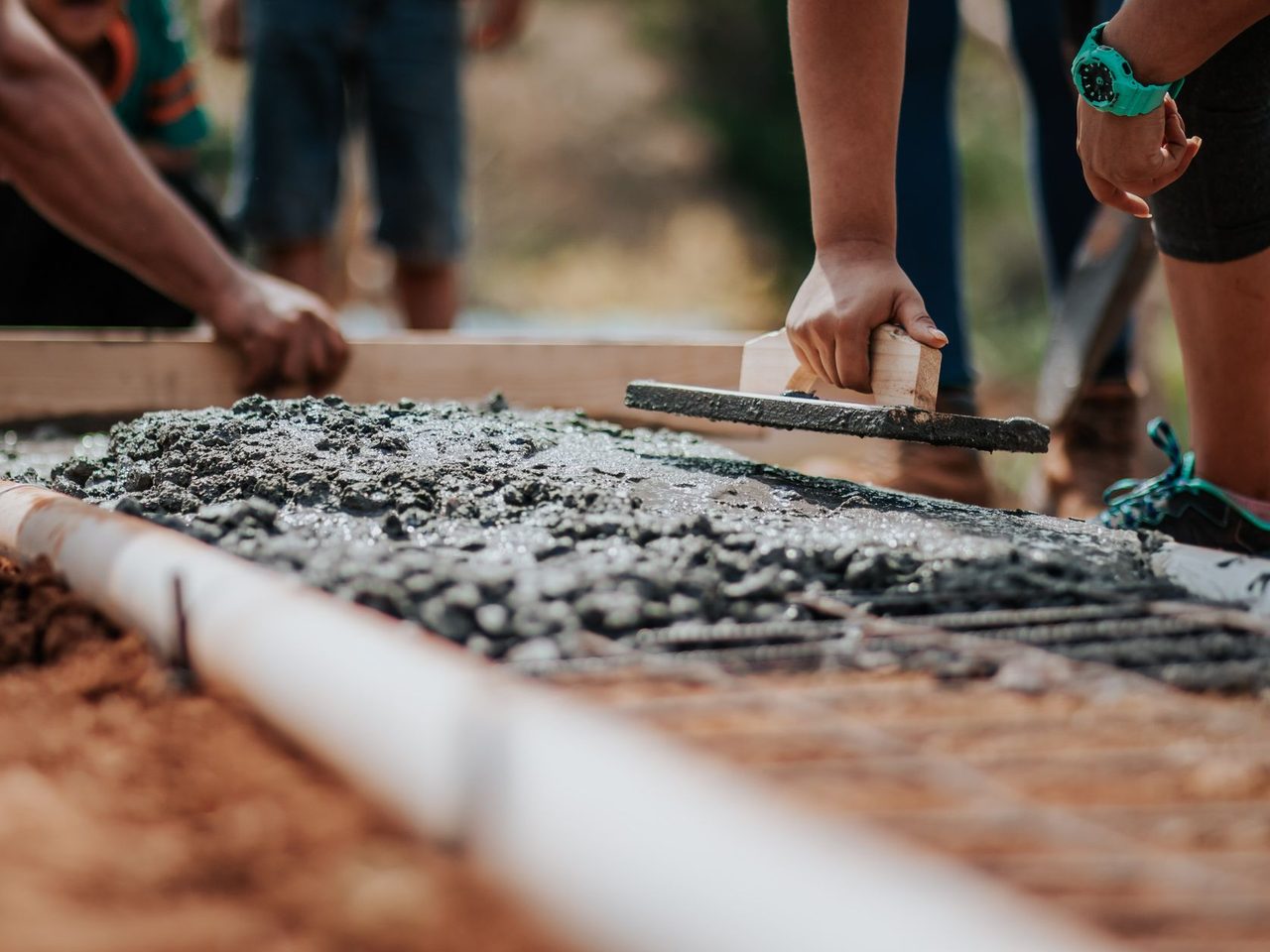
Floor covering instructions use a different language. Jeremy Waldorf, a regional business manager for Schonox, a Sika brand, describes the usual pattern. He writes that most flooring manufacturers specify a flatness tolerance, typically 1/8 inch over a 6-foot span, or 3/16 inch over 10 feet.3 He adds that tolerances can be much tighter, especially for industrial and healthcare applications.3 That is one underlayment maker's summary. The figure to price against is in the instructions for the product actually being installed.
Waldorf also separates the two properties the F-numbers name. Flat means the floor has no undulations and is consistent across the plane.3 He calls flatness the requirement for most finished flooring types, to avoid uneven wear, hollow spots or an irregular surface.3 Level means truly horizontal. He calls it critical for machinery, medical equipment, computers, walls and cabinets.3 In the level zone of the project he describes, the target was less than 1/8 inch over 10 feet.3
None of the sources here converts an F-number into a straightedge gap. Do not assume a conversion. Where a spec carries both, treat them as two separate tests the floor has to pass.
| Source | How it expresses flatness |
|---|---|
| ASTM E1155 | Estimated FF and FL numbers from a random sampling of the surface1 |
| VA 09 65 19 | At existing slabs, overall value not to exceed FF30/FL202 |
| Schonox article | Typically 1/8 inch over a 6-foot span, or 3/16 inch over 10 feet, per most flooring makers3 |
| ACI 302.1R-15 | Floor flatness listed among tolerances the construction documents should address4 |
| Texas State 09 65 19 | No slab flatness number in the standard5 |
Why a passing slab can still fail the floor
The first reason is sampling. A number estimated from a random sample of the surface can pass while a local dip fails a short straightedge.1 The second reason is that the two tests measure different things, as above.
The third reason is time. The American Concrete Institute's ACI 302.1R-15 calls floor surface curling at joints a normal consequence of volume change from differential moisture loss.4 It warns that this distortion can lead to conflicts with some floor coverings in the months after placement.4 It says national standards for ceramic tile and wood flooring, such as gymnasium floors, require tolerances that cannot be met under typical slab curling behavior.4 It also says present technology permits only a reduction in cracking and curling, not elimination.4
ACI flags one more contributor. Concrete placed directly on a vapor retarder/barrier has increased potential for a greater measure of slab curl.4 Under rapid surface drying, the surface of that concrete can crust, and a reduction in surface flatness can occur.4
ACI puts the coordination on the designer. It says the designer should correlate the slab design with the floor covering specification.4 It says the design should address the potential for joints to telegraph through the flooring.4 When that has not happened, the floor covering inherits the problem. See slab joints and cracks under click-lock LVP.
Pricing the prep
Start with what the documents say. ACI lists tolerances, including floor flatness, among the minimum items the construction documents should address.4 If that information is missing, ACI says the contractor should request it from the slab designer.4 It also says contractors and suppliers should thoroughly review the contract documents before bid preparation.4
Watch for borrowed language. ACI states that its guide should not be referenced in contract documents. Items the designer wants must be restated in mandatory language.4 Some owner standards set no number at all. Texas State's resilient flooring standard covers base, stair treatments, tile and overage, with no slab flatness requirement.5 There, the flooring maker's tolerance becomes the working figure.
Then look at where correction sits. In the VA section, correcting and filling the slab are written into the resilient flooring section's own preparation article.2 Unless the bid excludes or caps that work, the flooring contractor usually pays for it. Price leveling as a separate line, or as an allowance or unit rate. If conditions exceed it, use a written change order before pouring.
Plan before you pour. Waldorf names skipping planning and rushing to pour self-levelers as one of the biggest mistakes he sees.3 On his project, the team walked the floor with a tripod laser level and a 10-foot straightedge.3 They reviewed the flooring tolerances and the minimum and maximum depth needed before choosing products.3 For the measuring method, see subfloor flatness for LVP and resilient floors. For the pour itself, see self-leveling underlayment without soft spots.
Before you bid: what to check and put in writing
- Find every flatness requirement: F-numbers, a straightedge tolerance, or both.
- Note whether E1155 testing applies only to existing slabs, as in the VA section.2
- Ask who performs the F-number test, when, and who pays for it.
- Get written confirmation of how an "overall value" limit will be read.
- Pull the installation instructions for the specified product and record its tolerance and span.
- Walk the slab with a straightedge where access allows, and mark joints, cracks and curl.
- Expect some cracking: ACI calls random visible cracks in 0 to 3 percent of the surface reasonable.4
- State leveling scope, depth assumptions and exclusions in the bid.
- Submit the leveling product with the flooring package. See the submittal checklist.
Sources
- ASTM International, “E1155 Standard Test Method for Determining FF Floor Flatness and FL Floor Levelness Numbers”. store.astm.org/e1155-20.html
- U.S. Department of Veterans Affairs (via WBDG), “Section 09 65 19, Resilient Tile Flooring (master specification)”. nibs-s3-wbdg3-production.s3.us-east-1.amazonaws.com:443/FFC/VA/VANCAS/VA
- HP Subfloors, ““Flat is a Must – Level is a Plus”: A Guide to Perfect (Or Near-Perfect) Floors - Schonox | A Sika Brand”. hpsubfloors.com/flat-is-a-must-level-is-a-plus-a-guide-to-perfect-or-nea
- American Concrete Institute, “ACI 302.1R-15 Guide to Concrete Floor and Slab Construction, Chapter 5 (excerpt)”. concrete.org/Portals/0/Files/PDF/302.1R-15_Chapter5.pdf
- Texas State University, “09 65 19 Resilient Tile Flooring and Base design standard”. docs.gato.txst.edu/141401/09_65_19-Resilient-Tile-FlooringBase.pdf
General information for the flooring trade. This article was drafted with AI assistance and checked against the sources listed above; the manufacturer's current instructions and the project specification govern any real job. If something here is wrong or out of date, tell us.