Materials, installation, specifications, supply, shows and training — for flooring contractors, dealers, specifiers and facility teams, with the commercial side of the trade first. We sell nothing.
General notesHow the trade works: what floors are made of, why installations succeed or fail, how commercial jobs are specified, and where the trade meets and trains.
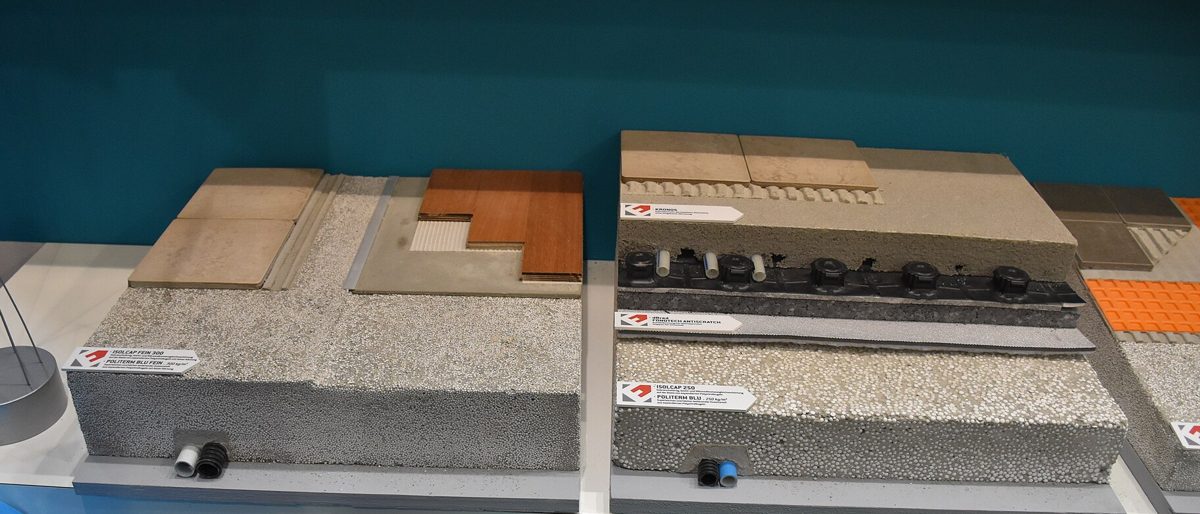
A finished floor is three things working together: the flooring, the structure under it, and the building it lives in. When a floor fails, the product usually gets the blame. The cause is more often underneath or around it: a slab still giving off moisture, a substrate that was never flat, a floating floor pinned at its edges, an adhesive used outside its limits.
The industry's own standards say as much. ASTM F710, the practice for preparing concrete to receive resilient flooring, asks for slabs that are permanently dry, clean, smooth, structurally sound and free of anything that could stop an adhesive bonding. It also says every slab should be tested for moisture, whatever its age or grade level, and every floor tested for pH before resilient flooring goes down.1 None of that is about the flooring itself. It is about the system the flooring joins.
One rule sits above all of it. The manufacturer's written installation instructions for the exact product, the project specification and the local code govern every job. General advice, including ours, comes after them.
The main floor coverings, and what separates them
Wood and laminate
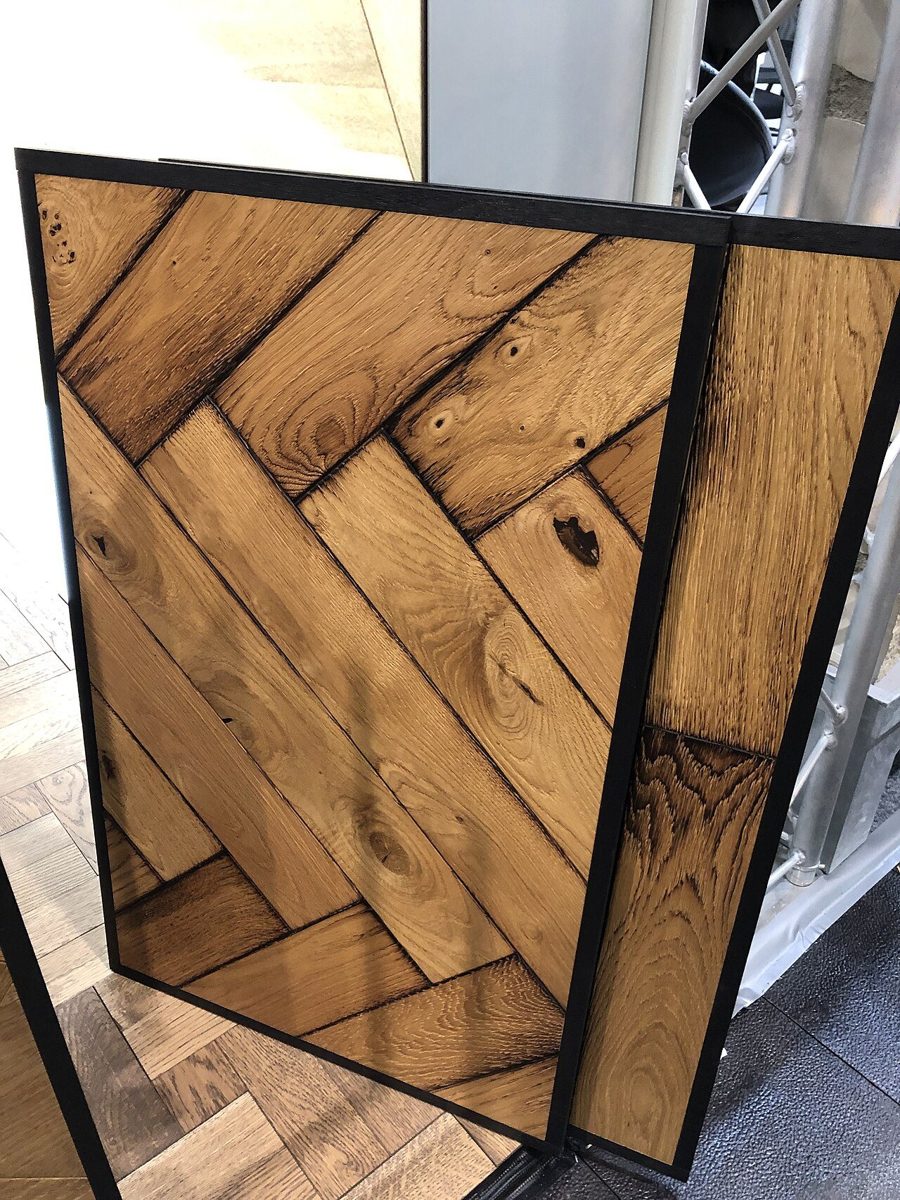
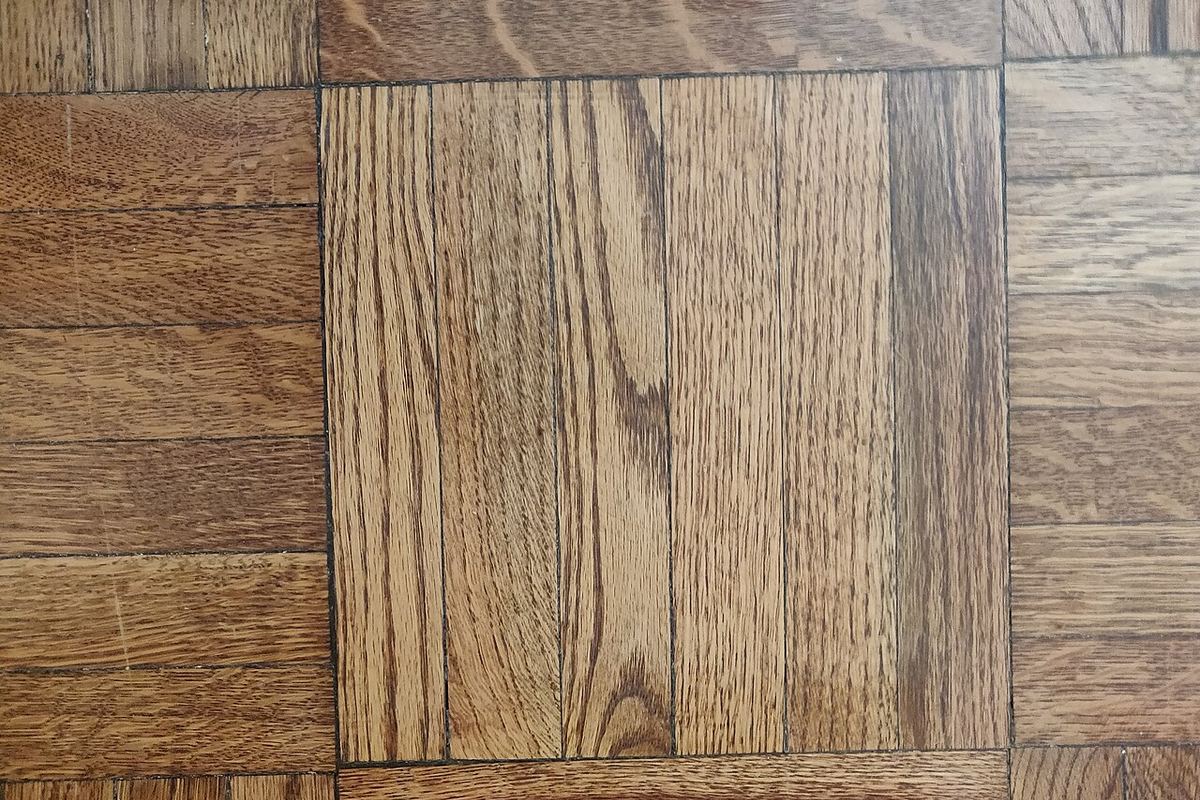
Wood moves with moisture. The USDA's Wood Handbook explains that lumber shrinks and swells as its moisture content changes, and that denser woods typically move more for the same change in humidity.2 It also warns that cracks can develop in wood flooring if the material takes up moisture before or after installation and then shrinks.2 Engineered wood puts a real wood face on a cross-layered core to resist that movement. Laminate looks similar and is built differently, around a printed decor layer and a fiberboard core; our guide to how a laminate plank is made walks through the layers.
Resilient flooring
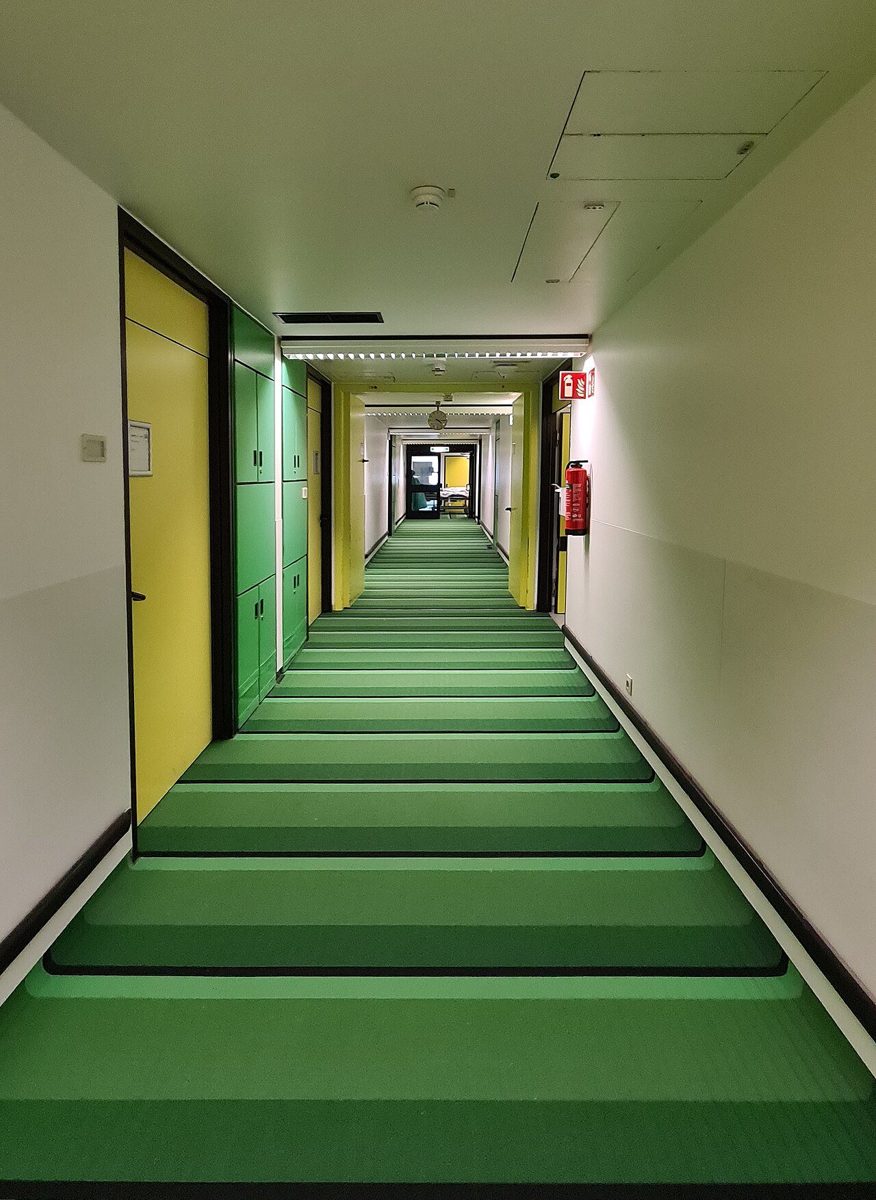
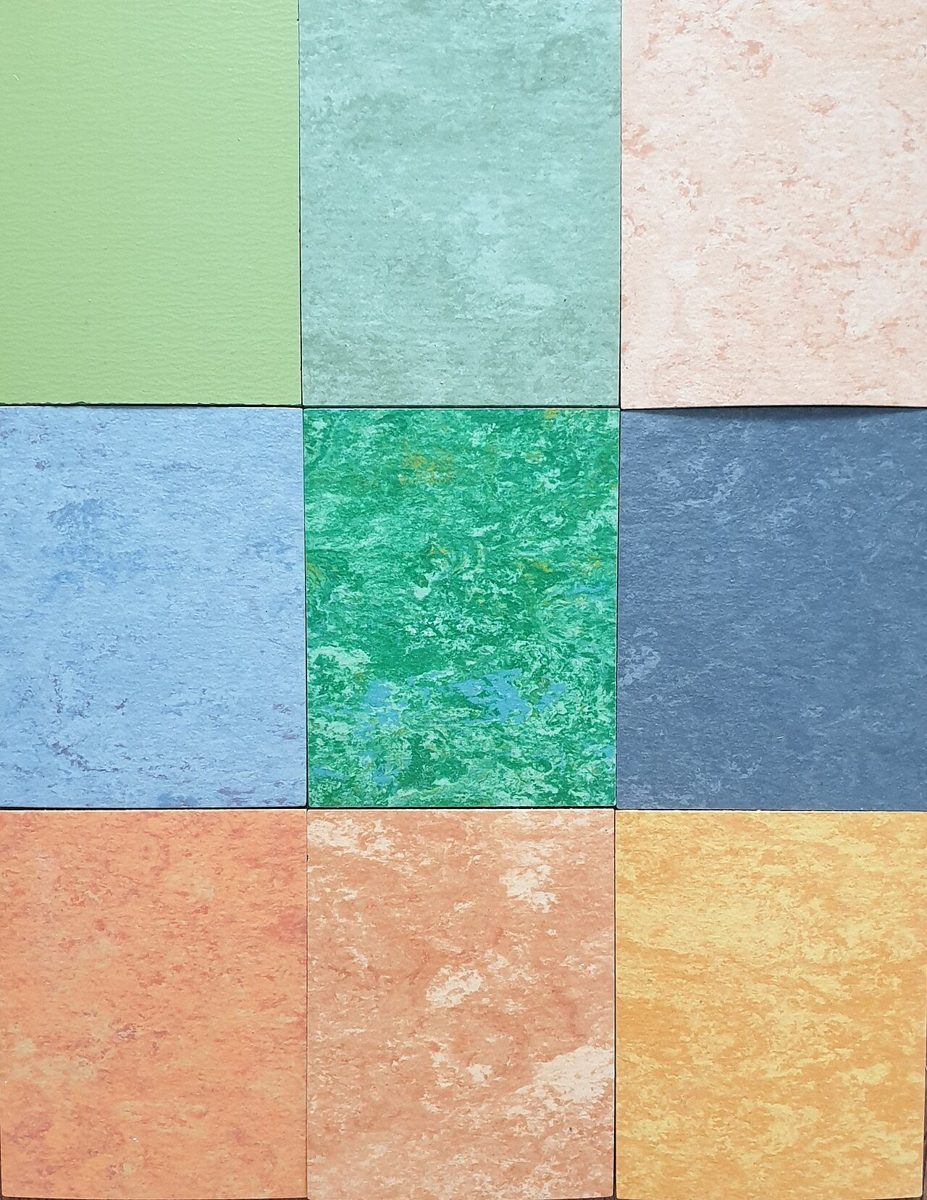
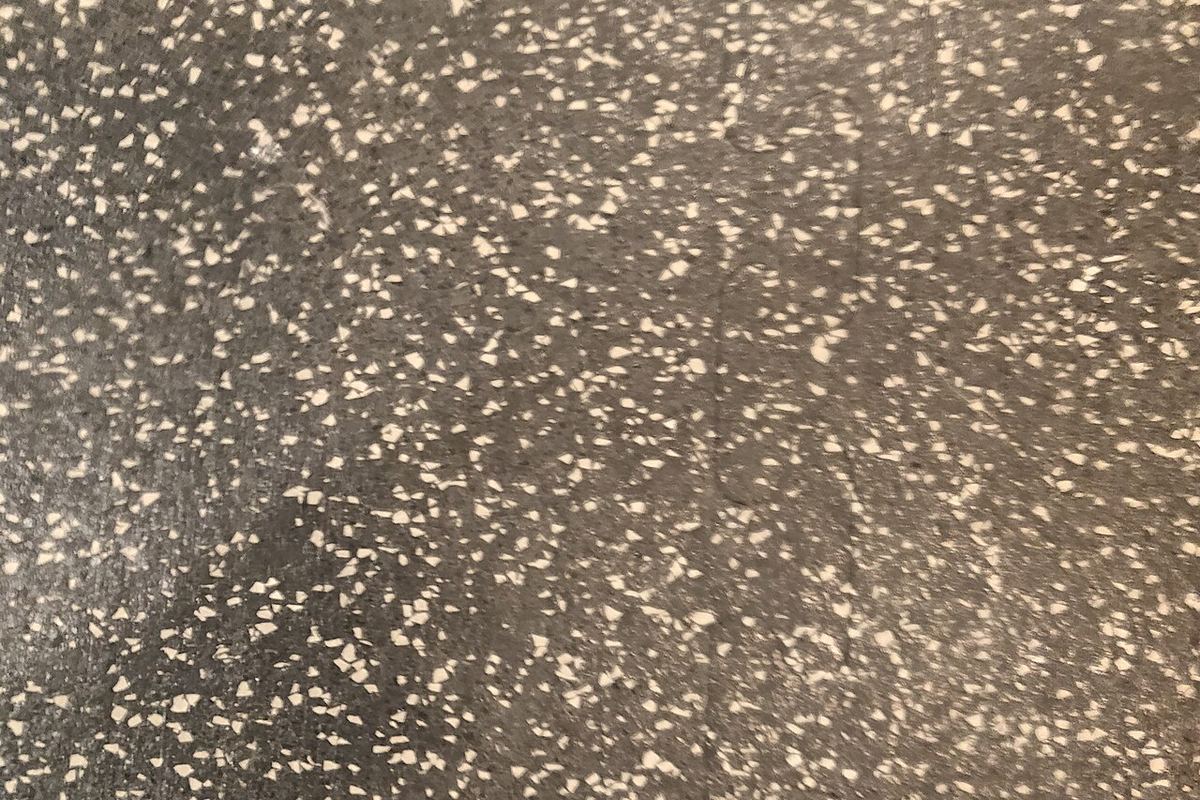
Resilient is the workhorse of commercial interiors: luxury vinyl tile and plank, sheet vinyl, linoleum, rubber. Vinyl barely reacts to humidity but does react to temperature. Shaw measured a plank growing and shrinking by 1/16 of an inch between a cold room and a hot one.3 That is why floating vinyl needs the expansion space covered in our comparison of manufacturer gap requirements. Sheet goods in healthcare and education are often heat-welded into a continuous surface. The Resilient Floor Covering Institute publishes recommended installation practices for that work.4
Tile and stone
Tile is governed by a dense body of published criteria. The Tile Council of North America develops industry quality standards and publishes the ANSI tile standards and the TCNA Handbook used by buyers, specifiers and installers.5 Large-format tile has raised the stakes on substrate flatness and lippage, the height difference between adjacent tiles.
Carpet and carpet tile
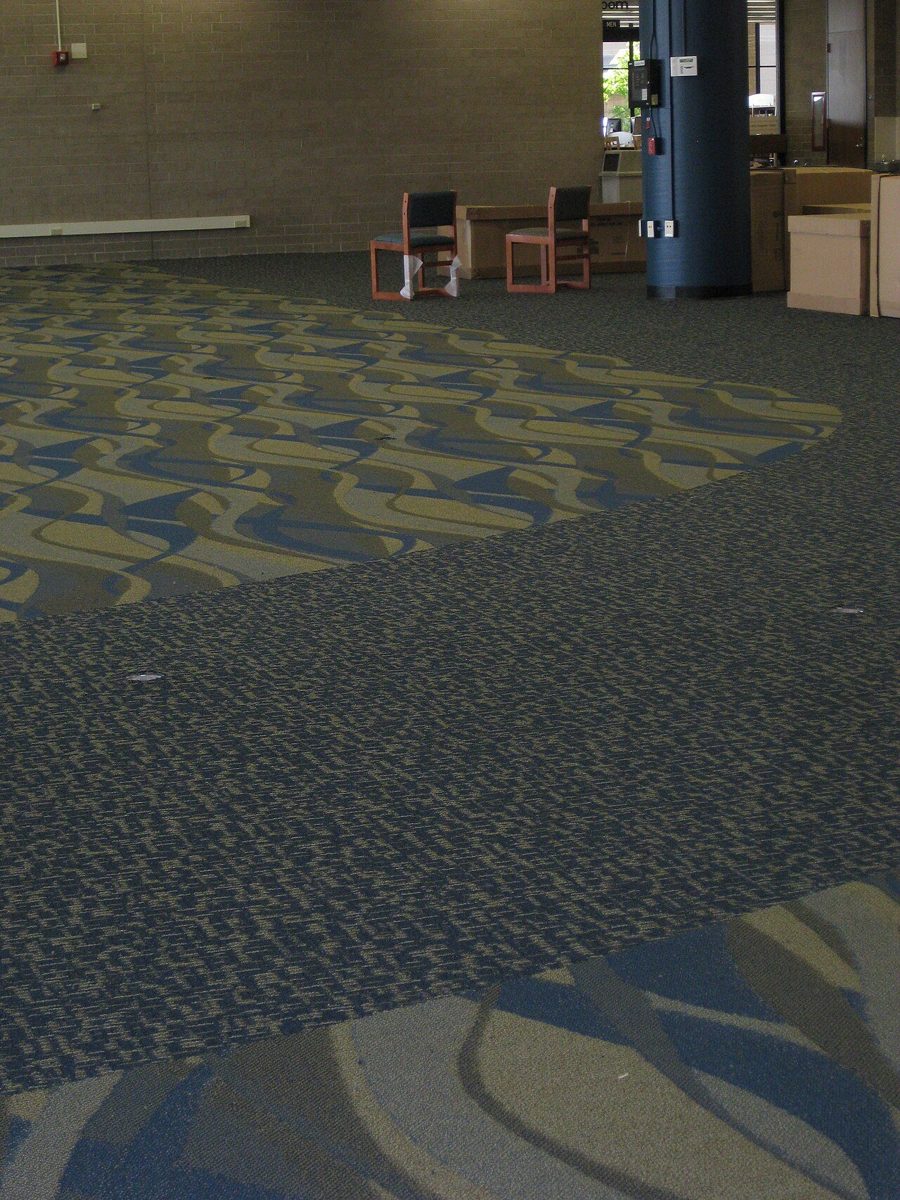
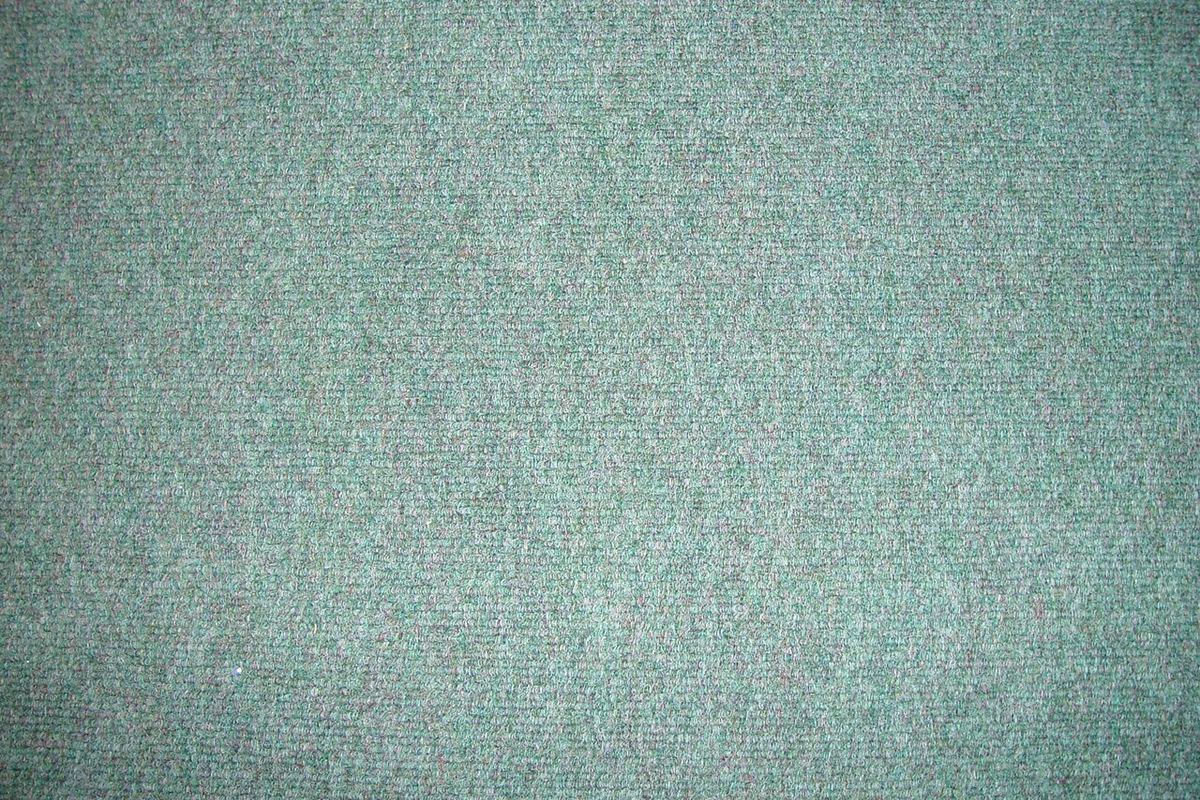
Carpet has its own installation standards. The Carpet and Rug Institute publishes CRI 104 for commercial carpet and CRI 105 for residential, and describes them as the only carpet installation standards created and supported by the industry.6 Commercial offices now lean on carpet tile, where pattern, installation method and adhesive choice decide how the floor looks a year later.
Why installations succeed or fail
Most callbacks trace to three conditions that were not checked or not controlled: moisture, flatness and temperature.
Moisture. Concrete keeps releasing water long after it looks dry. ASTM F2170 measures relative humidity inside the slab with in situ probes, while ASTM F1869 measures the rate of moisture vapor emission at the surface with anhydrous calcium chloride.78 F1869 itself notes that its result only reflects the floor's condition at the time of the test.8 Moisture-meter maker Wagner argues that in situ relative humidity testing is the most reliable way to assess a slab.9 Which test a job uses is set by the flooring and adhesive manufacturers' requirements; our moisture testing guide compares them.
Flatness. Rigid planks, large tile and thin sheet goods all show what is under them. FloorFolio's installation guide, for example, asks for concrete flat within 1/8 inch in 6 feet or 3/16 inch in 10 feet.10 Other products set other numbers, and the flatness guide explains how to measure and fix a substrate.
Temperature and movement. Floors need conditions held steady before, during and after installation, and floating floors need room at their edges. Glued floors are not exempt. Shaw notes that a plank installed warm and then cooled can show slight gaps even on a glue-down floor.3
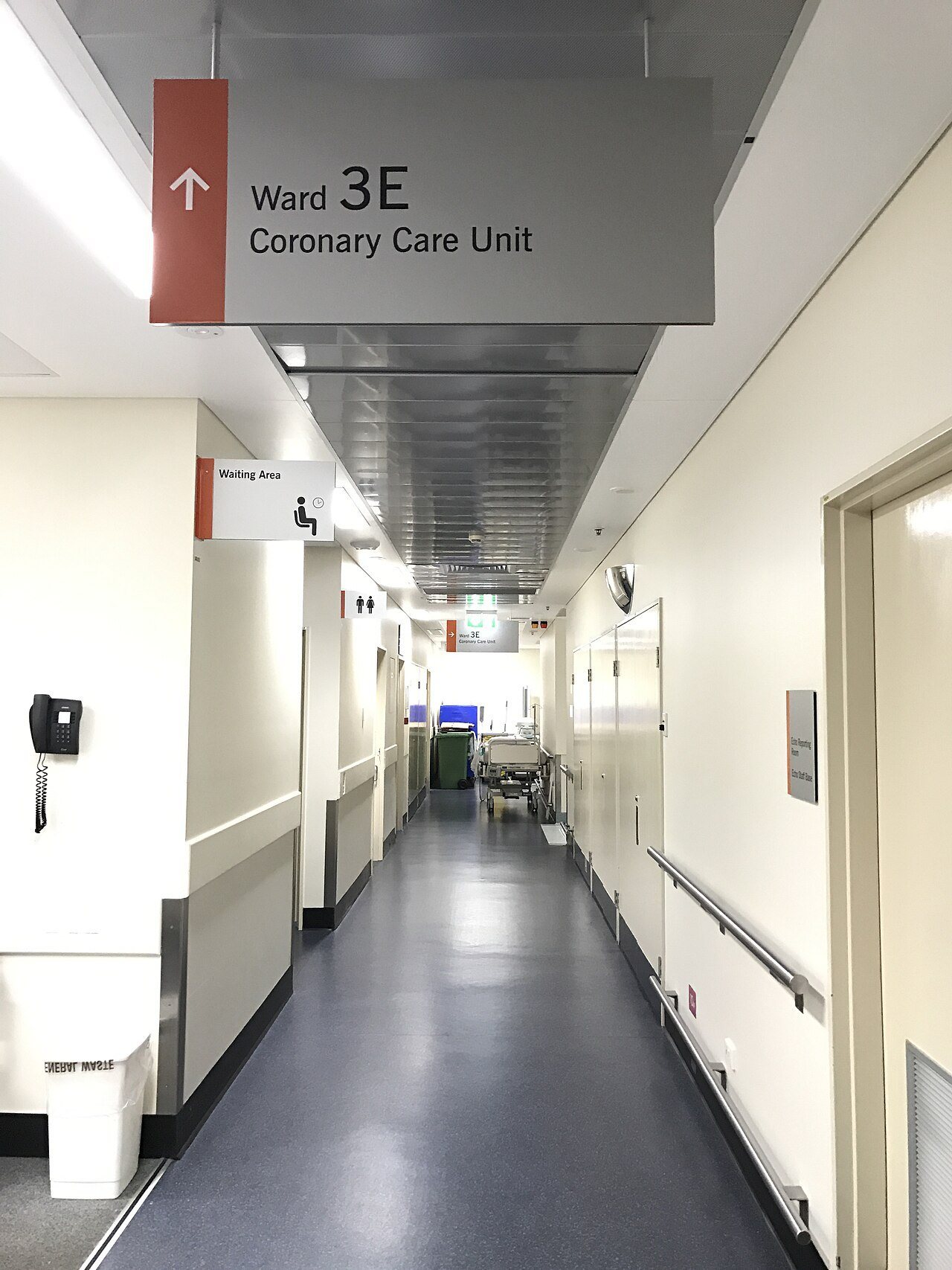
FIG 01Blue sheet vinyl and a dark wall base running the length of a hospital corridor.Photo: Kgbo, CC BY-SA 4.0, via Wikimedia Commons
The commercial side: specifications, documents and air quality
On commercial work, the floor is decided on paper long before it is installed. A specification names the products and the standards. Submittals prove the proposed products comply. RFIs settle the gaps in the drawings, and mockups settle what drawings cannot show. Our Commercial & Business section covers each document in turn, starting with the submittal checklist.
Indoor air quality is now part of that paperwork. FloorScore is an indoor air quality certification for hard-surface flooring, adhesives and underlayments; the program is administered by the Resilient Floor Covering Institute, with SCS Global Services as its certification body.11 Environmental and health product declarations follow the same path into specifications, and our guide to EPDs and HPDs explains what reviewers check. For the contractors who do this work, the Floor Covering Installation Contractors Association describes itself as the resource for commercial flooring contractors and runs a Certified Installation Manager program.12
Where the trade meets and trains
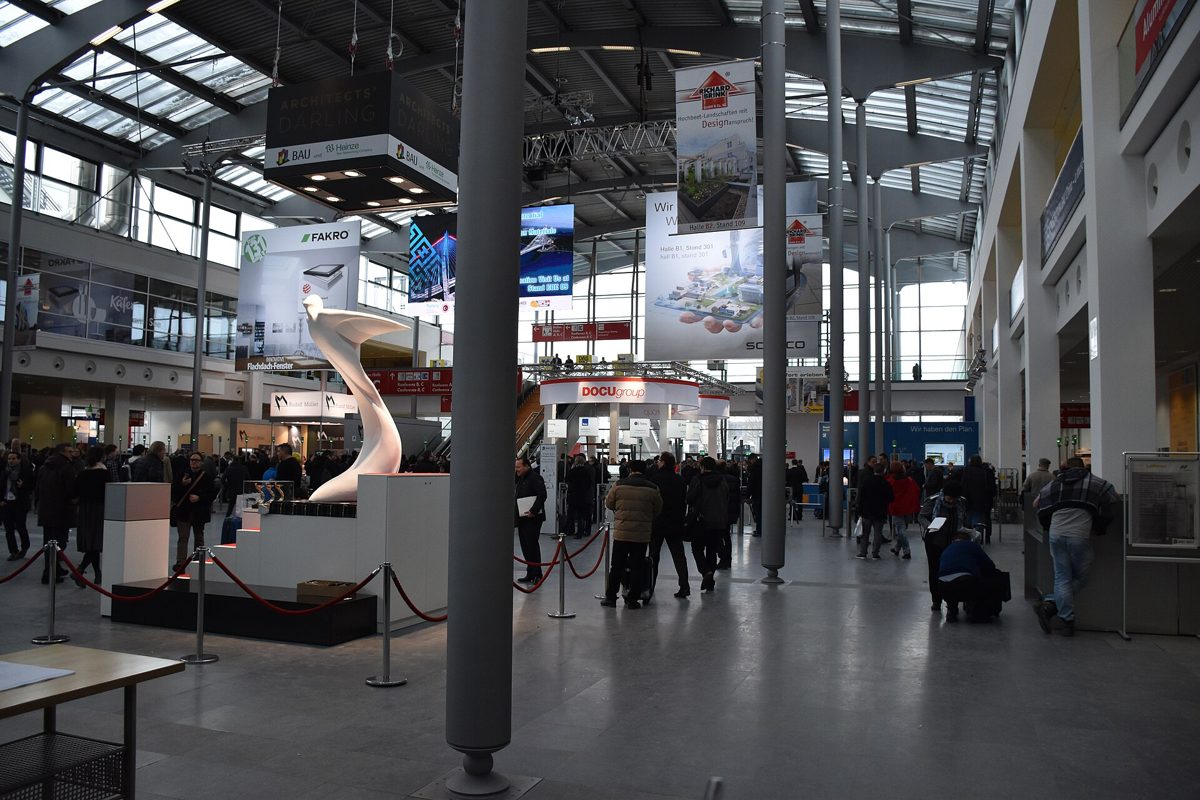
A handful of recurring events set the calendar. The International Surface Event lists its 2027 exhibit hall for February 2 to 4 at Mandalay Bay in Las Vegas, with education from February 1.13 The NWFA Expo bills itself as the only trade show dedicated exclusively to wood flooring, and lists April 27 to 29, 2027, in Fort Worth, Texas.14 Coverings, the tile and stone show, is headed to Orlando for 2027.15 In Europe, DOMOTEX in Hannover lists January 17 to 20, 2028.16 Our shows guide explains how to get value from a show day.
Certification gives an owner or a general contractor independent evidence of skill. The International Certified Flooring Installers Association runs training from one- and two-day events to courses of one, two and five weeks, alongside its certifications.17 The NWFA offers certification tracks for installers, sand-and-finish professionals and inspectors, and requires 24 continuing credit units a year to keep them current.18 The Ceramic Tile Education Foundation launched its Certified Tile Installer program in 2008; it combines a multiple-choice exam with a hands-on test.19 None of these replaces a product's instructions. They show that the person reading them knows the trade. The training guide compares the programs.
Sources for the general notes
ASTM International, “F710 Standard Practice for Preparing Concrete Floors to Receive Resilient Flooring”. store.astm.org/f0710-22.html
Resilient Floor Covering Institute (via FloorReports), “RFCI IP #1 Recommended Installation Practice for Homogeneous Sheet Flooring, Fully-Adhered”. floorreports.com/images/technotes_files/61.pdf
Tile Council of North America, “Tile Council of North America | Voice of the Ceramic Tile Industry”. tcnatile.com/
ASTM International, “F2170 Standard Test Method for Determining Relative Humidity in Concrete Floor Slabs Using in situ Probes”. store.astm.org/f2170-19a.html
ASTM International, “F1869 Standard Test Method for Measuring Moisture Vapor Emission Rate of Concrete Subfloor Using Anhydrous Calcium Chloride”. store.astm.org/f1869-22.html
Coverings, “Coverings 2026 | The Ultimate International Tile and Stone Exhibition”. coverings.com/
DOMOTEX, “DOMOTEX | Home of Flooring & Interior Finishing”. domotex.de/en/
International Certified Flooring Installers Association, “Certification and Training Courses - International Certified Flooring Installers Association”. cfiinstallers.org/certification/
A meter sweep is a comparative screen. It does not accept a floor. What F2659 covers, where it says little, and how to use it to decide where the RH or calcium chloride tests go.
James Hardie and USG agree on the basics of backer board over wood subfloors. They split on bedding material, fastener edge distance, gaps and joint fill.
The stain appears exactly where the mat sat, and it does not wash off. What the manufacturers say causes it, why it is excluded from warranty, and how to prevent it.
A plank edge standing proud of its neighbor catches light, feet and cart wheels. On vinyl it usually means a joint that is not fully locked, a bump underneath, or a glued plank that never bonded flat.
Scratches, scuffs and gouges are not the same as wear-through, and warranties treat them very differently. What the wear layer is, how thickness relates to warranty, and what prevents damage.
Cupping is a plank whose edges rise. Buckling is a floor that lifts off its base. They look alike from across a room and point to different causes. What the sources say about each.
A straight line showing through a vinyl floor is almost always a message from the layer below. How to read it, what the guides say prevents it, and what fixing it involves.
Filed
04 Aug 2026
Length
996 w
Read
~4 min
Sheet 03
Sample board
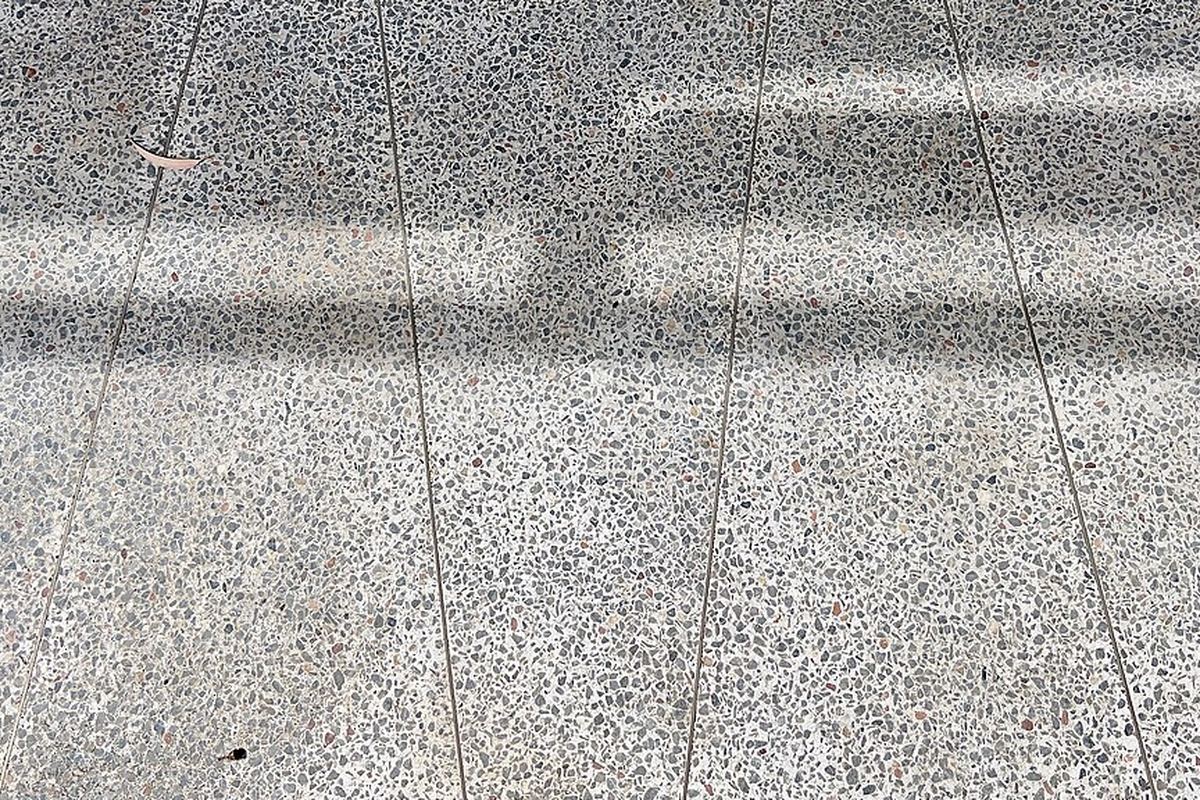
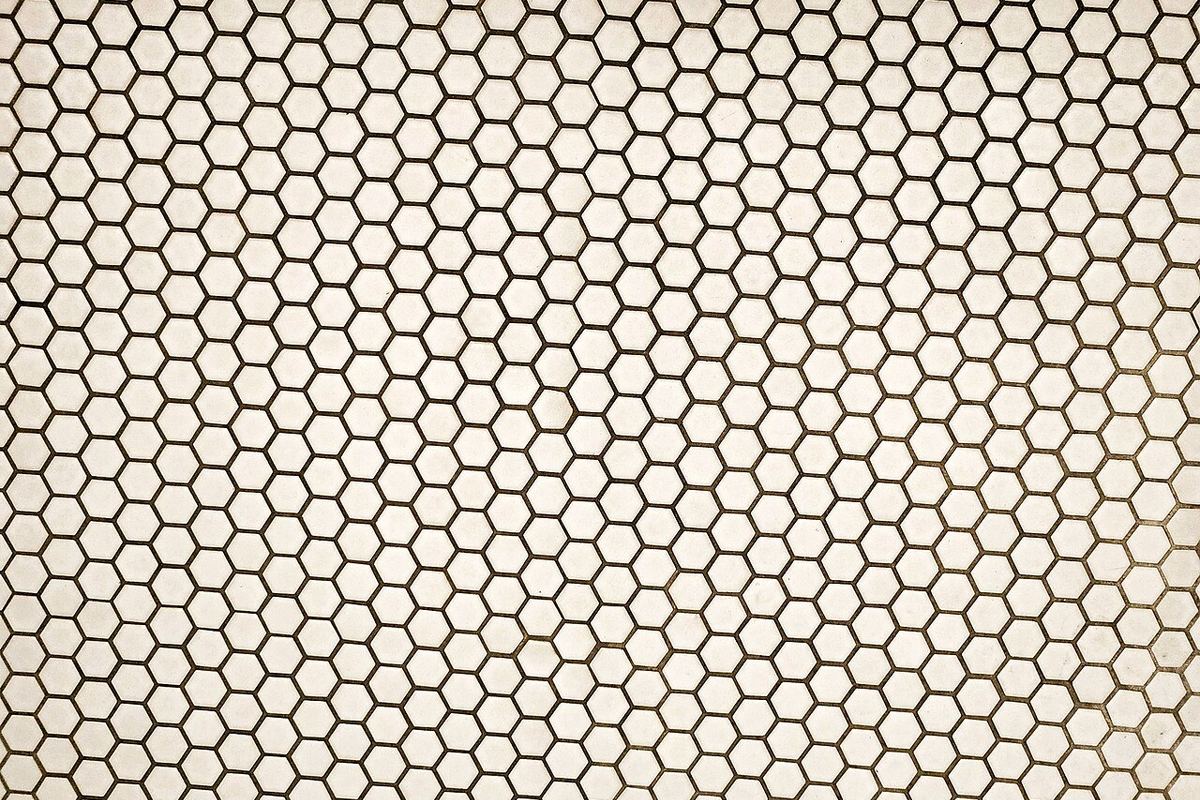
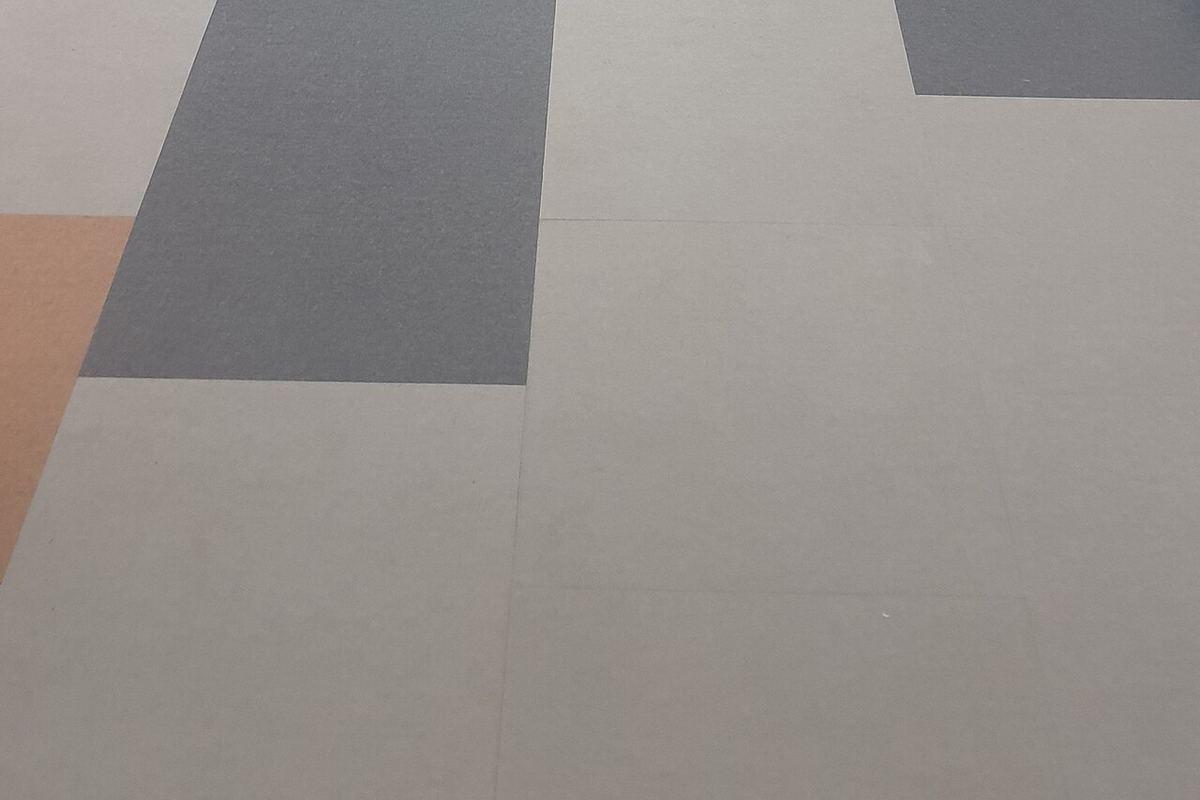
Every section is a material. The same swatch marks its articles in the rail, on the cards and on every article page.
Next editions as the organizers list them: TISE, February 2 to 4, 2027 13; DOMOTEX, January 17 to 20, 2028 16; Coverings, Orlando in 2027 15; NWFA Expo, April 27 to 29, 2027 14. Confirm with each organizer before booking travel. The shows guide explains how to plan a visit.

.jpg)
.jpg)

.jpg)

.jpg)


