 SW-04 · Troubleshooting & Repairs
Buckling is expansion with nowhere to go. In a single room, look for what that room has that others do not: strong sun, which Timeless says can make planks expand and buckle; a pinned island or heavy load; a doorway with no break; or moisture or heat underneath.1 2 3 Shaw measured a plank growing 1/16 of an inch when heated to 135 degrees.4
A whole-house buckling problem points to the product, the install season or the building. A problem in one room is different. The same planks, laid by the same crew, are flat in every other room. So the cause is usually something that one room has. Finding it is a matter of comparing that room against the rest of the job.
What buckling is
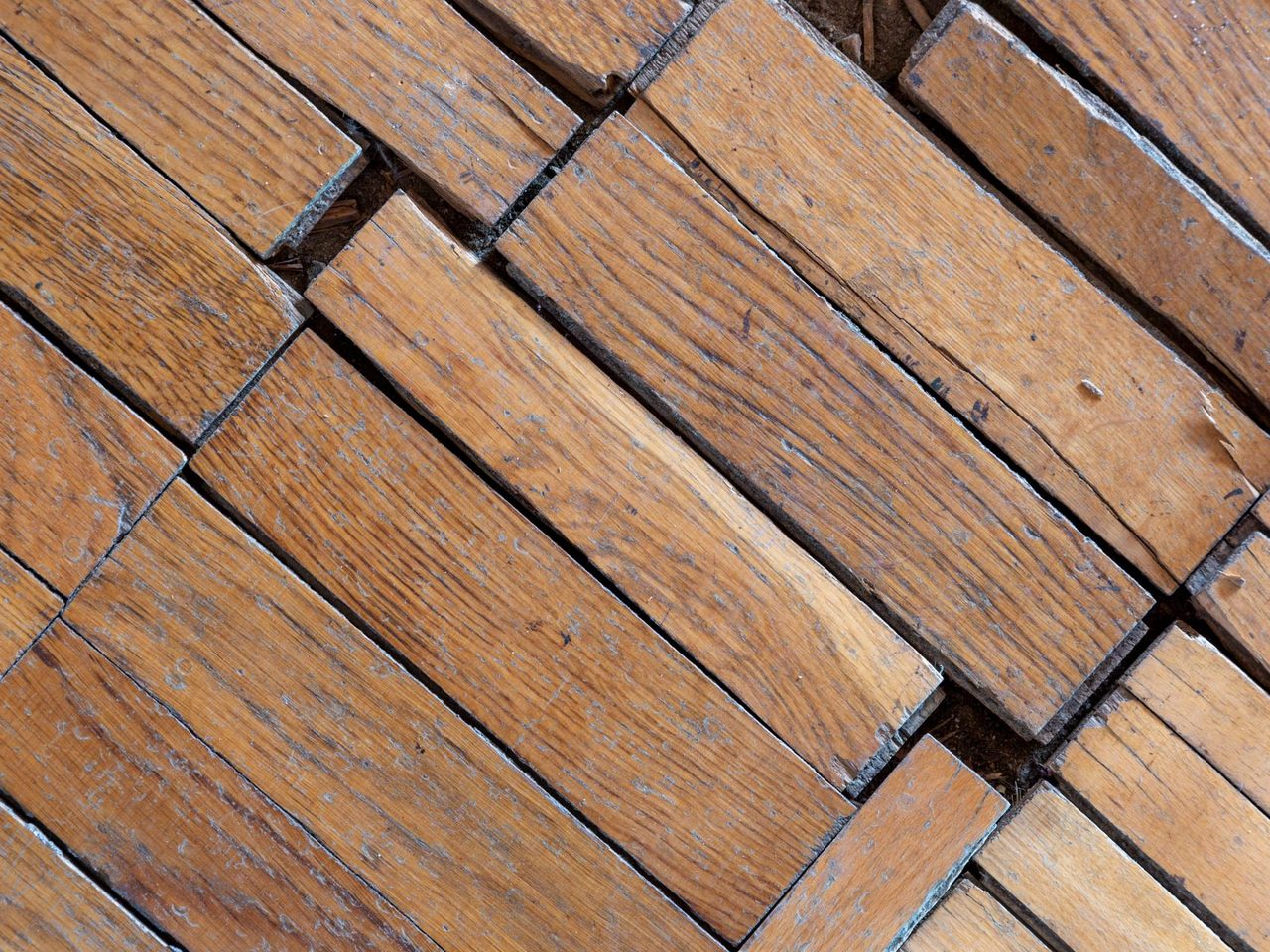
Buckling is a floor lifting off the substrate, usually in a ridge or a tent along joints. It happens when planks expand and the floor has nowhere to go. Continental Flooring describes it plainly: when expansion is not accommodated, the material has nowhere to go except up.5 For floating floors, that usually means the expansion space at the edges is blocked, or the room has expanded more than the space allows.
Sun on the floor
A sunroom, a room with a glass wall or a south-facing bay is the most common single-room cause. Timeless Designs says floating vinyl floors should not be exposed to direct sunlight for extended periods. Excessive temperatures will cause the product to expand and buckle.1 Daltile warns that long-term direct sun can damage flooring, causing it to discolor, fade or buckle.6
Shaw's temperature test shows the scale. Sunny areas can run in excess of 130 degrees, and a plank heated to 135 degrees grew by 1/16 of an inch.4 Shaw works an example: a 30-foot room that changes 50 degrees from its install temperature moves roughly 1/2 inch.4 That is more than most perimeter gaps can absorb. The remedies are window coverings, UV or thermally protected glazing, and in a heavily glazed room, a product or method suited to it. See click-lock vinyl in sunrooms.
A pinned area
The kitchen is the classic case. An island or cabinet set on top of a floating floor holds it in place, and the floor around it cannot move freely. Timeless says cabinets, heavy furnishings and other built-ins must not be installed on top of its flooring, because they restrict expansion.1 EverStep's guide rules out cabinets on a floating floor entirely.3 National Flooring Products adds heavy furniture of 500 pounds or more, which may obstruct a floated floor's movement and lead to buckling or separation.2
Some manufacturers allow fixed items in specific conditions. Elite permits wall-mounted cabinets and free-standing islands on its SPC, and calls for a 3/4 inch expansion hole where bolts pass through the floor.7 Read the guide for the product on the job. See LVP around a kitchen island.
A doorway with no break
A floating floor that runs through a doorway joins two rooms into one sheet. If one room is hotter, sunnier or bigger than the guide allows, the strain goes to the narrowest point. EverStep asks for a transition break every 30 ft in either direction, and a T-molding in doorways less than 6 ft wide.3 Marquis requires an expansion gap for runs exceeding 45ft in length or 25ft in width.8 A buckle that starts at a doorway, or in the bigger of two connected rooms, points here.
Moisture from below
One room may sit over a different substrate: a slab on grade beside a framed floor, a basement, or a room over a crawl space. Water from a leak can also stay under a floor long after the surface is dry. INSTALL, the installers' training organization, notes that adhesives under vinyl can re-emulsify when exposed to high moisture, causing tiles to shift, curl or lift.9 Huber notes that slowed vapor under vinyl can lead to condensation and bubbling, warping or cupping.10 A buckle with damp underlayment, staining or a musty smell needs a moisture test before any repair. See moisture testing.
Heat underneath
Radiant heat in one room, a heating duct under the floor or a boiler room next door can heat one area far above the rest. Elite says its maximum operating subfloor temperature should never exceed 85°F.7 Continental Flooring lists commercial kitchens and areas with radiant heating systems among the places where heat causes problems.5 See click-lock vinyl over radiant heat.
A room installed cold
Some rooms are conditioned differently from the rest of the building. A closed-off guest room, an addition on its own system, or a space with its vents shut can be far colder on the day of installation. Shaw says the plank is stable within 60-80 degrees, and recommends checking the subfloor and product temperature before installing.4 A floor laid tight in a cold room grows when the room warms up. Daltile requires the HVAC system to be on and functional before, during and after installation.6 If one room was installed while its heating was off, or while a door to the outside stood open, that room's floor started smaller than the rest. Ask the crew, and check the job notes.
Over a slab joint
Concrete moves at its joints. FloorFolio warns that flooring installed over expansion joints is likely to fail by bond failure, bubbling or buckling, and asks for expansion joint covers instead.11 A buckle that runs in a straight line across a room, following a joint in the slab, is the sign. See control joints and click-lock failures.
A checklist for one-room buckling
| Question | If yes, look at |
|---|---|
| Does the room get hours of direct sun? | Surface temperature, window coverings |
| Is anything fixed on top of the floor? | Cabinets, islands, heavy loads, fasteners |
| Does the floor run through a doorway untouched? | Transition breaks and run lengths |
| Is the substrate or grade different? | Moisture tests, leaks |
| Is there heat under or beside the floor? | Radiant heat, ducts, equipment |
| Does the buckle follow a straight line? | Slab joints |
The repair
Fix the cause first. Then relieve the floor: free the pinned edge, trim the planks to restore the expansion space, and add a break where the run is too long. Planks that have been bent hard or whose joints are damaged should be replaced rather than relaid. On a commercial job, write down the cause and the change made, because a buckle that returns in the same room usually means the cause was missed.
Sources
- Timeless Designs, “Click Floating Luxury Vinyl Installation Instructions”. timelessdesignsflooring.com/wp-content/uploads/2023/05/TD-Rigid-Core-Ins
- NFP, “Architect’s Choice LVP Installation Guide”. my-nfp.com/resource/architects-choice-lvp-installation-guide
- EverStep Flooring, “LVP Click Lock Installation Guidelines”. everstepflooring.com/lvp-click-installation-guidelines/
- Shaw Floors, “LVP Case Study: How Temperature Affects Dimension”. shawfloors-sherwinwilliams.com/SiteFiles/sherwinwilliamsdigital/Images/L
- Continental Flooring, “How Heat Affects Vinyl Flooring in Commercial Settings”. continentalflooring.com/commercial-vinyl-flooring-heat-damage/
- Daltile, “ProSeries Luxury Vinyl Flooring Installation & Care Guide (Rigid Core Click, Glue Down)”. s1.img-b.com/build.com/mediabase/specifications/daltile/1996309/daltile-
- Elite Flooring, “Välinge Installation Guide (Woodlands)”. eliteflooringusa.com/links/install-instructions/Elite-Installation-Guide
- Marquis Industries, “Rigid Vinyl Plank Installation Instructions (Angle)”. marquisind.com/static/resources/Angle_Angle%20Installation%20Instruction
- INSTALL (International Standard & Training Alliance), “Avoiding Moisture Mistakes in Substrate Preparation - INSTALL Floorcovering Professionals”. installfloors.org/news-events/avoiding-moisture-mistakes-in-substrate-pr
- Huber Engineered Woods, “Four Ways to Prevent Moisture Damage Under Luxury Vinyl Flooring | Huber Engineered Woods”. huberwood.com/blog/four-ways-to-prevent-moisture-damage-under-luxury-vin
- FloorFolio, “Installation Guide 2025”. floorfolio.com/wp-content/uploads/2025/FloorFolio-Installation-Guide-202
General information for the flooring trade. This article was drafted with AI assistance and checked against the sources listed above; the manufacturer's current instructions and the project specification govern any real job. If something here is wrong or out of date, tell us.