 SW-04 · Subfloors & Moisture
Self-leveling underlayment makers treat primer as part of the system: TCC Materials says all surfaces require priming, and Proma requires it once the surface is properly prepared.1 2 On absorbent concrete, Sika says its primer reduces outgassing and bubbles and prevents water loss from the underlayment into the substrate.3 Coverage, dilution and second-coat ratios differ by product, and TEC and TCC Materials give different second-coat ratios.4 1
Primer is the cheapest line in a self-leveler pour. It is also the step that gets dropped when a crew is behind. The data sheets do not treat it as optional. TCC Materials states that all surfaces require priming before its Akona underlayment.1 Proma says priming is required for its self-leveling underlayments once the surface has been properly prepared.2
This article covers what the primer does, how coverage and dilution change by substrate, and how a skipped or sloppy coat shows up. Mix water and cure are covered in self-leveling underlayment without soft spots.
What the primer is doing
On absorbent concrete, the job is sealing. Sika describes SikaLevel Primer as a one-part, water-dispersed, solvent-free, acrylic-based solution that primes and seals the floor.3 Sika says it prevents water loss from the underlayment into the substrate.3 It also says the primer penetrates the substrate to reduce outgassing and the formation of bubbles in the underlayment.3 That is the pinhole problem, named by the maker.
On dense surfaces, the job is bonding. TEC says its Skill Set primer may be used to enable bonding to difficult substrates. Its list includes metal, glazed ceramic tile, gypsum-based underlayments, vinyl and well bonded epoxy coatings.4 Proma sets the limit plainly. The product will only adhere to what it is directly in contact with.2 Proma adds that loose or hollow-sounding existing floor coverings will not be corrected by a cement underlayment.2 Primer bonds to a weak surface. It does not repair it.
Porous and non-porous concrete
Proma splits concrete into two cases. Smooth, chemically densified, burnished or power-troweled concrete must be either primed with its PRO SUPERPRIME products or mechanically roughened.2 Excessively dry or porous concrete must be primed, or wet down and kept continuously moist for at least 24 hours.2 In that wet-down case, standing water must be removed and the surface brought to saturated surface dry before the pour.2
TCC Materials says maximum bond over concrete can be achieved by profiling to an ICRI CSP3 to CSP5 standard.1 It adds that sound, porous concrete that has not been troweled smooth may not require profiling.1 TCC lists burnished concrete with epoxy coatings, cold rolled steel and existing tile as non-porous substrates.1 For non-porous substrates, wood and tight concrete, it calls for Level-Flo Primer Pro.1
Polished floors deserve a hard look. Proma warns that polished concrete densifiers may contain sealers, and that mechanical preparation may be required over chemically densified and polished concrete.2 If the bid assumed prime-and-pour on a burnished slab, grinding is new scope. Raise it before the pour. See change orders contractors should put in writing.
Gypsum, wood, tile and residue
Gypsum is where the sheets disagree most. Proma says to always prime gypsum-based substrates.2 Without primer, it warns, a reaction known as ettringite may occur, causing crystallization and then bond failure.2 Proma requires the gypsum to be completely dry before priming, and says never to use sweeping compounds on it.2 TEC lists gypsum substrates as suitable for its primer, with a minimum tensile bond strength of 72 psi.4 TCC Materials says not to install Akona over gypsum at all.1 The underlayment's own sheet decides. Background on the material is in gypsum underlayment in multifamily floors.
On wood, Proma says all wood substrates must be primed before a self-leveling underlayment.2 TCC primes the wood and then fastens metal or plastic lath, which it requires over wood subfloors.1 Panel selection and fastening are covered in vinyl over wood subfloors.
Over existing tile and VCT, Proma requires all wax and floor finish stripped and dried before priming.2 Metal must be cleaned of contamination and corrosion, wiped with denatured alcohol and allowed to dry.2 Over cutback, TCC says to use only Level-Flo Primer Pro, and the residue must not be water soluble or tacky.1 Proma states that mechanical preparation and/or priming is not recommended over any material that may contain asbestos.2
Coverage and dilution by substrate
Dilution is product-specific. Do not carry a ratio from one sheet to another.
| Primer | Substrate | What the sheet says |
|---|---|---|
| Sika SikaLevel Primer | Absorbent concrete and cement screeds3 | Ready to use, no dilution; approximately 325 to 500 square feet per gallon3 |
| TCC Level-Flo Primer | Porous concrete1 | 330 square feet per gallon; two coats may be required on highly porous substrates1 |
| TCC Level-Flo Primer Pro | Tile, linoleum1 | Full strength, 140 square feet per gallon1 |
| TEC Skill Set primer | Tile, linoleum, steel, epoxy coatings4 | 140 square feet per gallon4 |
| TEC Skill Set primer | Gypsum underlayments4 | Two coats required, at ratios 1:3 and 1:24 |
| Quikrete Concrete Bonding Adhesive | Concrete5 | 1 part adhesive to 2 parts water; old, excessively porous concrete requires 2 coats5 |
Read the footnotes before ordering. Sika says its coverage figures do not include allowance for surface profile, porosity or waste.3 TEC notes its coverages reflect broom application unless noted.4 A ground slab will drink more than the chart shows.
The second-coat ratio is a clear disagreement. TEC sets the second coat at 1:2 primer to water.4 TCC sets its second coat at 1:3.1 Follow the sheet for the primer actually in the bucket.
One coat or two: reading the floor
Sika says one application is typically required, but porous substrates may require two or more coats.3 Each previous coat should be tack-free before the next.3 The other sheets give a field test. TEC requires a second coat if the first is rapidly absorbed and dries in less than 1 hour.4 TCC says primer that turns clear within 30 minutes means a highly porous substrate that requires a second coat.1
Sika builds in a visual check. Its primer goes on white and dries clear, which Sika says confirms complete coverage.3
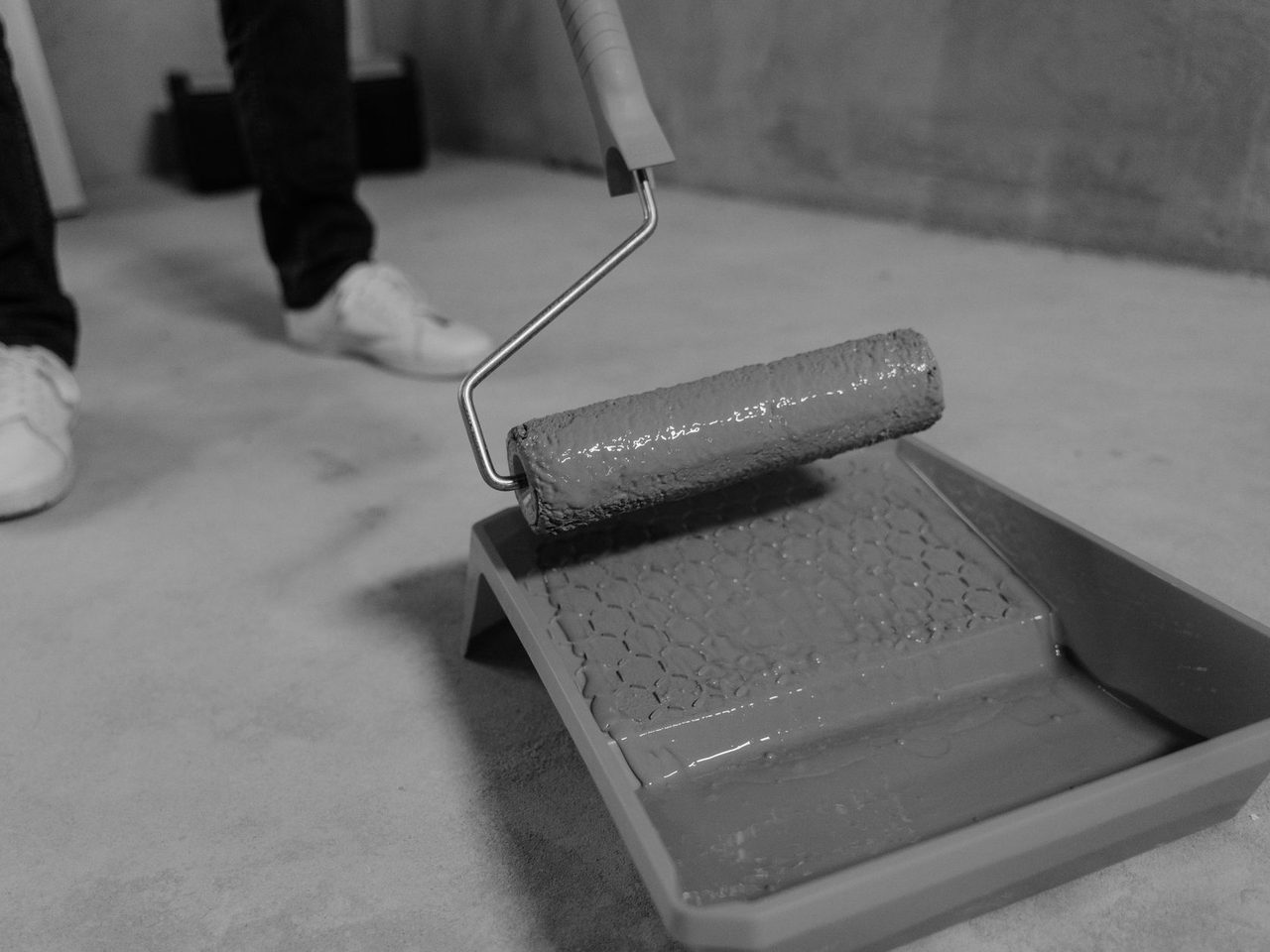
Puddles are the other failure. Sika says ponding must be avoided and puddles must be removed.3 TCC requires no bare spots, puddles or excess primer.1 Quikrete says no pools or puddles should be present when its resurfacer is applied.5 Tools differ too. Sika calls for brush or roller, with a long nap roller for rougher surfaces.3 TEC lists a paint brush, short nap roller or soft push broom.4
The window: too early, too late
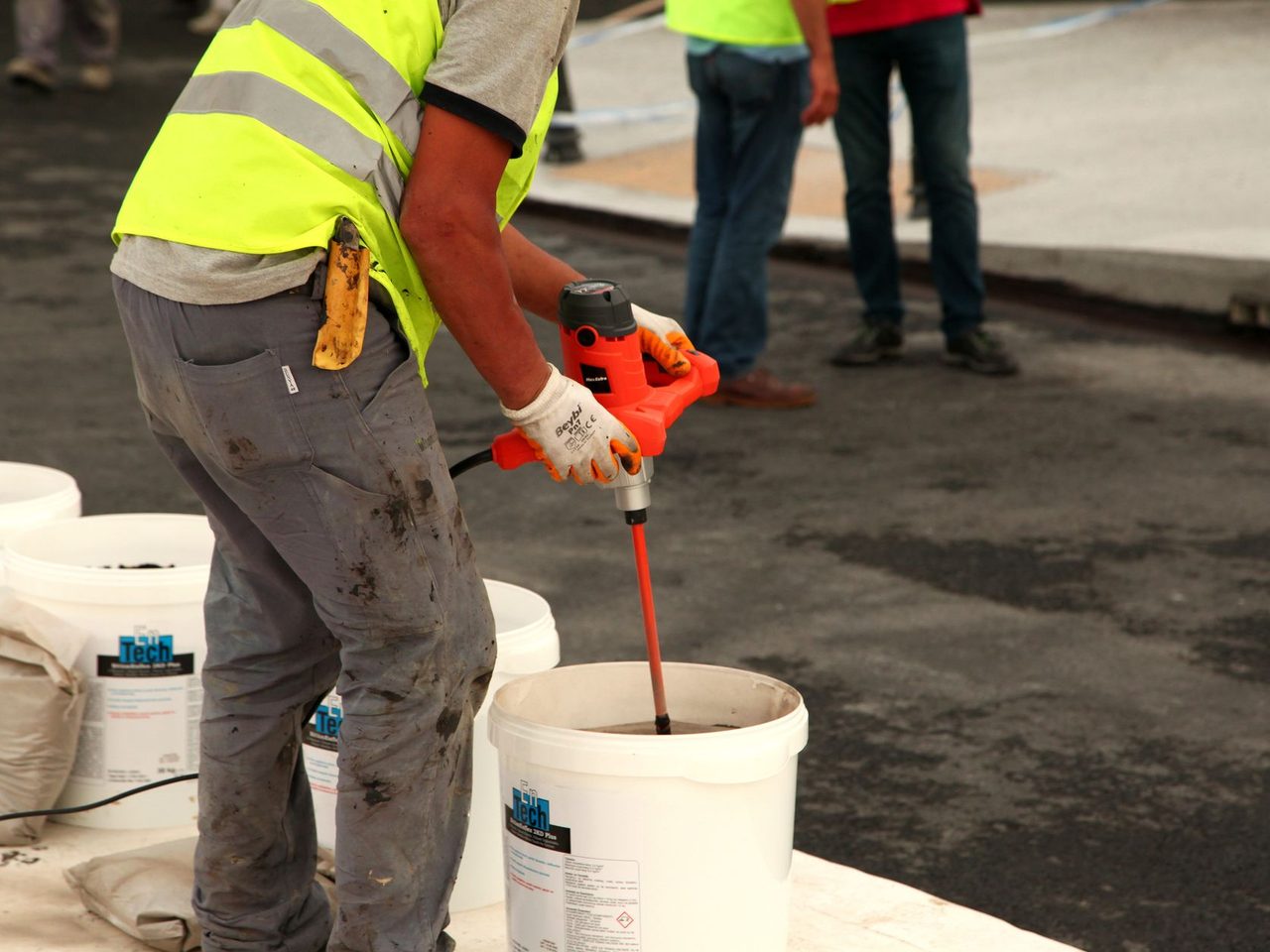
Pour too soon and the primer is still wet. Sika says the underlayment must go down only once the primer is clear, without milky spots, and dry to the touch.3 That is typically after a minimum of 2 hours under normal conditions.3 TCC looks for a tacky translucent film with no milky wet spots, typically 1-3 hours, then says the primer must be completely dry before pouring.1 Quikrete says dry to the touch, about 1 to 2 hours depending on conditions.5 TEC says its primer typically dries in 30 minutes to 3 hours.4 Cold and humidity lengthen all of these.3 4
Pour too late and the primer has expired. Sika says the underlayment must be applied within 24 hours of priming.3 TCC says to reapply if the primer dries past 24 hours or the floor is contaminated by traffic or other trades.1 A primed floor left open overnight to other trades can mean a second primer coat. Agree in writing who keeps them off it.
Second lifts count as new substrate. Sika says to prepare the floor and prime again before a second application.3 TCC calls for 24 hours drying between pours and a fresh prime, and warns that outgassing can occur with multiple lifts.1 Quikrete limits each layer to 5/8 inch and calls for priming between layers.5
Temperature limits also differ. Sika requires substrate and air between 50 °F and 95 °F before priming, maintained at least 3 days after the pour.3 TCC sets 50°F to 90°F for 24 hours before and 48 hours after.1 TEC, for best results, sets 50° to 70°F.4 Quikrete says not to apply below 50 °F.5
Who carries the risk
The sheets put it on the installer. TCC states it is the installer's responsibility to ensure the product suits its intended use.1 It also requires the contractor or design professional to test mixed-brand systems for compatibility before construction.1 Proma says to report deficiencies in writing and not to proceed until conditions comply.2 Proma also voids its warranties after chemical etching unless a certified letter confirms all residual chemicals were removed.2 Quikrete says acid etching, solvents and sanding are not acceptable preparation.5 A bond failure traced to the wrong primer is usually an installer callback. For the flatness the pour is chasing, see subfloor flatness for LVP and resilient floors.
Before the pour: what to check and put in writing
- Use the primer named on the underlayment's own sheet. Do not swap brands without the maker's approval.
- Identify the substrate: porous, burnished, densified, gypsum, wood, tile or residue. Price grinding where the sheet calls for it.
- Confirm the dilution and second-coat ratio from that primer's sheet, not from memory.
- Watch the first coat dry. Fast absorption means a second coat.
- Remove puddles before they dry.
- Record primer time and pour time. Note when the window closes.
- Keep other trades off the primed floor, and write down who enforces it.
- Reprime between lifts.
- Log substrate and air temperatures before priming and through the cure.
- Report slab conditions in writing before starting.
Sources
- Dayton Superior, “dayton-slu”. tccmaterials.com/wp-content/uploads/2020/07/data_Self-Leveling-Floor-Und
- Proma, “proma-slu”. proma.us/wp-content/pdf/SPG/proma_SPG_self_leveling_0620E.pdf
- Sika, “SikaLevel® Primer | Primers”. usa.sika.com/retail/en/products-catalog/subfloor-prep/primers/sikalevel-
- Custom Building Products (via Lowe's), “lowes-slu-howto”. pdf.lowes.com/howtoguides/720468369159_how.pdf
- Quikrete, “quikrete-slu”. quikrete.com/pdfs/data_sheet-self-leveling%20floor%20resurfacer%201249-5
General information for the flooring trade. This article was drafted with AI assistance and checked against the sources listed above; the manufacturer's current instructions and the project specification govern any real job. If something here is wrong or out of date, tell us.