 SW-01 · Materials & Supply
Gypsum underlayment is poured over wood, concrete or steel decks, typically 3/4 in. to 3 in. deep, with compressive strengths around 2,000-3,200 psi for multifamily grades.1 It carries fire-resistance ratings and, with a sound mat, much of the impact rating.1 Drying takes days, not hours: 5 to 7 days at 3/4 in. and 7-10 days at 1 in.1 Flooring goes down only after it is dry and prepared.2
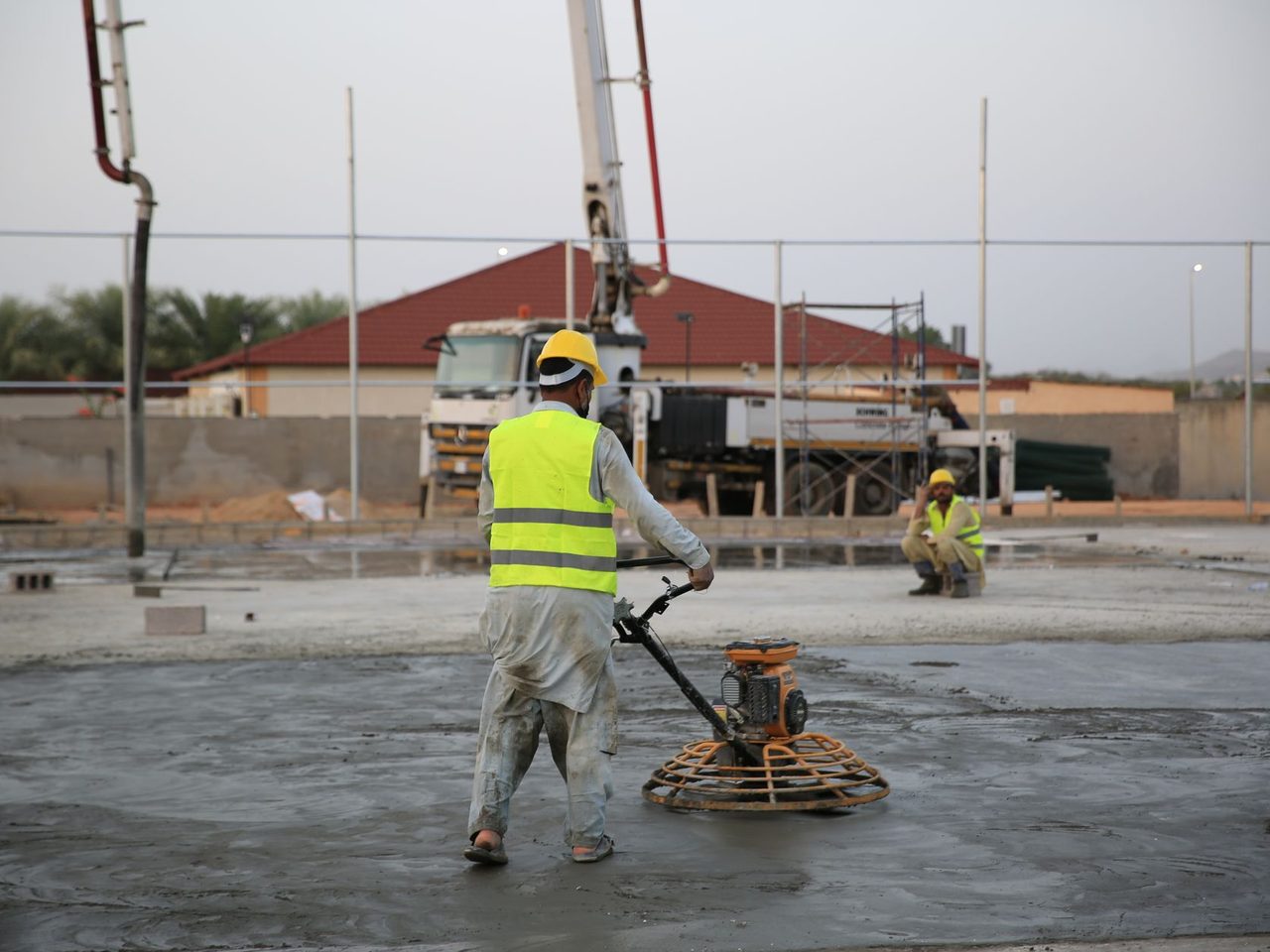
Walk into an apartment building under construction and the floors are usually poured, smooth and pale gray, even over wood framing. That is gypsum underlayment, pumped as a slurry and left to level itself. The flooring contractor rarely orders it and almost always has to work over it. It brings three things to the floor assembly: fire resistance, sound control and a flat surface. It also brings a drying schedule that collides with every tight construction program.
What it is and where it goes
Maxxon describes its multifamily gypsum underlayment as suited to multifamily and light commercial wood frame construction. Its subfloors are interior wood, concrete or steel.1 Installation depths run from 3/4 in. to 3 in. (19 – 76 mm), with deeper pours requiring the manufacturer's involvement.1 Its compressive strength is given as a typical range of 2,000 – 3,200 psi, with a dry density of 110-120 lbs/ft³.1 Its higher-strength product lists 3,000 – 4,000 psi, and allows shallower pours over concrete.3
Keene Building Products describes the same category from the acoustic side. It offers gypsum underlayments as part of a multifamily system with sound mats, intended to meet sound codes and UL fire ratings.2 It notes gypsum underlayment also works as a topping slab to flatten concrete slabs that have been damaged or left uneven.2
Fire and sound: why it is specified
Gypsum underlayment is usually in the drawings because the assembly needs a rating. Maxxon lists more than 140 UL and ULC fire-resistance rated designs using its multifamily underlayment. It reports flame spread, fuel contribution and smoke development all at 0 by ASTM E84.1 Keene notes simply that gypsum does not burn.2
For sound, the underlayment usually works with a mat. Maxxon describes superior sound attenuation when its underlayment is used with its sound mat product.1 That matters because the building code sets minimums between dwelling units: STC 50 and IIC 50 in the lab, or 45 in field tests.4 Commercial Acoustics notes that impact transmission is dominated by the floor finish and the underlayment beneath it.4 A hard floor over a rated assembly can still fail if the specified layers are changed. See IIC and STC in apartments.
Drying is the schedule risk
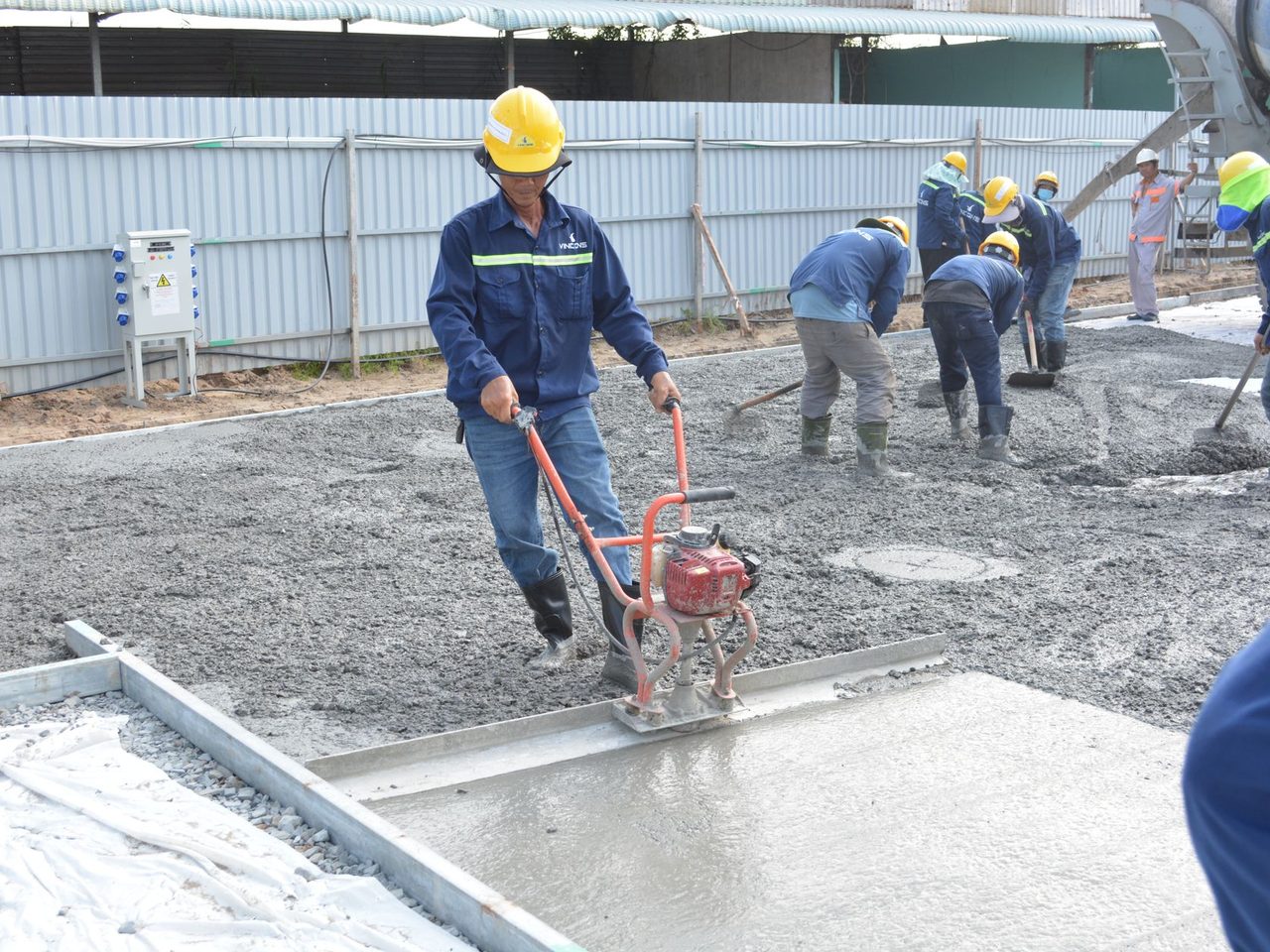
This is where flooring contractors meet gypsum underlayment at its worst. Maxxon gives trade traffic typically within 2-4 hours, which is often all a superintendent hears.1 Drying is a different matter: usually 5 to 7 days at 3/4 in. thickness, and 7-10 days at 1 in.1 It also asks for temperatures of at least 50 °F for 24 hours before installation and until the underlayment has set.1 Those drying figures assume adequate ventilation and heat. In a sealed building in winter, or a humid one in summer, they stretch.
Walking on it is not the same as covering it. A floor that is hard enough for trades can still be wet enough to destroy an adhesive bond or trap moisture under a vinyl plank.
Test before covering
Flooring guides treat gypsum as its own substrate. National Flooring Products lists gypcrete among the substrates it approves, subject to all moisture content, flatness and deflection requirements.5 Bona's wood flooring adhesives list dry, above-grade gypsum underlayment among suitable substrates, with that word "dry" doing the work.6 INSTALL notes that moisture and high alkalinity lead to adhesive breakdown and flooring failure, and that testing and mitigation come before installation.7
ASTM has a guide written for exactly this mixed situation. F2659 covers preliminary evaluation of the comparative moisture condition of concrete, gypsum cement and other floor slabs and screeds, using a non-destructive electronic moisture meter.8 Confirm which test method the flooring and adhesive makers accept over gypsum, because methods developed for concrete do not all transfer.
Primers and sealers
Gypsum underlayment is porous and dusty, and most flooring systems need it sealed or primed. Keene offers a primer designed to enhance the bond between its underlayment and various substrates. It also offers an all-purpose sealer, recommended on its installed systems to bond the underlayment to the finished floor covering.2 Use the sealer the underlayment maker names and confirm it is compatible with the flooring adhesive. A sealer that suits one adhesive can act as a bond breaker for another.

Surface condition and flatness
Poured floors self-level, but they do not arrive flat everywhere. Check the surface against the flooring maker's tolerance, not against appearance. Marquis, for example, asks for the subfloor within 3/16” in 10’ or 1/8” in 6’.9 Soft or chalky surface areas, pump lines, foot traffic marks and patched spots all need attention before flooring. See the flatness guide.
Who owns the problems
Gypsum underlayment is poured by a specialty applicator under the general contractor, often months before flooring starts. By the time the flooring crew arrives, the pour has been walked on by every trade, cut for plumbing, patched, and possibly wetted by work above. None of that is the flooring contractor's doing, and all of it affects the floor that goes on top.
Protect yourself with a written condition report before installation: moisture readings with dates and locations, flatness measurements, photographs of damaged or patched areas, and the questions you asked about pour date and product. Paul Pleshek, an inspector writing in Flooring Contractor magazine, recommends photographing subfloor conditions, preparation materials and test readings on every job.10 Where correction is needed, price it as a change rather than absorbing it; see flooring change orders.
A checklist before you cover it
- Confirm which underlayment product and depth were poured, and get its data sheet.
- Ask when it was poured, and whether heat and ventilation ran since.
- Test moisture by a method the flooring and adhesive makers accept for gypsum.
- Prime or seal with the products the underlayment maker names, checked against the adhesive.
- Check flatness and surface soundness, and price any correction as a change.
- Do not change the layers in a rated assembly without checking the rating.

Sources
- Maxxon, “Gyp-Crete® 2000 Multifamily - Gypsum Underlayment”. maxxon.com/products/gyp-crete-2000-multifamily/
- Floor Prep, “GSL® | Keene Building Products”. keenebuilding.com/products/gsl/
- Maxxon Corporation, “Gyp-Crete High Performance underlayment sell sheet”. public-assets.maxxon.com/Our+Products/Gyp-Crete/Gyp-Crete+High+Performan
- Commercial Acoustics, “IBC Section 1206 Sound Transmission Requirements Explained”. commercial-acoustics.com/sound-advice/ibc-1206-sound-transmission-requir
- NFP, “Architect’s Choice LVP Installation Guide”. my-nfp.com/resource/architects-choice-lvp-installation-guide
- Bona, “Bona Quantum R851 technical data sheet”. arcat.com/datasheets/bonaus/Bona_Quantum_R851.pdf
- INSTALL (International Standard & Training Alliance), “Avoiding Moisture Mistakes in Substrate Preparation - INSTALL Floorcovering Professionals”. installfloors.org/news-events/avoiding-moisture-mistakes-in-substrate-pr
- ASTM International, “Resilient Floor Covering Standards”. store.astm.org/products-services/standards-and-publications/standards/re
- Marquis Industries, “Rigid Vinyl Plank Installation Instructions (Angle)”. marquisind.com/static/resources/Angle_Angle%20Installation%20Instruction
- Flooring Contractor magazine, “Inspector Input (Winter 2019)”. digitaladmin.bnpmedia.com/publication/
General information for the flooring trade. This article was drafted with AI assistance and checked against the sources listed above; the manufacturer's current instructions and the project specification govern any real job. If something here is wrong or out of date, tell us.