 SW-01 · Materials & Supply
A plywood core is built from veneers with the grain of adjacent layers at right angles, in an odd number of layers for balanced construction.1 That cross-lamination is why engineered flooring moves less across its width than solid wood. Cores made of hardwood plywood, MDF or particleboard fall under EPA's TSCA Title VI formaldehyde rule and must be labeled compliant.2 The core also decides the fastener schedule.3
Engineered wood flooring is a real wood wear layer bonded to a manufactured core. Buyers often treat the wear layer as the product and the core as packaging. The core is what decides whether the floor can go over a slab, over radiant heat, or below grade. It also decides how the floor is fastened and how much it moves with the seasons.
How a plywood core is built
The USDA Forest Products Laboratory's Wood Handbook defines plywood as a flat panel. It is built up wholly or primarily of sheets of veneer called plies.1 It is constructed with an odd number of layers, with the grain direction of adjacent layers perpendicular to one another.1 A layer can be a single ply, or two or more plies laminated with their grain parallel. A panel may contain an odd or even number of plies, but always an odd number of layers.1 The outside plies are the faces; the rest are inner plies.1
The handbook's glossary explains why the count matters. The usual constructions have an odd number of layers for balanced construction.1 A balanced panel pulls equally from both faces as humidity changes, so it stays flat. An unbalanced one cups.
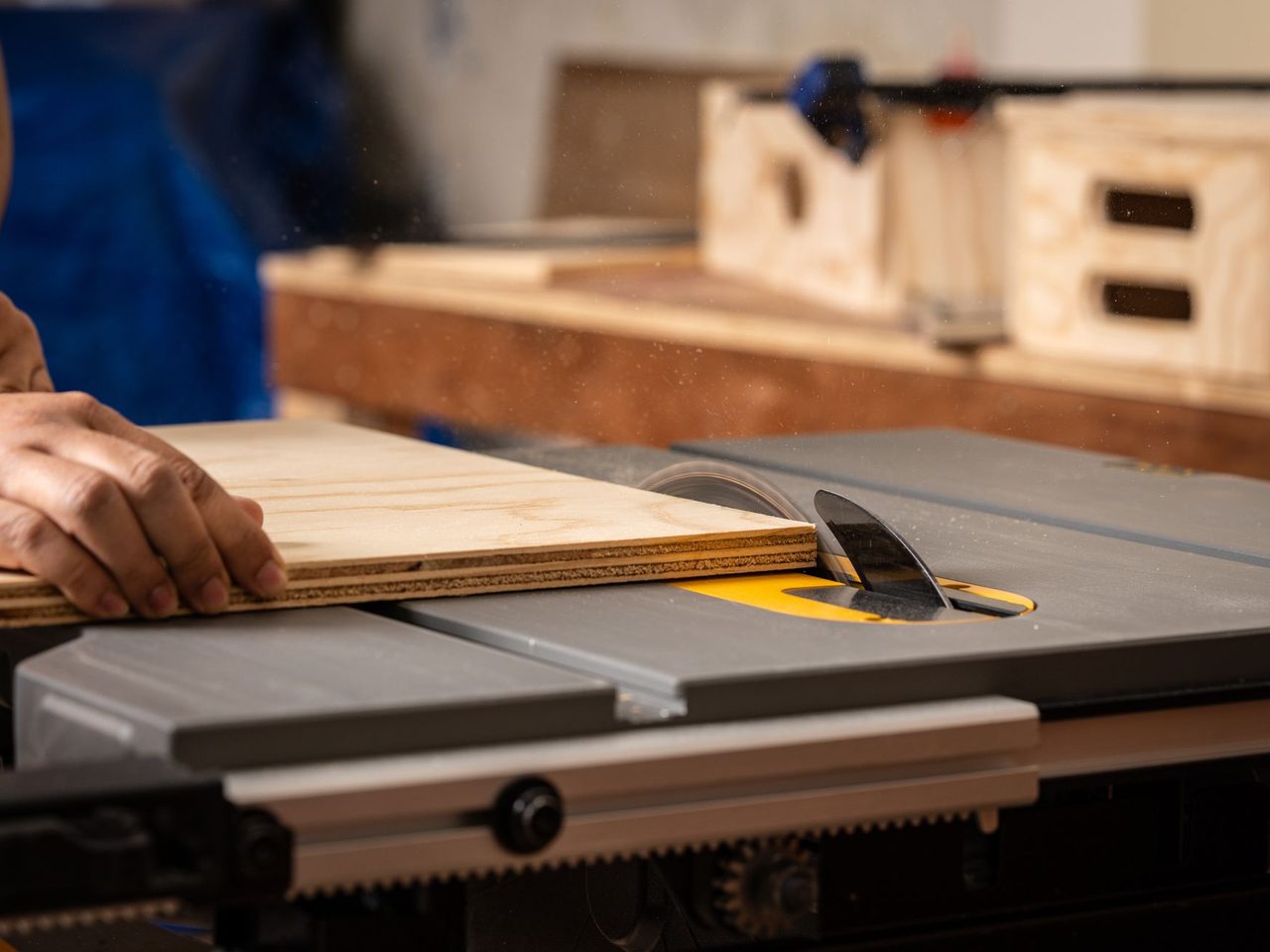
Why cross-lamination controls movement
Wood moves far more across the grain than along it. The Wood Handbook's shrinkage data shows the difference clearly: white oak shrinks 10.5 tangentially against 5.6 radially, as a share of the green dimension, from green to ovendry.1 Along the grain, movement is much smaller still. Gluing layers at right angles means each layer restrains its neighbor, so the panel as a whole moves less than a solid board of the same width.
That is the engineering case for engineered flooring. A wide solid plank in a building with seasonal humidity swings will gap in winter and tighten in summer. The same width in engineered form moves less, which is why wide planks are now mostly sold engineered.
Other core materials
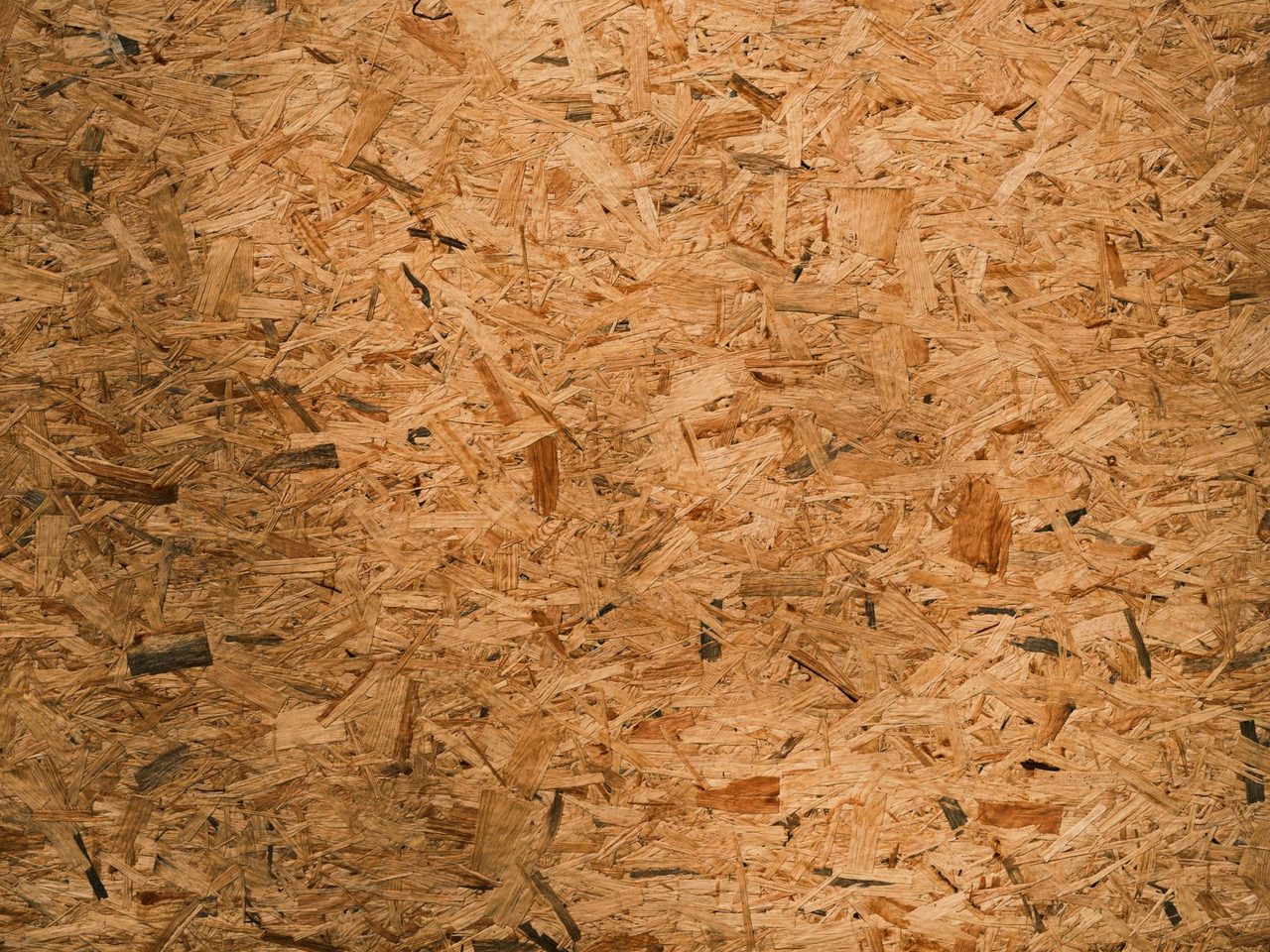
Not all cores are plywood. Some engineered flooring, and most laminate, uses a fiberboard core. EPA's rule explains that products marketed as high-density fiberboard are regulated as medium-density fiberboard if they meet that definition.4 Fiberboard cores are dense and uniform, which suits precise milling of locking profiles. They are also more vulnerable to water than a plywood core, which is one reason wet-area suitability varies so much between engineered products.
Formaldehyde: a core question
Because the core is a composite wood panel, it falls under federal emission rules. EPA's TSCA Title VI rule covers hardwood plywood, medium-density fiberboard and particleboard, and finished goods containing them.2 It says that after March 22, 2019, composite wood products must be labeled as TSCA Title VI compliant.2 The rule includes provisions for laminated products, product testing, labeling, recordkeeping and import certification.2 It also established a third-party certification program for testing and oversight.2 EPA worked with the California Air Resources Board so the national rule was consistent with California's requirements.2
For a dealer or contractor, the practical step is simple: check that the carton or the documentation carries the compliance label, and keep that record with the job file.
The core sets the fastening
Fastener schedules change with core thickness. Mercier's fastener table gives engineered flooring at 1/2” (13 mm) a different schedule from engineered flooring at 3/4” (19 mm). The thinner product takes lighter gauge fasteners and a shorter length.3 Both engineered constructions are spaced 4 to 6 inches, closer than the 6 to 8 inches it allows for 3/4” solid.3 It still asks for at least 2 fasteners per board and no nailing within 2 inches of the ends.3 See cleats and staples.

Acclimation still applies
A stable core is not an exemption from site conditions. The Wood Handbook's principle holds for any wood product: match the moisture content as closely as practical to the equilibrium moisture content it will reach in service.1 Engineered flooring moves less, but it still moves, and it still needs the building conditioned before it arrives. Aacer's requirements for solid flooring give the shape of it. The building must be closed in with wet work dry, and permanent heating and cooling running. A stable range of temperature and humidity is held before, during and after installation.5 Check each engineered product's own acclimation instructions, because they vary by core and by maker. Some rigid cores need less time than solid wood; none need none.
Where engineered flooring can go
The core is also what lets engineered flooring go where solid cannot. Aacer's solid strip instructions say solid flooring must be installed on or above grade and not in full bathrooms, and not over radiant heated subfloors.5 Many engineered products are approved below grade and over radiant heat, within their makers' limits. Those limits are product-specific, so read the guide rather than assuming the category. Where glue-down is used, the adhesive maker sets its own moisture limits; see silane adhesives.
What to ask about a core
- What is the core material, and how many layers?
- Is it approved below grade, over radiant heat, or for glue-down?
- What fastener schedule applies to this thickness?
- Is the product labeled TSCA Title VI compliant?
- How thick is the wear layer, and can it be sanded?
That last question decides the floor's long-term value. A thicker wear layer can be refinished; a thin one cannot. Ask for the wear layer thickness in millimeters, not as a marketing grade. For finishes, see waterborne wood floor finishes.
Sources
- USDA Forest Products Laboratory, “Wood Handbook: Wood as an Engineering Material (FPL-GTR-282)”. research.fs.usda.gov/download/treesearch/62200.pdf
- U.S. Environmental Protection Agency, “Formaldehyde Emission Standards for Composite Wood Products”. 19january2025snapshot.epa.gov:443/formaldehyde/formaldehyde-emission-sta
- Mercier Wood Flooring, “Technical Bulletin #9: Fastener selection table”. icms.mercier-wood-flooring.com/icms/webfolder_download/f5da71d27054c1efe
- Federal Register (EPA), “Formaldehyde Emission Standards for Composite Wood Products (final rule)”. federalregister.gov/documents/2016/12/12/2016-27987/formaldehyde-emissio
- Aacer Flooring, “3/4" Solid Strip and Plank Installation Instructions (nail-down)”. aacerflooring.com/downloads/residential/Installation-Instructions-Solid-
General information for the flooring trade. This article was drafted with AI assistance and checked against the sources listed above; the manufacturer's current instructions and the project specification govern any real job. If something here is wrong or out of date, tell us.