 SW-01 · Materials & Supply
White oak heartwood pores are usually plugged with tyloses, which the USDA Wood Handbook says make it nearly impenetrable to liquids; red oak lacks them.1 It is slightly harder than red oak, 1,360 lbf against 1,290 in one supplier's comparison, and shrinks more: in the handbook's table, tangential shrinkage is 10.5 for white oak and 8.6 for northern red oak, as a share of the green dimension.2 1 Acclimation and stable humidity matter more than species.3
White oak has become the default request for wood floors in homes, offices, retail and hospitality. Its color takes modern finishes well, and it is available in solid strip and plank and as the face layer of engineered flooring. For dealers and contractors, the species question is usually settled before the job. What still matters is understanding how the wood behaves, so the floor is installed and finished to suit it.
The white oaks and the red oaks
Oak sold as white oak is a group of species, not one tree. The USDA Forest Products Laboratory's Wood Handbook lists white (Quercus alba), chestnut, post, overcup, swamp chestnut, bur, chinkapin and swamp white oak among the principal species.1 McIlvain, a hardwood lumber supplier, makes the same point for both groups. White oak is primarily Quercus alba, red oak primarily Quercus rubra, and each name covers several species.2
The handbook describes how to tell them apart. Red oak lumber can be separated from white oak by the size and arrangement of pores in the latewood, and because red oak generally lacks tyloses in its pores.1
Tyloses and moisture
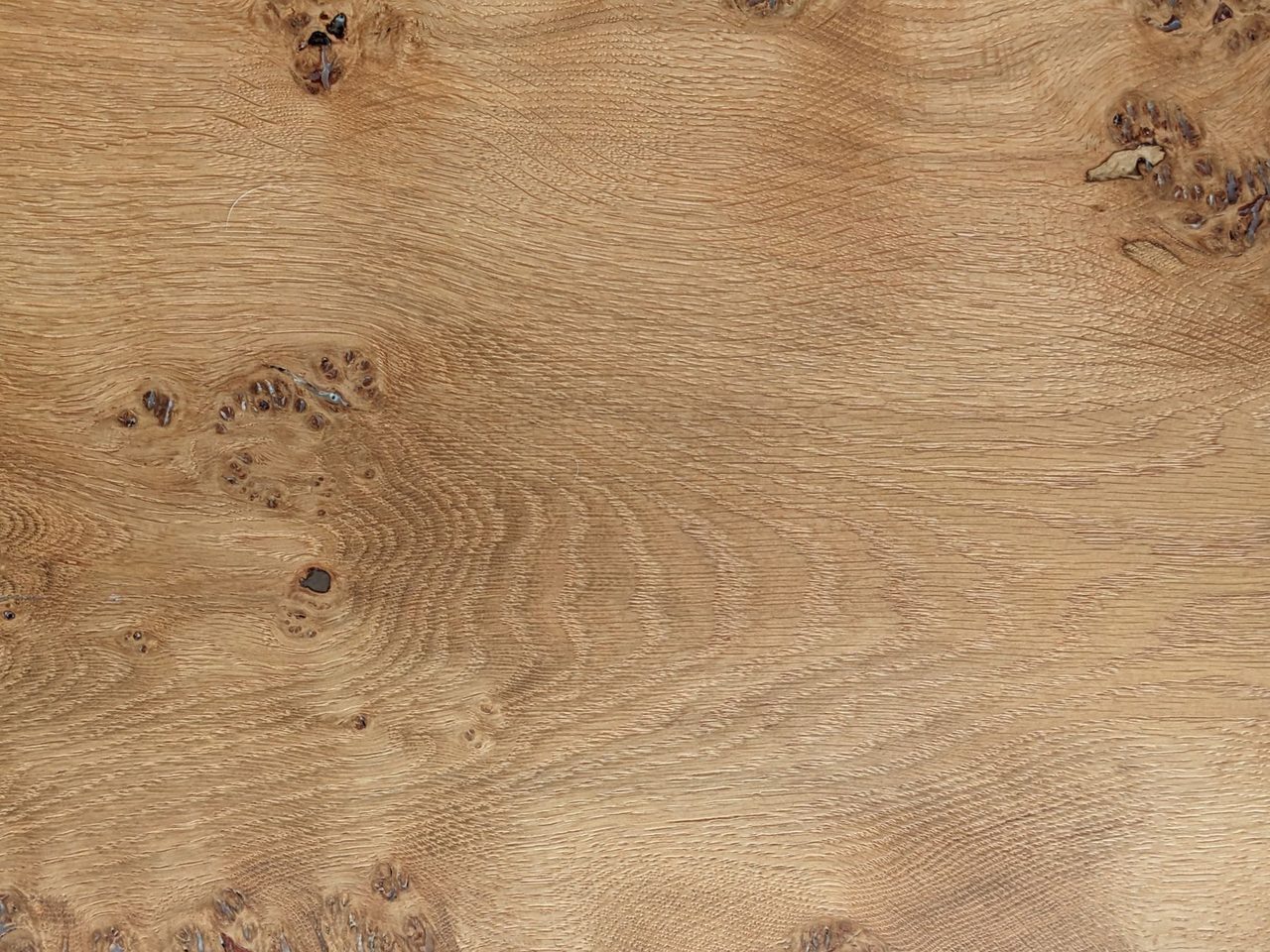
Tyloses are the key difference. The Wood Handbook says white oak heartwood pores are usually plugged with tyloses, which tend to make the wood impenetrable to liquids. That is why most white oaks are suitable for tight cooperage.1 It says white oak heartwood has good decay resistance.1 Red oak's open pores make it unsuitable for tight cooperage unless barrels are lined.1 McIlvain describes a simple demonstration: air blown through the end of a short piece passes through red oak but not through white oak.2
For floors, this matters in two ways. White oak is the better choice where spills and wet mopping are likely, such as kitchens, entries and commercial areas. And it takes some finishes and stains differently. McIlvain notes that red oak's open pores accept stain evenly, while white oak can be blotchy and responds to fuming and reactive stains.2
Hardness and density
The two oaks are close in hardness. McIlvain's comparison gives white oak a Janka hardness of 1,360 lbf and red oak 1,290 lbf.2 It lists air-dried densities of 47 and 44 lbs per cubic foot.2 The Wood Handbook notes that white oak is somewhat heavier than red oak.1 In practice, both dent under concentrated loads such as heels and furniture legs. Species choice changes dent resistance only a little. Finish and protection change it more.
Shrinkage and movement
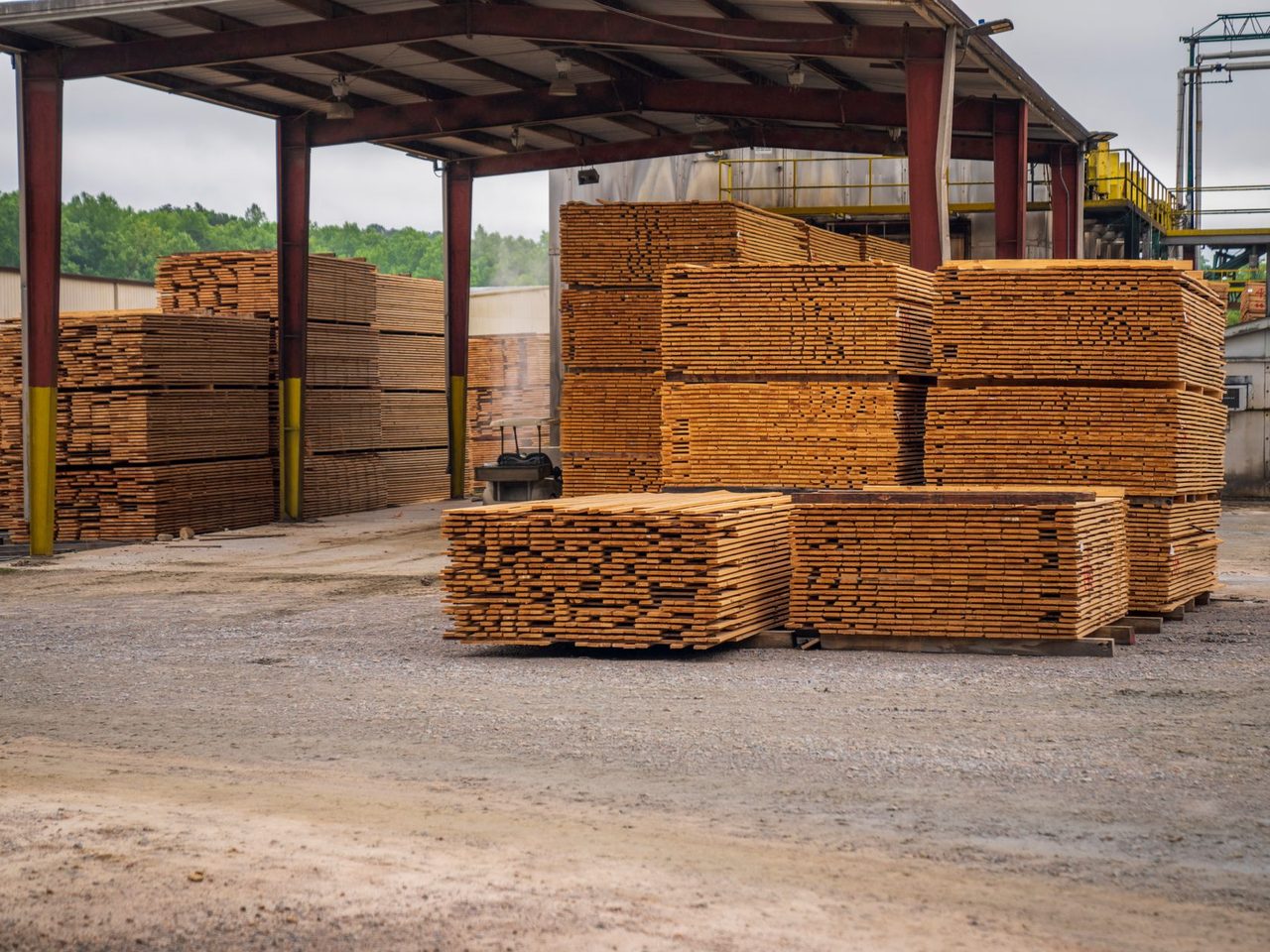
Wood moves with moisture, and white oak moves a lot. The Wood Handbook's shrinkage table, expressed as a percentage of the green dimension, gives white oak (Quercus alba) shrinkage from green to ovendry of 5.6 radially, 10.5 tangentially and 16.3 by volume.1 Northern red oak shrinks 4.0 radially, 8.6 tangentially and 13.7 by volume.1 Those are full green-to-dry figures; an installed floor moves only a fraction of them as humidity changes. The ratio between species still holds. Tangential shrinkage, across the growth rings, is the largest, which is why plainsawn boards cup and gap more than quartersawn ones.
The handbook explains the sawing terms. Lumber with growth rings at angles of 0° to 45° to the wide face is called plainsawn; quartersawn boards are cut closer to radial.1 Quartersawn oak is distinguished by its broad, conspicuous rays.1 McIlvain calls quartersawn white oak's ray fleck highly prized.2 For wide plank floors in buildings with seasonal humidity swings, quartersawn or rift material moves less across its width.
Site conditions decide performance
Most white oak floor problems are moisture problems. Aacer's installation instructions for solid strip and plank ask for a building closed in, with all wet work dry and permanent heating and cooling running.3 They call for a consistent 60-75 degrees F and 35-55% humidity for 14 days before installation, during it and until occupancy.3 The flooring is to acclimate for 72 hours or as long as needed to reach its required moisture content.3 Aacer says the wood subfloor must not exceed 13% moisture content. The difference between subfloor and flooring must not exceed 4%.3
The Wood Handbook gives the principle behind those rules: match the moisture content of wood as closely as practical to the equilibrium moisture content it will reach in service.1 A white oak floor laid at the right moisture content in a conditioned building stays flat. The same floor laid in a damp new building cups when it dries.
Solid or engineered
White oak comes as solid flooring and as the wear layer of engineered flooring. Aacer says its solid flooring must be installed on or above grade, and not in full bathrooms.3 It also says not to install its solid plank or strip over radiant heated subfloors.3 Where the slab, the grade or the heating rules out solid, engineered white oak keeps the look on a more stable core. See engineered flooring cores.
Finishing white oak
The tyloses that keep water out also change how finish and stain behave. Test any stain on offcuts of the actual flooring, under the room's lighting, before committing the whole floor. White oak's natural tones are much of its appeal, which is why many floors get a clear finish. For finish types and their rules, see water-based floor finishes.
A white oak checklist
- Confirm the species group; red oak and white oak are not interchangeable where moisture is present.
- Choose sawing to suit the width and the building's humidity swings.
- Test the flooring and subfloor moisture content and compare them.
- Run the HVAC at service conditions before delivery and through installation.
- Test stains on the actual boards; white oak can take color unevenly.
Sources
- USDA Forest Products Laboratory, “Wood Handbook: Wood as an Engineering Material (FPL-GTR-282)”. research.fs.usda.gov/download/treesearch/62200.pdf
- McIlvain (hardwood lumber), “White Oak vs. Red Oak: Choosing the Right Species”. blog.mcilvain.com/white-oak-vs-red-oak.html
- Aacer Flooring, “3/4" Solid Strip and Plank Installation Instructions (nail-down)”. aacerflooring.com/downloads/residential/Installation-Instructions-Solid-
General information for the flooring trade. This article was drafted with AI assistance and checked against the sources listed above; the manufacturer's current instructions and the project specification govern any real job. If something here is wrong or out of date, tell us.