 SW-03 · Tile & Hard Surfaces
For pressed floor and porcelain tile with grout joints from 1/16 to under 1/4 inch, the TCNA Handbook allows 1/32 inch of lippage, plus the tile's actual warpage.1 2 For tiles over 15 inches on the offset side, ANSI A108.02 allows only offsets of 33% or less unless the specifier and owner approve a mockup.3 Large format tile needs a substrate flat to 1/8 inch in 10 feet.2 Leveling clips help, on a flat substrate.4
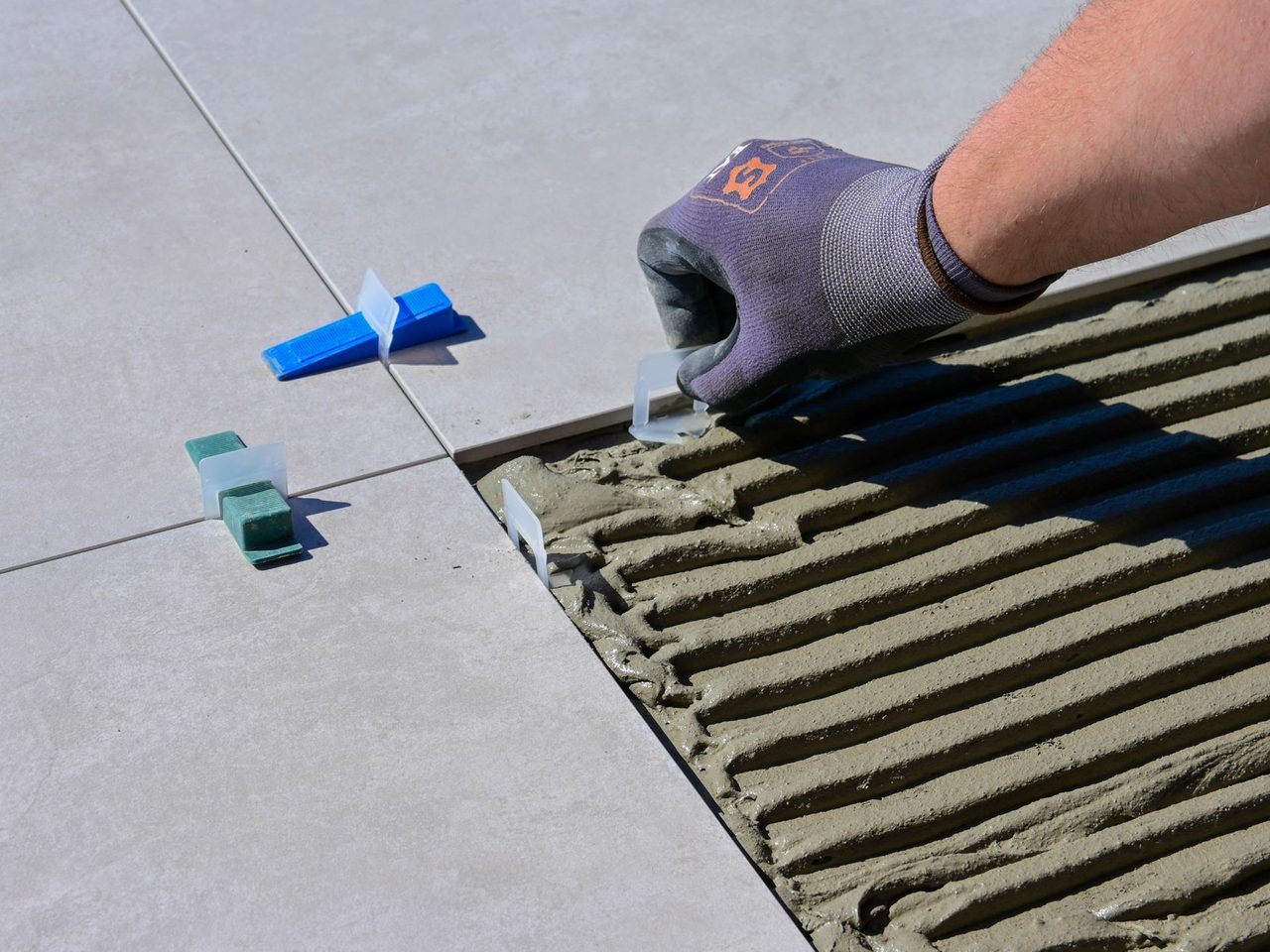
Lippage is a height difference between the edges of neighboring tiles. It has always existed. What changed is the tile. Floors now use porcelain panels several feet long, many of them thin and slightly bowed, set with very narrow grout joints. A tile setter writing in Fine Homebuilding notes joints have slimmed to 1⁄16 in. or less.4 Every one of those trends makes a small height difference more visible and more likely. Lippage is now one of the most common tile complaints, and the standards say a lot about it.
What the standards allow
Lippage is defined in the installation standard. LATICRETE's technical sheet quotes ANSI A108.02: lippage refers to differences in elevation between edges of adjacent tile modules.2 The TCNA Handbook adds that it is inherent in all installation methods and may be unavoidable because of tile tolerances under ANSI A137.1.2
It is also measurable. Scott Carothers of the Ceramic Tile Education Foundation explains that the TCNA Handbook's flatness and lippage chart sets the limit. For pressed floor and porcelain tiles of all sizes, with a grout joint of 1/16" to less than ¼", the allowable lippage is 1/32".1 The total allowable lippage is that figure plus the actual warpage of the tile supplied, so warpage counts on top.2 A floor can have visible lippage and still be within the standard. A floor with lippage beyond it can be rejected.
Why large tile is harder
Large tile does not follow small undulations in the substrate. A tile setter writing in Fine Homebuilding notes that large-format tile needs a thicker layer of thinset to bring edges flush. Most large porcelain is bowed at least slightly, especially long plank tiles that imitate wood.4 Warpage is controlled by the tile standard. NTCA's TileLetter notes that ANSI A137.1 lists allowable warpage for pressed floor tile and for porcelain tile.3 Tiles that meet that standard can still produce lippage when their bows line up badly.
The offset rule
That alignment is the problem with running bond. In a 50% offset, the high middle of one bowed tile sits beside the low ends of two others. TileLetter quotes the current rule in ANSI A108.02 section 4.3.8.2. It covers running bond and any other offset pattern. Where the side being offset is greater than 15 in., only patterns with an offset of 33% or less shall be specified.3 If a greater offset is wanted, the specifier and owner must approve a mockup and the resulting lippage.3
The International Masonry Institute notes the rule's earlier wording applied to sides greater than 18 in., and that a subcommittee was reviewing broader language.5 It points out that herringbone and basketweave also put a tile's corner beside its neighbor's midpoint, with similar effects.5 Specify the offset in the drawings. If the design calls for a half offset with long tile, plan the mockup and the approval before ordering.
Grout joint width
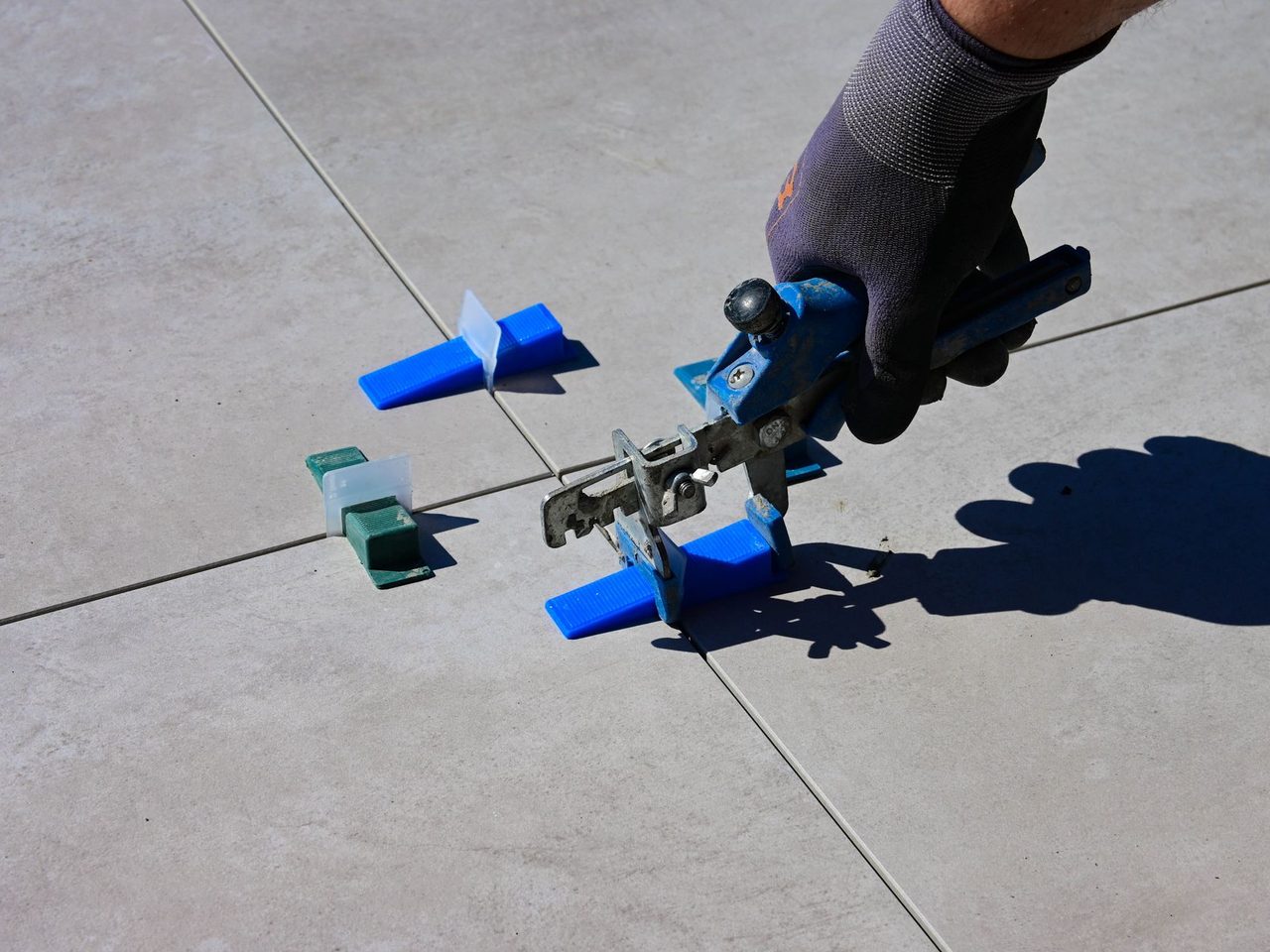
Narrow joints make lippage look worse, and the standard sets minimums for large tile. IMI quotes ANSI A108.02 4.3.8.1, as it stood then. For running bond with tiles over 18 in. on any side, joints were to average at least 1/8 in. for rectified tile and 3/16 in. for calibrated tile.5 The width was to be increased by the edge warpage of the actual tiles.5 Carothers describes a commercial floor of 6"x 36" calibrated plank set with joints of about 1/16". That was less than the 3/16" required, and the lippage measured just over 1/16".1
The substrate comes first
No leveling system fixes a floor that is not flat. LATICRETE quotes the TCNA tolerance for thin-bed tile. Tiles with all edges shorter than 15” allow a substrate variation of ¼” in 10’, with no more than 1/16” in 12”.2 Tiles with at least one edge 15” long need 1/8” in 10’, with no more than 1/16” in 24”.2 Carothers notes that a substrate not flat to 1/8" in ten feet is one of the conditions behind lippage with tiles 15" or longer.1
LATICRETE adds that if the architect wants a flatter finish, the specification must say so. It must include a separate requirement to bring the substrate into compliance.2 It calls substrate tolerance probably the tile contractor's biggest lippage concern. Unless leveling is in the contract, an out-of-tolerance substrate is not the contractor's fault.2 See the flatness guide.
Leveling systems
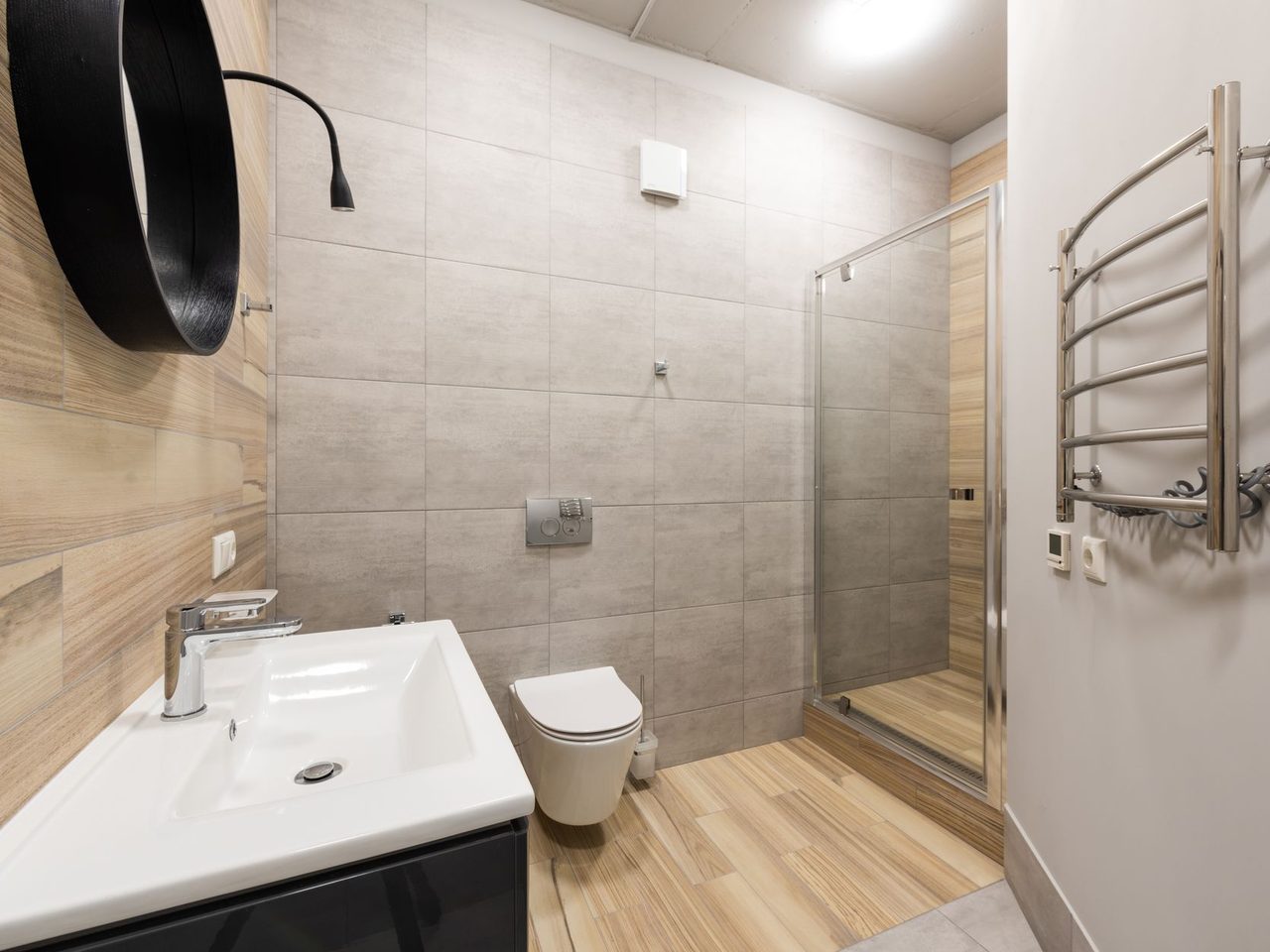
Clip, wedge and spin-cap leveling systems pull adjacent tiles flush while the mortar cures. The Fine Homebuilding author says he relies on them for long floor planks and large-format tile. He describes the method: a base sits under the tile edges, a cap or wedge presses the tops flush, and after cure the cap is knocked off.4 He adds the condition: if the substrate is flat and the thinset is applied uniformly, the systems do the alignment.4 The consultant Donato Pompo writes that a leveling system can help minimize lippage.6 Neither treats it as a substitute for a flat floor and the right offset.
Perceived lippage
Some complaints are about light. Pompo writes that perceived excessive lippage is typically due to improper lighting design, too narrow grout joints and not following industry recommendations.6 LATICRETE lists the angle of natural or artificial light, and highly reflective tile surfaces, among the factors that accentuate otherwise acceptable variation.2 A corridor washed with low-angle light will show lippage that a measurement says is within tolerance. Settle that in a mockup under the real lighting; see the mockup checklist.
A lippage control checklist
- Specify substrate flatness for the tile size, and who achieves it.
- Specify offsets within the ANSI limit for long tile, or require a mockup.
- Size grout joints for the tile type and its actual warpage.
- Use a leveling system on a flat substrate, with full mortar coverage.
- Judge the result by measurement and in the room's real light.
Sources
- Ceramic Tile Education Foundation (via Stone World), “CTEF Tile Tip: The Hazards of Lippage”. stoneworld.com/articles/95283-ctef-tile-tip-the-hazards-of-lippage
- LATICRETE, “Lippage: Causes and Prevention (TDS 164)”. cdn-global.laticrete.com/-/media/project/laticrete-international/shared/
- TileLetter (NTCA), “Tile offsets to avoid lippage”. tileletter.com/tile-offsets-to-avoid-lippage/
- Fine Homebuilding, “Choosing a Tile-Leveling System - Fine Homebuilding”. finehomebuilding.com/project-guides/tiling/choosing-a-tile-leveling-syst
- International Masonry Institute, “Large Format Tile: Dealing with Lippage”. info.imiweb.org/blog/large-format-tile-dealing-with-lippage
- The Construction Specifier, “Tile and stone lippage: What is acceptable (and how do you specify it?) - Page 2 of 2 - Construction Specifier”. constructionspecifier.com/tile-and-stone-lippage-what-is-acceptable-and-
General information for the flooring trade. This article was drafted with AI assistance and checked against the sources listed above; the manufacturer's current instructions and the project specification govern any real job. If something here is wrong or out of date, tell us.