 SW-04 · LVP & Vinyl Installation
SPC and WPC are both rigid-core vinyl, and the difference is the core. SPC cores are mostly ground limestone bound with PVC and have no foaming agent, so they are thinner, denser and heavier.1 WPC cores are foamed, which makes them softer and quieter underfoot but less dent resistant and thicker for the same rigidity.2 Choose by the space, then check the data sheet, not the acronym.
From the top, an SPC plank and a WPC plank can be identical: the same print, the same wear layer, the same click profile. The difference sits in the core, the thick middle layer that gives a rigid plank its stiffness. That core decides how the floor handles dents, how it sounds and feels, how much it hides the substrate, and how it responds to temperature. For a contractor or a specifier, it is the part of the product that matters most and shows least.
Where rigid core came from
A Floor Focus history of the category, published on Floor Daily, describes how WPC arrived in 2012 and disrupted the LVT market. Its rigid core meant the floor could go over subfloors with minor imperfections with little or no preparation, and even over ceramic tile without skim coating the grout lines.1 SPC followed as an offshoot of the same composite-core idea. The same article notes that the Multilayer Flooring Association named it SPC, for solid polymer core.1 Retailers and manufacturers also expand the letters as stone plastic or stone polymer composite.3
What is in each core
The Floor Daily article sets out the distinction. SPC cores have a much higher concentration of limestone, a lower concentration of PVC and no foaming agents, which makes them thinner, denser and heavier than WPC cores.1 Flooret, which sells SPC flooring, describes SPC as finely ground limestone bound with PVC, and gives its own core as 60 to 70 percent limestone.2 It describes WPC as PVC, plasticizers and a foaming agent that creates air pockets through the plank.2
Despite the name, wood is not what matters in most WPC. The foaming is. Air pockets make the core lighter and softer, and they are why WPC usually needs more thickness to reach the same stiffness.
What the difference does on the job
- Dents. Flooret ties SPC's density directly to its dent resistance and dimensional stability.2 A foamed core gives more under concentrated loads, such as furniture legs, rolling carts and dropped objects.
- Feel and sound. The flip side of a foamed core is comfort. WPC is generally softer and quieter underfoot, which matters in apartments and offices where impact noise travels.
- Hiding the substrate. Any rigid core bridges small imperfections better than flexible LVT, which is how rigid core earned its place.1 That is not a license to skip preparation. The flatness tolerances in the installation guides still apply; see the flatness guide.
- Temperature. Both are vinyl, and both grow and shrink with heat. Shaw's measurements of a vinyl plank changing length with temperature apply to any PVC-based plank.4 Core type does not remove the need for expansion space.
Field checks before committing
Marketing names are inconsistent, so check the product rather than the label. A few simple comparisons, done with samples, tell you a lot.
- Weight and thickness. Two planks of the same size: the denser, thinner one is usually the high-limestone core.
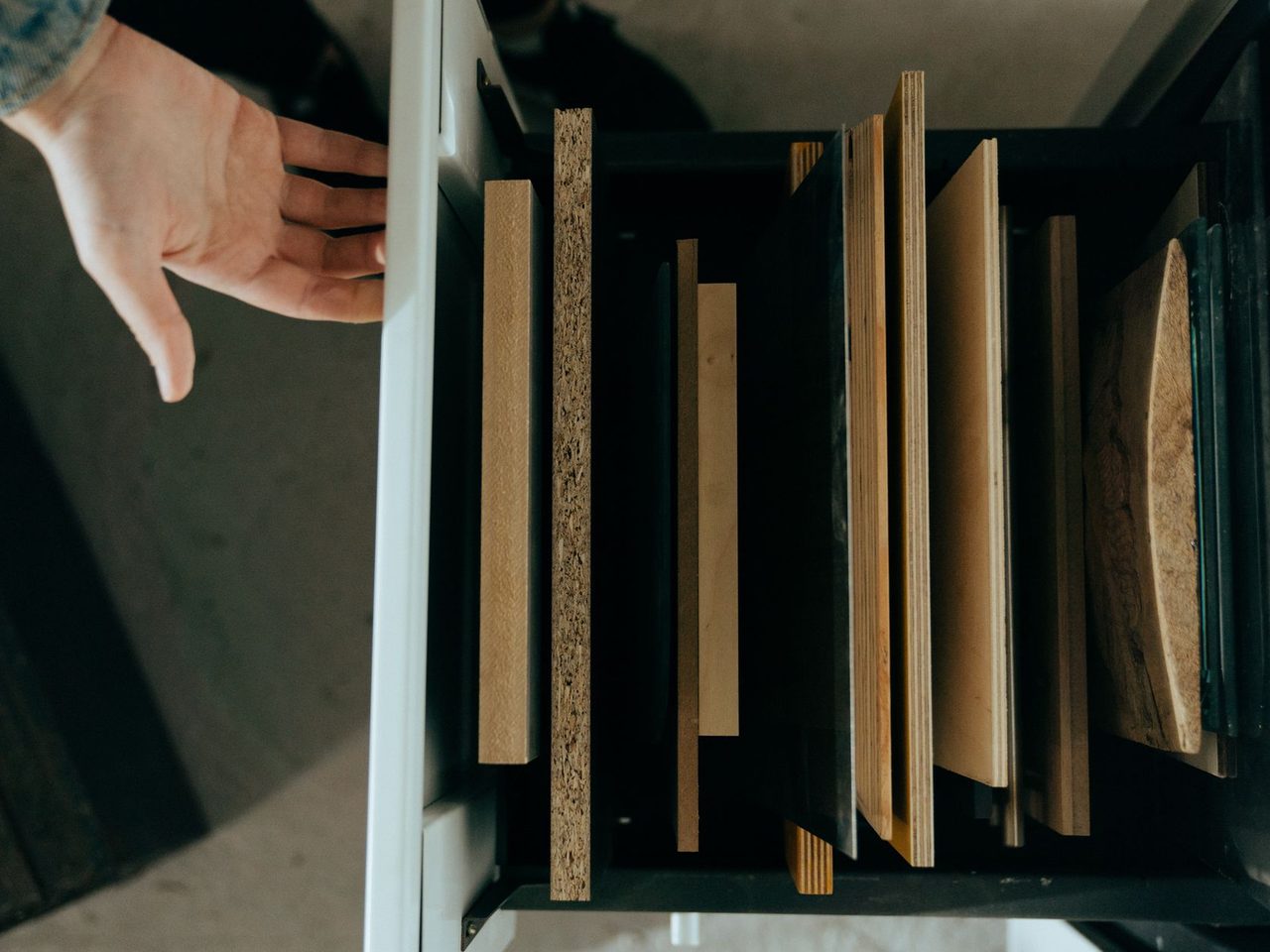
- The cut edge. A foamed core shows small voids at the cut. A mineral-filled core looks solid.
- Flex. A short offcut bent by hand shows how stiff the core is, and how much it will bridge.
- The data sheet. Look for tested properties such as static load and dimensional stability, and the standard each was tested to. The data sheet guide covers how to read them.
Choosing for commercial spaces
Commercial floors usually weigh durability above comfort, which tends to favor dense cores in corridors, retail and areas with rolling loads. Comfort and sound can tip the choice the other way in multifamily corridors and residential units, though an acoustic underlayment may matter more than the core; see the underlayment guide. In every case, the warranty and the installation guide are written for the specific product. The core type is a starting point for the comparison, not the conclusion.
Many commercial specifications also call for glue-down installation, where a fully adhered floor is preferred for rolling loads and heavy traffic. Check that the product is approved for the method the specification requires; not every rigid-core product can be glued.
Acclimation and the core
Some manufacturers say their rigid cores need less conditioning than older floating vinyl. Timeless Designs states that its rigid core products are designed to require less acclimation than traditional PVC floating floors, while still asking for 48 hours at normal conditions.5 Elite treats acclimation as unnecessary for its SPC unless the product was stored hot.6 Read those statements as product-specific. They describe how one core responds, not a property of every plank sold under the same label.
What the core does not change
The wear layer, not the core, decides how a floor resists scratches and scuffs; see wear-layer scratches. Moisture limits, acclimation and expansion rules come from the installation guide whatever the core. And a rigid core does not make an unprepared substrate acceptable. It makes small imperfections less visible, which is not the same thing.
Sources
- Floor Daily, “LVT Evolution: What are the key differences between WPC and SPC? - Dec 2017”. floordaily.net/floorfocus/lvt-evolution-what-are-the-key-differences-bet
- Flooret, “SPC vs WPC Flooring: What's the Difference?”. support.flooret.com/spc-vs-wpc
- LX Hausys, “What is SPC flooring? Comparing SPC and WPC”. lxhausys.com/us/blog/wp-json/wp/v2/posts/3110
- Shaw Floors, “LVP Case Study: How Temperature Affects Dimension”. shawfloors-sherwinwilliams.com/SiteFiles/sherwinwilliamsdigital/Images/L
- Timeless Designs, “Click Floating Luxury Vinyl Installation Instructions”. timelessdesignsflooring.com/wp-content/uploads/2023/05/TD-Rigid-Core-Ins
- Elite Flooring, “Välinge Installation Guide (Woodlands)”. eliteflooringusa.com/links/install-instructions/Elite-Installation-Guide
General information for the flooring trade. This article was drafted with AI assistance and checked against the sources listed above; the manufacturer's current instructions and the project specification govern any real job. If something here is wrong or out of date, tell us.