 SW-01 · Materials & Supply
SPC cores are mostly limestone: Floor Daily describes SPC as up to 75% limestone with no foaming agents, and one maker states its core is 60–70%.1 2 WPC uses less filler and a foaming agent, so it is lighter and softer.1 VCT is also limestone-based with a PVC binder.3 ASTM F3261 sets rules for the binder in rigid-core flooring, not for the filler share.4
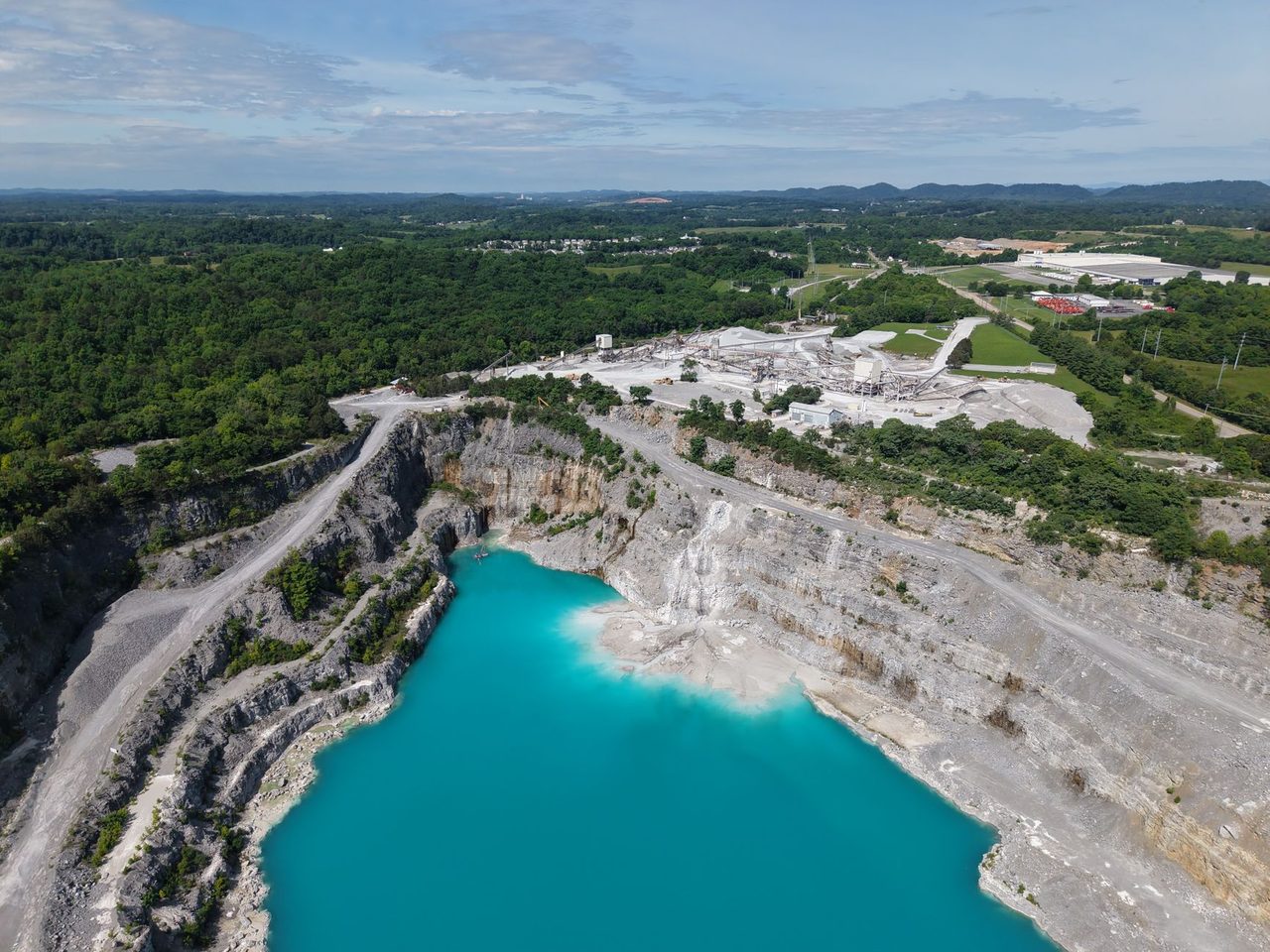
Pick up a rigid-core vinyl plank and its weight surprises people who expect plastic. Most of what is in the core is not plastic. It is calcium carbonate, ground limestone, bound together by PVC. The same is true of the vinyl composition tile in school corridors. How much limestone a product contains, and what else is in the core, explains much of how it behaves on the floor and on the job.
How much limestone
A Floor Focus history of rigid core, published on Floor Daily, compares the two cores. SPC has a much higher concentration of limestone than WPC, a lower concentration of PVC, and no foaming agents.1 It says SPC is up to 75% limestone.1 Flooret, an SPC flooring seller, describes SPC as finely ground limestone bound with PVC, and gives its own core as 60–70% limestone.2 LX Hausys, another maker, describes an SPC core of 60% calcium carbonate, PVC and plasticizers.5 The share varies by product. Limestone is the majority in all three descriptions; ask whether the data sheet gives a figure for the product in question.
WPC uses less. LX Hausys describes WPC as PVC with a smaller amount of calcium carbonate, plasticizers, a foaming agent and wood-like materials.5 Floor Daily notes that early WPC cores contained wood dust, PVC, calcium carbonate and foaming agents. The wood dust was later removed because it hurt dimensional stability.1
What the filler changes
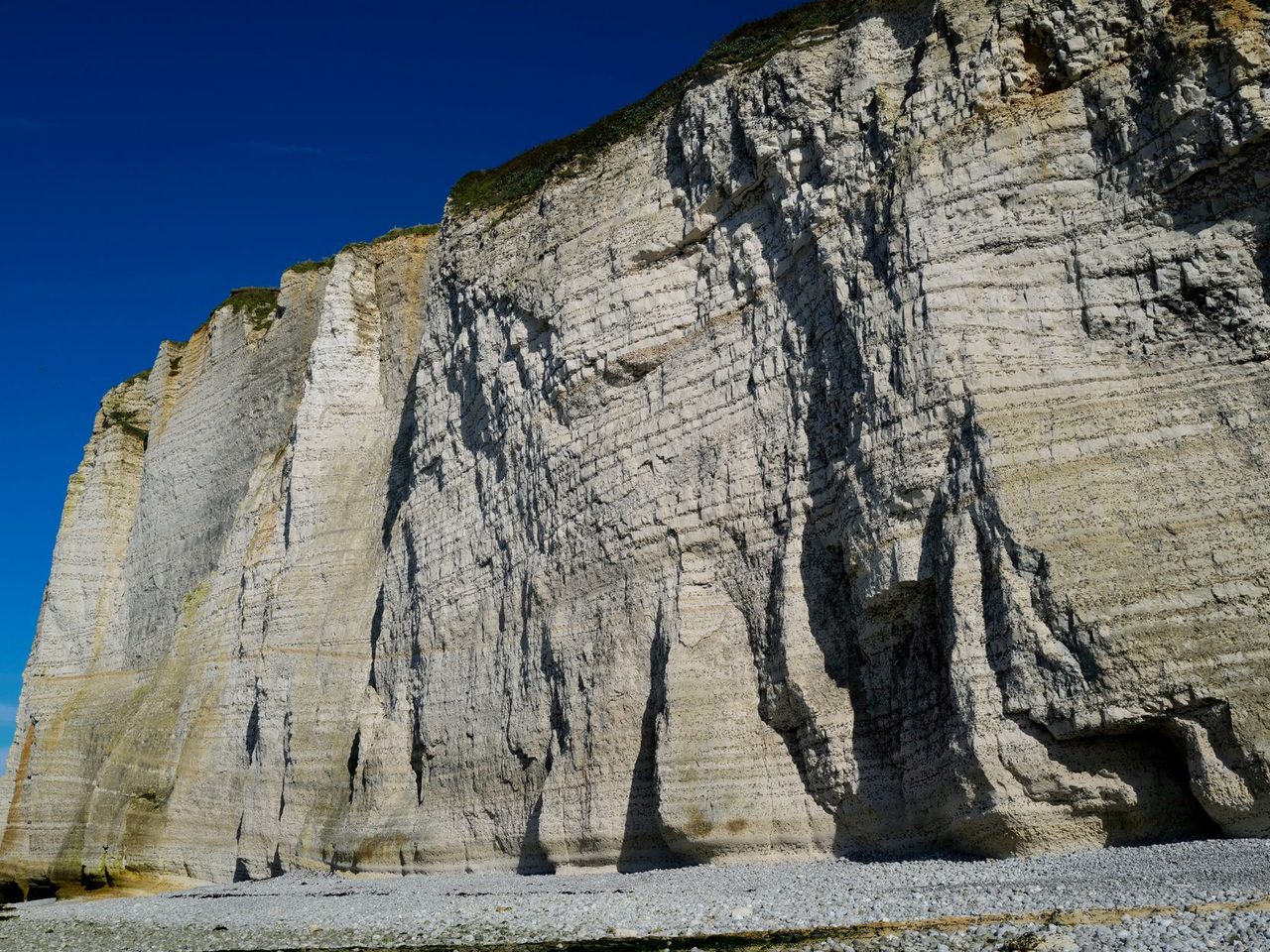
Limestone makes a core dense. Floor Daily says the result is a thinner, denser and heavier core than WPC.1 It says the density of high-limestone cores gives higher impact and dent resistance, while foamed cores are softer, warmer and quieter underfoot.1 Flooret calls limestone the source of its core's dent resistance and dimensional stability.2 It says SPC is roughly twice as dense as foamed WPC, so a thinner plank holds more solid material.2
Density has practical costs. Floor Daily notes high-limestone SPC is more difficult to cut.1 Heavy cartons change how material is stacked, carried and stored. See storage rules.
Limestone does not stop thermal movement
A mineral-filled core is still bound by PVC, and PVC moves with heat. Shaw's builder division measured a vinyl plank growing by 1/16 of an inch when heated to 135 degrees.6 Guides for high-limestone SPC still require expansion space at the walls. Elite, for example, recommends at least 3/8” at perimeter walls.7 A dense core reduces some movement and bridging problems. It does not make a floating floor immune to temperature. See expansion gaps.
Cutting a mineral-filled core
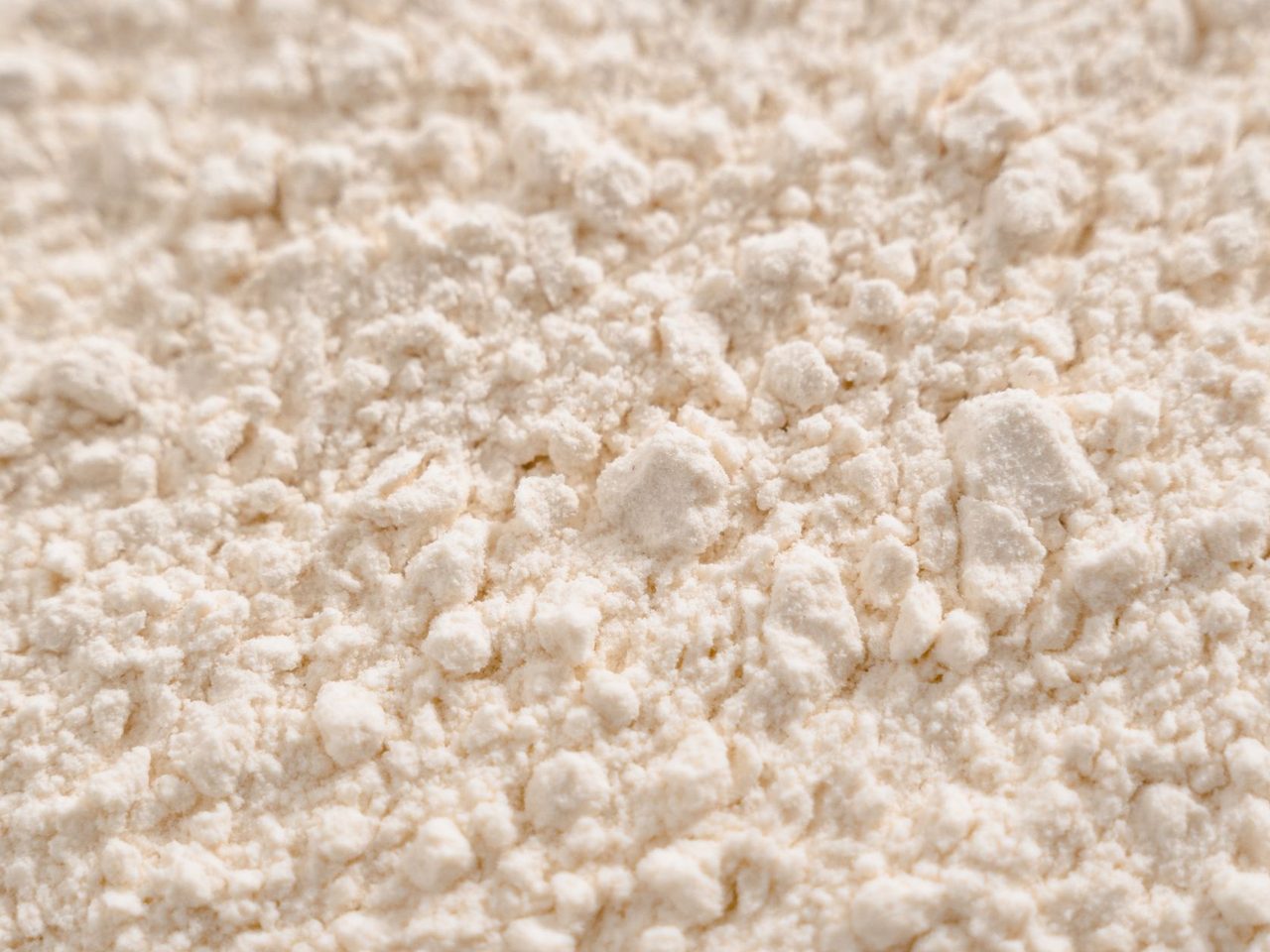
Dense cores change how planks are cut. Many rigid planks are still scored and snapped. Daltile's rigid click instructions say to score the top with a utility knife and snap the panel, and list saws for other cuts.8 When power saws are used, dust is the issue. Daltile tells installers to avoid inhaling airborne particles, and to wear NIOSH or OSHA approved dust masks, safety goggles and work gloves.8 Cut outdoors or with dust collection where the product allows it, and keep fine dust out of the locking profiles of planks waiting to go down. A grain of grit in a joint is enough to stop it closing; see end joints breaking during install.
Waterproof is about the core, not the filler alone
Limestone and PVC do not swell with water the way a wood-based core does, which is why rigid core is sold as waterproof. Floor Daily notes the WPC acronym came to signify a waterproof core once wood dust was removed from the formula.1 Waterproof describes the plank, not the floor. Water can still pass the joints and edges and collect underneath. Mohawk's waterproof warranty, for example, covers topical water, not moisture from below or flooding.9 See underlayment for wet rooms.
VCT: the original limestone floor
Vinyl composition tile has always been a filled product. Armstrong's EPD describes its VCT as limestone-based flooring tiles with a PVC binder and a through-pattern construction.3 It lists limestone flour first among the flooring components, followed by PVC, a plasticizer and recycled material.3 It says the through-pattern construction keeps the pattern visible after years of foot and rolling load traffic.3 That durability is why VCT, polished and maintained, still serves in schools and healthcare; see VCT maintenance.
What the standards govern
Product standards set rules for the binder rather than the filler share. ASTM F3261, the specification for rigid polymeric core flooring, says the wear surface is composed of binder, filler and pigments.4 It says polymers or copolymers of vinyl chloride make up at least 60% of the weight of the binder. Any vinyl chloride copolymer used must contain at least 85% vinyl chloride.4 Its performance requirements cover residual indentation, dimensional stability, and resistance to chemicals, heat and light, among others.4 ASTM F1700, for solid vinyl tile, says tiles are composed of binder, filler and pigments compounded with lubricants and processing aids.10 For a buyer, performance results under those standards matter more than a limestone percentage. See reading a data sheet.
Questions for the supplier
- Which product standard does the core meet, and what are the tested results?
- What is the core construction: solid mineral-filled, foamed, or another?
- What expansion space, transitions and temperature limits does the guide require?
- What is the carton weight, and how high can cartons be stacked?
- Is there an EPD that covers this exact core?
For the difference between SPC and WPC on the job, see SPC vs WPC.
Sources
- Floor Daily, “LVT Evolution: What are the key differences between WPC and SPC? - Dec 2017”. floordaily.net/floorfocus/lvt-evolution-what-are-the-key-differences-bet
- Flooret, “SPC vs WPC Flooring: What's the Difference?”. support.flooret.com/spc-vs-wpc
- Armstrong Flooring, “Vinyl Composition Tile Maintenance Recommendations”. armstrongflooring.com/assets/sustainability/afi/225096.pdf
- ASTM International, “ASTM F3261 Standard Specification for Resilient Flooring in Modular Format with Rigid Polymeric Core”. store.astm.org/f3261-20.html
- LX Hausys, “What is SPC flooring? Comparing SPC and WPC”. lxhausys.com/us/blog/wp-json/wp/v2/posts/3110
- Shaw Floors, “LVP Case Study: How Temperature Affects Dimension”. shawfloors-sherwinwilliams.com/SiteFiles/sherwinwilliamsdigital/Images/L
- Elite Flooring, “Välinge Installation Guide (Woodlands)”. eliteflooringusa.com/links/install-instructions/Elite-Installation-Guide
- Daltile, “ProSeries Luxury Vinyl Flooring Installation & Care Guide (Rigid Core Click, Glue Down)”. s1.img-b.com/build.com/mediabase/specifications/daltile/1996309/daltile-
- Mohawk (via Lowe's), “LVT/LVP Residential Limited Warranty”. pdf.lowes.com/warrantyguides/842374006031_warranty.pdf
- ASTM International, “ASTM F1700 Standard Specification for Solid Vinyl Floor Tile”. store.astm.org/f1700-20.html
General information for the flooring trade. This article was drafted with AI assistance and checked against the sources listed above; the manufacturer's current instructions and the project specification govern any real job. If something here is wrong or out of date, tell us.