 SW-04 · Troubleshooting & Repairs
Laminate has a wood-based core, so water that reaches the joints swells the edges, and swollen planks are replaced rather than repaired. Pergo describes a cut-out replacement: saw out the damaged plank, trim the new plank's lower groove, glue and weight it for at least two hours.1 Prevention is in the care rules: no wet mopping or steamers, and spills wiped up quickly.2 3
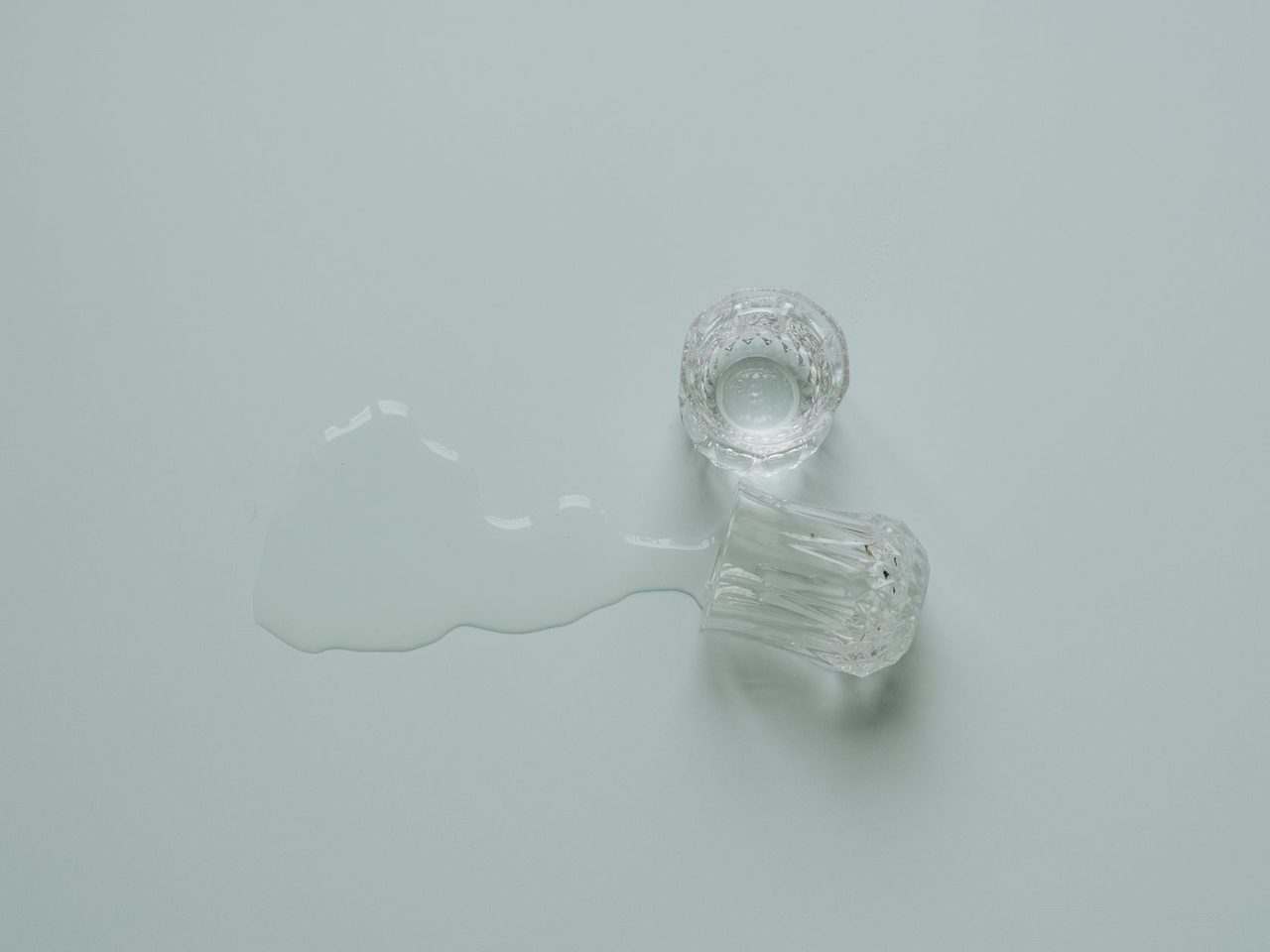
Laminate and vinyl plank look alike on the floor and are often confused. Underneath, they are different. The European laminate producers' association describes laminate as made of up to 80% natural products, with at least 65 % wood.4 That wood-based core is why laminate resists dents well and why it does not like standing water. Most laminate repairs fall into two groups: edges swollen by water, and chips or gouges from impact. The fix for both is usually the same, but the cause needs different attention.
Why swollen edges rarely come back
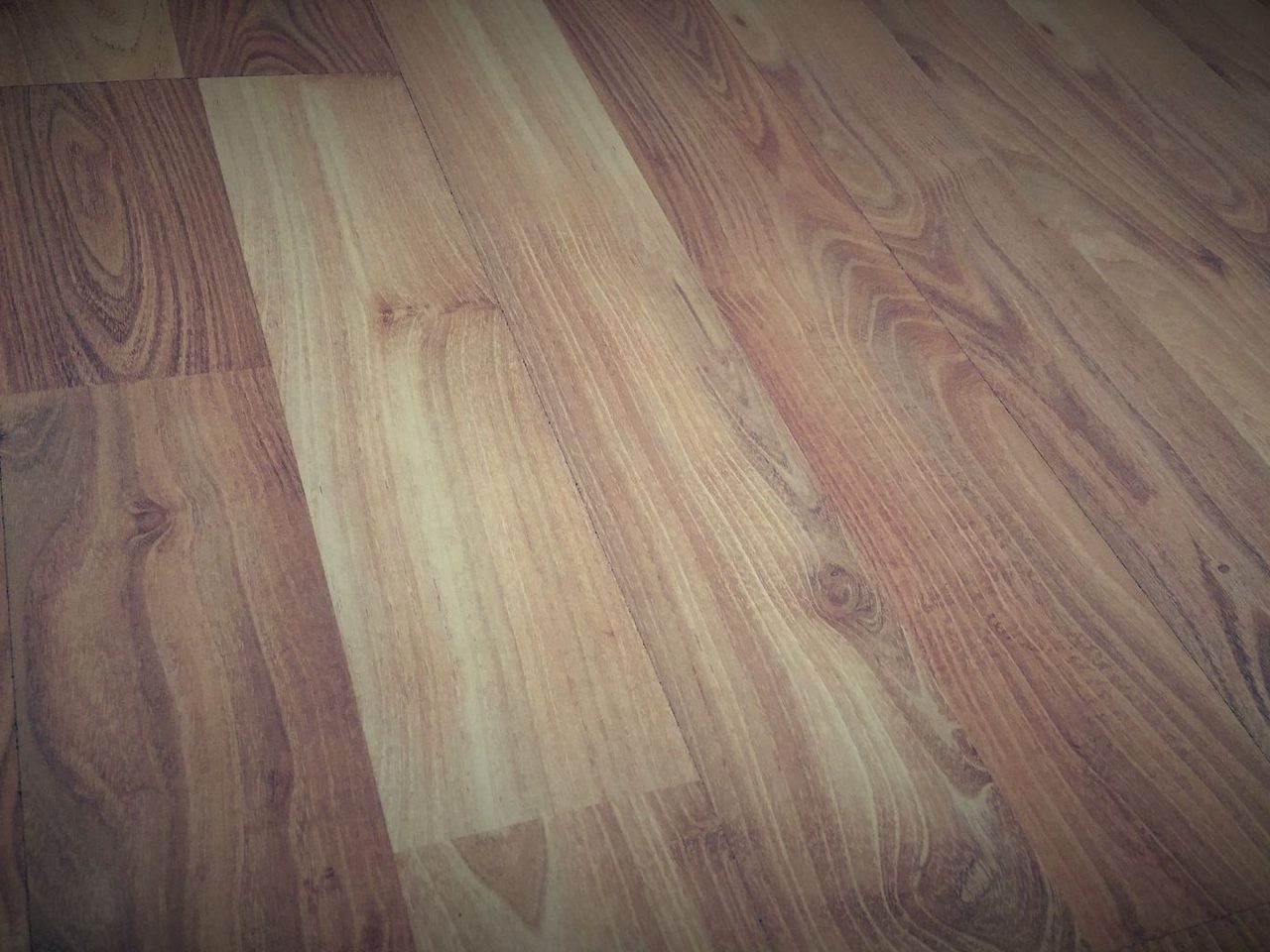
When water sits on a laminate floor, it finds the joints. The core at the plank edges absorbs it and swells, lifting the edges into a ridge along the seam. Mohawk's laminate instructions warn that prolonged water exposure could damage the flooring.3 Pergo's instructions say not to allow moisture to be on the floor for longer than 30 minutes.2 Once the core has swollen, drying the floor does not return it to its original shape. Swollen planks are replaced.
Before replacing anything, find the water. A leaking dishwasher, a refrigerator line, a bathroom or a door left open in rain each leaves its own pattern. Replacing swollen planks over an active leak just repeats the repair.
Water from below
Not all swelling comes from spills. Moisture can rise from the subfloor or from the air. Pergo's instructions limit its laminate to climate-controlled indoor spaces at 35- 65% RH and 60-85° F. They also rule out rooms with floor drains or sump pumps.2 They strongly recommend a moisture test, with concrete at ≤ 5 lbs/1000ft²/24-hr by calcium chloride or <80% with an in situ probe.2 Wood subfloors must read ≤ 12%.2 Swelling spread evenly across a floor, rather than at one spill, points here. Test before relaying, or the new planks will swell too.
Chips, dents and gouges
Impact damage is the other common repair. Pergo's guidance opens with exactly that case: a large, heavy object dropped with its sharp edge down can mark any floor.1 Small chips in a plank's surface can sometimes be filled with a color-matched repair compound. That is a cosmetic fix, best kept to low-traffic areas. Deeper damage, or any chip at a joint, is better handled by replacing the plank.
Replacing a plank from the wall
Near a wall, the simplest method is to unlock the floor back to the damaged plank. Mohawk's maintenance notes mention a tool that removes a damaged plank in minutes without replacing the whole floor.3 For it to work, the required expansion gap must be in place around the room's perimeter, and extra flooring must be available.3 The expansion gap matters for any repair: a floor jammed tight against the walls cannot be taken apart cleanly.
Replacing a plank in the middle of the floor
Pergo describes a cut-out method for planks in the middle of a floor.1
- Acclimatize the new plank first. Pergo suggests letting it lie in the room for about a week, because the existing floor may have swelled or shrunk with humidity.1
- Saw the damaged plank along its length in the middle, leaving ten centimetres from the edge on each side. Then saw from the center line out to the corners, without cutting into the next plank.1
- Lift out the pieces with a chisel and vacuum away all sawdust. Tape any damaged underlay.1
- Prepare the new plank by sawing off the lower groove on its long side. Then saw off 10 centimetres of the tongue on the long side.1
- Apply wood glue sparingly along the tongue of the installed floor. Set the new plank, click in the long side, and tap it into place. Wipe off excess glue.1
- Weight the plank with at least 40 kg for at least two hours.1
The method is close to the cut-out repair for click vinyl; see replacing a single click-lock plank.
Matching the replacement
The new plank has to match. Mohawk recommends buying a few extra cartons at installation, partly so that a repair is possible if the product is no longer made.3 Store spares flat in a dry, conditioned space. A replacement from a different production run can differ in shade or pattern, so pull it from the same lot where possible. See matching floor colors after a repair.

Wet areas and the warranty
Laminate can go into kitchens and baths, but only under conditions. Mohawk lists bathrooms, powder rooms, kitchens, mud rooms, foyers and laundry rooms as wet areas with specific installation rules.3 Its water warranty excludes all products thinner than 8mm, and does not apply to beveled edge products used in bathrooms.3 In wet areas, it requires all perimeter expansion areas to be completely filled with a water repellent flexible silicone sealant.3 It also says not to install its planks in extremely humid spaces such as saunas or pool areas.3 A swollen floor in a bathroom with open perimeter gaps is usually an installation question, not a product one.
Cleaning that causes damage
A lot of swelling comes from cleaning. Pergo's care instructions say dust mop or damp mop only, with no wet mopping.2 They also rule out rotating beater bars, floor scrubbers, steamers and jet mops, and say to wipe up spills immediately.2 Mohawk says wet maintenance is absolutely forbidden. It rules out cleaning machines such as spray mops, steam cleaners and power cleaners.3 For beveled edge products, it strongly recommends dry cleaning only.3 In commercial spaces, where cleaning crews default to auto scrubbers and wet mops, write the care rules into the maintenance contract. A steam mop used every night will ruin a laminate floor faster than any foot traffic.
Sources
- Pergo, “How can I change a plank in the middle of the floor?”. int.pergo.com/en/frequently-asked-questions-helpcenter/laminate/reparati
- laminate manufacturer (via Lowe's), “Pergo MAX Installation Instructions”. pdf.lowes.com/productdocuments/28cb1be7-0f5e-4f01-9cd7-390118a3d475/0274
- laminate manufacturer (via Home Depot), “Mohawk Laminate Installation Instructions”. images.homedepot-static.com/catalog/pdfImages/36/36608e02-c5f4-4f65-8f0b
- EPLF, “European Laminate Made With Wood – Association of the European Producers of Laminate Flooring”. eplf.com/en/
General information for the flooring trade. This article was drafted with AI assistance and checked against the sources listed above; the manufacturer's current instructions and the project specification govern any real job. If something here is wrong or out of date, tell us.