 SW-04 · LVP & Vinyl Installation
Floating vinyl tolerates ordinary furniture, but very heavy items and rolling loads need care. One guide warns that furniture over 500 pounds may obstruct a floated floor's movement, while another says heavy furniture typically will not.1 2 All agree on protection: move heavy items over hardboard or plywood, use large non-staining protectors, and keep hard casters off the floor.3 4
A floating floor is designed to carry furniture and people while moving slightly underneath them. Two things test that design: very heavy, static loads that sit in one place for years, and rolling loads that push across the surface. Both are common in commercial spaces, from filing systems and library stacks to carts, beds and pallet jacks. The guides address both, and on one question they disagree.
Do heavy loads pin the floor?
Shaw's case study on temperature and vinyl says heavy furniture will typically not cause any impediment to a floating floor's expansion and contraction.2 National Flooring Products takes a more cautious line: heavy furniture of 500 pounds or more may obstruct a floated floor's free, natural movement.1 Both can be true. A sofa is not a safe or a server rack. The difference is weight concentrated on small feet, in one place, for a long time.
Where the specification puts very heavy equipment on a floating floor, ask the manufacturer in writing, or detail that area as glued down. Large refrigerators are a special case. National Flooring Products requires its expansion gap around large Sub-Zero style refrigerators and appliances, treating them like walls.1 See the kitchen and casework guide for built-in equipment.
Moving heavy items onto a new floor
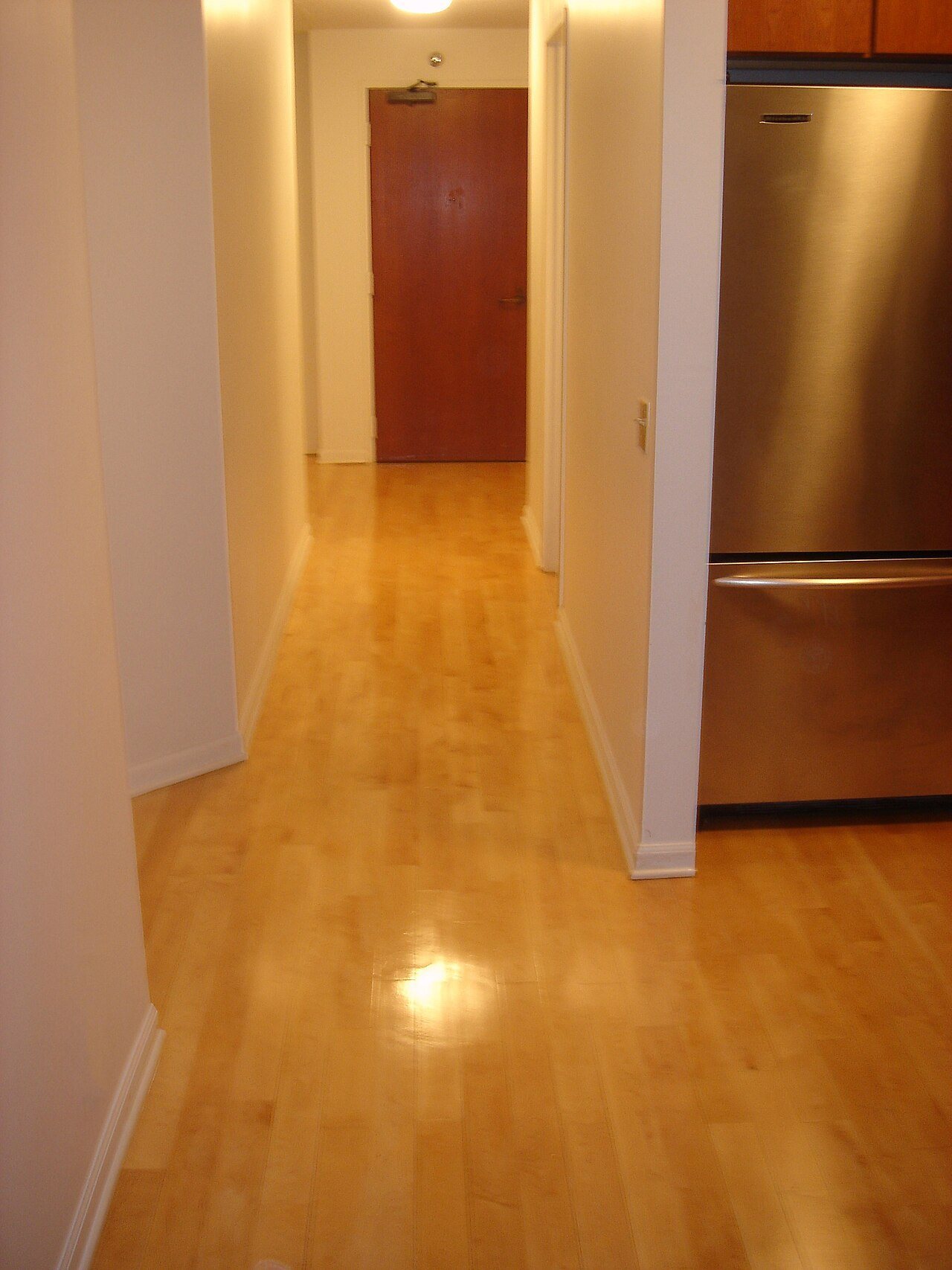
The most damage happens on move-in day. EverStep allows its glue-down floor to be walked on immediately, but asks for it to be protected with plywood when heavy furniture and appliances are moved back in.4 Timeless asks for furniture to be moved onto a new floor with an appliance hand truck over hardboard runways.3 Dragging a refrigerator across planks can gouge the wear layer and stress the locks; a runway spreads the load and keeps wheels off the surface. Glued floors also need time. FloorFolio asks for foot traffic and rolling loads to be kept off for 24 hours after installation.5

What goes under furniture and equipment
The guides agree on spreading the load and avoiding hard contact points.
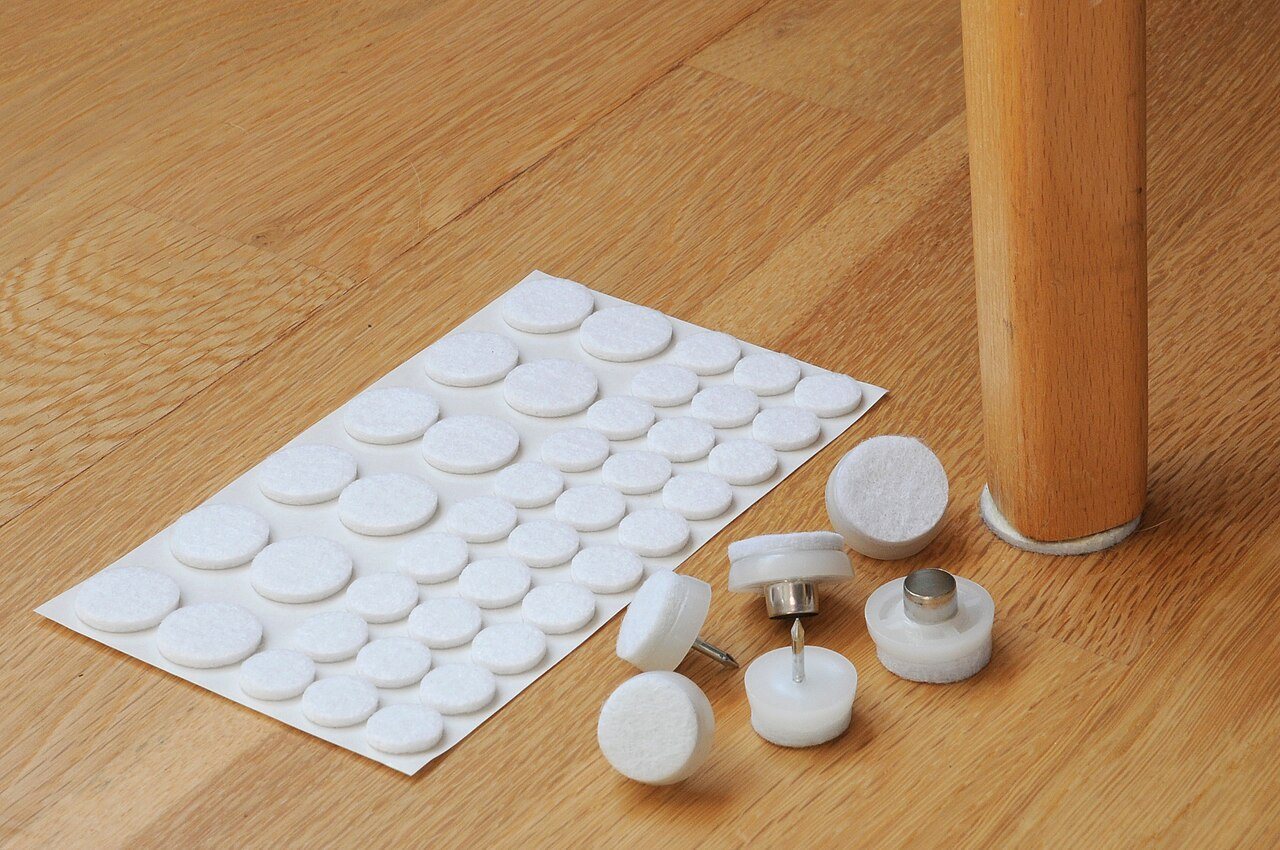
- Felt pads. Marquis asks for felt pads on all furniture and chair legs, replaced when dirty or worn.6 National Flooring Products specifies heavy-duty felt pads 3/16 inch thick under all furniture feet before furniture goes on the floor.1 Shaw also recommends felt pads under furniture legs and heavy items.7
- Large protectors. Timeless asks for heavy furniture and appliances to have non-staining, large-surface floor protectors.3 Daltile asks for non-staining protectors under chairs, appliances and heavy furniture.8
- Casters. Timeless wants caster chairs on wide rubber casters, with protective mats under them.3 Daltile recommends replacing plastic or metal casters with rubber, and using a hard-surface, non-rubber chair mat under office chairs.8 National Flooring Products does not approve metal or hard plastic rollers on its laminate flooring at all.1
Note Daltile's warning about mat backings. A rubber-backed mat or chair mat can stain vinyl. That is its own failure, covered in discoloration under rubber-backed mats.
Rolling loads in commercial spaces
Rolling loads are a design question, not just a maintenance one. Marquis excludes products installed in areas subject to rolling loads from its warranty.6 Floors in hospitals, labs, warehouses and back-of-house corridors see carts, beds and equipment all day. For those areas, guides point to a different installation. FloorFolio recommends its two-part epoxy adhesive for areas with heavy rolling loads or moisture, including under hospital beds.5 In practice, that means a fully adhered resilient floor with an adhesive rated for the load, or a different flooring type, rather than a floating plank.
When a space will carry rolling loads, say so in the specification and in the submittal. The product data sheet and the installation guide should both show that the floor and adhesive are rated for it. A floating floor chosen for a residential look in a corridor that sees carts is a warranty dispute waiting to happen.
Damage that shows up later
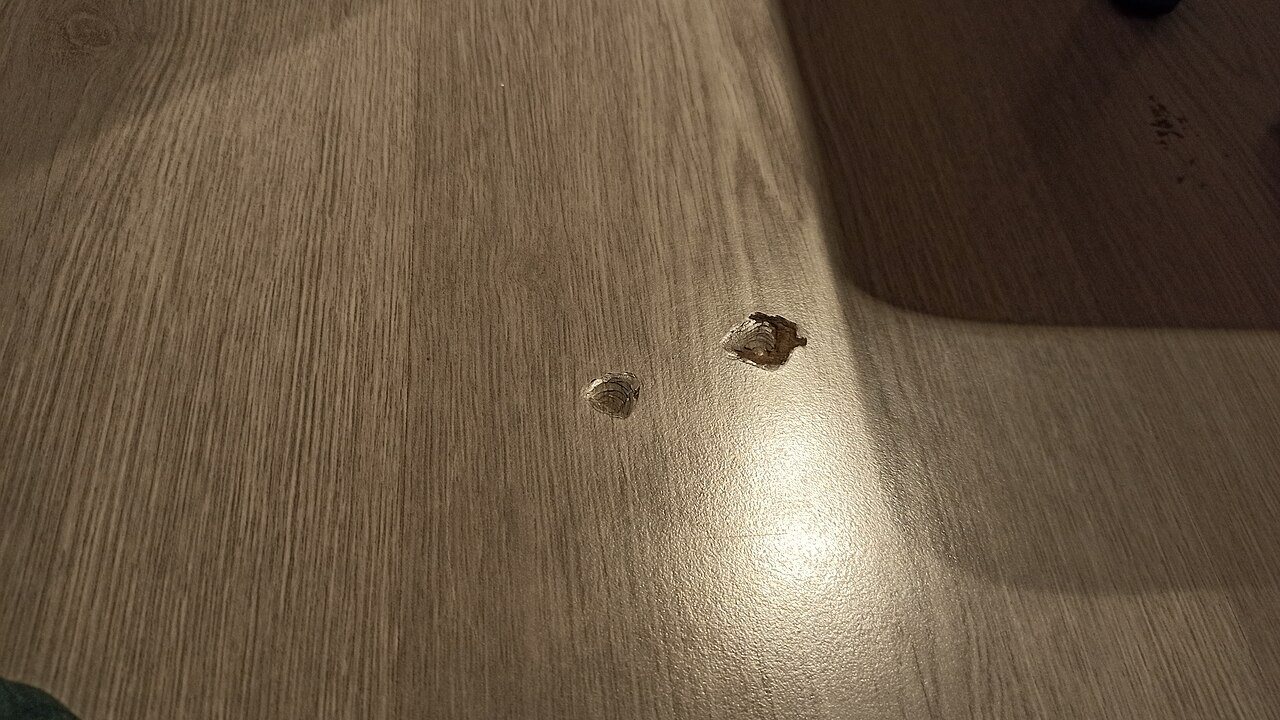
Most appliance and furniture damage appears in three forms: gouges from dragging, dents from small hard feet, and joint damage where a heavy load sits on a plank edge. Gouges and dents are wear-layer problems; see wear-layer scratches. Joint damage is a locking problem, and the fix is usually to replace the plank. Both are cheaper to prevent with a runway and a set of pads than to repair.
A load checklist
- Identify heavy static loads and rolling-load areas on the drawings.
- Check the flooring guide and warranty for each; glue down or change product where needed.
- Keep the expansion gap around large built-in appliances.
- Protect the floor with runways when moving equipment in.
- Fit pads, protectors and rubber casters before furniture goes on the floor.
Sources
- NFP, “Architect’s Choice LVP Installation Guide”. my-nfp.com/resource/architects-choice-lvp-installation-guide
- Shaw Floors, “LVP Case Study: How Temperature Affects Dimension”. shawfloors-sherwinwilliams.com/SiteFiles/sherwinwilliamsdigital/Images/L
- Timeless Designs, “Click Floating Luxury Vinyl Installation Instructions”. timelessdesignsflooring.com/wp-content/uploads/2023/05/TD-Rigid-Core-Ins
- EverStep Flooring, “LVP Glue Down Installation Guidelines”. everstepflooring.com/technical/lvp-glue-down-installation-instructions/
- FloorFolio, “Installation Guide 2025”. floorfolio.com/wp-content/uploads/2025/FloorFolio-Installation-Guide-202
- Marquis Industries, “Rigid Vinyl Plank Installation Instructions (Angle)”. marquisind.com/static/resources/Angle_Angle%20Installation%20Instruction
- Shaw Floors, “Vinyl Flooring Installation | Shaw Floors”. shawfloors.com/en-us/plan-and-install/vinyl
- Daltile, “ProSeries Luxury Vinyl Flooring Installation & Care Guide (Rigid Core Click, Glue Down)”. s1.img-b.com/build.com/mediabase/specifications/daltile/1996309/daltile-
General information for the flooring trade. This article was drafted with AI assistance and checked against the sources listed above; the manufacturer's current instructions and the project specification govern any real job. If something here is wrong or out of date, tell us.