 SW-07 · Contracting & Specs
OSHA's construction silica standard lets employers either follow the control methods in Table 1 or measure worker exposure and choose their own dust controls.1 Table 1 requires a respirator with a minimum APF of 10 for some indoor tasks, such as wet cutting with walk-behind saws indoors.2 Whichever method is used, employers must have a written exposure control plan, designate a competent person and restrict housekeeping practices that expose workers.1
Grinding a slab, cutting with a walk-behind saw and cutting fiber-cement board can all generate respirable crystalline silica dust.3 2 4 On a construction job, that dust falls under OSHA's standard at 29 CFR 1926.1153.5
The standard gives employers two routes.1 They can use the control methods in Table 1, or they can measure worker exposure and decide for themselves which dust controls keep exposures to the limit.1 This article covers the rows of that table a flooring contractor is likely to meet. It also covers the duties that apply on either route.
Who the rule covers
The standard applies to all occupational exposure to respirable crystalline silica in construction work.5 The one exception is where exposure will remain below 25 micrograms per cubic meter of air as an 8-hour time-weighted average under any foreseeable conditions.5 The standard calls that same concentration the action level.5 The permissible exposure limit (PEL) is 50 micrograms per cubic meter, calculated as an 8-hour time-weighted average.5 The exception turns on foreseeable conditions, not on a good day.
One definition matters on the floor. "Employee exposure" means the exposure that would occur if the worker were not wearing a respirator.5 A mask therefore does not lower the measured number. State Plans may have different or more stringent requirements, so check the state before bidding out of town.1
The table route: all or nothing
For each employee on a Table 1 task, the employer shall fully and properly implement the engineering controls, work practices and respiratory protection listed for that task.5 An employer who does this is considered in compliance with the standard's respiratory protection requirement for silica.5 A partial setup does not count. A task done without the full Table 1 controls moves to the exposure assessment route.5
The standard also sets conditions that apply to every row.5 Indoors or in enclosed areas, the employer must provide a means of exhaust as needed to minimize the buildup of visible airborne dust.5 With wet methods, the water flow must be sufficient to minimize the release of visible dust.5
The rows flooring work meets
| Task | Control specified | Respirator, per OSHA |
|---|---|---|
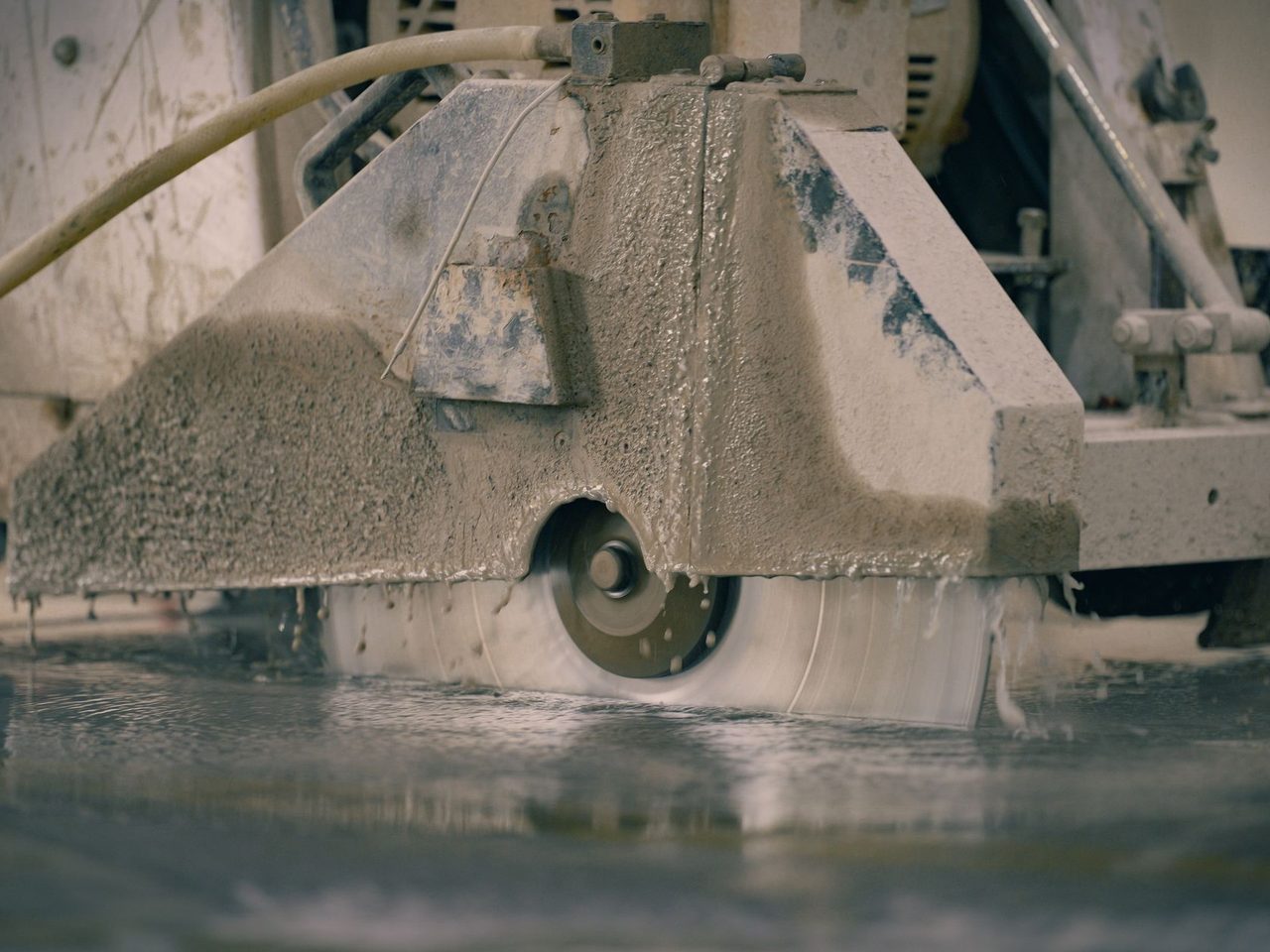
| Walk-behind saws | Integrated water delivery that continuously feeds water to the blade2 | None outdoors with wet methods; minimum APF of 10 indoors or in enclosed areas2 |
| Handheld power saws (any blade diameter) | Integrated water delivery that continuously feeds water to the blade5 | Minimum APF of 10 when wet cutting indoors or in an enclosed area6 |
| Handheld grinders, other than mortar removal | Integrated water delivery, or a shroud with dust collection5 | None with water; minimum APF of 10 with vacuum collection indoors or in enclosed areas for more than 4 hours per shift3 |
| Walk-behind milling machines and floor grinders | Integrated water delivery, or the dust collection system the manufacturer recommends5 | Check the respirator column for this row in the standard |
| Handheld saws for fiber-cement board, blade 8 inches or less | Commercially available dust collection system5 | None outdoors; indoor use is outside Table 14 |
Tile tear-out with chipping tools has its own row. Jackhammers and handheld powered chipping tools need either water at the point of impact or a shroud with dust collection.5
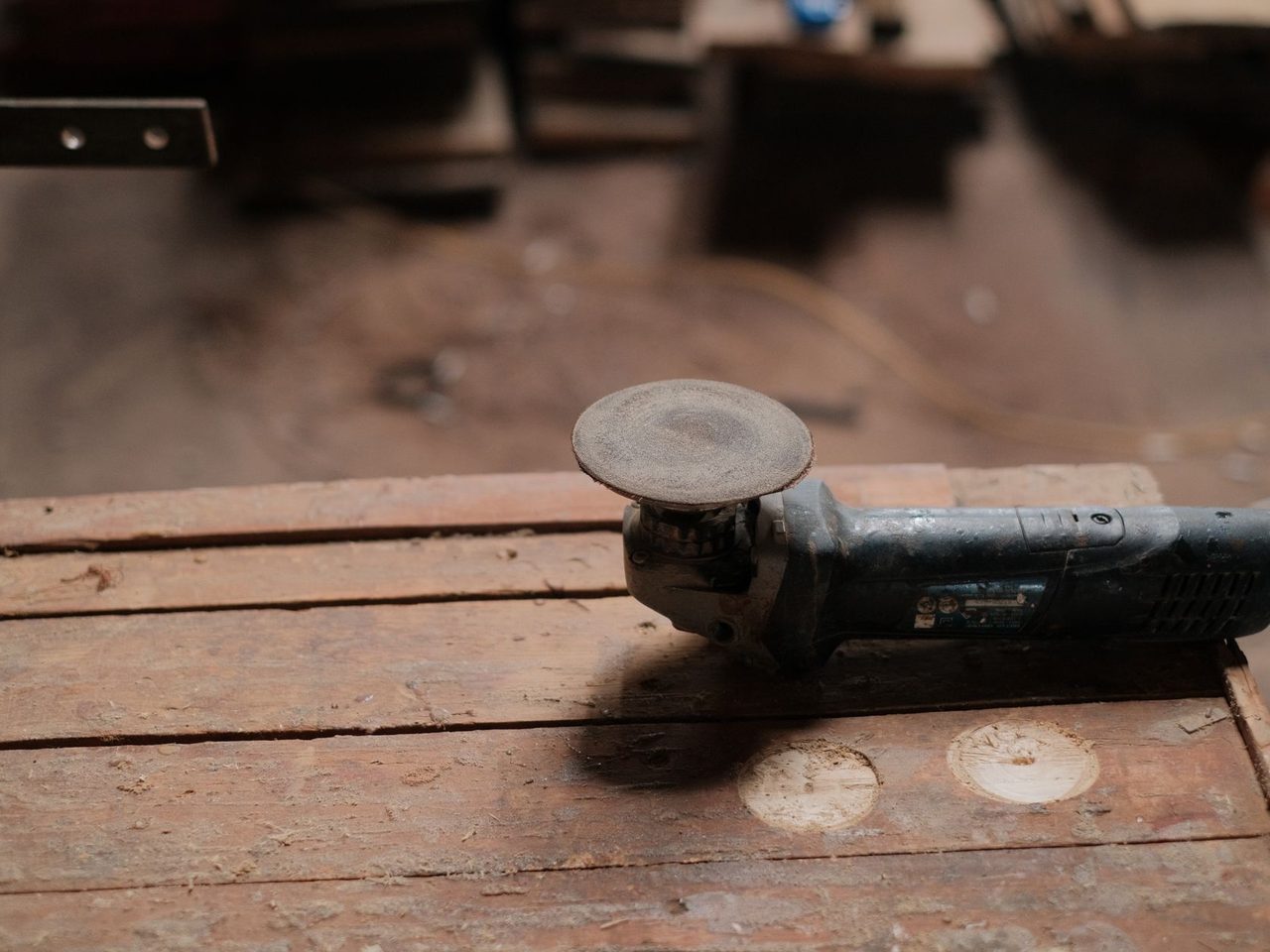
Grinding the slab
OSHA's fact sheet on handheld grinders limits the water-fed method to outdoor use.3 Indoors, that leaves the shroud and vacuum. The vacuum must provide at least 25 cubic feet per minute of airflow per inch of wheel diameter.5 Its filter must be 99% efficient or better, with a cyclonic pre-separator or filter-cleaning mechanism.5 OSHA's example: a 5” grinding wheel would require a rating of 125 cfm of air flow or more.3 A vacuum collection system indoors may not be relied on to keep exposure low.3 Extra ventilation may be needed, such as exhaust trunks, portable fans or air ducts.3
Walk-behind floor grinders have their own dust collection terms. The collector must provide at least the airflow the manufacturer recommends and have a filter of 99% or greater efficiency with a filter-cleaning mechanism.5 Indoors or in an enclosed area, a HEPA-filtered vacuum must remove loose dust between passes.5
Here is where money leaks. A slab that needs more grinding than the bid assumed puts more hours on the hand grinder. Past 4 hours per shift indoors, the vacuum method adds a respirator.3 That respirator requires a respiratory protection program under 29 CFR 1910.134.5 Price that in, or write the extra grinding up as a change order. When the grinding is prep for a pour, the surface side of the work is covered in self-leveling underlayment without soft spots.
Sawing joints and cuts
OSHA says applying water to a saw blade substantially reduces the dust created when cutting concrete and other silica-containing materials.1 Indoors, wet cutting with a walk-behind saw may not reliably keep exposure low, so extra ventilation may be needed.2 Position that ventilation to move contaminated air away from workers' breathing zones.2
The handheld saw fact sheet also lists a respirator trigger for outdoor use beyond a set time.6 Read that row of the standard for the hours. The same fact sheet asks for slurry to be cleaned up before it dries and releases dust. Shovels or a wet vacuum with a HEPA filter are its examples.6 Water on site also raises electrical risk. OSHA calls for ground-fault circuit interrupters and watertight, sealable connectors.6
Fiber-cement board
OSHA describes fiber-cement board as a composite of cement, sand and cellulose fibers.4 The handheld saw row for masonry does not cover it.6 Its own row applies to handheld saws with a blade of 8 inches or less.5 The dust collector must provide at least the airflow the tool maker recommends, with a filter of 99% or greater efficiency.5 Check what the backer actually is before assuming this row applies.
The fact sheet adds detail. It calls for a vacuum rated at 80 cubic feet per minute or higher, and says HEPA filters may be used but are not required.4 Specialty blades with 4–8 teeth reduce respirable dust compared with standard masonry blades.4
The trap is location. For indoor use, or with blades larger than 8 inches, Table 1 does not apply.4 The employer must then conduct an exposure assessment and may need further action, including a respiratory protection program.4 Cutting board in the room being tiled takes the task off Table 1.4 A cut station outdoors keeps it on.4 Fastener and joint rules for the board are in cement backer board under floor tile.
More than one task in a shift
Workers on prep rarely do one task all day. Where an employee performs more than one Table 1 task in a shift, the hours add up.5 If the combined total is more than four hours, each task takes the respirator listed for more than four hours per shift.5 If it is less than four hours, the less-than-four-hours column applies.5

Off the table: measuring instead
For unlisted tasks, or Table 1 tasks without the full controls, the employer must keep exposure at or below the PEL.5 The employer must also assess each employee who may reasonably be expected to be exposed at or above the action level.5 The assessment may use air monitoring data, objective data, or both.5 Objective data must reflect conditions closely resembling, or with higher exposure potential than, the employer's current operations.5 Samples go to a laboratory that follows appendix A of the standard.5 Employees must be notified of results in writing, or by posting, within five working days.5
Engineering and work practice controls come first on this route.5 Where they cannot reach the PEL, the employer must still use them and add respirators.5
Duties on either route
The employer must have a written exposure control plan.5 It must contain at least these elements:5
- The tasks that involve exposure to respirable crystalline silica.5
- The engineering controls, work practices and respiratory protection for each task.5
- The housekeeping measures used to limit exposure.5
- Procedures to restrict access to work areas, including exposures generated by other employers.5
The plan must be reviewed at least annually and made available to employees on request.5 That last element reaches other trades. The access limits belong in the same conversation with the GC covered in floor protection rules.
The employer must designate a competent person to make frequent and regular inspections of job sites, materials and equipment.5 That person must be able to identify silica hazards and be authorized to take prompt corrective measures.5
Housekeeping is restricted. Dry sweeping or dry brushing is not allowed where it could contribute to exposure, unless wet sweeping, HEPA-filtered vacuuming or other low-exposure methods are not feasible.5 Compressed air is barred for cleaning clothing or surfaces unless a ventilation system effectively captures the dust cloud.5 A HEPA filter, as defined in the standard, is at least 99.97 percent efficient on particles of 0.3 micrometers.5
The costs sit with the employer. Medical surveillance must be offered at no cost to employees who must wear a respirator for 30 or more days per year.5 OSHA lists those exams as every three years.1 Employers must also train workers and keep records of exposure measurements, objective data and medical exams.1
What to check and put in writing
- List every silica task in the scope: grinding, sawing, board cutting, chipping.
- For each task, confirm the tool has the full Table 1 control, not part of it.5
- Check vacuum airflow and filter ratings against the row for that tool.5
- Estimate hours per worker per shift, and flag any that pass four hours combined.5
- Cut fiber-cement board outdoors, or plan an exposure assessment.4
- Write extra grinding found after award into a change order.
- Agree access restriction with the GC and the other trades in writing.5
- Name the competent person on site, and tell the crew who it is.5
- Bring HEPA-filtered vacuums for cleanup.5
- Check whether a State Plan adds its own requirements.1
Sources
- OSHA, “Silica, Crystalline - Construction | Occupational Safety and Health Administration”. osha.gov/silica-crystalline/construction
- OSHA, “osha-silica-walkbehind”. osha.gov/sites/default/files/publications/OSHA_FS-3633.pdf
- OSHA, “osha-silica-grinders”. osha.gov/sites/default/files/publications/OSHA_FS-3628.pdf
- OSHA, “osha-silica-fibercement”. osha.gov/sites/default/files/publications/OSHA3927.pdf
- OSHA, “1926.1153 - Respirable crystalline silica. | Occupational Safety and Health Administration”. osha.gov/laws-regs/regulations/standardnumber/1926/1926.1153
- OSHA, “osha-silica-handsaws”. osha.gov/sites/default/files/publications/OSHA_FS-3627.pdf
General information for the flooring trade. This article was drafted with AI assistance and checked against the sources listed above; the manufacturer's current instructions and the project specification govern any real job. If something here is wrong or out of date, tell us.