Brochures make every floor sound perfect. One plank is scratch proof, another is waterproof, and a third somehow does both while looking handmade. The problem is that marketing language does not tell you how a product will perform on a real jobsite with heavy traffic, moisture, uneven subfloors, and a picky customer.
If you want to compare flooring products the right way, you need a method that cuts through the sales copy. This is essential when you consider how modern flooring trends evolve, as buyers consistently demand cleaner looks, warmer tones, and faster installations. For instance, luxury vinyl plank is often shrouded in marketing hype, yet its true performance depends on specific wear layer measurements rather than glossy advertisements. By ignoring the slogans, you ensure the chosen material provides genuine durability and protects the long term resale value of the property.
Key Takeaways
- Prioritize technical data over marketing slogans: Performance claims on display cards often lack context; always consult the technical data sheet and installation manual to understand actual limits and testing methods.
- Analyze structural composition: Focus on objective build details—such as wear layer thickness, core density, and locking mechanisms—rather than aesthetic marketing descriptions.
- Evaluate samples in real-world light: Move flooring samples to the actual jobsite to observe how natural light, shadows, and daily usage affect color, sheen, and texture.
- Demand verifiable proof: When a sales representative makes a performance claim, ask for the specific test method and conditions used to support it; if they cannot provide documentation, treat the claim as a sales line rather than a specification.
- Use a consistent scorecard: Compare flooring products side-by-side using standardized categories like surface durability, installation requirements, and material structure to ensure an objective decision.
Start with the spec sheet, not the slogan
A claim on a display card is not the same thing as a performance number. Water resistance might mean the top layer handles minor spills, or it could mean the plank survived a limited lab test under highly controlled conditions. These are not the same promise.
The same principle applies to labels like scratch resistance and commercial grade. These phrases can hide significant technical gaps. If a sales representative cannot point to the specific test method, the testing conditions, and the defined performance limits, you are effectively guessing.
For a fair comparison, start by analyzing the technical data sheet and the installation instructions. Because technical requirements vary wildly between solid hardwood, engineered wood flooring, and luxury vinyl plank, you must compare the actual product structure, approved subfloor requirements, moisture limits, and cleaning guidance. Always verify that the technical specifications in the showroom match the specific product version sitting in the warehouse.
A floor that looks impressive in a brochure can still be the wrong fit for a room with intense sun exposure, heavy rolling loads, or a moisture-prone concrete slab. Ultimately, the jobsite does not care about marketing language that sounds confident; it only responds to the physical realities defined in the product documentation.
Compare the details that affect the job
Once you strip away the marketing claims, the real differences usually sit in the build. For solid hardwood and engineered wood flooring, that means species, construction, finish, milling quality, and how the floor handles seasonal movement. For luxury vinyl plank and rigid core products, it means wear layer thickness, core density, locking profile, and temperature tolerance. For laminate flooring, it means the surface finish, edge treatment, moisture resistant properties, and how well the locking system holds up after repeated use.
The product’s look matters, but it shouldn’t be the first thing you judge. A wide plank can hide a lot in a showroom and reveal a lot on a jobsite. The same goes for attached pads, bevels, backing systems, and special coatings. Each one can help, but each one can also add a failure point if the floor is installed in the wrong conditions.
This is where category knowledge matters. The better products usually come with clearer limits, not louder promises. If a line says it can go in a basement, ask what the specific moisture threshold is. If it claims to handle high traffic areas, ask whether that includes rolling loads, heavy furniture, or long-term compression. You should also verify the level of water resistance when discussing core performance, especially for installations where humidity fluctuates.
Laminate flooring is a good example. The category has changed a lot, and current laminate flooring trends show why wide planks and matte finishes are winning attention. That trend can help with merchandising, but the locking system, wear layer, and moisture guidance still decide whether the product actually fits the requirements of the job.
Put samples in the same light as the floor
A small sample on a counter can hide a lot. Color shift, gloss level, edge detail, and texture all change when a product moves from a board to a full room. That is why full-size planks and larger display pieces matter.
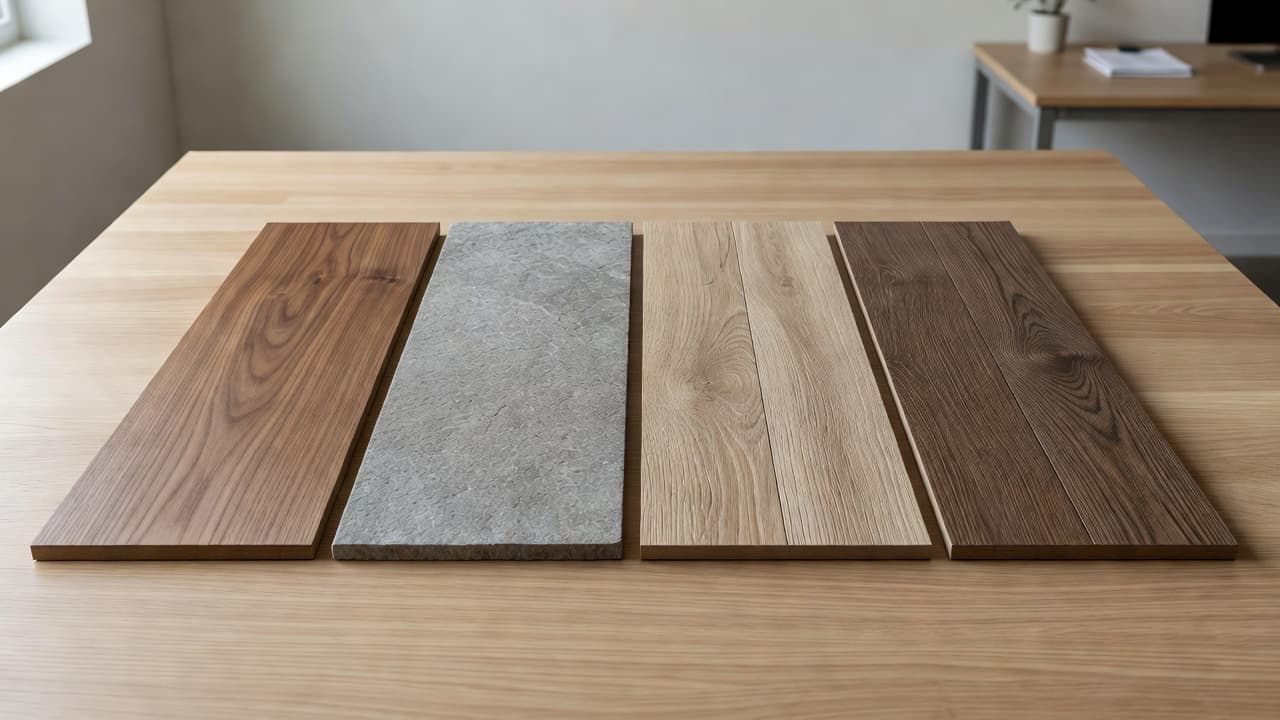
Light changes everything. Whether you are evaluating porcelain tile, ceramic tile, or a high-end stone look, the appearance shifts dramatically depending on the environment. A finish that looks rich under showroom lighting can turn flat in natural daylight. For instance, the natural grain patterns in solid hardwood require real-world light to judge accurately, as shadows reveal the true depth of the wood. Furthermore, if you are looking for pet friendly attributes or specific surface textures, testing them in the installation space is essential, as a low-sheen surface may hide dust differently than a glossy one.
Put the sample where the customer will actually see it. If possible, move it near a window, into the hallway, or onto the jobsite. Then look at it in morning light and again in the afternoon. Check it from standing height, not just from above.
This also helps with color trends. If you are tracking the shift toward softer neutrals, 2026 warm tone flooring trends is a good reminder that style direction changes fast. Warm woods, beige tones, and matte finishes are showing up more often, but the right look still needs to hold up in the room where it gets installed.
Use flooring news and trade shows as signals, not proof
Annual flooring shows are useful because they put the product in front of your eyes. Flooring Markets, for example, says 85% of attendees are key buying decision-makers, and more than 90% come to source new products. That is a strong sign that the aisles are full of people trying to separate real differences from polished sales talk.
The shows matter for another reason too. You can see texture, bevels, gloss, and pattern repeat in person for a wide range of materials, including vinyl sheet flooring, linoleum flooring, and ceramic tile. A screen cannot tell you how a finish feels under your hand, and a flyer cannot show how a plank shifts in direct light. Furthermore, these events provide an ideal environment to observe demonstrations of specific installation methods that may impact your project timelines.
Still, treat the show floor as the start of the comparison, not the finish line. The newest flooring products, such as the latest innovations in laminate flooring, often debut there with sharp booths and strong claims. That is useful, but it is not proof. Ask for the installation guide, the published test data, and the warranty language before you make a buying call.
The same approach helps when you read flooring industry news. If a story says a manufacturer has created a new testing method for PFAS detection, the bigger takeaway is not the headline itself. The takeaway is that claims tied to safety, chemistry, or compliance should be backed by a method you can verify. NTCA training updates and other flooring news work the same way. They point to what the market is paying attention to, but they do not replace a product check.
Ask for evidence you can verify
When a sales representative claims a product is superior, ask them to provide proof. The most useful answers are concrete and repeatable. If the claim shifts from one person to the next, you have your answer.
If a claim does not name a test, it is a sales line, not a specification.
A short list of questions keeps the conversation honest:
- What test method supports the claim regarding high traffic areas?
- What specific conditions void the warranty?
- What subfloor prep is required to meet manufacturer standards?
- What adhesive, underlayment, or primer is approved for this installation?
- What are the official maintenance and care protocols?
- Are there specific refinishing options available for this product?
- What changed in this version compared with last year?
- Which flooring manufacturing factories produce the line, and do they all run the same spec?
These questions matter because supply and production change. A product may come from more than one plant, and not every factory runs every color or format the same way. Lead times, lot consistency, and finish quality can shift when production moves. That is where supply watch thinking helps. The label on the carton is only part of the story.
If you buy for a store or a distribution business, ask for the same documentation every time. That makes product comparison easier across categories and across sales reps. It also helps your team spot when a line is getting quietly revised.
Build a side-by-side scorecard for the team
A simple scorecard keeps the conversation grounded. Use the same categories every time, then compare products row by row to see how they stack up.
| Category | What to compare | What to ask | What to watch for |
|---|---|---|---|
| Surface and wear | Wear layer, finish, scratch resistance | What test backs the claim? | Clear limits, not vague promises |
| Core and construction | Thickness, density, board build, backing | How does it handle moisture or movement? | Stable structure, fewer exclusions |
| Installation | Locking system, adhesive needs, subfloor prep | What does the install require? | Clear instructions and realistic prep |
| Appearance | Color, sheen, texture, bevel | How does it look in natural light? | Consistent color and low visual surprises |
| Material type | Floating floors, solid hardwood, ceramic tile | Which material fits the project needs? | Specific performance ratings per material |
| Financial value | Material, labor, waste, accessories | Is this a budget friendly option? | Full price, not just the box price |
The strongest product is not always the one with the loudest claim. It is the one with the clearest build, the cleanest instructions, and the fewest hidden costs. If you are choosing between laminate flooring, traditional solid hardwood, or modern floating floors, the better choice is often the one that gives your installer fewer chances to guess. By focusing on verifiable data rather than marketing, you ensure the final result meets your performance expectations.
Frequently Asked Questions
Why should I ignore the marketing claims on flooring displays?
Marketing language is designed to highlight benefits without explaining the necessary conditions for those benefits to hold true. By ignoring slogans, you focus on the physical performance data that determines whether a floor will actually survive your specific jobsite environment.
How can I verify if a product is truly water-resistant?
Do not rely on the term “water-resistant” alone, as it can refer to anything from minor spill protection to full-scale submersion capability. Instead, look for the specific moisture threshold in the technical documentation or installation manual to see if it meets your room’s requirements.
Does the country of manufacture or factory location matter?
Yes, products may be produced in multiple factories, and specifications can vary between facilities. Always check the manufacturing origin on the box and verify that the technical specifications remain consistent for the specific lot you are purchasing.
What is the most important factor to check before buying flooring?
The most important factor is the installation guide. This document contains the manufacturer’s official requirements for subfloor preparation, environmental conditions, and approved adhesives, which are essential for long-term product performance and warranty validity.
Conclusion
Marketing language can make every floor sound ideal, but the jobsite rewards facts. Whether you are evaluating the durability of engineered wood flooring, the water resistance of laminate flooring, or the aesthetic versatility of porcelain tile, the choice becomes much clearer when you focus on technical specifications rather than sales slogans.
By comparing products based on construction, installation limits, appearance in real light, and verified documentation, you can effectively cut through the noise. This approach serves as a reliable filter for any project, whether you are installing high-end engineered wood flooring, cost-effective laminate flooring, or heavy-duty porcelain tile. Ultimately, a floor should fit the space, the crew, and the supply chain, rather than simply looking good on a display card.