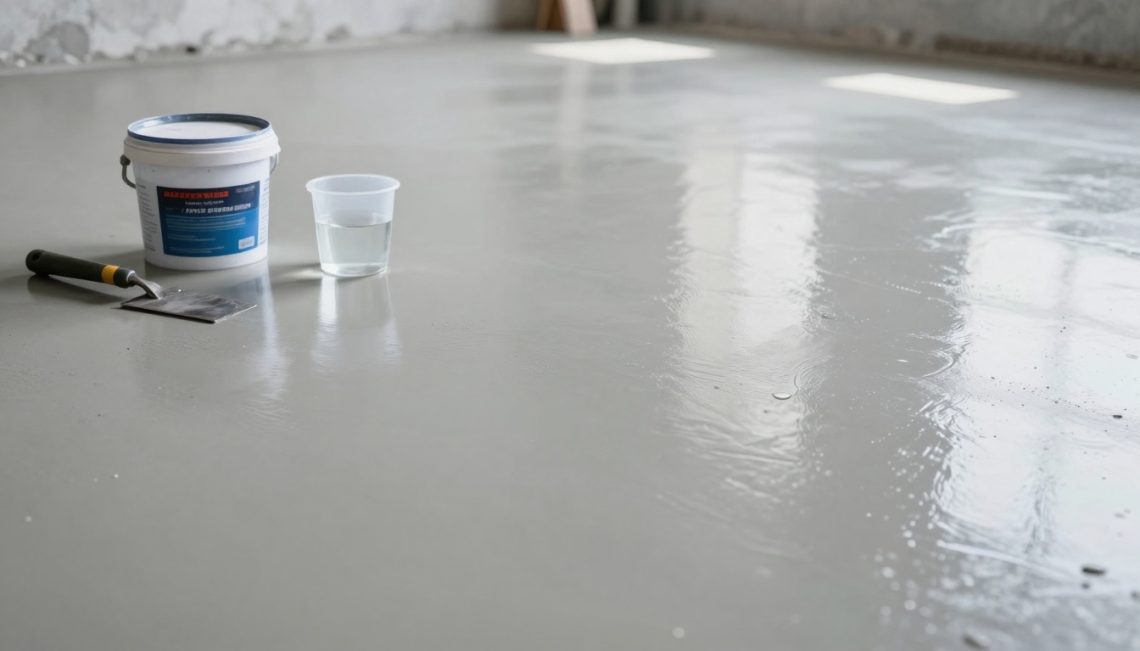
A self-leveler pour can look perfect at first, then turn into a headache a day later. You tap the surface and hear a dull thud, the floor dents under a boot heel, or a finished plank floor starts to flex. Those soft spots almost always trace back to the same roots: the slab wasn’t ready, the primer step got skipped or diluted wrong, the water was off, or the pour cured under bad conditions.
This guide is focused on the details that matter when installing self leveling underlayment concrete systems, especially over typical interior slabs. The goal is simple: a hard, flat, bond-ready surface that doesn’t crumble, powder, or debond.
Start with the concrete, not the bag
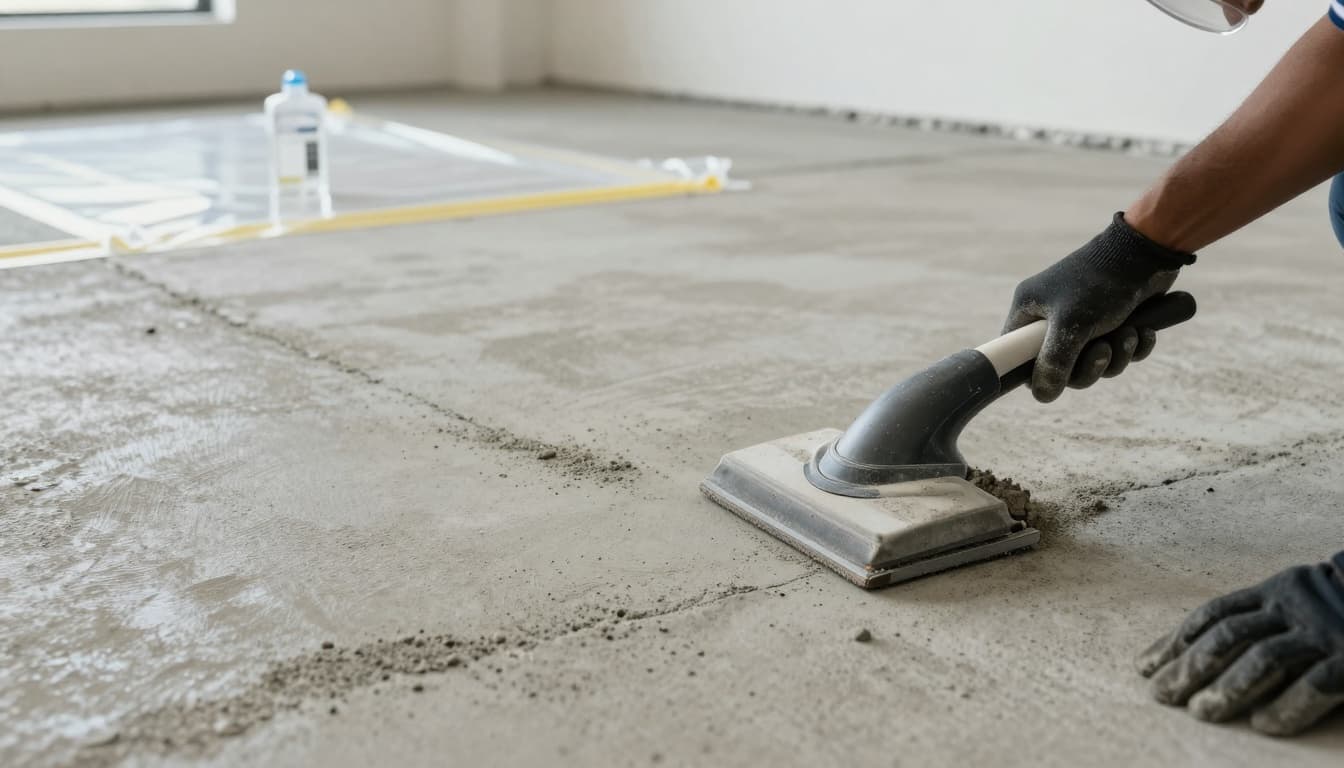
Concrete is a sponge with a memory. It holds moisture, oils, curing compounds, paint overspray, and old adhesive that can break the bond even if the floor looks “clean.”
Don’t trust appearance alone. A slab can look dusty-clean and still be contaminated.
Concrete prep that prevents soft spots
Soft spots often form where the underlayment never truly bonded. These steps reduce that risk:
- Mechanically remove weak layers: Scrape and grind down paint, sealer, drywall mud, and adhesive residue. Self-levelers don’t like “mystery films.”
- Vacuum like you mean it: Fine dust acts like ball bearings between primer and slab.
- Seal paths for leakage: Fill cracks, gaps at the perimeter, and holes around pipes so the pour doesn’t drain away and leave thin weak areas.
- Check moisture realistically: A simple taped plastic sheet test can reveal obvious moisture drive. For resilient installs, many specs call for formal testing and limits.
If you install resilient flooring on top, it helps to align your process with industry practices such as ASTM F2873, which covers prep and SLU installation principles for resilient finishes.
Primer over concrete: how to pick it and apply it right
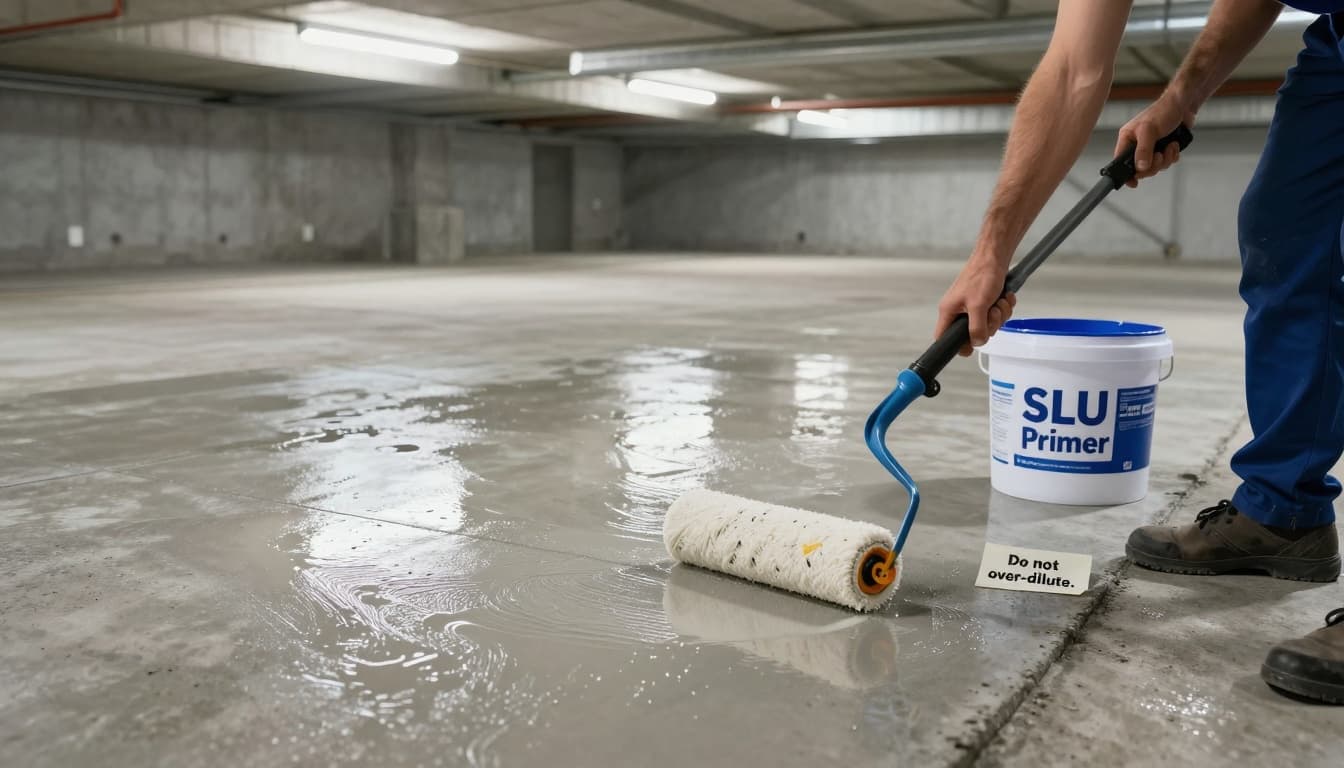
Primer is not optional “extra credit.” It controls suction on porous slabs and creates a compatible bond layer. Without it, the concrete can pull water out of the self-leveler so fast that the top skins over while the body stays weak, chalky, or poorly bonded.
Match primer to the slab condition
Most systems split into two common cases:
Porous concrete (most ground slabs): Use the primer intended for porous substrates, often applied at full strength or diluted exactly as directed.
Non-porous or dense surfaces: Old tile, epoxy residue, or hard-troweled slabs may need a different primer, sometimes a higher-bond formula.
A good starting point for what primers are designed to do and where they can be used is a manufacturer primer data sheet, like this self-leveling underlayment primer guide (it outlines bonding use cases and substrate types).
Primer mistakes that create soft spots
- Over-diluting: Dilution changes film build. Too thin can mean patchy bonding and dusty weak zones.
- Puddles and dry islands: Puddles can re-emulsify or stay tacky, dry islands can leave bare concrete that sucks the mix dry.
- Missing the recoat window: Many primers have a “pour within” range. Too soon can trap water, too late can reduce chemical tie-in.
If you want a quick example of a retail-grade primer system and its intended role, see SikaLevel Self-Leveling Underlayment Primer.
Water ratios: the fastest way to ruin a self-leveler

Think of self-leveler like pancake batter. A little too thick and it won’t flow, a little too thin and it turns weak. The difference is that watery SLU can look great during the pour, then cure soft.
What “too much water” actually does
Extra water doesn’t just “make it easier.” It can:
- Lower compressive strength and surface hardness
- Increase segregation (heavier solids sink, paste rises)
- Increase shrinkage and surface cracking
- Extend set time so bubbles linger and edges feather weakly
Always use the manufacturer’s water range, measured, not guessed. Many crews get in trouble by “loosening” the mix at the end of a batch to stretch coverage.
A typical data sheet spells out the allowed water range, thickness limits, and expected set times, like this Self-Leveling Floor Underlayment Cement data sheet. Even if you’re using a different brand, reading one helps you see what specs usually look like.
Mixing habits that keep strength consistent
Use a measuring bucket: Marked pails are better than “two inches from the bottom.”
Add powder to water (not the reverse): It reduces clumps and dry pockets.
Mix for the stated time: Under-mixing leaves unmixed powder that cures as weak marbles.
Don’t retemper: Adding water after the mix starts to set is a classic soft-spot recipe.
If your crew wants a second reference point for how specs are presented for a fast-setting resurfacer, review the QUIKRETE Self-Leveling Floor Resurfacer data sheet.
Pouring and finishing: flow control beats panic
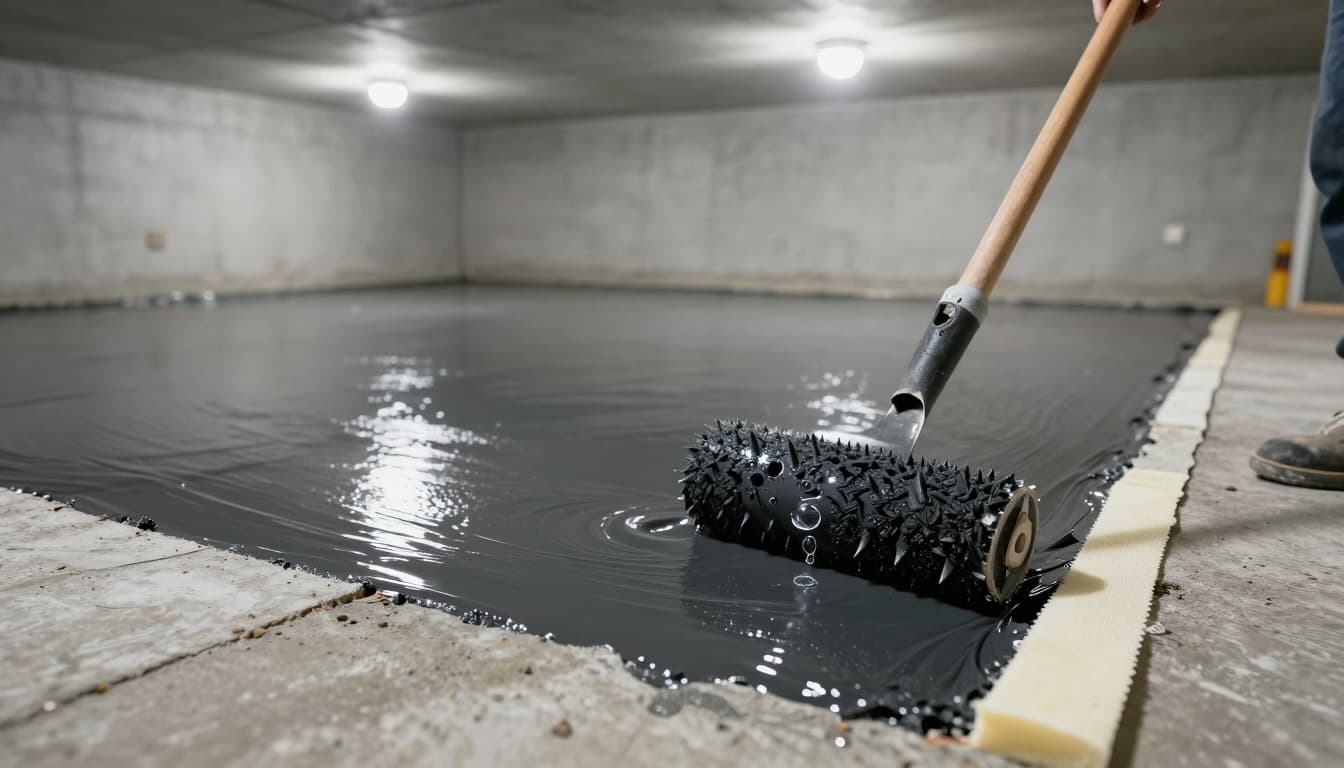
Most SLU problems happen in the first 10 to 20 minutes. The clock is loud. A calm plan matters more than speed.
Placement details that prevent thin weak areas
- Prime and stage the room: Foam perimeter strip, dam doorways, and pre-seal cracks so the material stays where you need thickness.
- Maintain minimum thickness: Feathering too thin can turn brittle or dusty, especially at edges and transitions.
- Use a gauge rake: It’s not just for “pretty.” It protects thickness and helps batches blend.
- Spiked roll quickly: It releases trapped air and helps pours knit together.
High-flow SLUs are becoming more common because they can reduce finishing work when used correctly. TEC’s overview of high-flow self-leveling underlayments is a useful snapshot of why installers are paying attention to flow and “healing” between pours. That’s one of the quiet new flooring techniques that can cut sanding and patch time on big jobs.
Cure times and site conditions: soft spots often cure in place
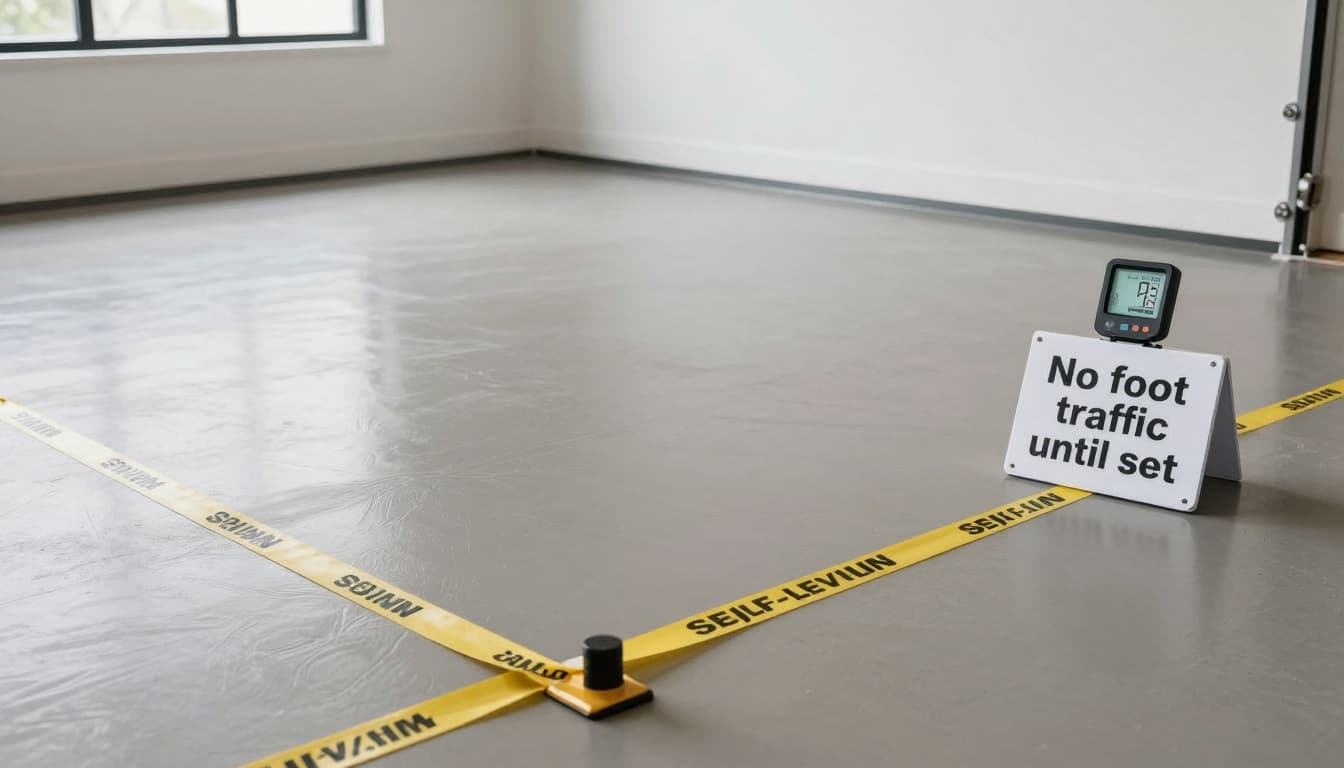
Cure time is not one number. There’s “walkable,” “ready for flooring,” and “fully dry.” Soft spots show up when the floor gets abused too soon or dries unevenly.
Protect the pour like a finish floor
Block traffic: Footprints can crush early-strength material and leave permanent weak zones.
Control temperature and air movement: Cold slows hydration, hot drafts skin the top. Keep conditions stable.
Don’t force-dry: Fans blasting across the surface can cause rapid surface drying while the body stays green.
Surface prep guidelines often call for controlling drafts and maintaining steady conditions during and after installation. This is echoed in documents like PROMA’s surface preparation guidelines for self-leveling, which emphasize protecting the work area during the early cure period.
A practical cure-time mindset
- If it’s cool and damp, assume longer set and longer dry.
- If you’re installing moisture-sensitive finishes, follow the SLU and flooring manufacturer requirements, not a guess from past jobs.
- When in doubt, test: hardness scrape test, moisture checks, and bond checks at edges.
Fast troubleshooting guide for soft spots
Soft spots rarely fix themselves. Identify the cause before you patch over it.
SymptomMost likely causeWhat to do nextSurface powders or sands easilyToo much water, poor priming, dusty slabGrind out weak layer, re-prime correctly, re-pour to specHollow sound when tappedDebonding from contamination or missed primerRemove debonded area to sound substrate, clean, prime, re-pourSoft only at edges or doorwaysThin feathered sections, material leaked outRebuild thickness with proper damming and minimum depthRandom soft pocketsUnder-mixed clumps, retempering, cold spotsCut out pockets, verify mixing method, stabilize site temp
On commercial work, these callbacks hit the flooring business twice: labor to fix it, plus schedule damage with other trades.
Flooring industry context (January 2026): why SLU quality matters more now
Crews are installing more rigid products over older slabs, and tolerance is getting tighter. That’s why flooring industry news has been paying more attention to what sits under the floor, not just the wear layer. For example, Floor Covering News has covered underlayment makers pushing water-resistant features in Underlayment: Suppliers get in on the waterproof act.
At the same time, flooring trends for 2026 continue to favor looks that highlight flatness, like long planks and large-format visuals, which don’t hide humps or dips. If you track the newest flooring products and trends, summaries like 2026 flooring trends show how style and performance expectations keep rising.
For contractors working with national accounts, this connects back to consistency from flooring factories and the field. A premium finish floor still fails if the underlayment is soft.
Conclusion
Soft spots aren’t bad luck. They’re usually a predictable outcome of skipped prep, the wrong primer approach, extra water, or curing under rough conditions. When you treat self leveling underlayment concrete work like a controlled system, not a quick pour, you get a hard surface that installers trust and customers don’t call back about.
On the next job, commit to three habits: prime to spec, measure water every batch, and protect the cure. Your finished floors will feel as solid as they look, and that’s the kind of result that lasts beyond today’s flooring news cycle.