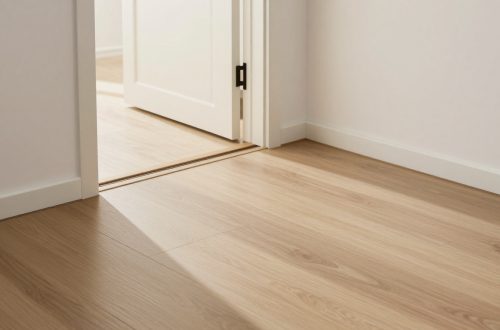
A floating LVP floor wants to slide under the trim like it belongs there. If the plank stops at the door casing, you either end up with awkward notches, tight spots that pinch the floor, or visible gaps that scream “DIY.”
The fix is simple: undercut door jamb and casing so the LVP can slip underneath while still leaving the expansion space it needs. The goal isn’t just “make it fit.” It’s making it fit cleanly, consistently, and fast enough that your install crew (or your Saturday) doesn’t stall at every doorway.
Getting the undercut height right (so LVP slides under, not jams)
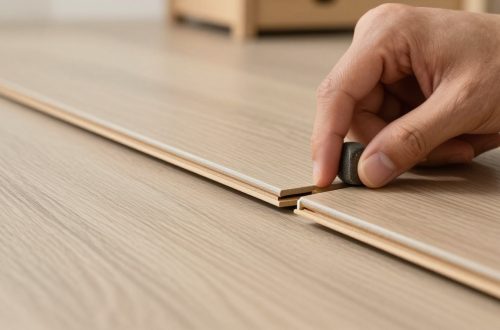
The “right height” is not a guess, it’s a stack. Use an offcut of the exact LVP you’re installing plus any attached pad, separate underlayment, or moisture barrier that sits under the plank. Put that stack tight to the jamb, then mark the cut line off the top of the stack.
A small extra bit of clearance helps the plank slide without scraping paint. Many installers aim for about a business-card thickness of breathing room, but don’t overdo it. Too high looks sloppy once the plank is under the casing.
A few practical details that prevent rework:
- Measure what’s actually going under the jamb. If the LVP will bridge onto a reducer, include that buildup where the doorway changes height.
- Mind the expansion gap. LVP is usually installed with a perimeter gap (often around 1/4 inch, but follow the manufacturer). Undercutting doesn’t remove the need for that gap, it just hides it.
- Mark both faces of the casing. Door trim is usually visible from two rooms. A line on both sides helps you cut straight and stop chip-out at the far edge.
- Check the door swing. If the door will drag after the floor goes in, address it now. A perfect jamb undercut won’t fix a door that needs trimming.
Think of the undercut like a parking garage clearance bar. If you set it too low, you scrape. If you set it too high, it looks wrong.
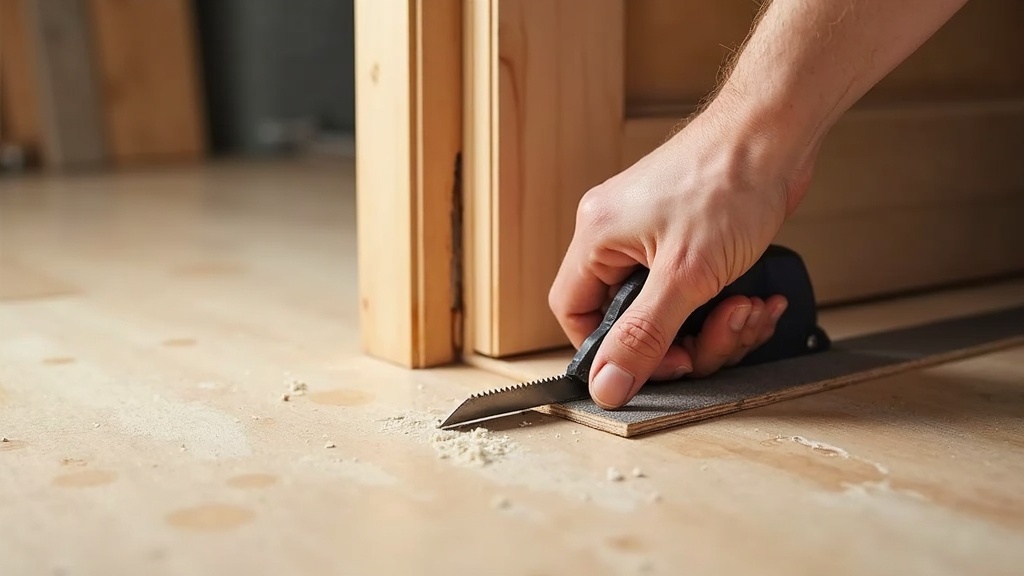
The right tool for undercutting door jambs (and what blades actually matter)
You can undercut door trim with several tools, but results depend on control. For most crews, the oscillating multi-tool is the best balance of speed and precision, especially when you’re working close to drywall returns, tile, or metal corner bead.
Here’s a quick comparison that matches what most flooring stores see in the field:
| Tool | Best for | Watch-outs |
|---|---|---|
| Oscillating multi-tool + flush-cut blade | Clean, controlled cuts in tight spots | Can overheat blades, can jump if rushed |
| Jamb saw (undercut saw) | Fast, flat cuts across wide casings | Easy to cut too deep or hit hidden fasteners |
| Fine-tooth hand saw (pull saw) | Quiet, low dust, small jobs | Slower, harder to stay perfectly level |
Blade choice matters more than brand hype. Use a sharp flush-cut wood blade for painted jambs and casing. If you suspect nails, staples, or a metal corner bead nearby, switch to a blade rated for wood and metal instead of forcing the cut. That one change prevents blade chatter that causes blowouts.
Also, treat dust control as part of the tool choice. A shop vac parked next to the cut line keeps visibility high and helps you avoid wandering off level.
How to undercut a door jamb for LVP without blowouts (clean cuts you can sell)
A clean undercut comes from setup, not muscle. Use this workflow whether you’re working over plywood or slab.
1) Prep the area like you care about the finish.
Pop off the baseboard if it’s in the way. Vacuum grit from the subfloor so the tool can ride flat. Put painter’s tape on the casing right above the cut line; it helps reduce paint flaking and makes the line easy to see.
2) Score the paint before you cut.
A sharp utility knife lightly scored along your pencil line can stop the paint from tearing past the cut. This is a small step that saves a lot of touch-up.
3) Start with a shallow pass.
Set the oscillating tool flat and let the teeth do the work. A light first pass creates a kerf that guides the blade. If you plunge to full depth immediately, the blade can grab, flex, and blow out the far corner.
4) Finish the cut in controlled passes.
Keep the blade level. Don’t twist at the end of the cut, that’s where most chip-out happens. If you can access both sides of the casing, cutting from each side toward the middle often leaves the cleanest edge.
5) Break the waste free, don’t pry it off.
After the cut, a sharp chisel can pop the strip loose. If it resists, it might be pinned by a brad nail. Cut again rather than ripping and splintering the casing.
6) Test-fit with a real plank.
Slide an LVP offcut under the jamb and casing. It should glide under without forcing. You should still be able to maintain your expansion gap behind the trim.
What causes “blowouts” and how to stop them
Blowouts are usually one of these problems:
- Dull blade: it tears fibers instead of slicing them.
- No scoring: paint and top fibers rip beyond the cut line.
- Rushing the last 1 inch: the blade exits and chips the visible corner.
- Hidden fasteners: the blade hits metal and chatters.
If you have to choose one habit to enforce on a crew, make it this: slow down for the last inch.
A quick flooring industry note (what shops are hearing in January 2026)
Install details like jamb undercuts get more attention when business shifts from new builds to remodels. Recent flooring news has pointed out that many homeowners are still holding onto low-rate mortgages, which keeps more projects in the “update the current home” lane rather than “move and build new.” That means more LVP installs in lived-in houses with doorways, tight trims, and plenty of jamb work.
On the flooring shows side, January brings a familiar cycle of product launches and training. Regional buying events and national expos are where retailers size up newest flooring products, check wear layer stories in person, and compare what suppliers are pushing. Training is also staying busy, including installer-focused workshops scheduled early in the year, which matters because the best-looking LVP floor still fails if prep and trim details get skipped.
Even at the flooring factories level, material conversations keep changing. Manufacturers and trade groups are paying more attention to testing and inputs, and that filters down into how sales teams talk about specs, compliance, and customer questions. These shifts shape flooring industry news and, over time, influence flooring trends on the showroom floor.
Conclusion
A clean doorway is one of the fastest ways to make LVP look “installed” instead of “laid.” Set the cut height with a real material stack, choose a sharp flush-cut blade, and treat the last inch of every cut like it’s the only part the customer will notice.
If you want fewer callbacks and better photos for your next install portfolio, make the undercut door jamb step a standard, not an afterthought. What doorway are you tackling next, a simple casing or a full pocket-door frame?
Keep reading
More in Uncategorized: Installing click-lock LVP around toilets, flange height, spacer tricks, and how to keep the floor floating, LVP acclimation in real homes, how long it takes, what temps matter, and when you can skip it, How to Match Floor Colors After a Partial Repair.