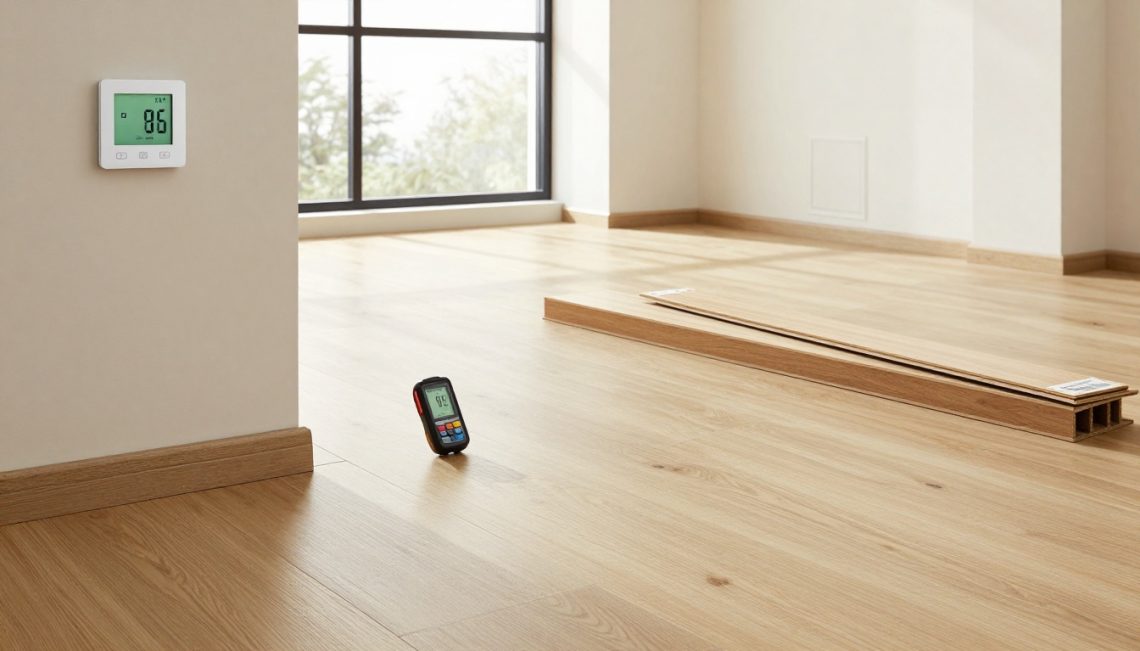
If you’ve ever opened a box of LVP on a jobsite and thought, “It’s plastic, it won’t move,” you’re not alone. Luxury vinyl plank is stable, but it’s not immune to temperature swings, tight homes, or a cold delivery truck.
LVP acclimation isn’t about following a rule because it’s always been done. It’s about reducing risk in real homes where HVAC cycles, sun exposure, and slab conditions are never as “standard” as the spec sheet.
This guide covers how long acclimation really takes, which temperatures matter most, and the few situations where skipping it can be reasonable.
What “LVP acclimation” actually means (and what it doesn’t)
Acclimation is the process of bringing the flooring material to the same general conditions as the install space before you lock it in place. The goal is simple: avoid installing planks that are still reacting to a big change in temperature or humidity.
What it doesn’t mean:
- It doesn’t “fix” a wet slab or a moisture issue in wood subfloors.
- It doesn’t replace flatness requirements.
- It doesn’t override the manufacturer’s written instructions.
Most callbacks blamed on “bad material” are really about the flooring being installed under stress, then forced to settle later. That’s when you see peaking, edge lift, gaps that weren’t there yesterday, or end joints that start talking.
Real-home conditions that change acclimation time
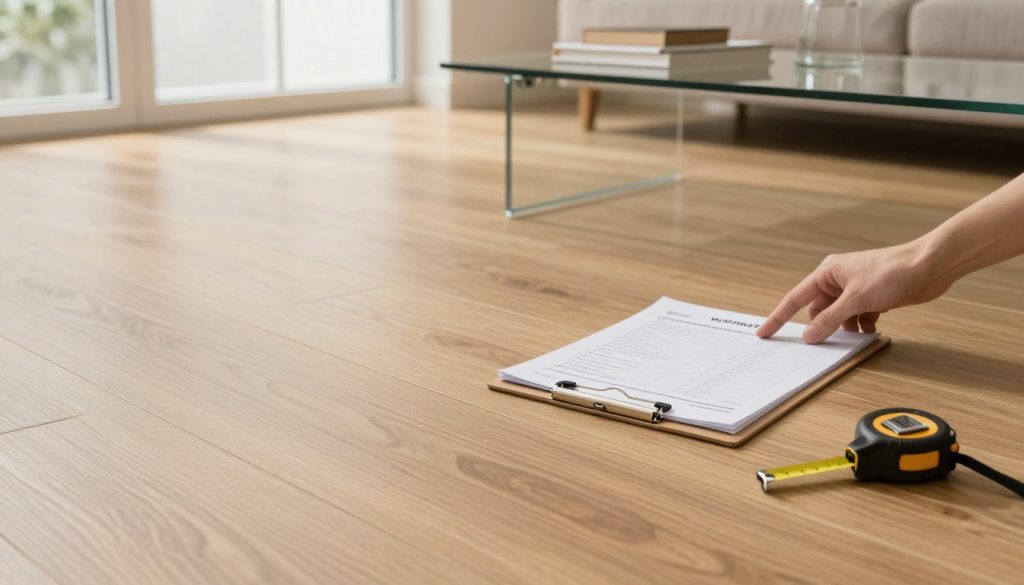
In the field, acclimation time is less about the calendar and more about the delta between where the planks were and where they’re going.
Temperature swings during shipping and storage
A pallet that sat in a cold warehouse, then rode in a box truck overnight, then lands in a 72°F living room is going through a fast change. Rigid core helps, but it still expands and contracts.
A common mistake is storing cartons in a garage “to keep them out of the way.” Garages in many climates are the exact opposite of controlled conditions.
Humidity and indoor air control
LVP itself doesn’t absorb moisture like wood, but humidity still matters because:
- Underlayments can compress and relax.
- Subfloors (especially wood) move.
- Click systems can bind if the floor is installed tight while materials are cold, then warmed.
If the home is running heat one day and windows open the next, acclimation becomes guesswork.
Product build and thickness
Some of the newest rigid-core offerings feel almost “dead stable,” and thicker constructions can seem more forgiving. Even so, thicker or denser products don’t eliminate thermal movement, they just reduce how dramatic it is. Treat premium, thicker planks the same way you’d treat any finish material: let it live in the room first.
How long does LVP acclimation take in practice?
Manufacturer instructions always win, but here’s what tends to happen on real jobs when the house is actually lived in and conditioned. Many retailer guides still recommend acclimation as a default step, even for waterproof vinyl, because it lowers installation risk (see this retailer overview on whether luxury vinyl needs acclimation).
| Real-home scenario | Typical acclimation window | Why it takes that long |
|---|---|---|
| Occupied home, HVAC steady, cartons stored indoors | 24 to 48 hours | Planks equalize to room temp, minimal stress |
| Winter delivery, cartons arrived cold | 48 to 72 hours | Core and locking edges need time to warm evenly |
| New build with HVAC not fully operating | 72+ hours | Room conditions drift, flooring keeps adjusting |
| Slab or sunroom with big daytime swings | 72+ hours (sometimes longer) | Surface temps change fast, movement risk increases |
The best “timer” is not a rule like 48 hours. It’s stable readings. If the room temp and RH are consistent for a full day and the cartons feel room temperature through the stack, you’re close.
The temperatures that matter most (and the ones people forget)
Most LVP issues tied to acclimation come down to two measurements:
1) Room temperature
Keep the space at a normal living range before, during, and after install. Many product documents call for a conditioned environment, often somewhere around the mid-60s to mid-80s Fahrenheit. The exact range varies, so verify for the product line you’re installing.
Tip that saves jobs: start conditioning the home 48 hours before material arrives, not after it shows up.
2) Subfloor temperature
Installers check the air, then forget the slab. Concrete can run colder than the room, especially on perimeter edges and below-grade.
If you install on a cold slab, then the heat kicks on, the planks expand while locked together. If there’s no breathing room, the floor has to push somewhere.
When you can skip LVP acclimation (and still sleep at night)
Skipping acclimation shouldn’t be the default, but there are a few cases where it can be reasonable if the manufacturer allows it and the site conditions are stable.
You may be able to skip or shorten acclimation when:
- The home is fully conditioned and has been holding steady temps and humidity for days.
- The cartons were stored in similar conditions (not a garage, not a shed, not a freezing truck overnight).
- You’re doing a small repair with matching material that’s already been in the home.
- The product documentation states acclimation is not required under specific controlled conditions.
Think of it like setting tile thinset: you might get away with bending a rule once, but the one time you do it on a high-risk job is the time it fails.
When you should never skip acclimation
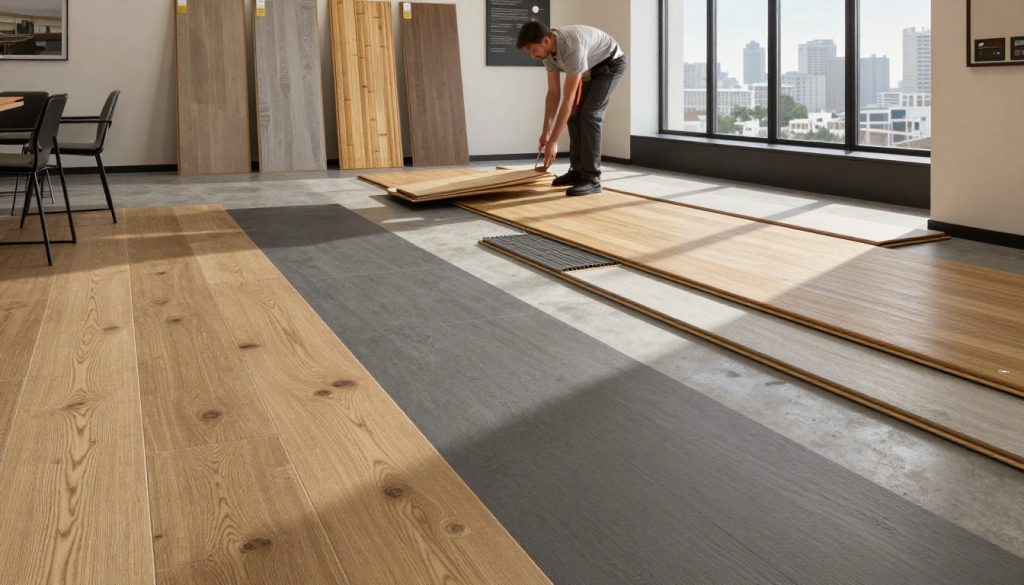
These are the homes where acclimation earns its keep:
- New builds where HVAC is not fully operating or interior doors are off and air flow is uncontrolled.
- Material delivered in extreme weather, especially when cartons are cold to the touch.
- Sunrooms and glass-heavy rooms with big solar gain changes across the day.
- Basements and slab-on-grade installs, where subfloor temperature lags behind air temperature.
- Radiant heat systems, where warm-up schedules matter.
- Any job with moisture questions, because skipping acclimation often comes with skipping testing, too.
If you only acclimate on “easy” jobs, you’re doing it backwards. The risky jobs need it most.
A repeatable LVP acclimation process for contractors
A process beats a guess, especially when crews rotate.
Stage material correctly: Bring cartons into the install area, keep them flat, don’t lean them against walls.
Run the HVAC like an occupied home: Heating and cooling should be steady before the first plank is clicked.
Measure, don’t assume: A basic hygrometer and an infrared thermometer cost less than one callback.
Check the subfloor: Flatness, temperature, and moisture. If moisture is out of range, acclimation won’t save the install.
Maintain expansion space: Leave the required gaps at all vertical obstructions.
Hold conditions after install: A sudden heat blast after install can stress the floor as much as a cold start.
For another perspective on why shops still push acclimation even with waterproof vinyl, see this contractor-friendly take on whether luxury vinyl flooring needs acclimation.
Why acclimation keeps showing up in flooring industry conversations in 2026
Even with faster installs and tougher materials, installation basics are still tied to fewer claims and better margins. That’s why flooring industry news keeps circling back to training, testing, and standards, not just the newest visuals.
In late 2025, industry reporting highlighted new methods to detect PFAS in manufacturing inputs and expanded installer education opportunities (including early-2026 training schedules). Pair that with busy flooring shows and product launches, and you get a simple reality: newest flooring products coming out of modern flooring factories still depend on controlled site conditions once they hit a real home.
If you follow broader flooring news and flooring trends, it’s clear that design is moving fast, but performance still comes down to basics like conditioning and prep. For a quick snapshot of current flooring trends, see Flooring trends expected in 2026.
Conclusion: Treat acclimation like cheap insurance
LVP is forgiving, but it’s not magic. The tighter the locking system and the bigger the temperature swing, the more LVP acclimation matters. When conditions are stable and verified, you can sometimes shorten the wait, but skipping blind is where trouble starts. Before the first row goes down, take five minutes to measure the room and the subfloor, it’s the fastest way to avoid a slow, expensive callback.