
Radiant heat and glue-down LVT can be a perfect match, but only if the adhesive is right. Heat cycles don’t just warm the room, they push the whole floor system to expand, relax, and repeat. If the bond can’t handle that movement, you’ll see edge curl, gapping, or a tile that slowly “walks” out of place.
This guide focuses on LVT adhesive radiant heat compatibility, in plain terms. You’ll learn what to look for on a data sheet, which adhesive types hold up best, and how to avoid the small install mistakes that cause expensive callbacks.
Why radiant heat is tough on LVT adhesives
Radiant systems heat from below, which means the adhesive layer gets stressed first. Think of the glue line like a suspension system on a truck. If it’s too soft, the load shifts. If it’s too brittle, it cracks under movement.
On heated floors, common failure drivers include:
Temperature cycling: Repeated warm-up and cool-down can weaken a poor bond over time.
Shear stress: LVT wants to move a bit with heat. The adhesive must resist sideways creep.
Shortened working time: Warm substrates can flash off moisture faster, which changes tack and open time.
Moisture pressure: Heated slabs can still drive vapor, and adhesive performance drops when moisture limits are ignored.
That’s why “general vinyl glue” often disappoints here. You want an adhesive engineered for resilient flooring, with specs that match the job.
What to look for in an LVT glue for radiant heat (data sheet checklist)
Manufacturers don’t all label products the same way, so it helps to read like an inspector. The best glues for holding luxury vinyl tile on radiant-heated floors usually share these traits:
Radiant-heat approval and service temperature guidance
The adhesive documentation should clearly list LVT/LVP as an approved use, and it should not conflict with heated-floor installs. If the data sheet is vague, don’t guess. Call tech support and document the answer.
A general compatibility overview is also helpful when you’re explaining the system to customers, like this guide on radiant heat with vinyl flooring.
Pressure-sensitive acrylic chemistry (often the “sweet spot”)
For many glue-down LVT jobs, pressure-sensitive acrylic adhesives are the workhorse. Once they reach the right tack, they grip hard under roller pressure and resist shear well. They also make replacement easier than hard-set options.
Moisture tolerance that matches your slab reality
If you work over concrete, moisture is never “not a thing.” Some resilient adhesives publish moisture limits, sometimes in both MVER and RH terms. When the project can’t meet those limits, handle moisture mitigation first, or choose a system designed for higher moisture exposure.
Plasticizer resistance and long-term bond strength
LVT formulations vary. A resilient adhesive should resist plasticizer migration and hold peel and shear strength long-term. This matters more on heat, because warmth can accelerate reactions in materials that aren’t compatible.
Low odor, low VOC (because jobsites are tighter now)
This isn’t just comfort. It’s part of jobsite rules, indoor air goals, and customer expectations. It also ties into broader flooring trends where healthier materials and better testing are becoming standard.
Adhesive types that typically perform best over radiant heat
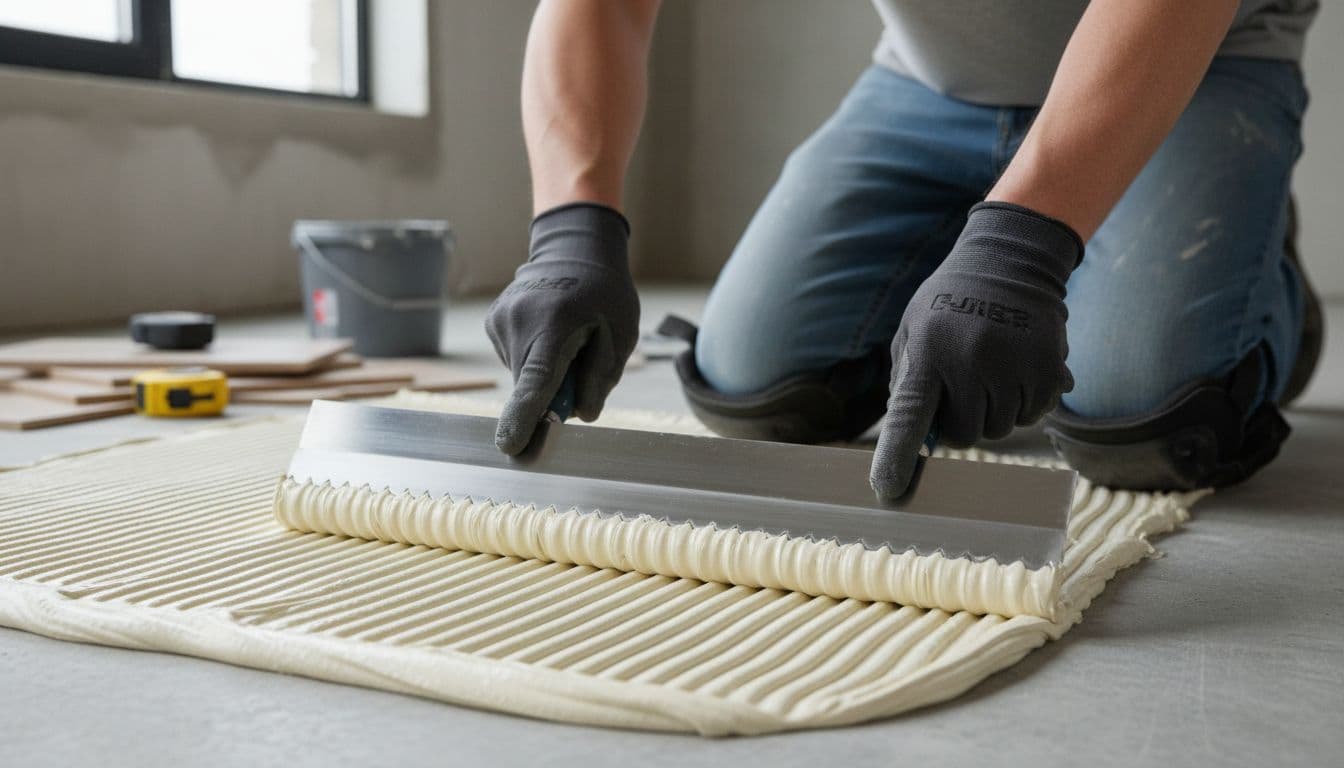
Below are common “pro-grade” adhesive categories used for glue-down LVT on heated floors. Always match the adhesive to the LVT backing and the substrate.
Pressure-sensitive resilient flooring adhesives (PSA)
Best for: Most glue-down LVT in residential and light commercial.
Why: Good initial grab after proper flash, strong shear resistance, and workable open time.
Examples worth reviewing:
- SikaBond®-5800 product data sheet (listed as a premium pressure-sensitive resilient adhesive, with high moisture resistance claims in the published sheet)
- DriTac® 6200 product data sheet (pressure-sensitive wood and resilient adhesive with a long track record)
Firm-set acrylic resilient adhesives
Best for: Areas where you want a more locked-in bond feel than a classic PSA.
Why: Tends to reduce movement and can feel more “set” under heavy use, but still installs like a resilient adhesive.
Example to reference:
- SikaBond®-6000 product data sheet (listed as a pressure-sensitive dispersion adhesive for LVT/LVP and other resilient products)
High-tack LVT-specific adhesives (retail-friendly, contractor-usable)
Best for: Smaller jobs, fast turns, stair treads, and high-traffic residential.
Why: Often easy to source and designed specifically for LVT/LVP bonding behavior.
Example listing:
Quick comparison (how contractors often choose)
| Adhesive example | Category | Why it’s a fit for radiant heat installs | Best use case |
|---|---|---|---|
| SikaBond®-5800 | Pressure-sensitive resilient | Strong tack and published moisture resistance targets | Slabs, busy homes, light commercial |
| DriTac® 6200 | Pressure-sensitive | Long open time helps when heat changes flash time | Larger rooms, paced installs |
| SikaBond®-6000 | Firm-set acrylic resilient | Designed for full-spread resilient bonding on many substrates | When you want a “tighter” set |
| Titebond 675 | LVT-focused acrylic adhesive | Built for LVT/LVP handling and high-traffic areas | Residential turns, stairs, repairs |
Installation details that matter more than the brand name
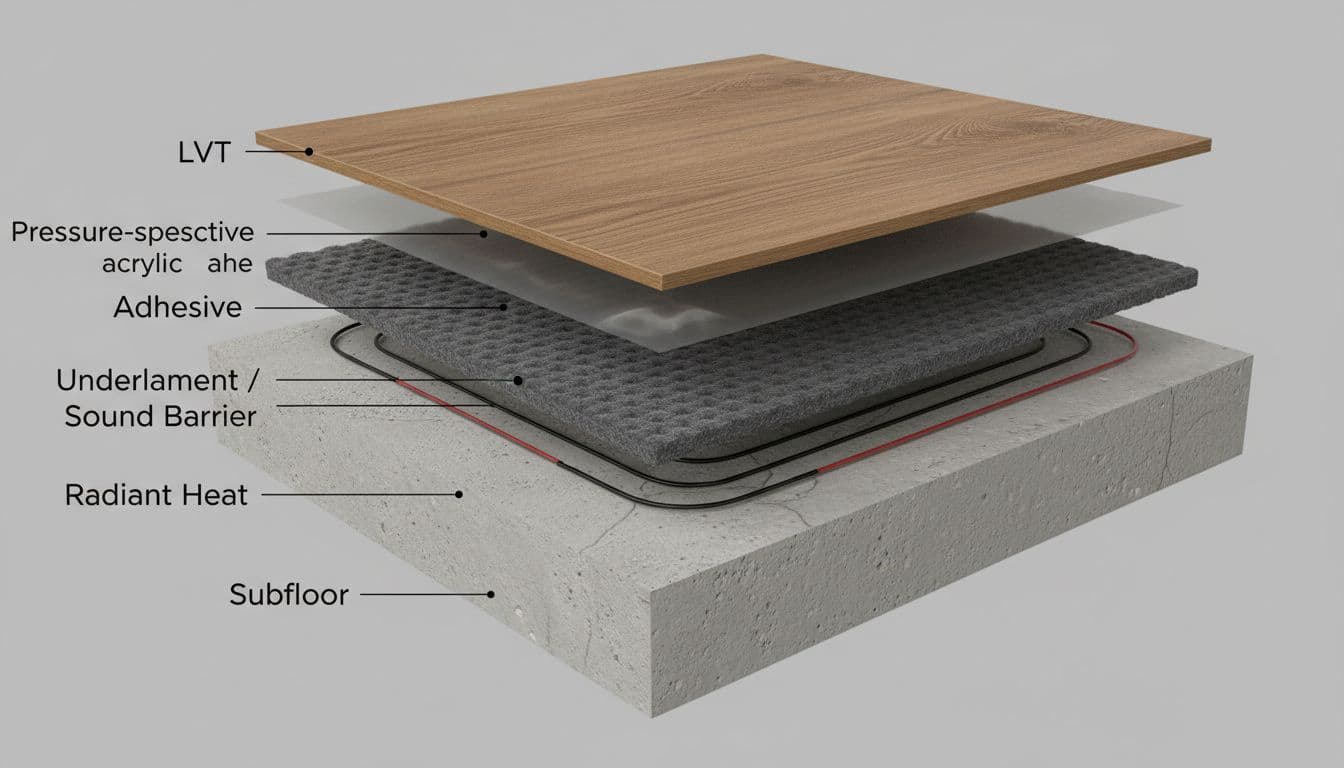
A great adhesive can still fail if the system build is sloppy. On radiant heat, these are the repeat offenders.
Subfloor flatness and skim coat discipline: LVT telegraphs. If you’re using SLU or patch, let it cure and follow primer rules. Heat makes weak prep show up faster.
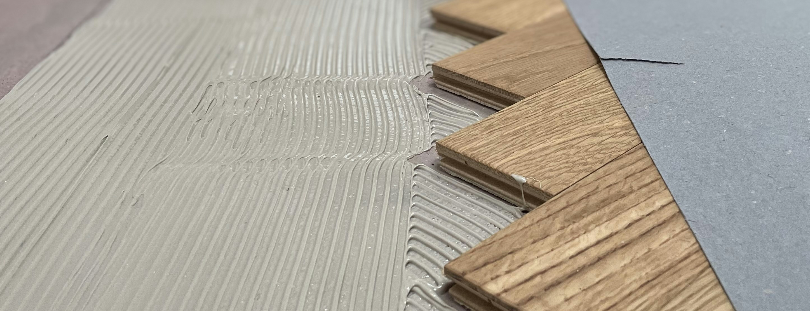
Correct trowel and coverage: Notched size is part of the system. Too little adhesive leads to voids. Too much can cause squeeze and longer dry times.
Hit the right tack window: With PSAs, setting into wet glue vs tacky glue changes everything. Warm floors can shorten that window, so stay on schedule.
Roll like it matters: Use the specified roller weight and pattern. The bond happens under pressure, not wishful thinking.
Manage heat sequencing: Many radiant systems need to be off (or reduced) before install and brought back up slowly after. Follow the radiant manufacturer and LVT maker instructions, not habits.
These basics are also where new flooring techniques are paying off. More crews are using moisture testing, substrate mapping, and documented checklists because callbacks cost real money in the flooring business.
January 2026 flooring news that affects adhesive choices
A good install isn’t just tools and skill. It’s also staying current with what’s changing around you.
Training access is expanding: The National Tile Contractors Association announced a January training schedule with free workshops and regional sessions. Even if you focus on LVT, it’s useful for crews that cross over into prep, flatness, and substrate work. See the schedule at FloorDaily’s coverage of the NTCA January 2026 education sessions.
Material testing is tightening: In flooring industry news, Shaw reported a new testing method aimed at detecting PFAS in manufacturing inputs, which reflects a wider push for better transparency in materials. That ripple hits adhesives, primers, and underlayments too. Reference: FloorDaily on Shaw’s PFAS testing methodology.
This is part of why flooring factories are leaning harder on published specs and traceable documentation. Contractors feel it on the job when GCs ask for submittals and product data, not just “what we usually use.”
It also ties to the newest flooring products and trends, where heat comfort, low-odor installs, and healthier chemistries keep gaining ground.
Conclusion: pick the adhesive system, not just the bucket
The best glue for LVT over radiant heat is the one that’s approved for your tile, your substrate, your moisture conditions, and your heat plan. Pressure-sensitive resilient adhesives are often the safest starting point, but your prep, tack timing, and rolling routine decide whether the floor stays tight for years.
If you want fewer callbacks, treat the adhesive data sheet like a contract, and keep up with flooring news that impacts materials and training. That’s how a radiant heat LVT job becomes a profit job, not a problem job.