If a floating LVP floor could talk, it would ask for one thing: room to move. That movement is tiny, but it’s constant. Temperature swings, sunlight, HVAC cycles, and seasonal humidity all nudge a floating floor to expand and shrink.
That’s why LVP transition strips are a make or break detail. A transition that looks perfect on install day can start pushing, squeaking, or popping loose months later if it traps the floor.
Retailers and installers are hearing more questions about this at flooring shows each January, especially as newer locking systems and thicker cores show up in the newest flooring products. Add the steady drumbeat of flooring news about training, compliance, and performance testing, and it’s clear that “small parts” like transitions deserve big attention.
What “pinching” really is, and why it happens at transitions
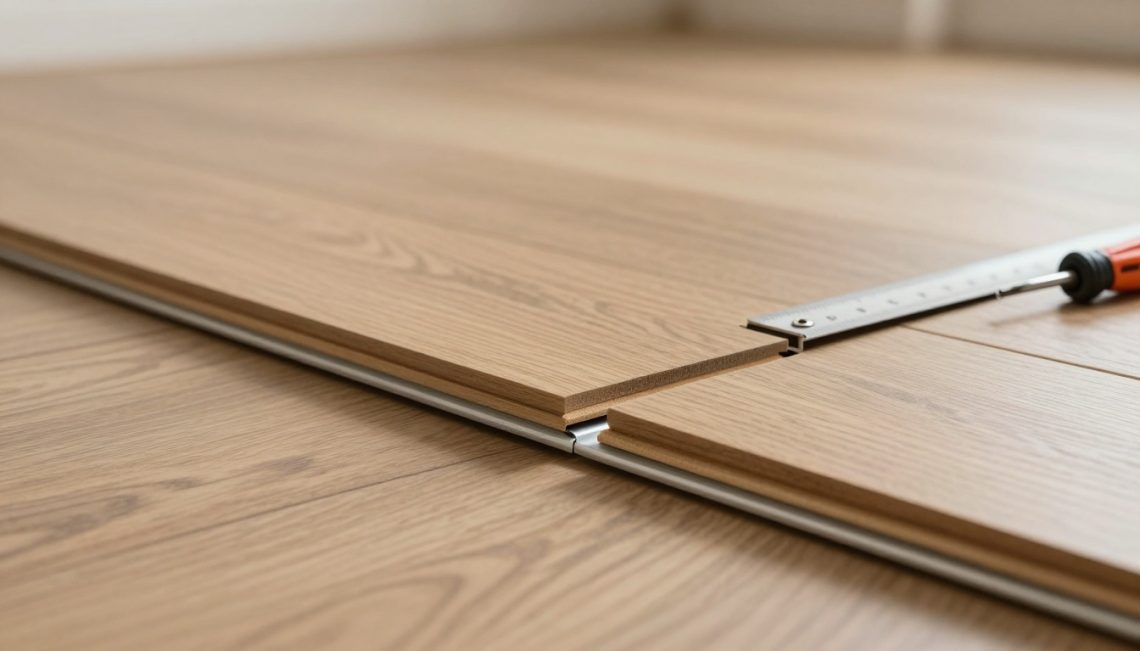
A floating floor isn’t glued or nailed down, it’s meant to slide as a single sheet. The locking joints hold planks together, but the whole field needs expansion space at the edges and at any hard stop.
Pinching happens when a transition strip presses the LVP edges down or sideways, removing that ability to move. Think of it like putting a belt on a balloon. The balloon still wants to expand, so pressure shows up somewhere else.
Common pinch points include:
- Doorways where the transition is fastened too close to the LVP edge.
- Long runs that end at a slider track or fireplace hearth.
- Two floating floors meeting under a T-molding where one side is tight.
- An overlap-style end cap that “clamps” the plank edge.
In January 2026, flooring industry news has been highlighting more installer education options (including renewed hands-on workshops from trade groups). That’s helpful, because transition mistakes are rarely a product defect. They’re usually a gap or fastening issue that doesn’t show until the floor goes through a few seasons.
Expansion gap sizing at transitions: small space, big payoff
The goal is simple: the molding covers the gap, but it never controls the floor. If the LVP can’t expand under a doorway molding, it may try to lift in the next few rows back. That’s when you see peaked joints or a bubble-like ridge.
Always start with the manufacturer’s instructions for that specific LVP and transition system. Different cores and locking profiles move differently, and tolerances vary across flooring factories.
Here’s a practical way to think about gaps without pretending one number fits every job:
| Location | Common gap target (verify with manufacturer) | What matters most |
|---|---|---|
| Perimeter walls, cabinets, posts | Often about 1/4 inch, sometimes more | Continuous space, not blocked by trim or shoe |
| Doorways with T-molding or threshold | Often similar to perimeter guidance | Gap must remain open after the track is installed |
| Heavy sunlight or big temperature swings | Often increased from baseline | Movement is larger, pinching shows sooner |
A few field rules that prevent callbacks:
- Undercut door jambs enough so the LVP can slide under without binding.
- Don’t let underlayment bunch up into the gap. Trim it clean.
- If you’re using a track, center it so the molding doesn’t sit hard against one edge.
How to fasten transitions without trapping the LVP
Most pinching problems trace back to one habit: fastening the transition through or into the floating floor area. The fix is mindset as much as method.
A floating floor should never be pierced by a transition fastener. The transition system should be anchored to the subfloor (or a separate base), and the molding should “float over” the expansion zone.
Fastener placement details that matter in the real world:
- Fasten the track, not the cap (when using a two-piece system). Tracks spread holding strength and reduce wobble.
- Use a pattern that keeps the track flat. If the track bows, the molding rocks and loosens.
- Don’t over-tighten screws. Crushing a plastic track can raise one side and reduce the gap.
- When the subfloor is uneven, address the low spot first. Shimming a track is risky if it tips the profile into the plank edge.
Adhesive-only installs can work for some profiles and substrates, but they can also fail if the floor moves and the glue bead is stiff. If adhesive is specified, a flexible construction adhesive is often preferred over brittle glue, but always follow the transition manufacturer’s guidance.
Choosing LVP transition strips that don’t “clamp” the edge
Transitions should solve a height change or a flooring break, not act like a vise.
Here’s how common profiles behave on floating LVP:
T-molding (LVP to tile or LVP to LVP): Great when both sides are close in height. The key is a centered track and a covered gap on both sides. If one side is tight, the floor may push and peak nearby.
Reducer (LVP to lower hard surface): Helpful when stepping down to vinyl sheet, thin tile, or concrete. Watch for reducers with a steep underside that touches the plank edge when walked on.
End cap (LVP to sliding door track or hearth): These are frequent pinch offenders. Many overlap the edge, so the gap must be sized so the cap doesn’t press the plank down once it’s clicked into place.
This is also where flooring trends are influencing the details. Wider planks, longer runs, and open floor plans leave fewer natural breaks. That puts more stress on transitions, especially at a single doorway that connects two large spaces.
Common failure signs, what they mean, and what to check first
Transition failures usually whisper before they shout. If you catch the early signs, you can often fix the transition without replacing planks.
Use this quick read on symptoms:
Peaking or buckling near a doorway: Often a pinched gap at the transition, or an end cap pressing down on the edge. Remove the molding and confirm the expansion space is still open.
A transition that “walks” loose: Track fasteners may be too far apart, sunk into weak subfloor, or the track is installed over debris. Re-fastening into solid subfloor usually solves it.
Clicking or squeaking at the strip: The molding may be flexing because the track isn’t flat, or the LVP edge is rubbing due to a tight fit. Flatten the base, then re-install with clearance.
Cracked molding corners: Often from stress where the profile bridges a height change that’s too great, or from repeated movement because the strip is binding. Confirm you’re using the correct profile, not forcing a T-molding where a reducer belongs.
One more note from recent flooring industry news: manufacturers are paying closer attention to material inputs and testing (including PFAS detection methods in manufacturing). For stores and contractors, that’s a reminder to document what was used on each job, including transitions and adhesives, because the small components are part of the system.
Wrap-up: transitions that stay quiet, flat, and serviceable
The best LVP transition strips do their job without grabbing the floor. Leave the right gap, fasten to the subfloor only, and choose a profile that covers movement instead of restricting it. Those habits reduce callbacks, protect margins, and keep floors looking calm through the seasons. If your team is tracking flooring trends and comparing notes at flooring shows, transitions deserve a spot on that checklist. The most reliable installs are the ones built around movement, not forced against it.