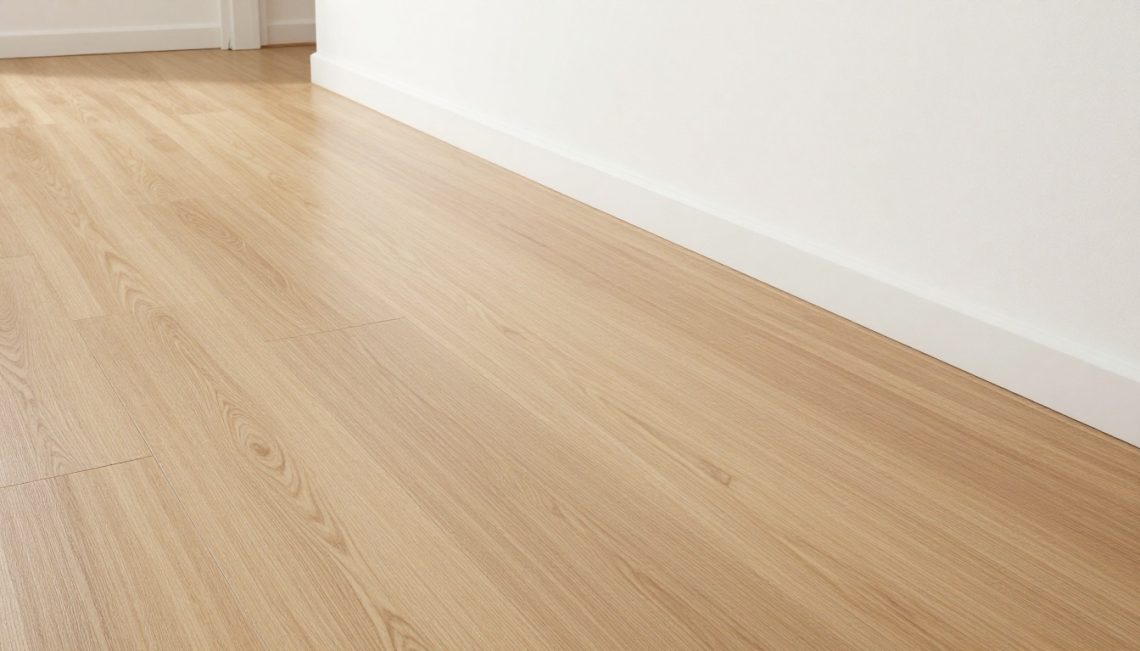
A click-lock LVP floor can look flat-out perfect on day one, then start showing repeat seams, weak spots, or visible lines once life happens. The usual culprit is layout, not the product.
If you want fewer callbacks (and fewer tense conversations), focus on LVP plank staggering rules: avoiding H-joints, keeping smart stagger ranges, respecting end-joint spacing, and using a plan that doesn’t fall apart in tight hallways.
These habits also help flooring stores and crews stay consistent across crews, even as flooring trends shift and the newest flooring products keep changing the “best practice” details.
What an “H-joint” really is, and why it causes trouble
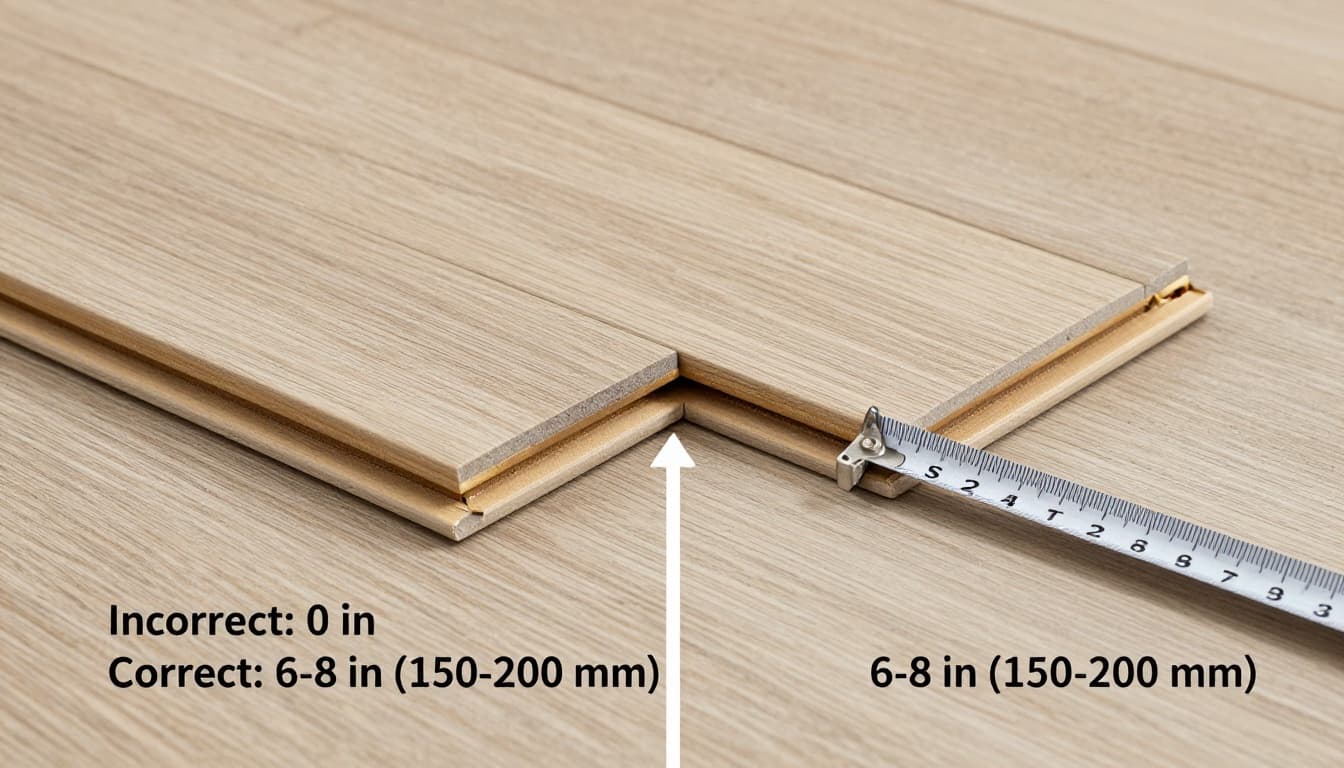
An H-joint happens when the end joints in two rows line up, and the row between them lands an end joint in the same zone, creating a blocky “H” look. Sometimes it’s a perfect H. Sometimes it’s “almost,” and it still behaves the same.
Why it’s bad comes down to how floating click-lock floors move. Instead of spreading small stresses across many joints, an H-joint stacks stress in one area. That can lead to:
- Visible seam telegraphing in certain light, especially with long, straight hall lighting
- Weaker lock points, because repeated ends create a “fault line” that flexes together
- A pattern that screams “installer,” because the eye catches repeated geometry fast
Think of it like bricks. Brick walls look strong because seams don’t line up. Line them up, and the whole wall feels suspect.
A key point for pros: most manufacturers don’t only say “avoid H-joints” for looks. They’re protecting the locking system under rolling loads, seasonal movement, and micro-subfloor changes. If the carton calls for a specific minimum offset, treat it like a structural requirement, not a style suggestion.
LVP plank staggering rules: stagger ranges, starter cuts, and end-joint spacing
Most click-lock LVP failures tied to layout come from two habits: repeating the same start length, and chasing speed instead of seam spacing.
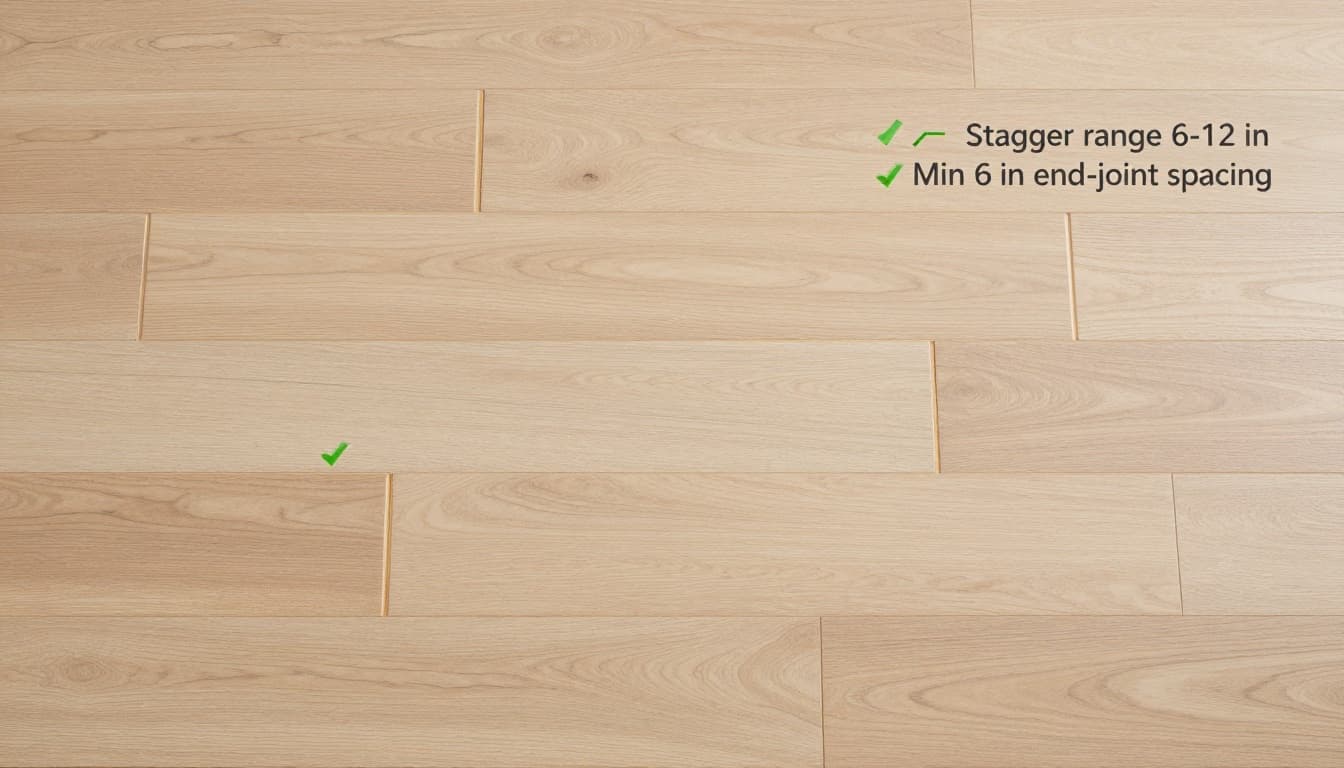
A practical approach for LVP plank staggering is to work inside a “range,” not a fixed number. Many products commonly call for something like a 6-inch minimum between end joints in adjacent rows, but specs vary. Some call for more, especially with longer planks or certain locking profiles. The carton insert wins every argument here.
To keep it clean and random without slowing production, use a small set of starter lengths, then rotate them. For example, instead of always starting Row 2 with a half plank, you might cycle different cutoffs so the offsets don’t repeat every three rows. The floor should feel “mixed,” not like a staircase.
End-joint spacing is the guardrail that prevents H-joints. Two fast checks help on every run:
Spacing check: Before you click a plank end in, look left and right one row up and one row down. If you can draw a short straight line through multiple end joints, stop and adjust.
Short-piece check: Don’t create tiny end pieces just to “make the math work.” Small ends tend to unlock first, especially near transitions and traffic pinch points.
Here’s a quick reference that matches how many manufacturers phrase layout rules (confirm against the specific product you’re installing):
| Layout item | Common rule of thumb | Why it matters |
|---|---|---|
| Minimum end-joint spacing (adjacent rows) | 6–8 in (150–200 mm) | Reduces stress stacking and seam lines |
| Minimum length of an end piece | Often 8–12 in (200–300 mm) | Avoids weak “stub” pieces that move more |
| Avoid repeating offsets | Don’t repeat a 2-row or 3-row pattern | Prevents visible striping and H-joints |
Tight hallways: how to keep staggering when the space fights back
Hallways create layout problems because they remove your wiggle room. You can’t easily “cheat” a seam a few inches when you’re boxed in by two walls, door jambs, and sometimes a long sight line that highlights every repeat.
Start by deciding direction. Most teams run LVP lengthwise in a hallway because it looks calmer and reduces the number of end cuts, but direction should still respect subfloor flatness and the customer’s visual goals.
The most reliable method is to build a controlled start:
Use a working line: Snap a chalk line (or laser line) to keep the first working row straight. In long halls, a tiny angle error becomes a nasty gap at the far end.
Build a “header” in an open area: If the hallway connects to a larger room, it’s often easier to assemble several rows in the room (where you can move), then carry the layout through the hallway opening while keeping your stagger rules intact.
Plan the doorway seams: Doorways are where installers get tempted to “reset” the pattern. If you must reset, do it honestly with a transition, not with a seam that creates an H-joint right at the pinch point.
This is also where training matters. In recent flooring industry news, installer education is getting more attention, including more hands-on sessions scheduled early in 2026. Pair that with what’s coming out of flooring factories (changes in locking profiles, wear layers, and testing practices), and it’s smart to refresh layout standards at the shop level. Flooring shows and regional markets are still one of the best places to compare locking systems in person, because photos don’t show how a joint behaves under pressure.
Conclusion: layout rules that save time, money, and reputation
A click-lock LVP floor doesn’t fail all at once, it fails at the seams. Avoid H-joints, work inside a clear stagger range, keep end joints spaced, and use a hallway plan built around a straight working line. Those steps reduce weak lock zones and make the finished floor look intentional.
As flooring news keeps highlighting shifting flooring trends and the newest flooring products, the basics still pay the bills. Set your layout rules, teach them, and inspect them early, because staggering is easier to fix in Row 3 than in a finished hallway.