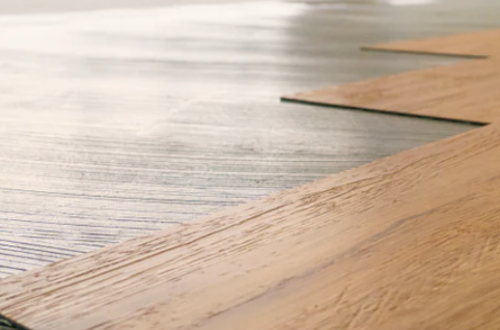
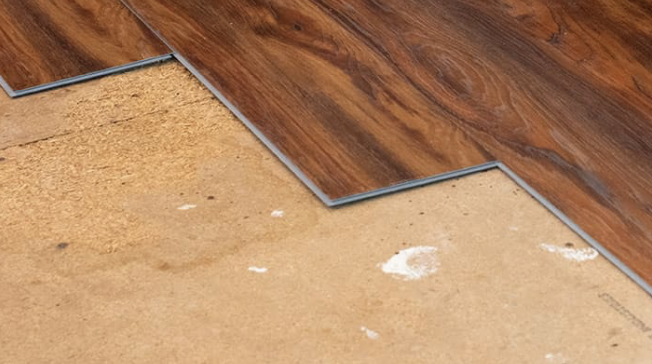
Installing luxury vinyl plank with click-lock flooring is supposed to feel like progress, fast, clean, and profitable. Then someone asks the question that can turn a simple job into a callback factory: LVP over particle board underlayment (or MDF), yes or no?
If you’ve been in retail, claims, or manufacturing support long enough, you’ve seen what happens when the underlayment is the weak link, whether in DIY flooring installation or professional installation. The floor can look great on day one, then seams swell, joints unlock, and the customer swears the product “failed.”
Below is a practical field guide to when it’s a hard no, why it fails, and what to rebuild instead, written for pros who have to stand behind the outcome. Proper flooring acclimation is also essential to ensure substrate stability.
Why particle board and MDF are weak links under click-lock LVP
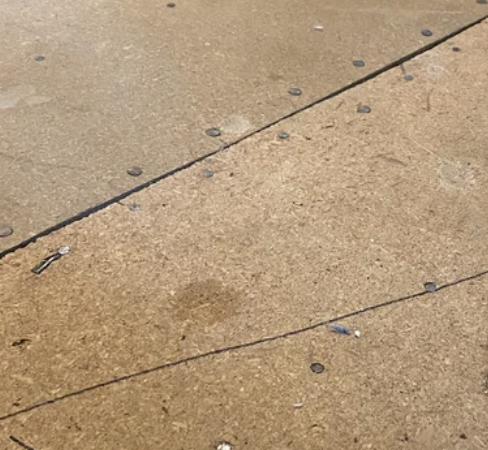
Particle board and MDF (medium-density fiberboard) are engineered wood products, but they do not behave like plywood or OSB when real life shows up. Think of them like a pressed-paper towel compared to layered veneer. They can be flat and smooth, but their moisture resistance is the problem, especially during shifts in humidity levels.
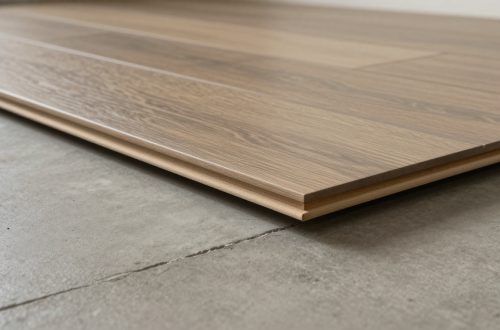
Proper subfloor preparation is the missing link with these materials. Vinyl plank click LVP, installed as a floating floor, relies on a stable, flat base so the locking mechanism stays supported. When particle board or MDF takes on moisture, it tends to swell at seams and edges first. That swelling can telegraph through thinner rigid cores, create peaks that concentrate foot traffic, and push click joints into stress. Over time, that stress shows up as peaking, gapping, or broken locks.
Even when moisture is not obvious, these panels can be sensitive to small wet events: a pet bowl spill, a wet mop, a leaky ice maker line, a dishwasher steam cycle, or seasonal humidity shifts near exterior doors. The floor might be “waterproof,” but the assembly underneath usually isn’t.
There’s also a fastening and stiffness issue. Many older particle board underlayments were installed as a smooth layer over a structural subfloor. If that top layer is loose, squeaky, or slightly crushed around fasteners, it can act like a cushion. With floating floor systems, cushion equals movement. Movement equals noise and joint fatigue. This is why floating floor LVP demands more from the substrate than solid hardwood, which tolerates minor subfloor movement through nailing.
Bottom line for production teams and retailers: the prettier the click profile and the tighter the tolerances, the less forgiveness you get from a substrate that can swell, crumble, or flex.
When LVP over particle board is a hard no (even if it “looks fine”)
Some installs are risky but manageable with the right rebuild. Others are a hard stop because the probability of failure is too high, and manufacturer warranty often won’t support you if a claim happens. For solid risk management, if your team is debating whether to roll the dice, use these “hard no” triggers.
Here are the conditions that should stop a click-lock install over particle board or MDF:
- Any known subfloor moisture history: past dishwasher leaks, toilet overflows, problems from a nearby concrete slab, or recurring pet accidents. Swelling can be permanent and localized.
- Below-grade or high-humidity spaces: basements, split-level lowers, rooms with chronic condensation, or unconditioned areas. Even if the product is rated for it, subfloor moisture means the underlayment often isn’t.
- Bathrooms and laundry rooms: not because the luxury vinyl plank can’t handle it, but because particle board and MDF are unforgiving when water leads to subfloor moisture around fixtures.
- Visible seam swell, edge curl, or “puffy” spots: if you can feel ridges at panel edges now, they’ll usually print through later.
- Soft spots, crush, or fastener failure: if a screwdriver can dig in or the surface powders, it’s already compromised.
- Out-of-flat or bouncy floors: click systems need support, unlike a plywood subfloor that provides reliable stability. Many install guides call for tight flatness tolerances (often around 3/16 inch over 10 feet, depending on the product). Particle board doesn’t solve flatness; it hides it until it doesn’t. Even professional installation with a proper expansion gap cannot compensate for a crumbling substrate.
If you need a quick refresher for sales or training decks on how click systems behave, this overview of click-lock flooring pros and cons lays out the practical tradeoffs that show up in the field.
One more “hard no” that experienced claims teams learn the hard way: if the particle board layer is acting as underlayment over a subfloor and it is not fully bonded and fastened, you can’t count on it. Floating floors don’t like floating underlayments.
Safer Rebuild Options That Protect the Install, the Warranty, and Your Reputation
These safer rebuild options cost more upfront, but they are cheaper than a failure that burns a dealer, a rep, and a brand. The right choice depends on whether the particle board or MDF is the structural subfloor or just an underlayment layer, with proper subfloor preparation as the core objective.
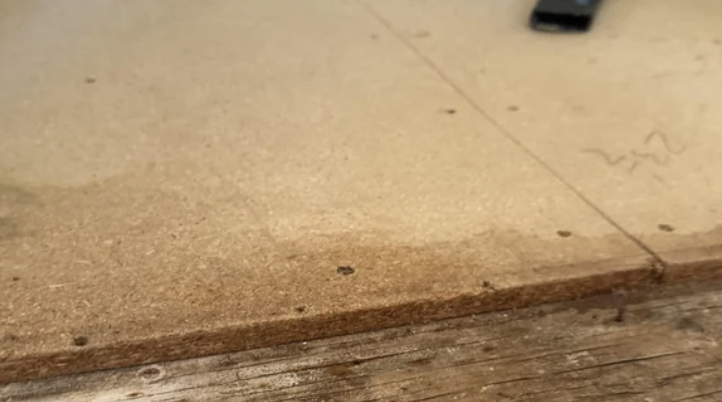
Option 1: Remove the particle board or MDF underlayment, then rebuild with plywood
If the suspect layer is a thin underlayment over a structural subfloor, the cleanest fix is usually to demo it and return to the structural layer. After that, patch and flatten, then install.
When you rebuild, use underlayment-grade plywood or an underlayment pad where needed for smoothness, installed per best practice (proper fastening schedule, staggered seams, expansion joints, correct gapping). Plywood holds fasteners better and tolerates incidental moisture far better than particle board.
This approach also gives you the best chance of meeting flatness requirements without relying on a panel that might swell later.
Option 2: If it’s the subfloor, replace with rated plywood or OSB, then flatten correctly
If the home was built with particle board as the actual subfloor (common in some eras and regions), treat it as a structural problem, not a prep problem. Spot repairs tend to create a patchwork stiffness profile that can make click floors noisy.
A full replacement with rated plywood or OSB, then proper flattening with a self-leveling compound or cement-based patch suitable for wood substrates, is the safer route.
Option 3: Change the floor system, not just the underlayment
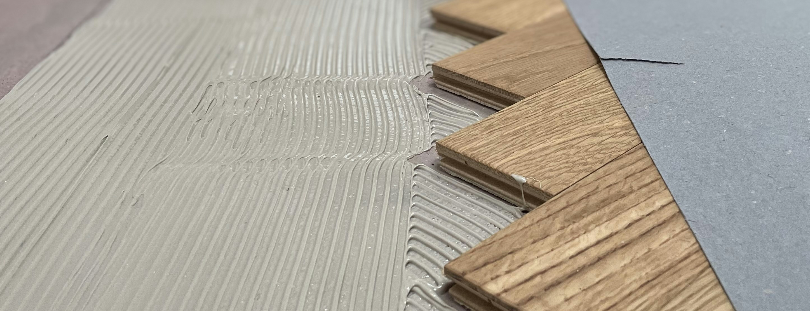
In commercial or multi-family settings, it can be smarter to re-spec the build. Sometimes an adhesive glue-down system or a different assembly performs better, but only if the substrate is appropriate and manufacturer instructions allow it, including proper t-molding transitions. This is where your technical teams, retailers, and inspectors earn their keep.
Here’s a quick decision snapshot for estimating and scoping:
| Situation | Safer path | Why it helps |
|---|---|---|
| Particle board is a thin underlayment layer | Remove and rebuild with plywood underlayment | Stops seam swell and improves fastener hold |
| Particle board is the structural subfloor | Replace subfloor panels, then flatten | Restores stiffness and long-term stability |
| Minor flatness issues on plywood/OSB | Patch and skim, then install | Meets flatness without adding a moisture-sensitive layer |
| LVP over suspect subfloor | Full subfloor preparation before install | More forgiving than engineered hardwood, avoids telegraphing |
| Engineered hardwood planned | Replace and level subfloor fully | Prevents cupping unlike solid hardwood or LVP |
What current shows and flooring industry news are reinforcing in 2026
From a business angle, this matters because claims pressure tends to rise when volumes rise. Recent flooring industry news points to a steadier 2026, which means more installs, more remodels, and more opportunities for substrate mistakes to show up months later. The International Surface Event continues to be a bellwether for what retailers and specifiers will push next, and TISE 2026 put a spotlight on newest flooring trends and products, including performance stories tied to underlayment, acoustics, and waterproof messaging. See the show recap and positioning in TISE 2026 innovation coverage and this TISE 2026 registration and preview.
In the same orbit, installer education is getting louder at annual flooring shows, with trade groups emphasizing field standards and leadership training. This WFCA education focus at TISE is a good example of where training and risk reduction are heading.
That’s relevant to factories too. As product constructions change, and as scrutiny increases around inputs and testing, flooring manufacturing factories are tightening specs while the market demands faster launches of the newest flooring products. All of it feeds back to the same truth: the floor is only as reliable as the surface it sits on.
Click-lock LVP sells on speed and simplicity, but LVP over particle board or MDF underlayment is where “simple” turns into expensive. If there’s moisture risk without a proper moisture barrier, seam swell, softness, bounce, or temperature fluctuations, buckling and gapping will follow, even after flooring acclimation; treat it as a hard no, rebuild the base, and protect the vinyl plank click system integrity. Tools like a floor gap fixer might patch buckling and gapping temporarily, but they won’t solve the underlying structural issue.
For retailers, manufacturers, and installers, the win is boring but real: stable plywood or OSB, correct flattening, and documentation that matches the install guide. Keep an eye on flooring news and flooring trends from the shows, but keep your standards old-school where it counts, the substrate. Ultimately, luxury vinyl plank performance is entirely dependent on the quality of subfloor preparation.