A flooring pallet can look acceptable from the dock and still hold damaged cartons, moisture-affected product, or broken locking edges. Once your team signs the delivery receipt without clear exceptions, recovering freight damage costs gets harder.
Fast receiving checks protect inventory, installation schedules, and customer trust. A disciplined inspection takes minutes, but it can prevent a full pallet from becoming a jobsite dispute.
Key Takeaways
- Inspect the pallet before the driver leaves, starting with wrap, corners, baseboards, and forklift access points.
- Record visible freight damage on the delivery receipt with specific notes, not vague phrases.
- Photograph the full pallet, close-up damage, pallet labels, and the signed paperwork.
- Quarantine suspect cartons until you count, inspect, and report the loss.
- Track recurring damage by carrier, terminal, product type, and inbound lane.
Start the Flooring Pallet Inspection Before Unloading
The receiving process begins when the truck backs into the dock, not after materials reach the warehouse. Watch how the driver handles the pallet and whether the load leans, shifts, or arrives with torn stretch wrap.
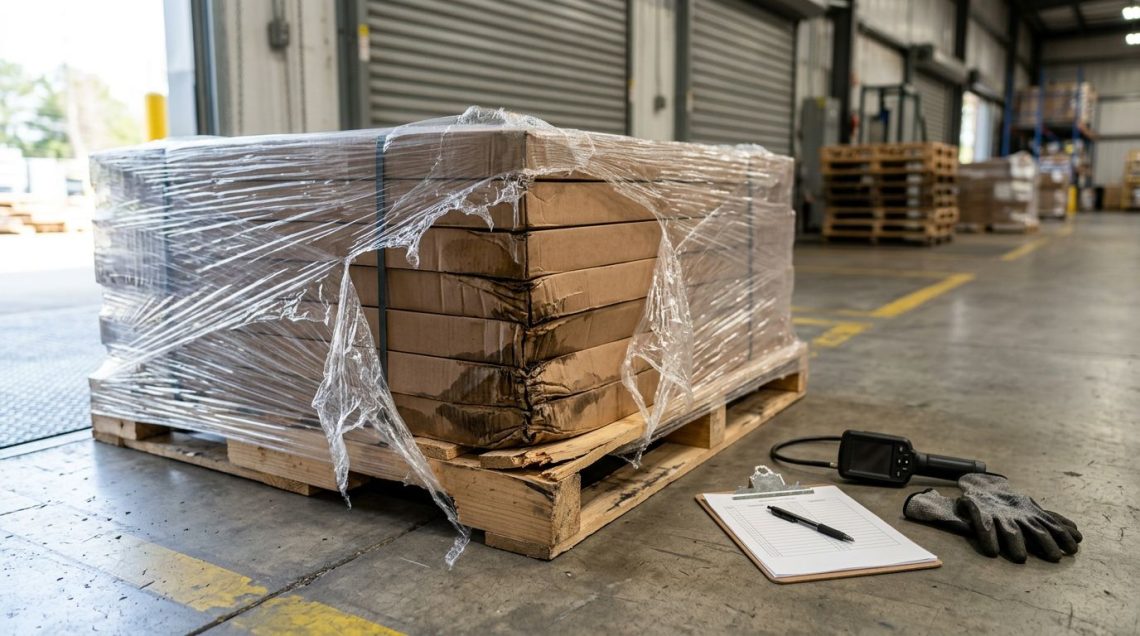
Walk around every pallet before you sign. Look at all four sides, including the back face that may have been against the trailer wall. Damage often hides where a forklift blade entered, where straps compressed cartons, or where pallet boards broke underneath the load.
Check the following conditions first:
- Torn, loose, or heavily rewrapped stretch film can point to shifting cartons or a prior exception during transit.
- Crushed carton corners may damage plank ends, tile edges, or click-lock profiles inside the box.
- Fork punctures can cut through multiple cartons, especially on low pallets of LVP, laminate, and adhesive boxes.
- Wet wrap, stained cartons, or swollen corrugate can signal rain exposure, trailer leaks, or condensation.
- Leaning stacks and gaps between cartons suggest the load moved during braking or was improperly secured.
- Broken pallet runners can let cartons drag on a dock plate or shift during forklift handling.
A pallet’s base deserves as much attention as its top. Lift the edge of the wrap only if it is safe and authorized. Then inspect bottom cartons for abrasion, water staining, and compression. Heavy tile, cement board, and rolled goods can suffer serious damage when the pallet deck fails.
Some suppliers set defined receiving expectations. For example, Floors Online’s receiving instructions advise buyers to inspect for visible carton and trim damage at delivery. Your own carrier agreement and supplier policy should set the inspection window, but crews should always use the available time.
A clean signature confirms receipt. A detailed exception note preserves the facts when the pallet arrives damaged.
Recognize the Damage Patterns That Matter
Freight damage to flooring is not always obvious. Some marks are cosmetic, while others create defects that appear only after cartons are opened. Receiving staff need to separate harmless scuffs from damage that threatens product performance or saleability.
Carton Compression and Edge Breakage
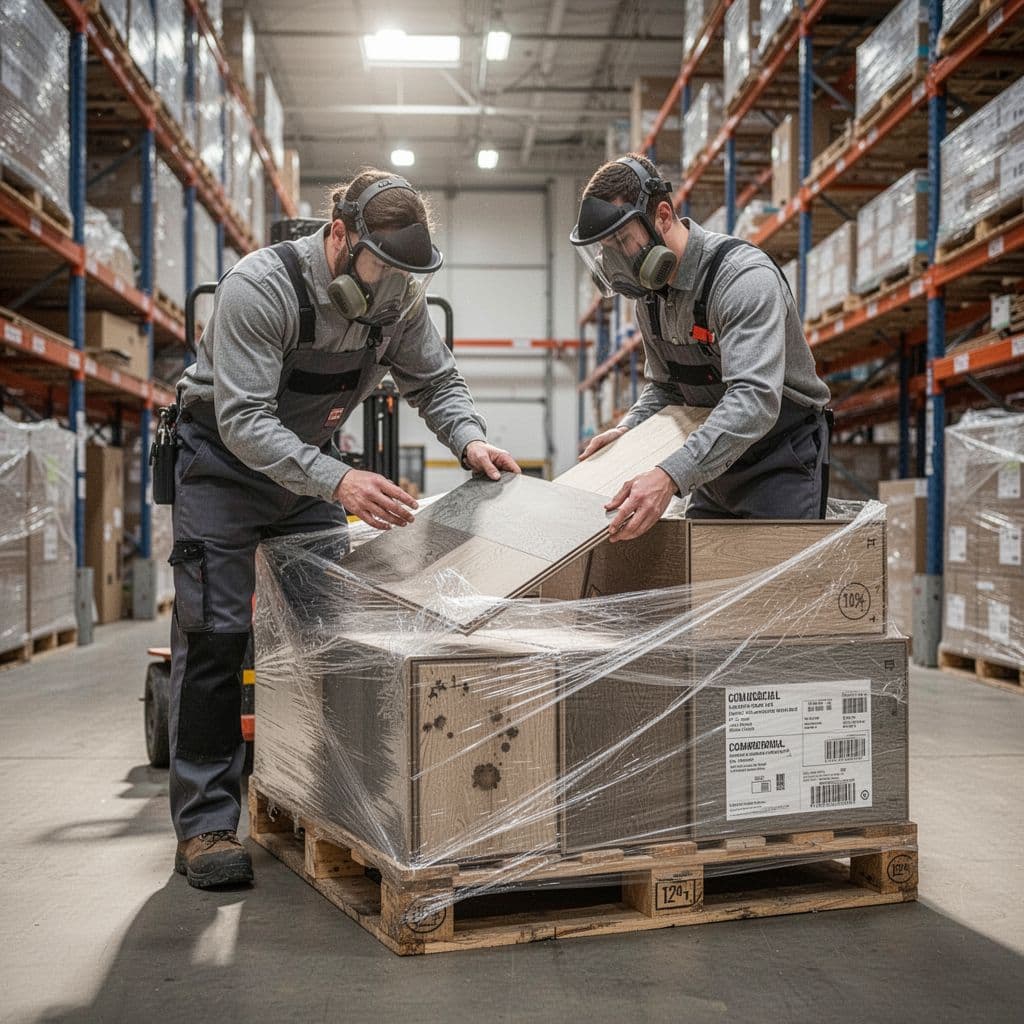
Compression damage is common when another pallet was stacked on top of flooring that was not rated for stacking. Look for bowed carton faces, crushed vertical corners, and boxes that have lost their square shape.
With ceramic and porcelain tile, cracked corners can spread through several pieces. With rigid-core flooring, compression may snap the tongue or groove along the carton edge. A box can remain closed and still contain unusable material.
Open representative cartons when the shipment shows visible impact. Select cartons from the top, middle, and bottom of the affected side. Do not pull product from only the cleanest outer layer.
Forklift Punctures and Drag Damage
Fork punctures leave little room for debate. Photograph the puncture before unloading, then count the cartons in its path. If the fork penetrated into a pallet of roll goods, inspect the roll ends and cores before moving material.
Drag damage is different. It often appears as shredded wrap, scraped cartons, and flattened lower edges. The product may have contacted rough pavement, trailer decking, or a dock plate. Damaged carton bottoms can also pick up moisture and dirt, which makes them unsuitable for a clean installation environment.
Moisture Exposure and Heat
Water does not affect every flooring category the same way. Laminate cartons may swell and boards can cup or lose edge integrity. Wet hardwood packaging can change the product’s moisture condition. Adhesive labels and batch information may become unreadable. Tile often survives water exposure, but soaked cartons weaken and make breakage more likely during handling.
Look for tide lines, soft corrugate, rust on metal banding, damp pallet wood, and condensation inside clear film. Separate material exposed to water before it sits in a conditioned warehouse.
Heat can also matter. Prolonged high temperatures may affect adhesive pails, seam sealers, resilient flooring, and packaging. Note trailer conditions if products arrive hot, distorted, or fused to their wrapping.
Document Freight Damage Before It Becomes a Claim Problem
Photographs alone are not enough. The bill of lading, delivery receipt, pallet labels, count sheet, and report to the carrier need to tell the same story.
Start with wide images that show the entire pallet in the truck or at the dock. Next, capture each damaged side, the affected carton labels, close-ups of punctures or wet areas, and the pallet identification label. Include the trailer number when available. Your phone’s date and time stamp can support the record, but save the original files too.
On the delivery receipt, write direct notes such as “Pallet 4, six cartons crushed on northeast corner” or “Pallet 7, wet cartons and torn wrap, concealed damage possible.” Avoid phrases like “possible damage” when you can identify the condition. Never write “received in good condition” if the pallet is visibly compromised.
If the driver refuses to wait, record that fact on the receipt and take photographs immediately. Keep damaged material, packaging, and pallet pieces until the carrier or supplier confirms disposition. Many policies require the consignee to retain material for inspection. Arko Flooring’s receiving policy states that reported damaged material may remain available for a carrier decision on inspection, pickup, or disposal.
Create a receiving report with these fields:
| Record | What to Capture |
|---|---|
| Shipment identity | Purchase order, bill of lading, carrier, trailer, delivery date |
| Product traceability | SKU, color, lot or dye lot, carton count, pallet number |
| Damage description | Location, type of damage, affected quantity, suspected cause |
| Evidence | Photo file names, signed receipt, driver name, receiving staff |
| Next action | Quarantine location, claim number, supplier contact, disposition |
Send the report on the same day. Waiting until installers find broken planks at the jobsite blurs the line between transit damage, warehouse handling, and installation loss.
For LVP and similar products, receiving documentation also supports warranty protection. The pre-installation flooring inspection guide explains why visible defects should be identified before installation begins. Once damaged material goes into the floor, the claim becomes harder to separate from installation conditions.
Build a Fast Receiving Routine Your Team Will Use
A workable process beats a detailed procedure that nobody follows during a busy delivery. Give warehouse staff a standard inspection sequence and the authority to hold questionable material.
First, compare the delivery count with the bill of lading. Second, inspect the exterior of every pallet before unloading. Third, photograph anything questionable before the pallet moves. Then write precise receipt exceptions, move suspect goods to a marked quarantine area, and notify purchasing or customer service.
Use a receiving checklist on a phone, tablet, or clipboard. The form should take less than five minutes for a normal shipment. However, it must prompt the receiver to check moisture, fork damage, crushed cartons, pallet condition, count accuracy, and product labels.
Train teams to inspect product before a transfer between locations. A pallet may arrive intact at a flooring store but sustain damage during warehouse movement or jobsite delivery. Each handoff should have a clear custody record.
Flooring manufacturing factories can reduce claims by photographing loads before shipment and applying visible pallet IDs. Distributors and retailers can use the same IDs to identify patterns. If one carrier terminal repeatedly produces fork damage, the data gives purchasing staff a basis for corrective action.
Use Flooring News and Shows to Improve Incoming Quality
Receiving practices change as materials and packaging change. The newest flooring trends and products often introduce longer planks, larger-format tile, more rigid cores, and mixed accessory packs. Those formats can change how a pallet handles under load.
Follow flooring news and flooring industry news for updates that affect product handling, packaging, and testing. Recent discussion around PFAS testing in manufacturing materials also shows why traceability has become more important across the supply chain, including product lots and supporting documentation.
Annual flooring shows remain useful for more than color forecasts. Ask manufacturers about pallet stacking limits, corner protection, moisture barriers, load diagrams, and carrier claim procedures. Compare the newest flooring products in person, then ask how their cartons perform in real warehouse conditions.
Trade events also help teams see packaging details that photos hide. As Flooring Markets has noted, people sourcing products in person can inspect texture and color directly. The same hands-on approach applies to cartons, edge guards, and pallet construction.
When a new supplier or SKU enters your inventory, inspect the first several shipments more closely. Rubber Flooring 4U’s shipping guidance also highlights exterior checks such as damaged box corners and torn wrapping, which are basic signs that should trigger a closer review.
Make Every Pallet Receipt Defensible
Fast inspection is not about slowing trucks down. It is about finding damage while the evidence is still at the dock, the driver is present, and the product has not passed through another crew’s hands.
Build the habit around visible checks, clear paperwork, good photographs, and a quarantine process. Consistent freight damage flooring records protect both the material and the people responsible for it.
Conclusion
A damaged pallet rarely fixes itself after it enters inventory. The strongest response is a documented dock inspection that identifies damage before unloading and before anyone signs away the facts.
When every receiver follows the same sequence, freight claims move faster and damaged flooring stays off the jobsite.