 SW-01 · Materials & Supply
After March 22, 2019, hardwood plywood, medium-density fiberboard and particleboard, and finished goods containing them, must be labeled as TSCA Title VI compliant 1. EPA states that the TSCA Title VI and CARB Phase II emission standards are set at identical levels 1. Fabricators, importers, distributors and retailers must take reasonable prudent precautions, such as obtaining statements of compliance from suppliers 2.
The federal formaldehyde rule for composite wood covers three panel types: hardwood plywood, medium-density fiberboard (MDF) and particleboard.3 It also covers finished goods that contain them, and CARB's comparison table names flooring as an example of a finished good.2 After March 22, 2019, these products must be labeled as TSCA Title VI compliant.1
For a dealer or specifier, the job is mostly paperwork. Know what the label should say. Know who certified the panel. Be ready to hand over the supplier's compliance statement when an owner, architect or regulator asks.
Two rules, one emission standard
California moved first. CARB's Airborne Toxic Control Measure was introduced in two phases between 2009 and 2013, and Phase 2 brought the more stringent emission standards.2 As of January 2014, only Phase 2 compliant products are legal for sale in California.2
EPA published its national final rule on December 12, 2016.1 It implements the Formaldehyde Standards for Composite Wood Products Act, which added Title VI to the Toxic Substances Control Act.3 TSCA Title VI became effective on May 22, 2017, with a manufacture-by date of June 1, 2018 for the emission standards.2
EPA states that the TSCA Title VI and CARB Phase II emission standards are set at identical levels.1 The Federal Register summary sets hardwood plywood made with a veneer core or a composite core at 0.05 ppm.3 The sources used here do not quote the particleboard and MDF limits. Get those figures from the panel producer's certification, not from a sales sheet.
For goods sold in California, the more stringent requirement applies wherever the two rules differ, whether it is CARB's or EPA's.2 CARB accepts panels and finished goods carrying a TSCA Title VI compliance label.2 Such products are assumed to meet all CARB requirements, including the ones stricter than TSCA.2
Who and what the rule reaches
The rule applies to these products when they are sold, supplied, offered for sale, or manufactured, including imported, in the United States.3 Affected businesses include panel producers, fabricators of finished goods, and distributors, importers and retailers of both.2 Building material and supplies dealers appear on EPA's list of potentially affected entities.3 A business that fits more than one category must meet the requirements of each.3 EPA's example is an importer of panels who also fabricates finished goods.3
One clarification matters to installers. Among its changes from the proposal, EPA clarified certain terms under TSCA Title VI to exclude renovation and construction activities.3 The panels and finished goods sold for that work are still covered products.1
Veneered products and the laminated product rules
The rule's definition of hardwood plywood exempts laminated products made by attaching a wood or woody grass veneer to a compliant core or platform.3 The resin must be phenol-formaldehyde, or a resin formulated with no added formaldehyde as part of the resin cross-linking structure.3 Producers claiming the exemption must maintain records demonstrating eligibility.3
Laminated product producer provisions carry a compliance date of March 22, 2024.1 From that date, non-exempt laminated product fabricators must meet the requirements for hardwood plywood panel producers, including routine emissions testing and third-party certification.2 For a veneered floor, ask the maker which side of that line its product sits on. Core construction itself is covered in engineered wood flooring cores.
Small components and the California difference
Under TSCA Title VI, a finished good needs no label if its composite wood content does not exceed 144 square inches, based on the surface area of the largest face.2 That exemption covers labeling only, not the recordkeeping requirements or other provisions.3 CARB has no such cutoff. It requires all finished goods to be labeled as containing Phase 2 compliant composite wood material, regardless of amount.2
On a California job, check small trim and transition parts against the CARB rule, not the federal one. For the material itself, see wrapped MDF trim and moldings.
What the label must show
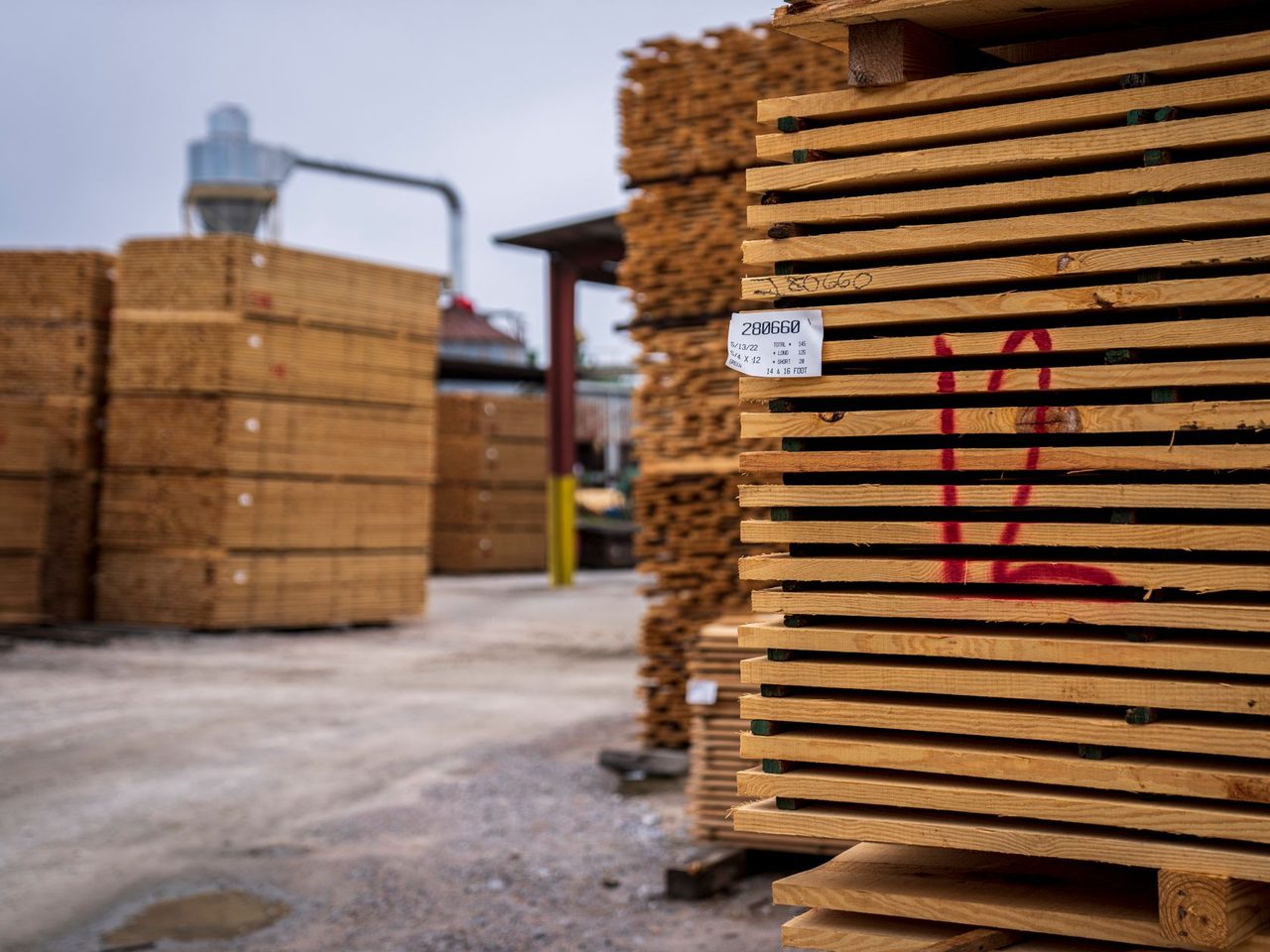
CARB's comparison table lists the label content required under TSCA Title VI.2
- Panels, or bundles of panels: the panel producer's name, the product lot number, the compliance level (TSCA Title VI or NAF/ULEF), and the EPA TSCA Title VI third-party certifier number.2
- Finished goods, or the box they ship in: the fabricator name, the production date (month/year), and the compliance level.2
- Optional on finished goods: a note that the good is made with NAF/ULEF products, if true for all composite wood products in it, or with a combination of TSCA Title VI and NAF/ULEF products.2
The certifier number belongs on the panel label. It is not among the finished-good label fields in that table.2 EPA's August 21, 2019 technical amendments clarified that labels on compliant products are required at point of entry in the United States.1
CARB does not require each panel or finished good to be labeled when the bundle or box is labeled.2 TSCA Title VI is stricter. Importers, distributors, fabricators and retailers must have a method, such as color-coded edge marking, to identify the supplier of each compliant panel and finished good.2 Once cartons are broken down, that link is easy to lose. Record the label at receipt. See inspecting flooring deliveries.
Older labels and transition dates
From June 1, 2018 until March 22, 2019, regulated products could be labeled as either CARB ATCM Phase II or TSCA Title VI compliant.1 Products made in or imported into the United States after that date may not rely on CARB reciprocity.1 Their certification and labeling must come from an EPA-recognized certifier holding all the required accreditations.1 Panels produced in or imported into the U.S. before June 1, 2018 may still be sold or used to make finished goods.2 So a carton showing only a CARB mark raises a question about its production date. It is not automatic proof of a problem.1 2
The table sets out the main points where the two rules part ways.
| Item | CARB ATCM | TSCA Title VI |
|---|---|---|
| Record retention | Two years2 | Three years2 |
| Small finished goods | All labeled, regardless of amount of composite wood2 | No label if content does not exceed 144 square inches2 |
| Unlabeled pieces | Not required when bundles or boxes are labeled2 | Supplier-identification method required, e.g., color-coded edge marking2 |
| Import certification | Not required2 | Required for all imported finished goods as of March 22, 20192 |
The certification behind the label
Under TSCA Title VI, compliance must be verified by an EPA-recognized third-party certifier. CARB requires a CARB-approved one.2 Certifiers regularly inspect panel producers and conduct, oversee and verify formaldehyde emissions tests.3 Panel producers must run quality assurance and quality control programs and test product emissions regularly.3 They must also have the certifier conduct or oversee quarterly testing.3 Under CARB, third-party certification is limited to panel producers and does not include fabricators of finished goods.2
No-added formaldehyde (NAF) and ultra low-emitting formaldehyde (ULEF) resins change the testing, not the labeling duty.2 Products made with them may be eligible for reduced testing or a limited exemption from certifier oversight.3 That follows an initial testing period of three months for NAF or six months for ULEF.3 NAF/ULEF panels still require the certifier number on the label.2

Records and supplier statements
Fabricators must obtain bills of lading, invoices or comparable documents and keep them for 3 years.3 The rule's summary table pairs import certification under TSCA section 13 with a stricter record set.3 Those invoices must bear a statement of TSCA Title VI compliance.3 Records identifying the panel producer, production date, supplier and purchase date must be available to EPA within 30 calendar days of request.3
The duty reaches past the mill. Fabricators, importers, distributors and retailers must take reasonable prudent precautions, such as obtaining statements of compliance from suppliers.2 That statement is easy to get at order time. Chasing it after a returned submittal costs schedule. The dealer or contractor who bought the material usually absorbs that cost.
FloorScore answers a different question
FloorScore is an indoor air quality certification for hard surface flooring, adhesives and underlayments. SCS Global Services developed it with the Resilient Floor Covering Institute.4 The program sends a product to an approved independent lab for emissions testing to the California 01350 standard.4 TSCA Title VI is a federal emission rule for hardwood plywood, MDF, particleboard and finished goods containing them.3 One does not stand in for the other. If a specification asks for both, submit both. Field detail sits in the FloorScore and VOC checklist.
What to ask for and put in writing
- The carton label: fabricator name, production date (month/year) and the compliance level.2 Photograph it at delivery.
- For panel goods: producer name, lot number and the certifier's number.2
- A written statement of compliance from the supplier, filed with the order.2
- Bills of lading or invoices, kept for 3 years.3
- On veneered products: whether the maker claims the laminated product exemption and keeps eligibility records.3
- On California jobs: CARB labeling on small finished goods, regardless of composite wood content.2
- On imported finished goods: confirmation of import certification.2
- How the dealer traces each panel or finished good back to its supplier once boxes are broken.2
- Where the specification also names FloorScore, the separate certificate. See the submittal checklist.
Sources
- U.S. Environmental Protection Agency, “Formaldehyde Emission Standards for Composite Wood Products”. 19january2025snapshot.epa.gov:443/formaldehyde/formaldehyde-emission-sta
- California Air Resources Board, “Comparison of CARB ATCM and TSCA Title VI requirements”. ww2.arb.ca.gov/sites/default/files/classic/toxics/compwood/comparisontab
- Federal Register (EPA), “Formaldehyde Emission Standards for Composite Wood Products (final rule)”. federalregister.gov/documents/2016/12/12/2016-27987/formaldehyde-emissio
- SCS Global Services, “FloorScore® Indoor Air Quality Certification”. scsglobalservices.com/services/floorscore
General information for the flooring trade. This article was drafted with AI assistance and checked against the sources listed above; the manufacturer's current instructions and the project specification govern any real job. If something here is wrong or out of date, tell us.