That sharp crack when you’re closing an end joint can stop a job cold. One minute the planks are clicking together, the next you’re staring at a chipped tongue, a broken tab, or an end seam that won’t stay tight.
Click lock LVP snapping at the short ends usually isn’t bad luck. It’s a small setup problem that stacks up until the lock profile can’t take it anymore. The good news is that most fixes don’t require starting over, they require changing what you do on the very next row.
Below are the eight most common causes, what they look like in real time, and the adjustment that prevents the next end joint from breaking.
What a snapped end joint looks like (and why it fails so quickly)

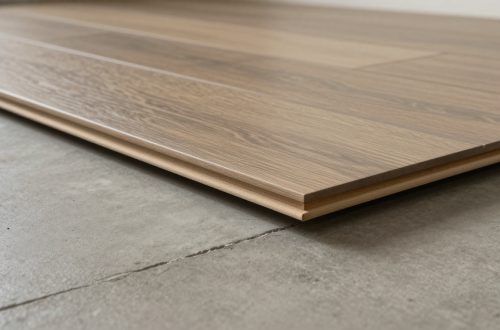
A click-lock end joint is a small mechanical latch. When it’s aligned, it flexes just enough to hook, then it relaxes and holds. When it’s misaligned or forced, it doesn’t “flex,” it shears.
Snapping often shows up as:
- A tiny chip missing from the end tongue or groove.
- White stress marks on the profile (a warning that it’s about to go).
- A seam that looks closed, then opens back up after a few boards.
- An end that “mushrooms” from repeated tapping and won’t lock cleanly.
Here’s the key idea for crews and store installers training new hands: if you need more force each row, something is drifting out of spec. Click systems are designed to assemble with controlled pressure, not a beating.
When an end joint breaks, pause and inspect three things before you lay another plank: the broken profile (is it crushed or clean snapped), the row alignment (is it arcing), and the floor support under the joint (is there a dip). Those three clues usually point to the cause.
The top 8 causes of click-lock LVP end joints snapping (and what to change on the next row)
1) Wrong entry angle on the short end
If the plank goes in too flat, the tab catches and tears. On the next row, lift the mating plank slightly, engage the end joint first (as the manufacturer allows), then lower it into plane instead of forcing it sideways.
2) No support under the end joint during closure
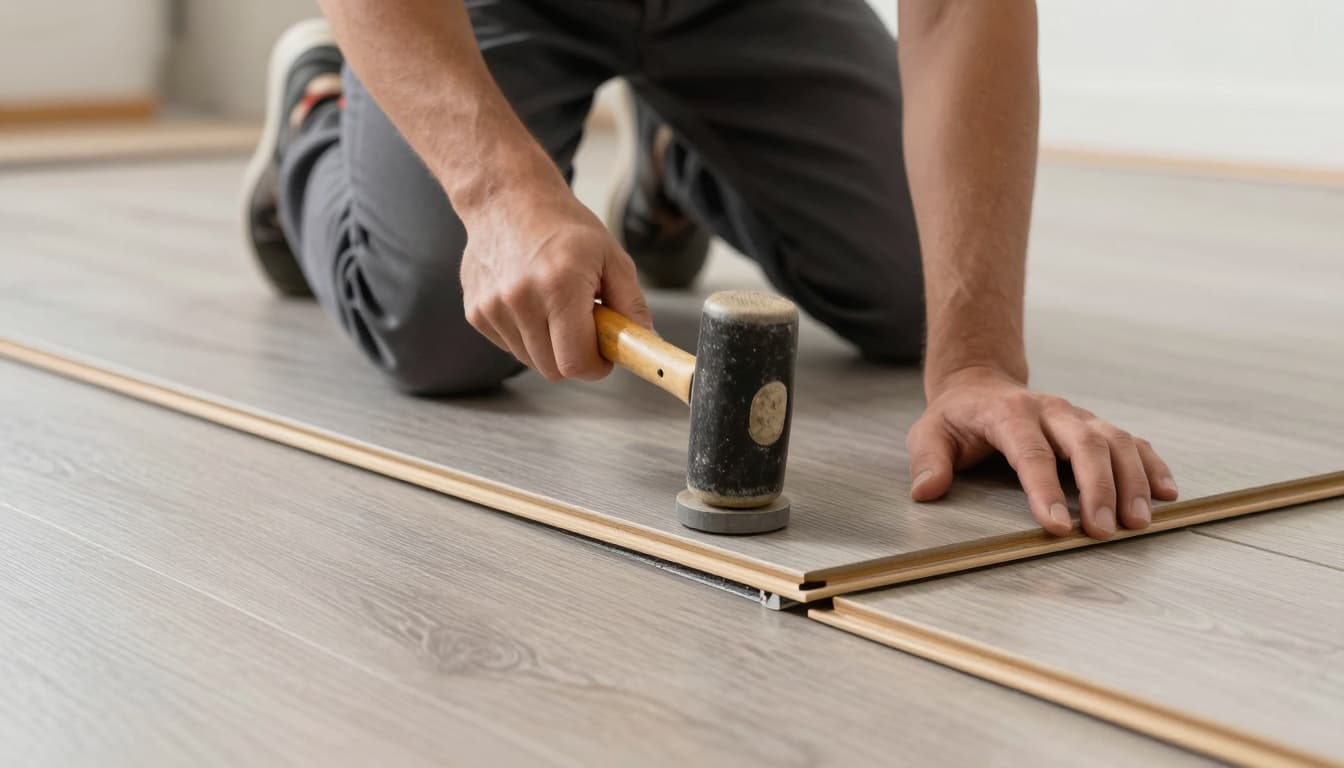
A small dip under the seam turns tapping into bending, and the lock pays the price. On the next row, press down right over the end joint while closing it, or bridge the area with your hand or knee so the joint can’t flex downward.
3) Over-tapping, or tapping the plank instead of the block
Repeated hard hits crush the profile, even if it doesn’t snap immediately. On the next row, use the correct tapping block (made for that profile), use lighter strikes, and stop the second the seam is tight.
4) Debris, edge damage, or factory dust in the joint
A grain of grit can hold the joint open just enough that the lock breaks when you “finish” it with a mallet. On the next row, brush or vacuum the ends, and reject any plank with a dinged corner before it enters the field.
5) Subfloor out-of-flat right where the ends land
End joints hate localized humps, especially near seams. On the next row, shift your layout so end joints don’t keep landing on the same high spot, then address the floor (sand high areas, fill low areas) to the product’s flatness spec.
6) Bad staggering and tight end-joint spacing
When end joints line up too closely, the row behaves like a hinge and you end up fighting the click. On the next row, follow the minimum stagger rule for that product, avoid repeating short end pieces, and keep end joints from forming a pattern.
7) Row drift, or “banana row” buildup
If the row creeps, every new plank is being forced into a slight curve, and the end locks snap under side load. On the next row, square the run, check the starting line, and use spacers or a straightedge to keep rows true.
8) Temperature, acclimation, or pinched expansion space
Cold planks can be stiff and brittle, and tight perimeter gaps can preload the joints. On the next row, bring material and room into the recommended range, keep expansion gaps clear, and confirm trim or drywall isn’t trapping the floor.
A next-row routine that prevents broken end joints (and reduces call-backs)
Most snapping problems disappear when the crew follows the same quick rhythm each row: align, support, close, verify, then move on. Think of it like zipping a jacket, if the teeth aren’t lined up at the bottom, pulling harder only makes it worse.
A simple quality check that works on busy installs: after every 3 to 5 planks, stop and look down the seams at a low angle. A tight seam looks like one continuous line. A seam that’s starting to fail shows tiny shadows at the corners.
Also, don’t “save” a damaged end. Once a locking tab is chipped, it becomes the weak link that shifts load into the next plank. Pull it and replace it now, because it will show up later as a complaint.
Diagnose the floor first, because end joints follow the substrate
A click system can’t “pull” a floor flat. If there’s a hump, the plank bridges it, and the end joint becomes the hinge point. If there’s a dip, the end joint gets flexed downward while you tap.
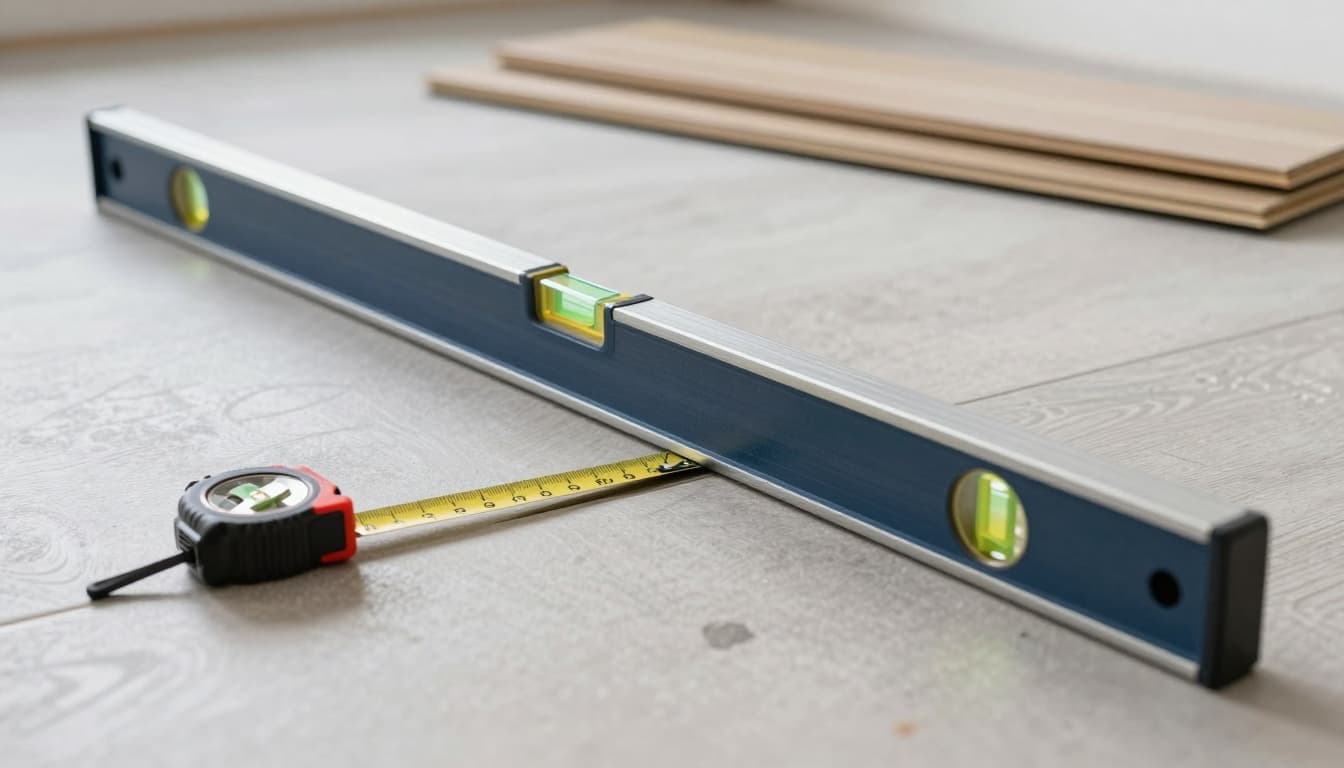
Before the next row, use a straightedge across the seam line you’re about to build. Mark trouble spots and fix them as you go. This also helps store teams set expectations: when a customer asks why install costs what it costs, prep is why.
Control acclimation, gaps, and jobsite conditions
LVP is stable, but it still reacts to temperature swings and tight installs. If boxes came from a cold truck, give them time in the room. Keep expansion gaps consistent, and re-check them after you shift rows or pull boards back out.
This matters more in January jobs, when HVAC cycles and slab temps can be all over the place.
Industry note for January 2026: training and what crews are watching
Installer performance is getting more attention in flooring industry news, partly because retailers are tired of avoidable claims. In January 2026, the NTCA Trainer Team is running dozens of free workshops plus regional training sessions, a reminder that hands-on education still moves the needle even outside tile.
The market is also busy with flooring shows and early-year events, where teams compare flooring trends and the newest flooring products that promise easier locking and better scratch resistance. Keep an eye on flooring news from the big expos, and listen for updates from flooring factories about tighter tolerances and new test methods for manufacturing inputs, because small profile changes can affect how forgiving a click system feels on the job.
Conclusion
When click lock LVP snapping shows up at the end joints, the fix usually isn’t “hit it harder.” It’s changing angle, support, cleanliness, flatness, and jobsite conditions so the lock can do its job. Treat every snapped tab as a clue, then adjust the very next row with intention. The payoff is fewer open seams, fewer replacements, and a floor that stays quiet and tight long after the last box is gone.