
What’s the quickest way to miss a laminate shipping date in 2026? Run out of melamine resin supply on a week when the press line is booked solid.
Laminate producers are walking a narrow path this year. Many retailers want faster refresh cycles and better visuals. At the same time, resin availability and pricing still swing with energy costs, feedstock moves, and plant downtime. That mix can turn a clean production plan into daily rescheduling.
This guide breaks down what to watch, why it matters on the press floor, and how to set press schedules that hold up when resin turns unpredictable.
What changes when resin gets tight on a laminate line

In laminate, melamine-formaldehyde (and related MUF systems) sits right on the critical path. If resin deliveries slip, almost everything downstream slips with it. Press schedules don’t just “wait,” they unravel: paper staging, layup crews, trimming, packaging, and outbound all lose rhythm.
Industry outlook going into 2026 suggests laminate demand is steadier than many expected, even with mixed housing signals. Forecasters have also pointed to more optimism around wood and continued hard-surface competition, which keeps product teams pushing updates. That’s good for sales, but it adds pressure on raw materials when you’re also chasing newest flooring trends and products.
Resin isn’t just a volume issue, it’s a performance issue
When purchasing teams hear “tight supply,” they often think “higher price.” Production teams feel it differently. Resin substitutions, late lots, or variability can change:
- Cure behavior and press time targets
- Overlay bond quality and edge integrity
- Surface appearance, including haze, texture clarity, and gloss control
Those shifts show up as scrap, claims, or rework. They also create planning noise because QA holds can freeze finished goods without warning.
A two-day resin delay doesn’t only cost two days. It can cost the next two weeks of sequencing if you lose your planned run order.
Global signals to watch in 2026 (before they hit your dock)
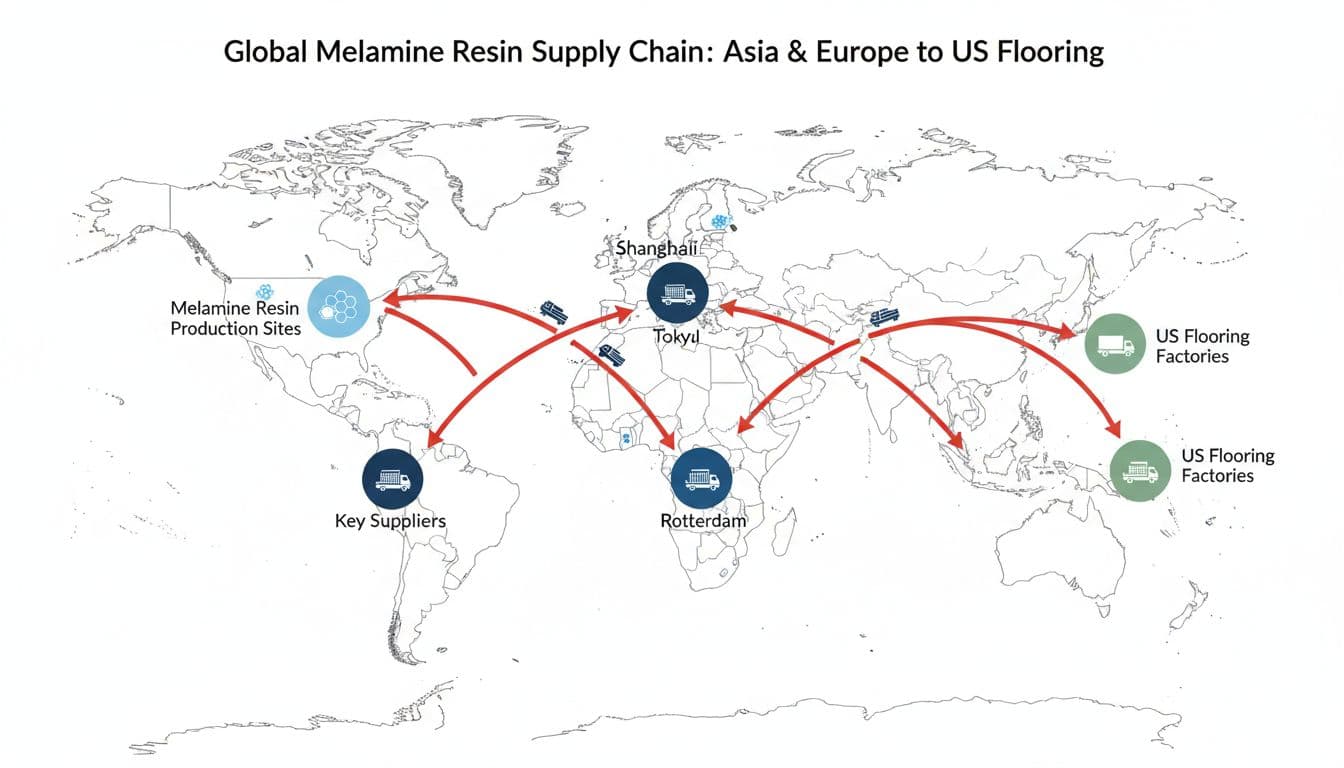
In early 2026, the market looks tight but mostly stable. The problem is that “stable” can still mean short inventory cycles and expensive spot buys. Several European melamine closures in recent years reduced slack in the system. New capacity in places like China and Qatar helps, but it doesn’t erase regional risk.
Why North America feels every hiccup
North America’s exposure stays high because domestic production is concentrated, while imports can be sensitive to trade policy and freight. When a single major producer faces maintenance downtime or storm impacts, flooring inputs tighten fast. Even if you’re not buying resin direct, panel and paper partners often are, so the squeeze travels.
Pricing also tracks energy and urea feedstock. When energy costs jump, resin suppliers protect margins quickly. For a real example of month-to-month movement, see this January 2026 U.S. melamine price update.
Quick “signal to schedule” table for planners
Use this as a fast translation layer between purchasing and production.
| Supply signal you see | What it often means | Press schedule move that helps |
|---|---|---|
| Supplier shortens quote validity | Volatile replacement cost | Freeze priority SKUs, reduce décor changeovers |
| Allocation language appears | Tight capacity or outage risk | Add buffer days, protect core programs |
| Lead times jump 1 to 2 weeks | Logistics pinch or plant maintenance | Pull forward paper and HDF, avoid partial staging |
| Spot offers rise while contract holds | Thin inventories | Keep resin for best-margin SKUs, delay low-value runs |
The point isn’t to predict every disruption. It’s to reduce surprises before they hit your weekly plan.
Press-schedule playbook for plant, sourcing, and sales teams

A press schedule is a promise, to sales, to distribution, and to the customer. In 2026, that promise has to be written in pencil, not ink. The goal is still high utilization, but you also need options.
Plan around launches, line trials, and show-driven demand
Product cycles often spike around annual flooring shows and early-year line reviews. This year’s flooring industry news has been full of talk about hybrids, better visuals, and performance upgrades across categories. Those launches pull attention and capacity, even inside laminate, because customers keep asking for “waterproof,” “scratch resistance,” and more realistic embossing.
That matters because show samples and fast refreshes can steal resin from base business if you don’t fence it off. Put another way, treat “sample and launch” as its own demand stream with its own resin allocation. Otherwise, your best-run core programs get disrupted by last-minute requests for newest flooring products (including odd lots, special gloss, or trial chemistry).
Contracting, inventory, and formulation tactics that reduce chaos
Most plants can’t buy their way out of volatility, but they can schedule their way out of it. Three moves help across many flooring manufacturing factories:
First, align on a simple resin strategy. Dual-source where possible, qualify alternates early, and keep a short list of “approved substitutions” tied to décor families. Second, protect conversion efficiency. When supply looks shaky, run longer campaigns with fewer changeovers, even if it slightly raises finished goods inventory. Third, keep compliance in view. Low-formaldehyde expectations and regional emissions rules can narrow substitution options, so don’t wait until a shortage to validate chemistry.
For teams that want a broader view of cost drivers, this melamine resin production cost analysis overview can help frame what suppliers react to. For price direction, procurement teams often track rolling indicators like the melamine price trend charts and forecasts.
Meanwhile, keep your commercial teams informed. When sales understands the resin story, they can sell smarter: fewer rush promises, better lead-time language, and fewer margin-killing exceptions. That also improves how you react to flooring news about category rebounds and shifting flooring trends.
Conclusion
Laminate press schedules in 2026 won’t fail because planners can’t build a calendar. They fail when melamine resin supply risk is treated as a purchasing problem instead of a production constraint. Watch the global signals, translate them into scheduling moves, and protect core runs with clear rules. Next time a supplier email hints at allocation, ask one question right away: what will we run, and what will we stop running, before the shortage arrives?