 SW-07 · Contracting & Specs
Store flooring flat, dry and conditioned. Guides limit stacking: EverStep says cartons no more than two high, Daltile five high, and National Flooring Products no taller than 3 feet.1 2 3 Keep cartons away from heating and cooling ducts and direct sun.2 CRI 104 asks for carpet in a climate-controlled, dry space, with nothing heavy stacked on rolls.4
On a busy job, flooring is stored wherever there is room: a loading dock, a parking garage, an unheated floor of the building, a trailer. Most of the time it survives. Sometimes it does not, and the damage shows up as curled edges, distorted tiles, crushed carpet or planks that will not lock. None of that is covered by a warranty, because it happened after delivery. The storage rules in the installation documents are short, and they are worth following exactly.
Conditioned, dry and enclosed
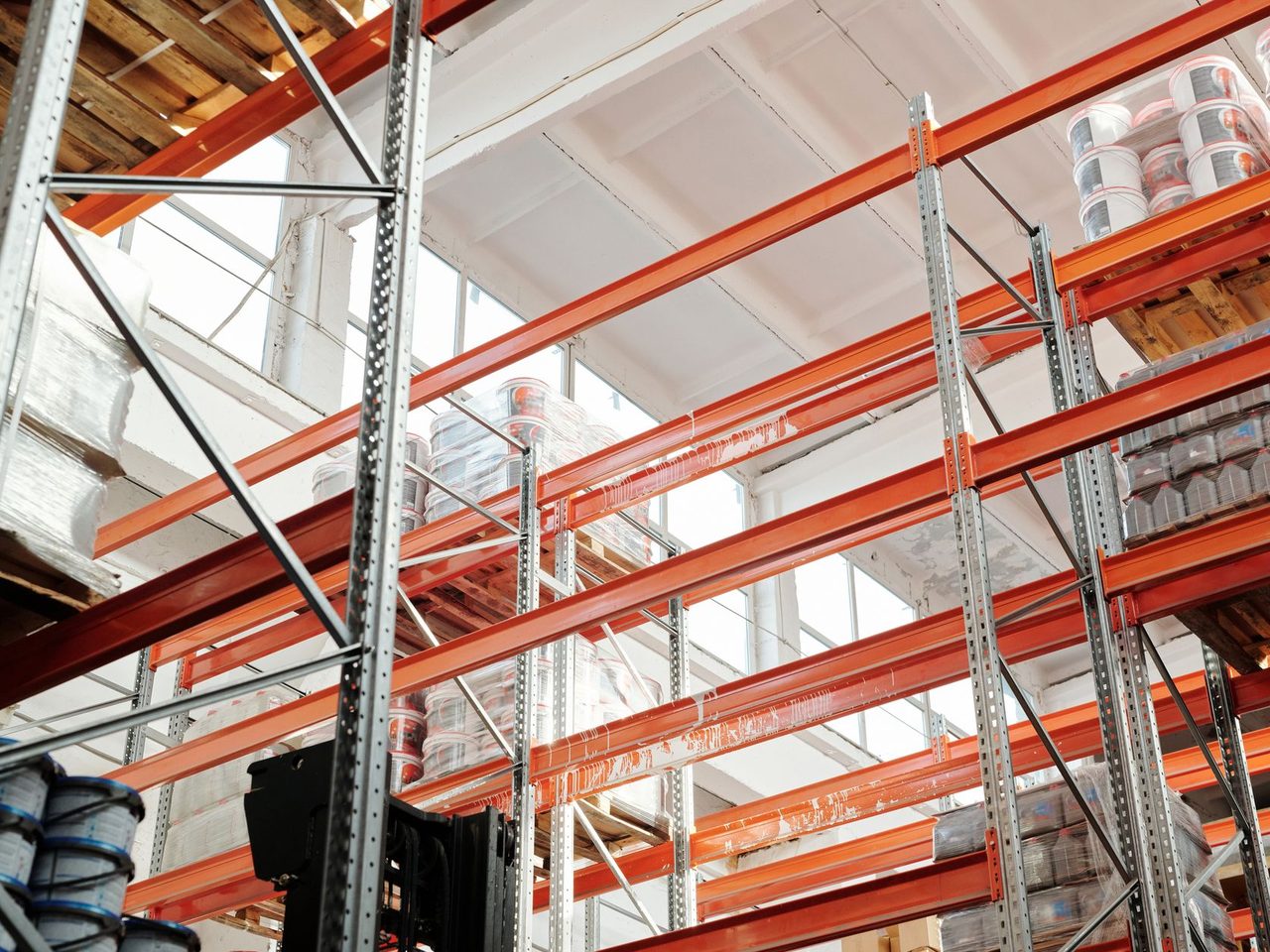
Every guide asks for flooring to be kept in conditions close to those it will live in. The VA master specification for resilient tile asks for a weathertight, dry storage space, protected from damage by handling, water and temperature.5 CRI 104, the commercial carpet installation standard, asks for carpet and related materials to be stored in a climate-controlled, dry space, protected from soil, dust and moisture.4 National Flooring Products says not to store material in exterior sheds, garages, or rooms that are not temperature-controlled.3
Elite says that when product is stored on site, it should be stored in the room where it will be installed.6 That is often impossible on a large commercial job, but it shows the intent: the closer storage is to final conditions, the less the material has to adjust.

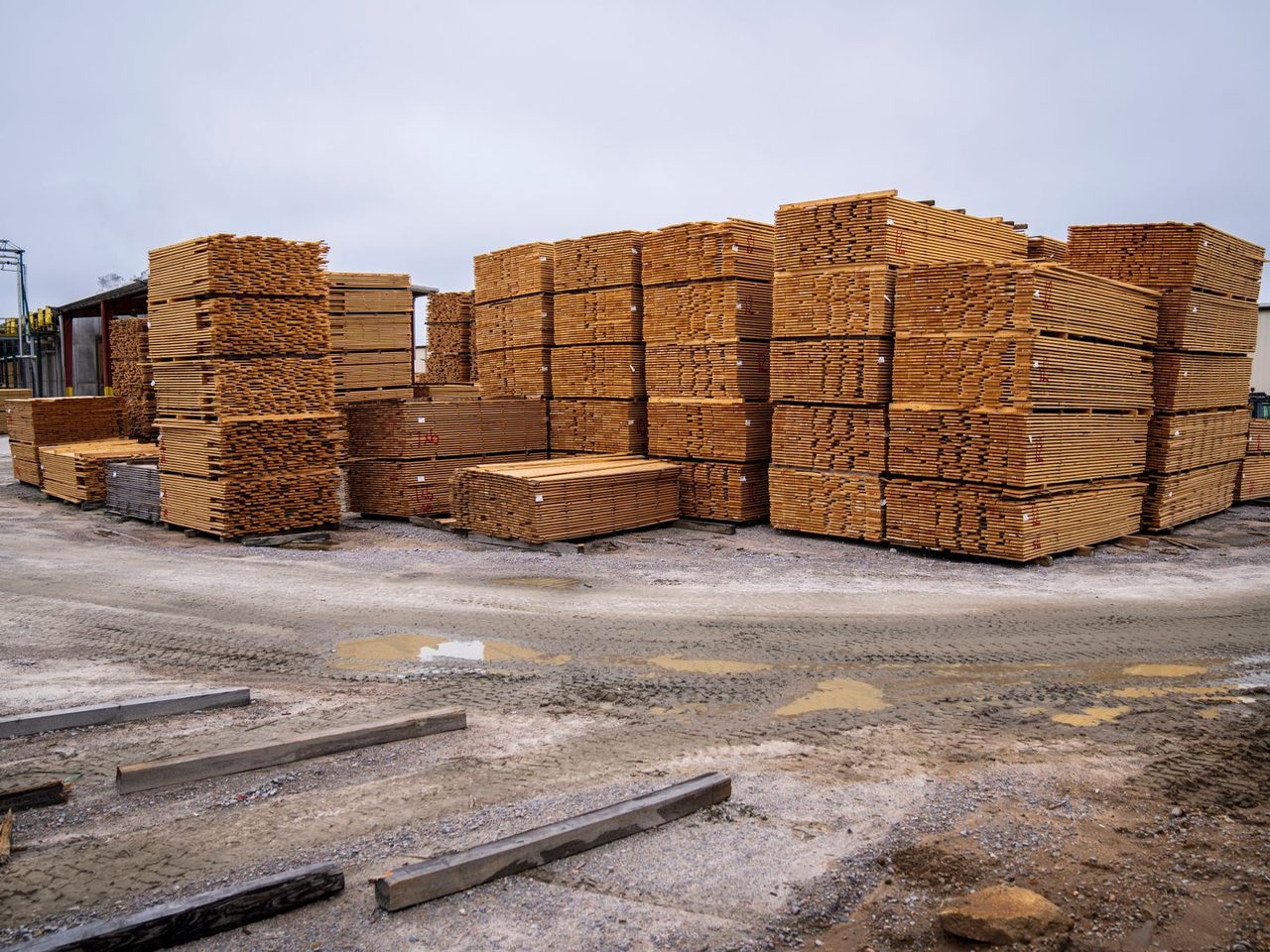
Stack flat, and not too high
Weight and uneven support distort flooring in its cartons. The limits vary by product.
| Source | Stacking rule |
|---|---|
| EverStep click LVP | Evenly stacked no more than two high on a flat surface1 |
| Daltile rigid click LVF | Evenly stacked no more than five cartons high on a flat surface2 |
| National Flooring Products | Stacked squarely, no taller than 3’, stacks a minimum of 3” apart3 |
| FloorFolio tile | Stored flat and squarely; not over 2 pallets high7 |
| CRI 104 carpet tile | Avoid double stacking pallets unless the manufacturer approves4 |
FloorFolio gives the reason: storing cartons flat and squarely helps minimize rolled or curled edging.7 National Flooring Products adds that boxes should not be leaned on walls during acclimation.3 Cartons stored on edge, or on a pallet with a broken board, take a set that does not always come out.
Away from heat and sun
A carton by a window or under a heater can reach temperatures well above the room. Daltile and EverStep both ask for cartons to be kept away from heating and cooling ducts and direct sunlight.2 1 Shaw's temperature test shows why for vinyl: a plank grew by 1/16 of an inch when heated to 135 degrees.8 Planks that go in at a different size from the rest of the floor make joints hard to close.

Carpet rolls and tile
Carpet needs extra care. CRI 104 prohibits stacking heavy objects on top of carpet rolls.4 It says bending or folding rolls is not recommended. If it is unavoidable for delivery, the carpet must be unrolled and allowed to lie flat immediately on arrival.4 It lists the results of poor storage and handling: delamination, dimensional changes, permanent indentation, wrinkles and bubbles, pile crushing, creases and pattern distortion.4
Carpet tile has its own conditioning. Interface asks for tiles to be left in the box and conditioned for at least 24 hours at a minimum of 18°C (64°F) before laying.9 It notes that cut pile products may show temporary pressure marks from packing and storage, which vanish as the tufts recover.9
Rubber, base and treads
Resilient accessories distort too. Burke asks for coiled or rolled wall base to be unrolled and left flat for 24 hours before installation to regain its normal shape.10 Spartan's guide to stair treads says treads should be stored flat.11 VPI asks for its rubber products and adhesive to be stored on site for 48 hours before installation, with treads taken out of their cartons to acclimate.12
Conditioning before installation
Storage and conditioning are linked. Once material is in the space, most guides ask for a set period at service temperature before installation. The VA specification holds materials at a minimum of 70 F for 48 hours before installation.5 The time and range differ by product, so read the guide for each. See the acclimation guide for vinyl plank.
When the building is not ready
The hardest storage problem is a building that is not finished. Flooring arrives on schedule, but the windows are not in, the drywall is still wet, or the heating is temporary. The guides are clear that delivery should wait. National Flooring Products asks for exterior doors, windows, drywall, painting and venting to be complete before flooring is delivered.3 It requires heating and cooling to be installed and running for at least 14 days before installation begins.3 The VA specification says not to install flooring until the building is permanently enclosed and wet construction nearby is complete, dry and cured.5 Daltile requires the HVAC system to be on and working before, during and after installation.2
If material must arrive early, store it off site in conditioned space, or in a finished, closed room with the heat on. A trailer in a parking lot, or a floor of the building with open window bays, is not storage. It is exposure. Write the delivery date into the schedule as a dependency of the HVAC start-up, not of the flooring start date. Then hold the general contractor to it in writing, so the condition of the material is not your risk.
Attic stock
Spare material handed to the owner needs the same care. Daltile asks for excess flooring to be stored in a protected and climate-controlled environment for possible future repairs.2 Texas State University's design standard calls for 5% overage of each product, or 2% on jobs over 10,000 sf.13 Label it with product, color and lot, and store it flat. Attic stock that has curled in a hot closet is no use for a repair. Tell the facility team where it is and why it matters.
Sources
- EverStep Flooring, “LVP Click Lock Installation Guidelines”. everstepflooring.com/lvp-click-installation-guidelines/
- Daltile, “ProSeries Luxury Vinyl Flooring Installation & Care Guide (Rigid Core Click, Glue Down)”. s1.img-b.com/build.com/mediabase/specifications/daltile/1996309/daltile-
- NFP, “Architect’s Choice LVP Installation Guide”. my-nfp.com/resource/architects-choice-lvp-installation-guide
- Carpet and Rug Institute, “CRI 104 Standard for Installation of Commercial Carpet”. carpet-rug.org/wp-content/uploads/2019/03/CRI-104-STANDARD-For-INSTALLAT
- U.S. Department of Veterans Affairs (via WBDG), “Section 09 65 19, Resilient Tile Flooring (master specification)”. nibs-s3-wbdg3-production.s3.us-east-1.amazonaws.com:443/FFC/VA/VANCAS/VA
- Elite Flooring, “Välinge Installation Guide (Woodlands)”. eliteflooringusa.com/links/install-instructions/Elite-Installation-Guide
- FloorFolio, “Installation Guide 2025”. floorfolio.com/wp-content/uploads/2025/FloorFolio-Installation-Guide-202
- Shaw Floors, “LVP Case Study: How Temperature Affects Dimension”. shawfloors-sherwinwilliams.com/SiteFiles/sherwinwilliamsdigital/Images/L
- Interface, “Carpet Tile Installation Instructions”. interface.com/content/dam/interfaceinc/interface/technical/emea/installa
- Burke Flooring, “Wall Base Installation Instructions (RubberMyte and Mercer)”. manualsdir.com/manuals/324191/burke-flooring-wall-base-installation.html
- Spartan Surfaces, “Specifiers' Guide to Resilient Stair Treads”. spartansurfaces.com/flooring-answers-one-step-at-a-time-specifiers-guide
- VPI Corporation, “Tread, Riser and Nosing Installation and Maintenance”. vpicorp.com/downloads/1P%20-%20Install%20&%20Maint%20Tread-Riser-Nosing%
- Texas State University, “09 65 19 Resilient Tile Flooring and Base design standard”. docs.gato.txst.edu/141401/09_65_19-Resilient-Tile-FlooringBase.pdf
General information for the flooring trade. This article was drafted with AI assistance and checked against the sources listed above; the manufacturer's current instructions and the project specification govern any real job. If something here is wrong or out of date, tell us.