If you make or sell LVT, you already know the product’s “feel” and look don’t carry a claim, the structure does. In 2026, a quiet risk sits inside many flexible LVT constructions: fiberglass scrim supply for stability layers.
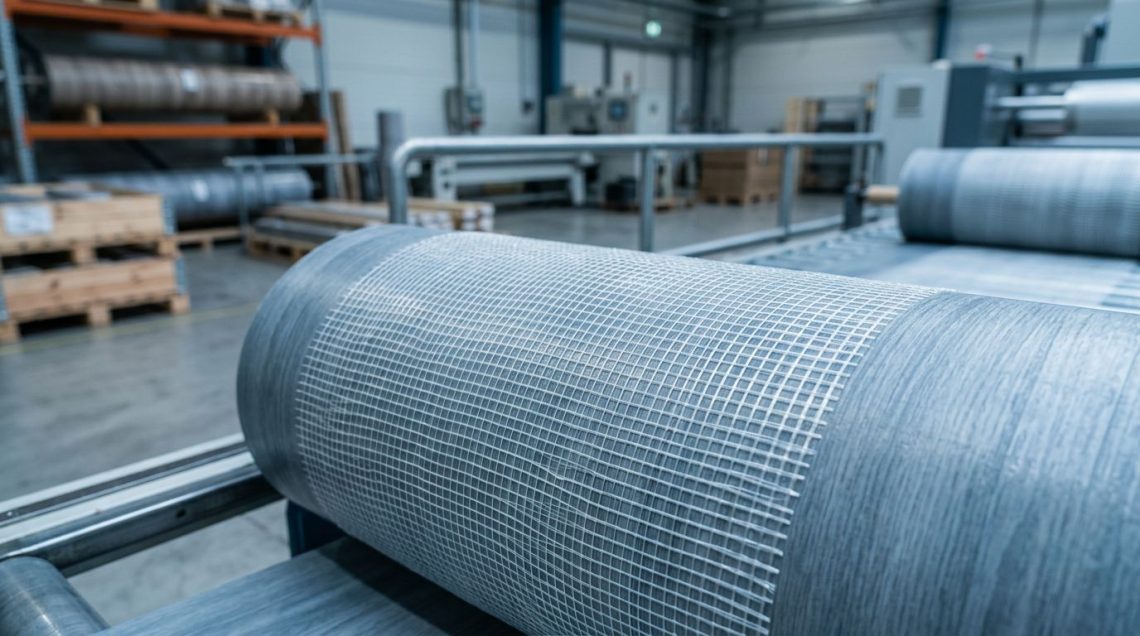
Fiberglass scrim, often made of high-quality glass fiber, is not a marketing line on a carton. It’s a critical reinforcement layer, more like rebar in concrete. When it’s right, the floor stays flat, locks stay tight, and cartons behave on the rack. When it’s wrong (or missing), you can get curl, growth, and angry install crews.
This article explains how scrim supports LVT stability, what could disrupt supply in 2026, and how to reduce exposure without redesigning your whole line.

Why fiberglass scrim matters in LVT stability layers
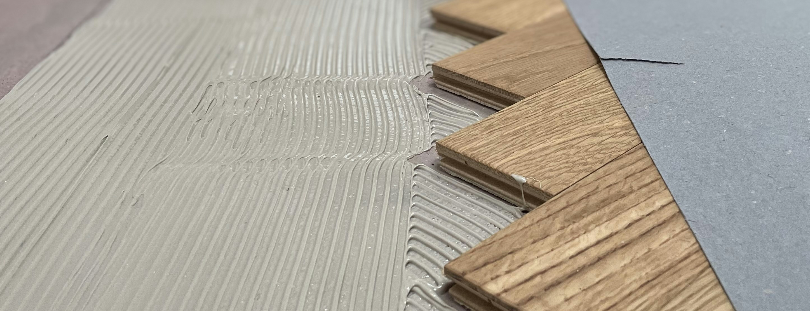
In many flexible LVT builds, fiberglass scrim, an open mesh fabric reinforcement, acts as a dimensional stabilizer to deliver dimensional stability. It helps resist thermal movement and humidity-driven change that can show up as peaking, gapping, or edge curl. That matters most for floating installs, where the floor relies on milling and plank-to-plank engagement.
Scrim can also support flatter production outcomes across long runs. If your wear layer, print film, and backing cure or cool at slightly different rates, the stabilizer layer helps keep the plank from “remembering” a bend. In other words, it reduces shape change after the line, after palletization, and after the customer opens the carton.
A key point for 2026: not every LVT uses fiberglass. Many rigid-core products achieve stability through the core itself, so their dependence on scrim differs. That’s why the real risk conversation is product-specific, not category-wide. It also explains why some teams can swap SKUs across plants easily, while others can’t.
Quality variation is another issue. “Fiberglass” isn’t a single spec. Mesh pattern, tensile strength, mechanical properties, coating (sizing), and how well the scrim bonds into the vinyl stack all affect performance. Two scrims can look similar on a roll but behave very differently once the glass fiber is integrated into the plank.
If the scrim spec drifts, the floor may still pass quick checks, then fail slowly in the field.
This is also where showroom pressure meets engineering reality. The newest flooring trends and products emphasize longer planks, wider visuals, and more natural embossing. Those choices can raise stress on stability layers because the plank has more area to move and more expectation of a “wood-like” laydown.
For broader context on resilient category momentum, see Floor Covering News coverage on why resilient remains a 2026 driver: Resilient remains industry driver.
2026 fiberglass scrim supply risks that can hit LVT performance
Most supply problems don’t announce themselves as “shortage.” They show up as substitutions, spec drift, longer lead times, and pricing tied to non-flooring events. In 2026, fiberglass scrim supply risk comes from a few predictable pressure points.
First, more buyers are chasing similar reinforcing materials across building products. Scrim and related fiberglass textiles appear in underlayment reinforcement, roofing membranes, synthetic membranes, and other composites. These products often utilize nonwoven materials or laid scrim constructions. When adjacent markets spike, scrim availability and minimum order terms can change fast. A simple way to see what suppliers sell into is to review examples of scrim constructions offered for flooring reinforcement, such as fiberglass laid scrim with paper.
Second, trade policy and logistics still matter. When tariffs, port congestion, or container cost swings hit, the impact often lands on “small but critical” inputs. Scrim fits that profile because you can’t ship finished LVT without it (for certain builds), yet it’s rarely the headline item in a purchasing forecast.
Third, cost pressure creates temptation. When margins tighten, teams may push for lower basis weight, fewer QA tests, or a new supplier that “matches the spec.” This is where stability problems start, especially without alkali resistant properties and acid resistance to survive the chemical environment of the laminating process and long-term use. If you change scrim, you may also change adhesive wet-out, nip settings, or cure behavior.
The table below is a quick way to map risks to plant-level symptoms.
| 2026 risk trigger | What changes first | Common symptom in the field |
|---|---|---|
| Supplier substitution or spec drift | Mesh, tensile, coating, roll consistency | Edge curl, shrink/grow, seam stress |
| Longer lead times | Safety stock gets consumed | Forced schedule changes, partial runs |
| Price spikes | Pressure to down-spec | More claims, more inspection holds |
| Bonding variability | Lamination settings no longer fit | Delamination, bubbles, “memory” curl |
Takeaway: the biggest risk is not “no scrim.” It’s the wrong scrim quietly entering production.
To keep downstream installs stable, it also helps to manage the layer stack below the plank. If you sell into kitchens and baths, moisture strategy below a floating floor can amplify or reduce movement. This internal guide may help when you’re aligning systems across channels: moisture-friendly underlayment choices for LVP in kitchens and baths.
How to reduce scrim-related risk without slowing product development
Risk control works best when it’s practical. The goal isn’t a perfect supply chain. It’s a floor that installs cleanly, stays flat, and avoids noisy warranty conversations.
Start with specification discipline. If you don’t already, lock down a scrim “identity” that goes beyond vendor name. Include measurable items (basis weight, tensile targets, coating type, roll width tolerance, splice rules, glass yarns, continuous filament quality). Then connect those specs to incoming inspection that’s fast enough to run daily. A ten-minute check that happens every time beats a lab test that happens once a month.
Flooring standards demand similar rigor to other industries. While GFRC (Glass Fiber Reinforced Concrete) used in a concrete countertop relies on specific zirconia content and alkali resistance to meet ASTM C1666 standards within a cement matrix, LVT requires the same attention to mechanical strength and flexural strength. Related industrial products like self-adhesive tape also compete for these fibers.
Next, avoid single points of failure. Dual-sourcing can be messy, but a pre-qualified second source can save a quarter. If you can’t dual-source, then negotiate supply assurances tied to your forecast and hold buffer inventory where it actually protects uptime (often at the converter or near the plant, not on the other side of the ocean).
Process control matters just as much. If a scrim change forces new lamination settings, treat it like a mini product change, not a “material swap.” A stable fiberglass mesh can also contribute to the thermal insulation profile of the finished floor. Run trials, then re-validate flatness after palletization and after controlled temperature swings. This is boring work, but it’s cheaper than claims.
Finally, use the industry’s calendar to your advantage. Annual flooring shows are not only for colors and bevels. They’re also a chance to compare construction stories and supplier stability. Recent flooring news out of Surfaces points to continued innovation in resilient visuals, which can raise expectations on performance: Surfaces ’26 resilient intros. Event coverage also shows how brands push launches and channel programs, for example: Shaw’s 2026 lineup at SWFM and Karndean debuts at TISE, along with broader show reporting like The International Surface Event update.
Those conversations matter because product teams chase flooring trends (longer planks, looser lay looks, more realism), while operations teams live inside flooring manufacturing factories where line speed and consistency decide profit. If scrim gets tight, that tension increases.
One more practical step: tighten install guidance when needed. Scrim-related movement issues often get blamed on “bad installs,” even when the product changed. If you want a fast refresher on what installers get wrong (and what triggers disputes), this internal reference helps align your retailer and contractor messaging: LVP warranty install mistakes.

Conclusion
In 2026, fiberglass scrim supply risk is less about panic and more about discipline. Know which SKUs depend on scrim, control the spec tightly, and validate performance when inputs change. Keep one eye on flooring industry news and show launches, because the push for the newest flooring products often increases the cost of small material surprises. The teams that win this year will treat scrim as a critical component, not a commodity, recognizing that the quality of the glass fiber used ultimately supports the market’s newest high-performance products.