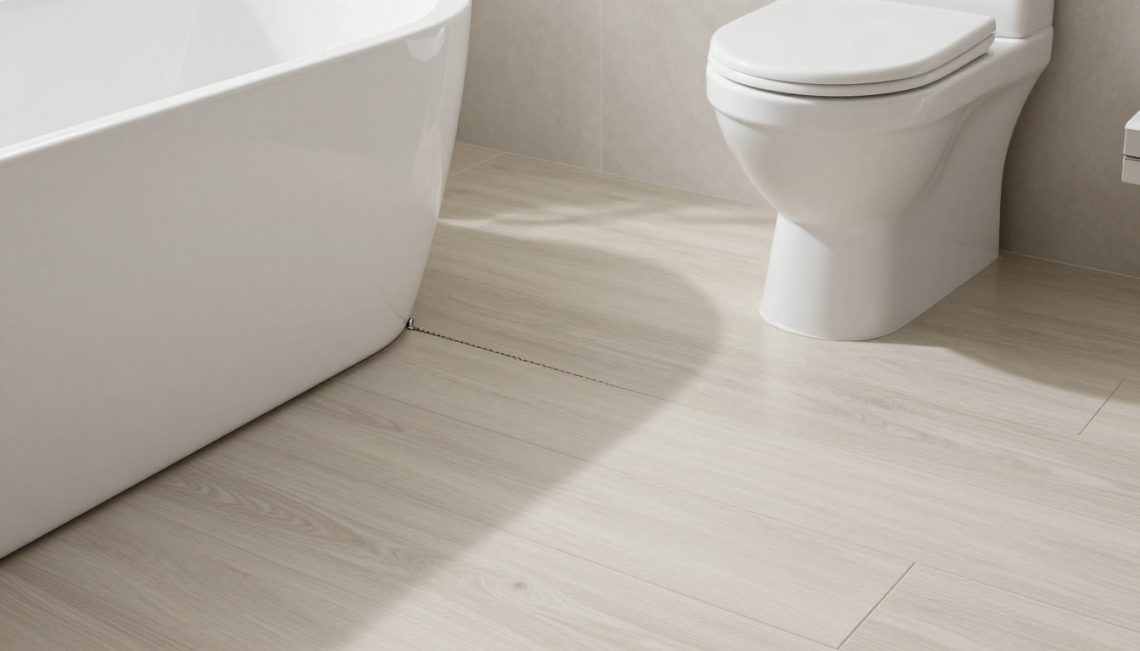
Does click lock lvp bathroom flooring really hold up to puddles, bath mats that never dry, and the occasional “who left the shower curtain out?” moment? While high-quality luxury vinyl plank (LVP) is often marketed as 100% waterproof, the planks themselves are only part of the equation, but bathrooms don’t fail because of the plank surface. They fail at the seams, tub edges, toilet splash zones, and penetrations, the spots where water sits, wicks, and finds a way down.
For flooring pros, this is less about selling a “waterproof” label and more about building a system: the right rigid core, a flat and dry subfloor, and finishing details at tubs and toilets that don’t trap the floor or invite water under it.

Start with the right click-lock LVP (and be honest about “waterproof”)
A bathroom is a small room with big moisture behavior. Steam cycles, splash zones, and standing water near the tub turn tiny weak points into callbacks. The best starting point is rigid-core luxury vinyl plank (LVP) built for wet rooms, especially stone plastic composite (SPC) cores that resist expansion and telegraphing better than softer constructions.
What to look for when you’re specifying product for bathrooms:
- Core stability: SPC tends to stay flatter through temperature swings and humidity spikes.
- Locking system quality: A click-lock installation system with tight, consistent milling reduces micro-gaps that can pull water by capillary action.
- Wear layer and finish: Matte finishes can hide mineral spots and improve slip feel, and deeper embossing can help traction when the floor is damp.
- Written installation allowances: Some lines allow bathrooms but restrict saunas, wet rooms, or areas with floor drains. Don’t guess. Check the guide.
Manufacturer instructions matter most in bathrooms, because a “floating floor” can still be detailed to slow water migration, but only within the rules of that product. Keep an up-to-date library of brand guides, for example the Daltile ProSeries LVF rigid click installation guide (PDF).
From a selling perspective, bathrooms also track broader flooring trends. In 2026, a lot of teams are leaning into wood-look patterns and stone-look visuals with more texture realism. These wood-look patterns are often the preferred choice for those seeking moisture resistance and aesthetics. If you want a quick snapshot of what consumers are responding to, see Bathroom floor trends for 2026. Those style preferences influence what retailers stock and what flooring manufacturing factories prioritize in tooling, EIR texturing, and locking tolerances.
Tub edges and toilet splash zones: where water actually wins
Most bathroom failures are slow and boring, a teaspoon at a time. The goal is to block the common pathways without pinning the floor so tightly it can’t move.
The tub edge: stop wicking, keep movement
The riskiest place is the long tub run where bath water drips and sits. Best practice is to leave the required expansion gap, which is critical to prevent buckling, then use trim and sealant in a way that doesn’t create a rigid dam that restricts seasonal movement.
Common approaches that work in the field:
- Gap + backer rod + 100% silicone caulk: The backer rod helps the caulk flex and keeps you from overfilling the joint.
- Shoe molding (or tub trim) plus a clean silicone caulk finish bead: Trim hides the gap, silicone caulk manages splash. Keep the bead neat so it can be inspected later.
Avoid stuffing the gap with hard fillers, and don’t run caulk in a way that bonds the floating floor edge to the wall for the full perimeter. In a small bath it might never show, but it’s still a preventable risk.
The toilet zone: water comes from above and below
Toilet water problems at the toilet base are not just splash. They’re also slow leaks at the supply, condensation, and wax ring failures at the toilet flange. The floor detail has to anticipate all of it, with proper sealing preventing water infiltration beneath the planks.
A quick reference for the most common bathroom water paths:
| High-risk spot | What usually happens | Detail that helps most |
|---|---|---|
| Tub long edge | Wicking under trim, puddles after baths | Expansion gap, backer rod, 100% silicone caulk |
| Shower edge | Direct water spray, standing puddles | Expansion gap, backer rod, 100% silicone caulk |
| Toilet base | Splash, mopping water, condensation | Tight cut with expansion room, optional silicone caulk at perimeter |
| Toilet flange | Wax ring failure causes water infiltration beneath the planks | Proper flange height, new seal, verify level |
| Vanity toe-kick | Drips sit unnoticed | Sealant at toe-kick trim, easy-to-clean edge |
| Door threshold | Wet bath mats, hallway tracking | Waterproof threshold detail, sealed transition |
If you want a practical, bathroom-specific checklist perspective, this guide on vinyl plank flooring installation tips for bathrooms, which emphasizes moisture resistance, aligns with what many installers learn the hard way: the floor surface can be waterproof, but edges and penetrations decide the outcome.
The details that keep water out (without creating future failures)
Water management is part materials science and part craftsmanship. A bathroom install should read like a plan, not a hope.
Subfloor prep: flat, dry, and predictable
Click-lock installation systems for luxury vinyl plank (LVP) hate vertical movement. In bathrooms, that movement often comes from a subfloor that’s slightly crowned at the doorway, soft around a toilet flange, or damp on a slab. Use a moisture meter for moisture testing and flatness checks; they don’t feel exciting, but they’re the easiest way to prevent seam stress and micro-gapping that invites water.
Key habits that pay off:
- Address soft spots before you lay a single plank, especially around the toilet and tub apron. Undercut door jambs for a clean look.
- Use the correct vapor barrier, such as 6-mil poly plastic sheeting, for concrete as required by the product. A slab can feed moisture upward even when there’s no visible dampness. The right underlayment can provide additional cushioning and sound dampening.
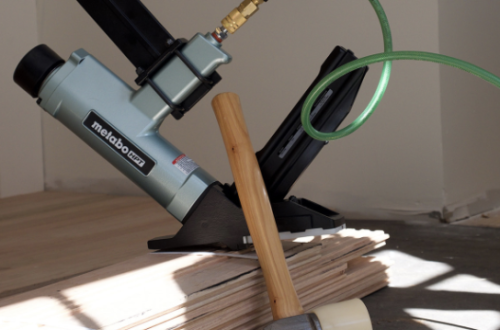
- Keep the layout intentional so you don’t end up with tiny slivers at the tub line that are hard to lock and easier to leak. Use a utility knife or floor cutter for trimming, and a tapping block with rubber mallet for securing the click-lock installation system.
For a clear consumer-facing explanation of why luxury vinyl plank (LVP) works in bathrooms (and where the limits are), MSI’s overview of installing luxury vinyl flooring in the bathroom is a solid reference to share with customers who still assume “vinyl” means yesterday’s sheet goods.
Penetrations and transitions: seal the little holes
Every pipe stub-out is a chance for water to bypass the wear layer and land under the floating floor. Cutouts should be clean, allow expansion, and be finished with escutcheons or sealant that can be serviced later.
Doorways matter too. Bathroom thresholds get wet shoes, wet mats, and towel drag. The best detail is a transition that’s mechanically sound, with sealant where water would otherwise run underneath. Transition strips, quarter round, and baseboard molding serve as finishing touches that hide the expansion gap.
Industry context: why these bathroom details are getting more attention in 2026
Retailers and suppliers are talking more about water and chemistry, not just visuals. Trade chatter has also pushed more training, better testing, and clearer claims. That shows up in product stories you hear at annual flooring shows, and in the steady drumbeat of flooring industry news and flooring news that sales teams pass around.
It also ties to what buyers ask for when they’re hunting newest flooring trends and products and comparing newest flooring products by spec, locking strength, and warranty language. The factory side feels it too, because tighter locks and better surface textures demand process control inside flooring manufacturing factories, from milling calibration to QC sampling.
For teams building showroom messaging, it helps to track the consumer-facing angle as well, like Better Homes and Gardens on broader flooring trends in 2026, then translate that into bathroom-specific performance guidance.

Conclusion: waterproof planks aren’t the point, waterproof details are
Luxury vinyl plank (LVP) with its click-lock installation system can be a durable bathroom floor, but only when the edges, penetrations, and splash zones are treated like first-class details. Focus on a stable core, follow the written guide, prep the subfloor like a pro, then finish tub and toilet areas with flexible, serviceable sealing. When your team gets those details right, the floor stays clean on top and dry underneath, which is what the customer is really buying.