 SW-01 · Trends
Stabilizers prevent PVC releasing hydrogen chloride when it is heated, and keep it from decomposing when it is softened during extrusion or molding.1 They are typically a small percentage of a PVC formulation.1 Calcium-based systems, including calcium-zinc, are the most widely used in Europe, and calcium-zinc is increasingly replacing liquid mixed metals in flexible indoor applications with strict air quality requirements.1
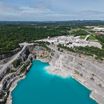
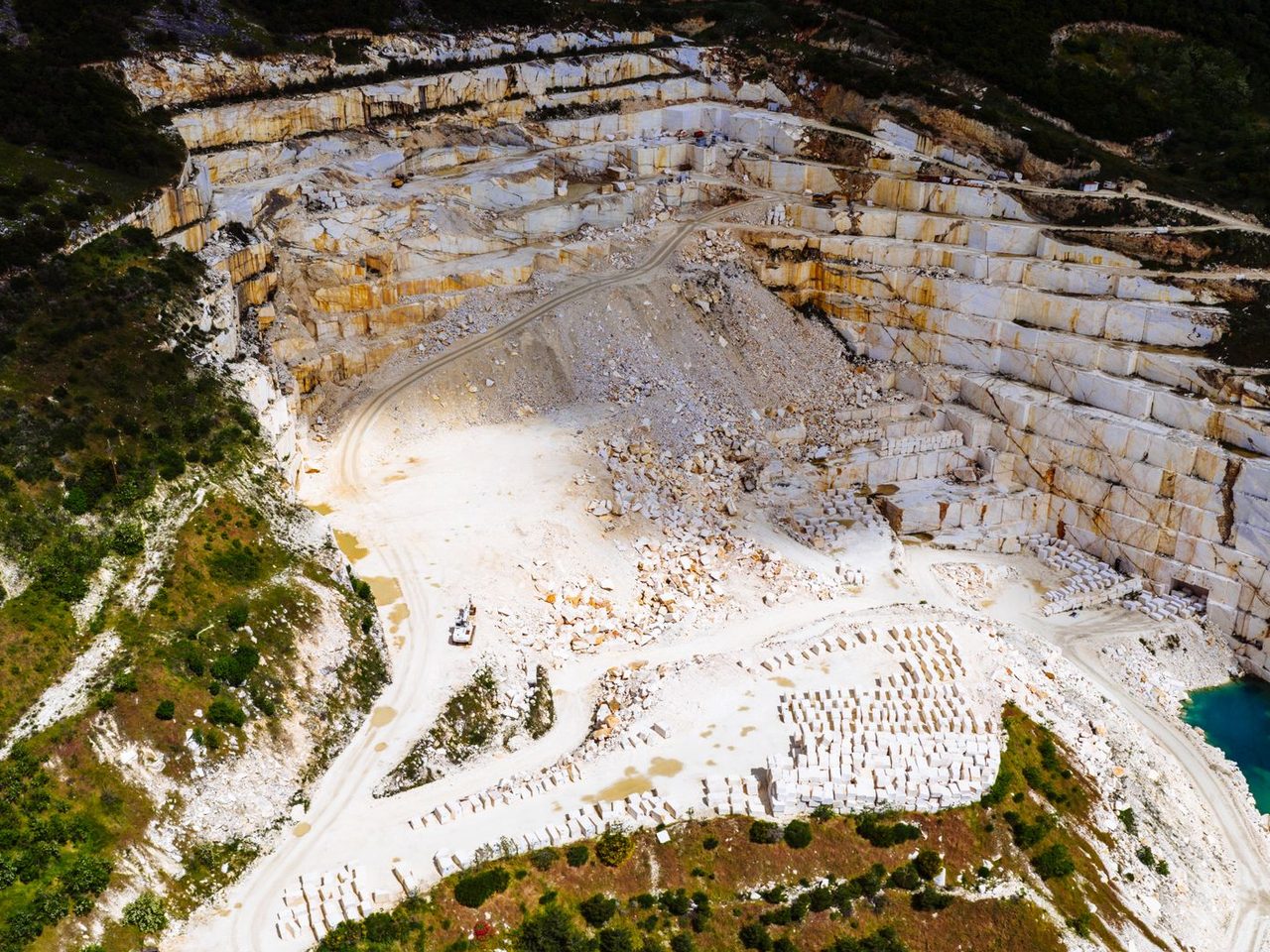
Pick up a rigid-core plank and most of what you are holding is limestone. LX Hausys describes an SPC core as consisting of calcium carbonate, PVC and plasticizers, giving the limestone share as a majority of the core.2 Flooret puts its own core at 60 to 70 percent limestone, bound with PVC, and credits that density with the dent resistance and dimensional stability.3 The filler and the polymer are what the marketing talks about. The part nobody mentions is a few percent of additive that makes the whole thing manufacturable.
What a stabilizer actually prevents
PVC has a problem with heat. The European Council of Vinyl Manufacturers states plainly that stabilizers are essential for making PVC processable and durable.1 They prevent the release of hydrogen chloride when PVC is heated.1 They also protect against sunlight and weathering, and help ensure products can last decades in use.1
The temperatures involved are the reason. ECVM notes that when PVC is softened at 170–180 °C during extrusion or molding, stabilizers prevent thermal decomposition.1 A rigid core is extruded. So is the backing layer of most LVT. Without a stabilizer package, the compound would begin degrading in the barrel, discoloring and generating acid before it ever reached a die.
For a floor, that matters twice. It decides whether the plank can be made at all, and it decides how the finished product behaves under sunlight and heat over a long service life. ECVM adds that stabilizers typically make up just 1–5% of a PVC formulation.1 They are firmly bound in the polymer matrix, so they do not migrate during use or recycling.1
The three families
ECVM groups stabilizers into calcium-based systems, liquid mixed metals and organotin.1 Calcium-based stabilizers, including calcium-zinc, are today the most widely used in Europe.1 It lists their applications as wires and cables, window and technical profiles, and all types of pipes and fittings.1 They also appear in rigid calendered films where improved organoleptic properties are needed.1
Liquid mixed metals are the family most associated with flexible PVC. ECVM says they are widely used in calendered films, flooring, wall coverings, artificial leather, coated fabrics, toys, footwear, hoses, profiles and plastisols.1 They are typically based on barium, zinc, calcium, magnesium or potassium carboxylates, often combined with co-stabilizers and antioxidants to optimize performance.1 Organotin stabilizers hold a smaller share of the market.1 They go into demanding applications such as clear rigid films, blister packs for medicines and certain medical devices, where high transparency and processability are needed.1
The flooring reader should notice that both calcium-based and liquid mixed metal systems have a legitimate claim on a vinyl floor. A rigid SPC core and a flexible LVT wear layer are not the same processing problem, and they do not necessarily get the same additive package.
Why calcium-zinc keeps taking share
Two separate forces push formulations toward calcium-zinc, and only one of them is regulatory.
The first is substitution of older metals. ECVM reports that liquid barium-zinc and calcium-zinc systems successfully replaced cadmium-based stabilizers in semi-rigid and flexible PVC.1 It also states that lead and cadmium stabilizers have been fully phased out in Europe under the VinylPlus commitment, cadmium by 2001 and lead by 2015.1 Legacy PVC waste containing lead or cadmium is handled under dedicated EU rules for safe recycling and resource recovery.1
The second force is indoor air quality, and it is the one that reaches a flooring specification. ECVM notes that calcium-zinc stabilizers are increasingly replacing liquid mixed metals in flexible indoor applications where strict air quality requirements apply.1 It adds that low-emission calcium-zinc solids and phenol-free liquids have been introduced in recent years, reducing odor and VOC emissions in building and construction applications.1
That is a direct line from additive chemistry to a line item on a submittal. A manufacturer chasing an emissions certification has a reason to reformulate that has nothing to do with the floor's wear performance.

What the stabilizer buys in the finished product
ECVM lists what these systems are valued for: good initial color, long-term stability, transparency, weathering resistance, and compatibility with fillers and pigments.1 Read that list next to an SPC core that is majority limestone and the compatibility point stops being abstract. A highly filled compound is a difficult environment for an additive, and a stabilizer that performs in a lightly filled film may not behave the same way at SPC loading levels.
Color stability is the property a flooring buyer is most likely to meet as a complaint. A plank that yellows in a sunlit bay is a stability question before it is a quality-control question. So is a wear layer that shifts tone against the same product laid elsewhere in the building. See limestone filler in SPC and WPC.
Where this shows up on a submittal
Nobody submits a stabilizer package. What gets submitted is the test result that the package helped achieve. SCS Global Services describes FloorScore as an indoor air quality certification standard for hard surface flooring materials and adhesives.4 A product sample is collected by an auditor and submitted to an approved independent lab for emissions testing to the California 01350 standard.4 It notes emissions test results can take approximately 3-4 weeks.4
Berkeley Analytical describes the same test method from the laboratory side.5 It is VOC emission testing in small- and large-scale environmental chambers, to standards such as CDPH Standard Method V1.2, widely known as CA Section 01350.5 Those claims, it notes, are used to earn credits in LEED, WELL, CHPS, Green Globes and other building rating systems.5 See the FloorScore and VOC checklist.
The product standard covers a different question. ASTM F3261 is the specification for resilient flooring in modular format with rigid polymeric core.6 It establishes material, manufacturing, physical and performance requirements for surface-decorated flooring protected by a clear wear layer.6 It is a performance specification, not a recipe. A product can meet it with more than one additive package, which is exactly why the emissions certificate carries the information the spec does not.

What a dealer or specifier can usefully ask
- Ask for the emissions certificate and its date, not the logo. A reformulation should produce a current test.
- Ask whether a product line has been reformulated since the sample in the showroom was made. Color and odor both track the additive package.
- For a large job, keep the attic stock from the same production run where you can, and record the run on the closeout documents.
- Treat a sudden change in odor on opening cartons as information, not a nuisance, and report it before the floor goes down.
- Do not read a stabilizer change as a durability change in either direction without test data. See SPC and WPC in the field.
The part worth remembering
A vinyl floor is a compound, and compounds are balanced. The limestone gives it density and stability. The PVC binds it. The small stabilizer fraction lets the other two be processed into a plank without the polymer tearing itself apart in the extruder. It then keeps working, quietly, for the life of the floor.1 When a manufacturer changes it, the change is usually invisible in the showroom. It shows up, if anywhere, in the emissions report and in how the floor looks after a few years in daylight.
Sources
- European Council of Vinyl Manufacturers (PVC.org), “Stabilisers”. pvc.org/about-pvc/pvc-additives/pvc-stabilisers/
- LX Hausys, “What is SPC flooring? Comparing SPC and WPC”. lxhausys.com/us/blog/wp-json/wp/v2/posts/3110
- Flooret, “SPC vs WPC Flooring: What's the Difference?”. support.flooret.com/spc-vs-wpc
- SCS Global Services, “FloorScore® Indoor Air Quality Certification”. scsglobalservices.com/services/floorscore
- Berkeley Analytical, “VOC Emissions Testing | Berkeley Analytical”. berkeleyanalytical.com/lab-services/voc-emissions-testing
- ASTM International, “ASTM F3261 Standard Specification for Resilient Flooring in Modular Format with Rigid Polymeric Core”. store.astm.org/f3261-20.html
General information for the flooring trade. This article was drafted with AI assistance and checked against the sources listed above; the manufacturer's current instructions and the project specification govern any real job. If something here is wrong or out of date, tell us.