
Nothing triggers an apartment complaint faster than a brand-new LVP floor that sounds like a drum. The owner loves the look, the downstairs neighbor hears every heel strike, and the installer gets the call.
Solving LVP underlayment noise is less about buying the “quietest” pad and more about matching the right acoustic layer to the building, the subfloor, and the plank system. This guide breaks down what actually works on multifamily jobs, without guesswork.
How underlayment reduces LVP noise (and why apartments are different)
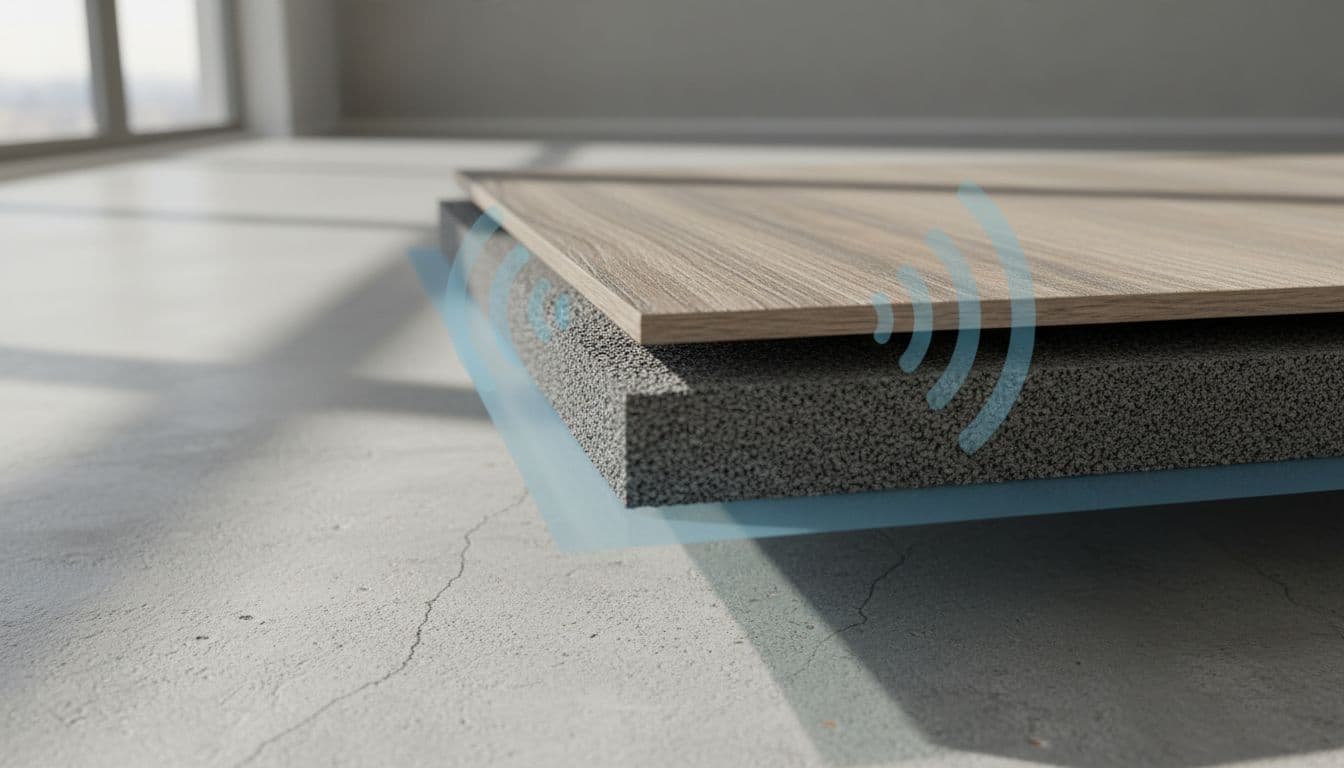
Apartment sound problems usually come in two flavors:
- Impact noise: footsteps, dropped items, chair legs. This is the big one for downstairs neighbors.
- Airborne noise: voices, TV, music. Underlayment helps less here, because sound travels through walls, doors, and vents too.
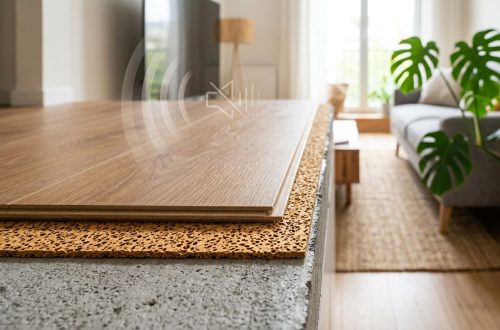
LVP often makes impact noise worse because it’s a floating surface. If the underlayment is too thin (or too soft), the floor can “slap” the subfloor and amplify the click-clack. If it’s too thick or too compressible, the joints can stress and the floor can feel unstable.
In multifamily work, you’re also fighting “flanking” paths. Sound can move around the floor assembly through baseboards, walls, or even a rigid transition strip. Underlayment helps most when the whole system is detailed for isolation, not just covered with foam.
Start with three constraints: HOA rules, manufacturer limits, and the subfloor
Before you pick a roll, lock down the non-negotiables:
1) HOA or property sound targets
Many apartment and condo associations require field-tested sound ratings (often referenced as IIC/STC). Don’t assume the same underlayment passes every building. A practical example of how HOAs approach LVP sound control is covered in this condo-focused overview: sound control with LVP and HOA tips.
2) LVP product rules (especially attached pad)
A lot of rigid-core LVP comes with pre-attached padding from the flooring factories. Adding underlayment on top can void warranties or create too much deflection at the click-lock. Always verify what the plank allows, and what thickness is approved.
3) Subfloor type and condition
- Concrete slab: you usually need moisture control (vapor barrier or an underlayment with an integrated film), plus an acoustic layer that doesn’t crush.
- Wood-frame: you’re balancing impact reduction with stiffness. Squeaks and subfloor flatness problems can overpower any underlayment benefit.
Underlayment types that actually quiet LVP in apartments
Most “quiet floor” claims come down to density, resiliency, and how well the layer stays intact over time.
Here’s a fast comparison you can use when quoting:
| Underlayment type | Best use case | Noise reduction feel | Watch-outs |
|---|---|---|---|
| Thin foam (PE/EVA) | Basic comfort, low budget | Slightly less “hollow” | Often weak on impact noise, can compress |
| Dense rubber or rubber blends | Multifamily impact control | Noticeably quieter steps | Cost, thickness limits, odor sensitivity in some projects |
| Cork (or cork composite) | Apartments needing impact damping | Warm, muted footfall | Needs flat subfloor, verify moisture approach on slab |
| Fiber/felt composite | Rigid-core support + acoustic | More solid, less click | Confirm it’s approved for LVP, avoid water-trapping installs |
| Acoustic membranes (specialty) | Higher spec multifamily jobs | Strong impact improvement | Detail work matters, seams and perimeter isolation are key |
If you need a reference point for a purpose-built LVP underlayment product category (fiber acoustic style), see an example here: QuietWalk LV acoustical underlayment. The big takeaway is not the brand, it’s the feature set contractors should look for: stable support, acoustic performance, and moisture strategy.
The specs that matter more than the label
Packaging loves big promises. Apartment jobs punish weak details. When you’re trying to stop LVP noise complaints, focus on measurable traits:
Density and “anti-crush” support
A denser underlayment can reduce that cheap, bouncy feel. It also helps prevent joint movement that turns into ticking noises later.
Thickness (within the plank’s limits)
More thickness isn’t always more quiet. If the LVP isn’t designed for it, extra cushion can raise the risk of end-joint separation and soft spots. Stay inside the system spec.
Moisture plan for slabs
On concrete, you’re managing vapor. Some underlayments include a film, others need a separate barrier. If you’re weighing options, it helps to review how manufacturers frame these choices, like this overview: underlayment guide for luxury vinyl and hybrid rigid core.
Meaningful sound numbers (not just “quiet”)
Ask for tested assemblies and look for impact improvements in the same kind of build (slab vs wood-frame). If you want a solid industry explanation of how installers should select underlayments by application, this trade resource is useful: how to select the right flooring underlayments.
Installation details that make or break sound control
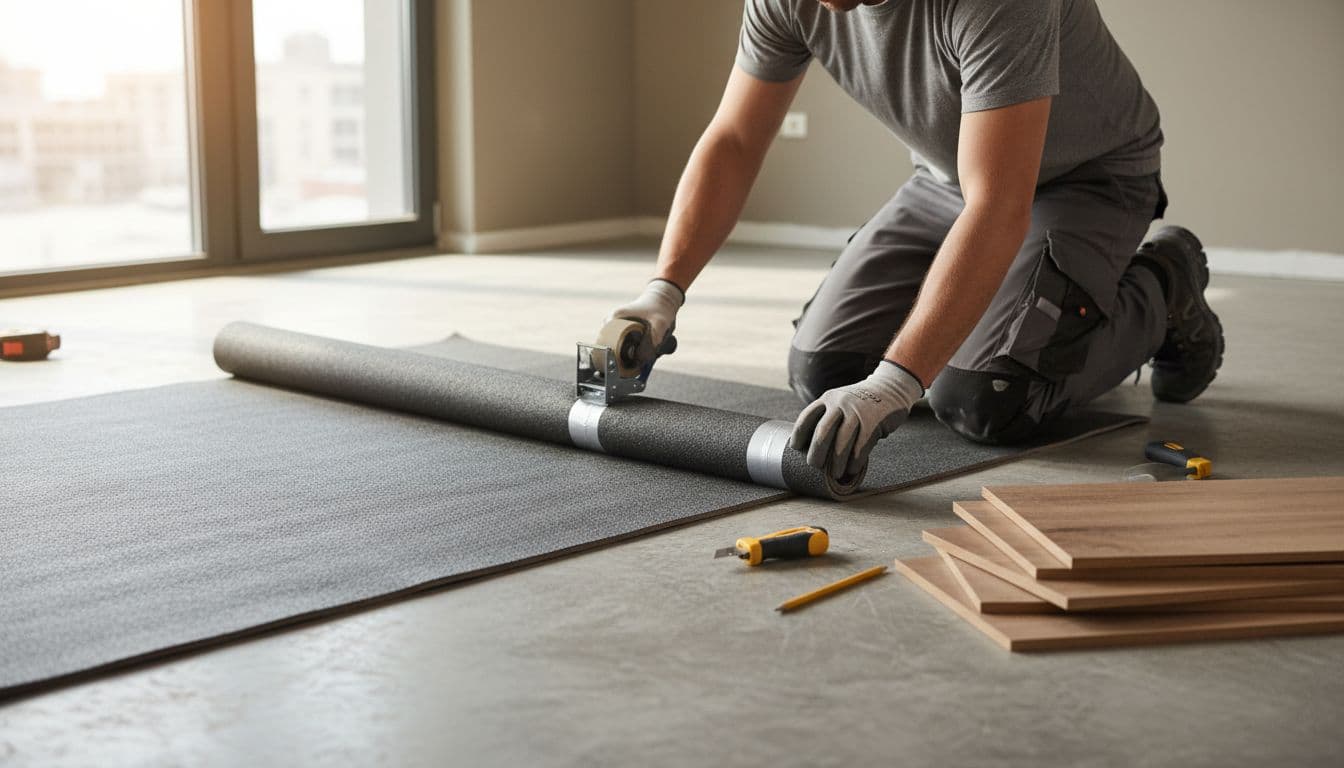
You can buy the right underlayment and still end up with a loud floor. Apartment installs expose every shortcut.
Seams and tape
Butt seams tight, tape per the underlayment spec, and avoid overlaps that telegraph through LVP. Think of sound like water, it finds gaps.
Perimeter isolation
If the floating floor binds against drywall or hard trim, impact energy transfers into the wall. Leave the right expansion gap and avoid packing it with rigid materials.
Flatness and prep
A floor that rocks will click. A low spot can create a “trampoline” effect that makes footsteps louder. Proper prep is one of the most overlooked new flooring techniques on fast-turn apartment work.
Don’t double-pad
If the plank has an attached pad, treat extra underlayment as a risk until the manufacturer approves it. The quietest job is the one that doesn’t fail.
A practical checklist for contractors (less noise, fewer callbacks)
Use this when you’re scoping a unit:
- Confirm HOA or management sound requirements and documentation needs.
- Identify subfloor (slab vs wood) and moisture risk.
- Verify if the LVP includes an attached pad and what’s allowed underneath.
- Choose an underlayment with stable support first, acoustic benefit second.
- Plan transitions and perimeter details to avoid hard contact points.
What’s shifting right now in flooring choices (December 2025)
If you follow flooring news and flooring industry news, you’ve seen the category move toward better performance proof, not just style boards. Suppliers are pushing clearer testing, and installers are seeing more oversight from property managers who want fewer tenant disputes.
At the same time, the newest flooring products and trends keep favoring rigid-core formats because they install fast and handle day-to-day abuse. That’s good for the flooring business, but it puts more pressure on underlayment selection because the “hollow” sound is one of the top resident complaints.
On the manufacturing side, flooring factories are also paying more attention to material inputs and verification. That’s showing up across flooring trends in how products are specified and documented, including what’s allowed under a plank system.
Conclusion
A quiet apartment LVP job isn’t luck. It’s the right underlayment, chosen inside the product limits, matched to the subfloor, and installed like sound matters.
If you want fewer noise complaints, treat LVP underlayment noise as a system problem, not a pad problem. The next time a client asks for “the quiet one,” you’ll have a clear answer, and a cleaner install plan to back it up.
Keep reading
More in Trends: 2026 Laminate Edge Wax Supply Watch for Water-Resistant Lines, Flooring Storage Rules That Prevent Curling and Rework, Bitumen Backing Supply Watch: What Carpet Tile Plants Face in 2026.