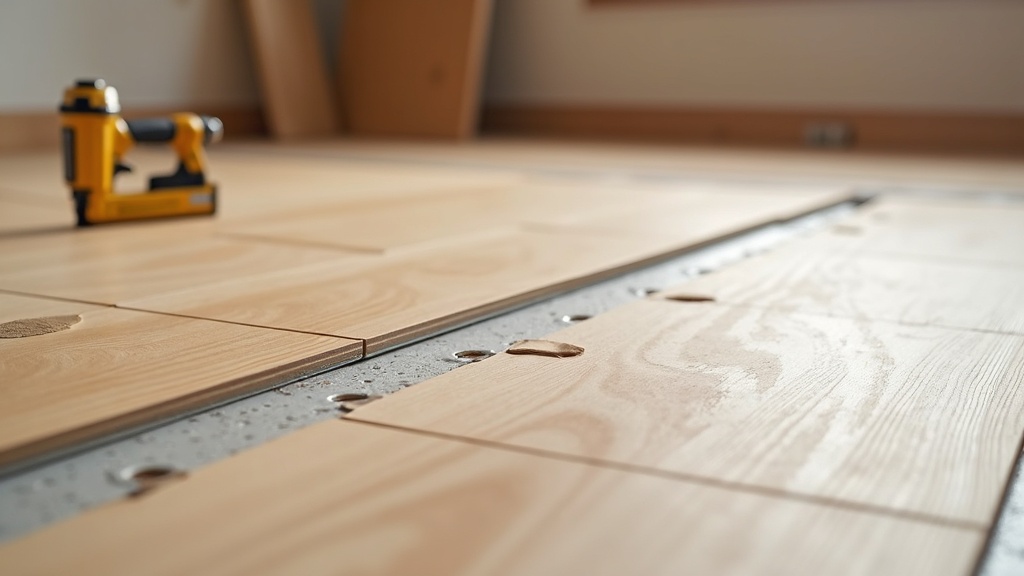
Click-lock LVP is sold as a “float it and forget it” floor, but everyone in the supply chain knows the truth: the product can only look as good as what’s under it. The fastest way to turn a clean install into a callback is to rush LVP over plywood prep, especially around panel joints and noisy spots.
This guide focuses on plywood subfloors (not OSB) and the three details that decide whether the floor feels solid or sounds like a drum: a practical fastener schedule, seam patching that won’t ridge later, and proven ways to stop panel squeaks before the first plank clicks in.
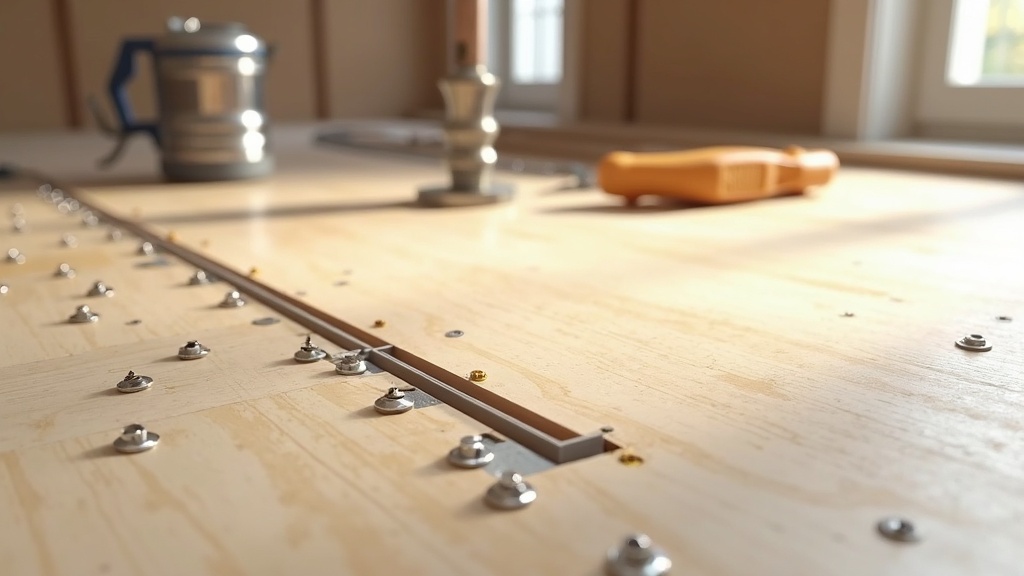
Plywood subfloor prep for click-lock LVP (flat, stiff, and dry)
Plywood is a strong base for click-lock products because it tends to hold fasteners well and is less prone to edge swell than many commodity panels when it sees short-term moisture. That doesn’t mean every plywood deck is ready for LVP out of the gate.
Start with stiffness and thickness. If the floor feels springy, the locking system takes the abuse. Many crews won’t install a click-lock plank over anything less than a solid, well-fastened subfloor with adequate thickness for the joist spacing. If there’s bounce, address it structurally (sistering, blocking, or an added underlayment layer), not with extra underlayment foam.
Next, confirm flatness, not “level.” Click-lock LVP usually tolerates a floor that’s out of level as long as it’s flat. Most manufacturers publish a flatness target in the neighborhood of 1/8 inch over 6 feet or 3/16 inch over 10 feet. The exact number matters, so match your prep to the specific product you’re installing. A straightedge and a pencil beat guesswork every time.
Finally, check moisture. Plywood can pick up seasonal humidity and jobsite water. If you’re installing on a slab-on-grade home with a plywood system above it, or over a damp crawlspace, control the source first. A floating floor can trap conditions that were “fine” before it was covered.
Fastener schedule for plywood panels, plus the squeak-stopping sequence
Squeaks are friction. With plywood subfloors, they usually come from panel-to-joist movement, panel edges rubbing, or fasteners that loosened over time. Fixing squeaks after a floating floor is down is like trying to tune a guitar after you glued the case shut.
A common field schedule many installers use when re-fastening plywood is tighter than what you’ll see on older builds: fasteners about every 6 inches along panel edges and every 8 inches in the field, with attention to joists and high-traffic runs. For remodel work, screws are the usual choice because they pull the panel tight and resist backing out.
Here’s a quick reference that fits most real-world LVP over plywood prep (always confirm local code requirements and any project specifications):
| Subfloor task | Typical fastener | Typical spacing | Notes |
|---|---|---|---|
| Re-fastening plywood to joists | #8 or #9 coated deck screw | 6 inches at edges, 8 inches in field | Avoid drywall screws, they can snap |
| Noisy seam area | Same as above | Add screws along the joist line near seam | Keep screw heads flush, don’t countersink deep |
| New panel replacement | Ring-shank nails or screws (per spec) | Per panel manufacturer / plans | Adhesive at joists can help if done during replacement |
A simple, repeatable approach to kill squeaks before LVP goes down:
- Find the noise: Walk the floor slowly and mark squeaks with tape.
- Locate framing: Use layout marks, a stud finder, or attic/basement confirmation, then snap joist lines if needed.
- Drive screws, don’t “chase”: Add screws into the joist at the squeak zone, then a few more 6 to 10 inches out on both sides.
- Check for edge rub: If two panels are tight and rubbing, you may need a slight relief (often a careful saw kerf along the seam) before re-fastening.
- Reset proud fasteners: Any nail head that sits high can become a click-lock failure point.
If the subfloor is quiet and tight, the floating floor gets to do its job: expand, contract, and stay locked without micro-movement from below.

Seam patching on plywood so click-lock joints don’t separate
Panel seams are where good installs go to die. Even if a seam is only slightly proud, the plank above it becomes a hinge. Foot traffic pushes down on one side, the locking edge takes stress, and months later the customer notices a gap that “came out of nowhere.”
The fix is targeted patching, not blanketing the whole floor with compound. On plywood, use a patch or skim product that’s approved for wood substrates and can be feathered to a true edge without crumbling. Many crews prefer cementitious, polymer-modified patch materials for this reason, especially in busy areas where chair legs and rolling loads show weaknesses fast.
Treat seam prep like finish sanding: remove what’s high, fill what’s low.
- If a seam is proud, sand it flat (vacuum dust thoroughly).
- If a seam is low or slightly open, fill and feather out wide enough that the straightedge reads clean.
- If the plywood has face checking, voids, or damaged plies, patch those too. A click-lock plank telegraphs surprises.
Two practical rules keep seam patching from becoming a mess:
- Feather wide, not thick: A thin, wide ramp is stronger than a narrow hump.
- Let it cure: Installing over “green” patch can trap moisture and leave soft spots.
A quick February 2026 reality check for pros: products move fast, prep still rules
If you track flooring news and flooring industry news, you’ve seen the pattern. Manufacturers keep pushing waterproof visuals, improved wear layers, and better realism. Reports in late 2025 also highlighted tighter material scrutiny in production, including new lab methods aimed at identifying PFAS in manufacturing inputs. At the same time, training calendars and annual flooring shows keep emphasizing installer education, from trade workshops to big buyer markets where dealers hunt the newest flooring trends and products.
For teams tied to flooring manufacturing factories or retail sales floors, it’s a useful reminder: even the newest flooring products still fail on the same old subfloor issues. The flooring trends change each season, but flatness, fastening, and seams stay stubbornly important.
Conclusion
A quiet, flat plywood deck is the best “underlayment” click-lock LVP can get. Tighten the panels with a sensible screw pattern, eliminate squeaks at the joists, then patch seams so the plank doesn’t bridge over ridges. Do that work once, and LVP over plywood installs start acting boring in the best way: no noise, no gaps, no callbacks. If you’re specifying product for a project, match the subfloor prep plan to the exact LVP requirements before the first carton hits the floor.
Keep reading
More in Uncategorized: Click-Lock LVP Over Particle Board or MDF Underlayment: When It’s a Hard No, and Safer Rebuild Options, Concrete slab moisture red flags and how to test them before LVP, Best glues for holding luxury vinyl tile on radiant-heated floors..