A floating click-lock LVP floor acts a lot like a long sheet of metal on a roof. It looks solid, but it’s always shifting a little with heat, sun, and seasonal humidity. Stretch that “sheet” across 40 feet or more with no planned relief, and the floor will eventually try to create its own, often as end-gaps, peaked joints, or a locked-up section that starts to tent.
This article focuses on the practical side of the LVP expansion joint in extra-long runs, where breaks make sense, and which transitions let the floor move without telegraphing problems to the customer or the warranty department.

Why extra-long click-lock LVP runs fail first at choke points
Click-lock LVP is designed to float, which means movement is expected, not optional. In extra-long runs, small movements add up. A few thousandths of an inch per plank across a wide, sunlit space can become a visible problem at the narrowest point, like a hallway, doorway, or the pinch between a kitchen island and a wall.
Three jobsite forces drive most long-run issues:
Thermal swing and direct sun. Large windows and sliders can heat the surface quickly. That expansion has to go somewhere, and if the floor is constrained, it pushes upward (tenting) or compresses joints until they click out.
Friction and “pinning.” Heavy furniture, built-ins, islands, and even tight door jamb undercuts can trap a floating field. Once part of the floor can’t slide, the rest of the run keeps trying.
Subfloor flatness and deflection. Locking systems tolerate less vertical movement over distance. Minor dips that seem harmless in a single room can stack up as the run continues.
If you want a real-world example of what a long, continuous floating run can do at a narrow connector, see this discussion of seasonal gaps in a corridor between rooms: floating vinyl plank gaps between rooms. The big lesson is simple: long spans concentrate stress at transitions even when the subfloor “looks” fine.
From a market standpoint, these failures are showing up more because LVP keeps taking share, and open-concept layouts keep getting bigger. Current flooring trends lean warm and natural, with more realistic embossing and matte finishes, so customers expect a premium look. That makes visible movement problems harder to explain away after install. Keeping up with flooring news and flooring industry news helps here, because manufacturers are refining locking profiles, attached pads, and testing protocols (including increased attention on material inputs coming out of flooring manufacturing factories).
Where to add breaks in 40-foot-plus click-lock LVP installs
The only rule that always wins is the manufacturer’s published limit. Many click-lock products set a maximum continuous run (often in the 40 to 50-foot range, sometimes different by direction). When a plan exceeds that, you typically need a planned LVP expansion joint (a break with a transition) or a different installation method (for example, glue-down in commercial corridors).
Use these placement principles to decide where breaks belong, even when you’re trying to keep a “single, continuous look”:
Doorways between enclosed rooms. A doorway is a natural place to hide a movement break. It also reduces the chance that one room’s sun exposure drives another room’s movement.
Long hallways and narrow connectors. Hallways act like stress funnels. If the project has a great room on each end, don’t let the hall become the expansion joint by accident.
Edges of big glass and high-heat zones. If one side of a long run gets direct sun and the other stays shaded, plan a break near that boundary.
Direction changes and offsets. If the layout turns a corner, especially around a kitchen, treat that as a logical point to relieve stress.
A quick field-friendly way to map breaks is to mark “choke points” first, then check span length second. This table is a useful starting framework for takeoffs and pre-bid conversations:
| Layout feature | Risk in long runs | Recommended break strategy |
|---|---|---|
| Doorway between rooms | Locks movement at jambs | Transition at threshold with expansion gap under it |
| Long hallway (10+ ft) | Concentrates expansion | Break near mid-hall or at each end, based on span limit |
| Open-concept with big windows | Thermal expansion spikes | Add a discreet break near window wall or room boundary |
| Kitchen island or built-in | Pins floating field | Keep flooring floating around it, avoid trapping, consider a break nearby |
When you’re documenting the plan for a retailer file or warranty packet, it helps to cite published guidance from an install manual. Here’s an example of a click-lock instruction set that highlights core prep and installation expectations: LVP click-lock installation guidelines. Always defer to the exact brand and SKU on the job, but the structure of the requirements is consistent across the category.
Transition options that still let the floor move (without “locking it down”)
The best transition is one that hides the required gap and never becomes a fastener through the floating floor. In other words, you’re not just choosing a profile, you’re choosing a movement strategy.
T-molding over an expansion gap (most common for same-height LVP)
For long runs, a T-molding placed over a correctly sized expansion gap is the standard solution. The critical detail is attachment: fasten or glue the track to the subfloor, then snap the molding in, keeping the LVP free to slide underneath. Don’t fasten through the LVP.
If your crews need a visual refresher on clean transition workmanship, these two videos are practical references for common site conditions:
Reducers and end caps (when height or edge conditions change)
When LVP meets a thinner surface, a reducer hides the edge and still allows movement if installed to the subfloor, not the plank. End caps (also called baby thresholds) are helpful at sliding doors and fireplaces, but they’re also common failure points when installers caulk tight and eliminate movement. Use sealant only where the manufacturer allows it, and keep the expansion space intact under the profile.
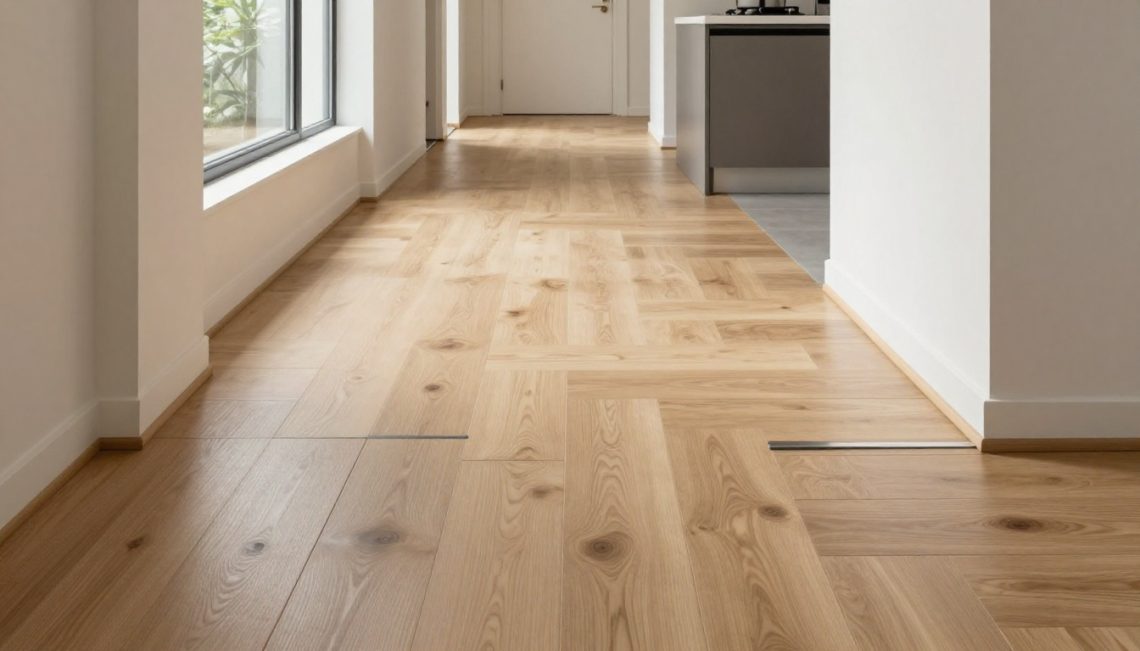
Flush transitions and “zipper” breaks (best for design-forward jobs, harder to execute)
Flush transitions can look sharp in high-end residential, especially as customers chase the newest flooring trends and products like wide planks, matte textures, and pattern play. The catch is they’re labor-sensitive. Many systems still rely on a channel or track that must be secured to the subfloor while leaving the LVP floating. If the detail ends up pinning one side, it’s worse than a standard T-mold.
For locking-system specifics, this type of manufacturer document is the level of detail that protects you in disputes: Valinge locking mechanism installation guide (PDF). It’s not a substitute for the exact product manual on your job, but it shows how seriously brands treat locking engagement and installation steps.

How pros are tying movement breaks to sales, training, and show-season planning
Long-run movement planning isn’t only an install topic, it’s a margin topic. Claims, call-backs, and negative reviews often trace back to one choice made at estimating: “Let’s run it continuous, it’ll look better.” A cleaner approach is to sell the break as part of the system, a planned LVP expansion joint that keeps the floor stable.
This also ties to what’s happening across the category right now. LVP continues to grow, with better print clarity, stronger cores, and more attached acoustic pads. At the same time, buyers are asking about material transparency, chemical inputs, and indoor air quality, which is why flooring industry news has been covering expanded testing and process controls. Training is also getting attention. Early-2026 installer education calendars and manufacturer clinics are being promoted more heavily, because the product is easier to click together than it is to detail correctly across a 40-foot run.
For retailers and manufacturers, this is part of the show-season rhythm. Annual flooring shows and regional markets still matter because you can see locking changes, new trims, and updated accessory programs in person, then take that knowledge back to sales teams. That’s where a lot of the newest flooring products get positioned, not just by color, but by what the system can handle in modern, open layouts.
Conclusion
A clean-looking 40-foot click-lock install isn’t luck, it’s planning. Treat every long span like a moving assembly, choose a LVP expansion joint location before the first plank drops, and use transitions that attach to the subfloor, not the floor. Keep tracking flooring news alongside installation updates, because the product keeps changing, and so do the expectations. The floors that last are the ones that were allowed to move on purpose.