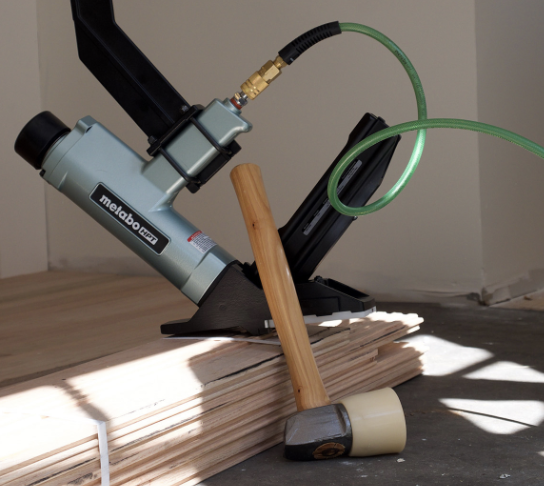
A hardwood job can survive a late trim piece. It can’t survive an empty fastener box at 7:15 a.m.
The good news in April 2026 is that hardwood cleat staple supply looks stable for most crews. Common cleats and staples are broadly available, but that doesn’t mean every shop can relax. Product mix is shifting, install schedules are tight, and small cost bumps still bleed margin.
That makes this year less about panic buying, and more about buying smarter.
What the April 2026 fastener picture looks like
Current market checks show no broad shortage of common hardwood fasteners. Standard sizes, including 18-gauge 1 3/4-inch L-cleats and 15.5-gauge 2-inch staples, are still easy to source through major distributors and tool suppliers.
This quick snapshot sums up the market:
| Item | April 2026 status | What crews should watch |
|---|---|---|
| Common L-cleats | Widely available | Brand fit and lead time on larger case orders |
| Common hardwood staples | Widely available | Tool compatibility and subfloor specs |
| 2-in-1 nailer fasteners | Steady supply | Keep backup SKUs for mixed jobs |
| Pricing | Mostly stable, mild upside risk | Requote long-lead jobs if costs move |
The takeaway is simple: availability is better than sentiment. There isn’t much bad flooring news here for crews that plan ahead.
That said, fasteners don’t move in a vacuum. Trade coverage points to a more upbeat hardwood category in 2026, with real wood gaining attention again, especially in white oak and premium visuals. FloorDaily’s hardwood category snapshot for 2026 lines up with what many dealers are seeing on the ground, steady demand for warmer, more natural wood looks. Those tastes also match warm wood tone flooring styles that are showing up in more showrooms this year.
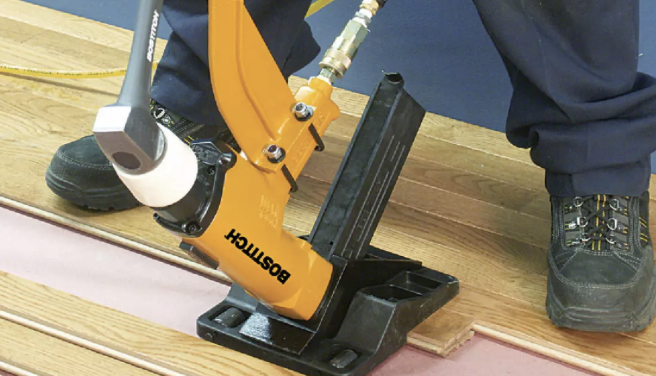
Remodel work is also carrying more of the market, because many homeowners still prefer upgrading in place over selling. For install crews, that means fast turnarounds, smaller buffer windows, and less room for missing consumables.
Common cleats and staples are in stock now, but one missed reorder can still stall a full crew day.
Why a steady supply can still create jobsite friction
Stable supply doesn’t mean smooth installs. The pressure has simply moved.
Inside flooring manufacturing factories, producers are still managing lumber sourcing, labor costs, and higher operating expenses. That matters because the floors being sold are changing. White Oak, Walnut, Soft Maple, and Poplar remain active categories, while some slower species have softer pull. At the same time, panel-based and engineered constructions keep gaining share because they can reduce labor time and fit current price points.
For crews, that changes the fastener conversation. More engineered wood means more care with thickness, core build, and tool setup. One carton may want cleats. Another may allow staples. A third may need a strict manufacturer-approved schedule.
Trade launch coverage on new products across categories shows how much assortment is moving this year. FCNews also reported that MSI expanded its hardwood lineup, another sign that the newest flooring products reaching dealers won’t all behave the same under the same nailer.
That is why the newest flooring products should trigger a spec check, not a guess. A fastener that worked on last month’s 3/4-inch solid red oak may not be the best call on this month’s wide engineered plank.
Fasteners are cheap compared with labor, yet they still deserve attention in your estimate. If you’re tightening bids, this true job cost checklist for crews is a good reminder that consumables belong in the math.
How install crews should stock and buy in 2026
Most crews don’t need to hoard. They need cleaner rules.
Keep at least two fastener options on hand for your core jobs, especially if you move between solid and engineered hardwood in the same week. A shop that installs mostly staple-down engineered products shouldn’t assume the same carton depth, board width, or tongue profile across brands.
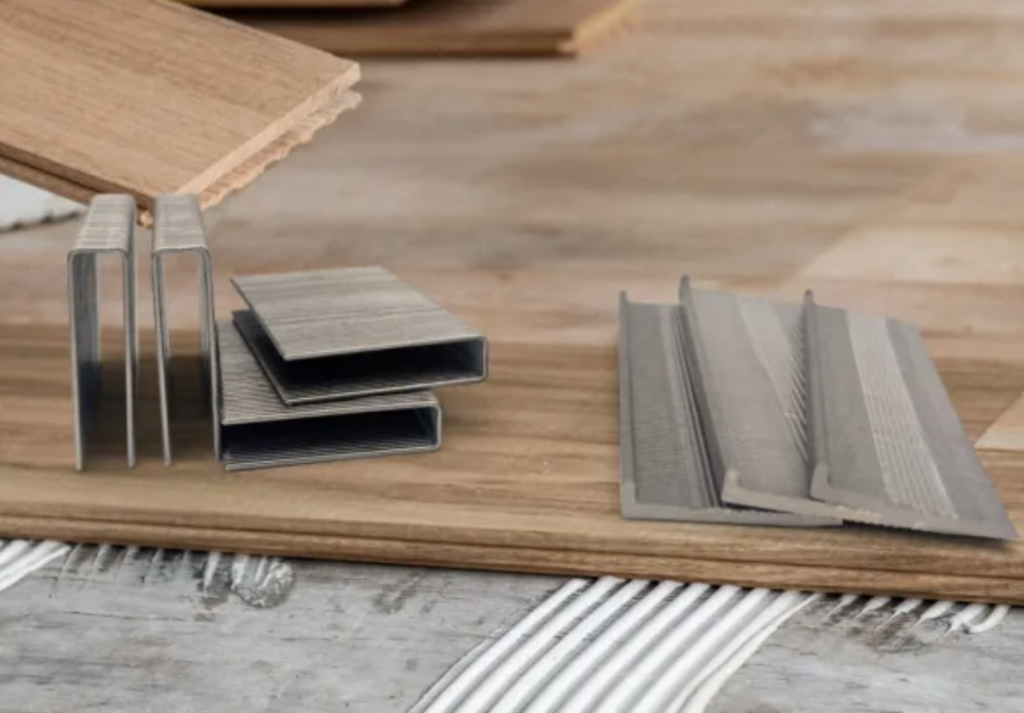
Photo by Antoni Shkraba Studio
A simple buying plan usually works best:
- Carry your top cleat size, your top staple size, and one backup SKU.
- Match reorder points to booked installs, not rough sales chatter.
- Check every warranty sheet before swapping staple for cleat, or the reverse.
- Track fastener use by crew, because waste and jams add up fast.
This year, that discipline matters more because flooring trends are affecting construction choices. Wider planks, lower-sheen finishes, and more white oak visuals are shaping what stores stock and what crews install. If you follow the newest flooring trends and products, you can usually see fastener demand coming a few weeks earlier.
Flooring industry news and annual flooring shows still matter
Installers don’t always think of flooring industry news as a supply tool, but it is. The best crews read product updates the same way they read moisture readings, because both can change the install plan.
That is also why annual flooring shows still matter. Catalogs can show a plank face. They can’t show milling quality, tongue shape, or how a new fastener tool feels after 800 square feet. The NWFA Wood Flooring Expo preview is worth watching this season, especially with hardwood-specific tool and fastener brands on the floor. Product news around NWFA points to more comfort-focused nailer design and better edge protection, which helps crews working long days on mixed-spec jobs.
For retailers and distributors, these shows also give early reads on the newest flooring trends and products before they hit full regional rollout. That’s useful when you need to line up stocking plans, train sales teams, and warn crews about spec changes before the cartons land.
In other words, good flooring news isn’t fluff. It can save callbacks.
A calm supply market is only helpful if your shop stays organized. In 2026, the bigger risk isn’t a national shortage. It’s treating every hardwood job like the last one.
Keep your fastener mix tight, watch spec sheets closely, and follow flooring industry news with the same care you give jobsite prep. That’s how a stable market turns into a smoother week, and better profit for every crew on the board.