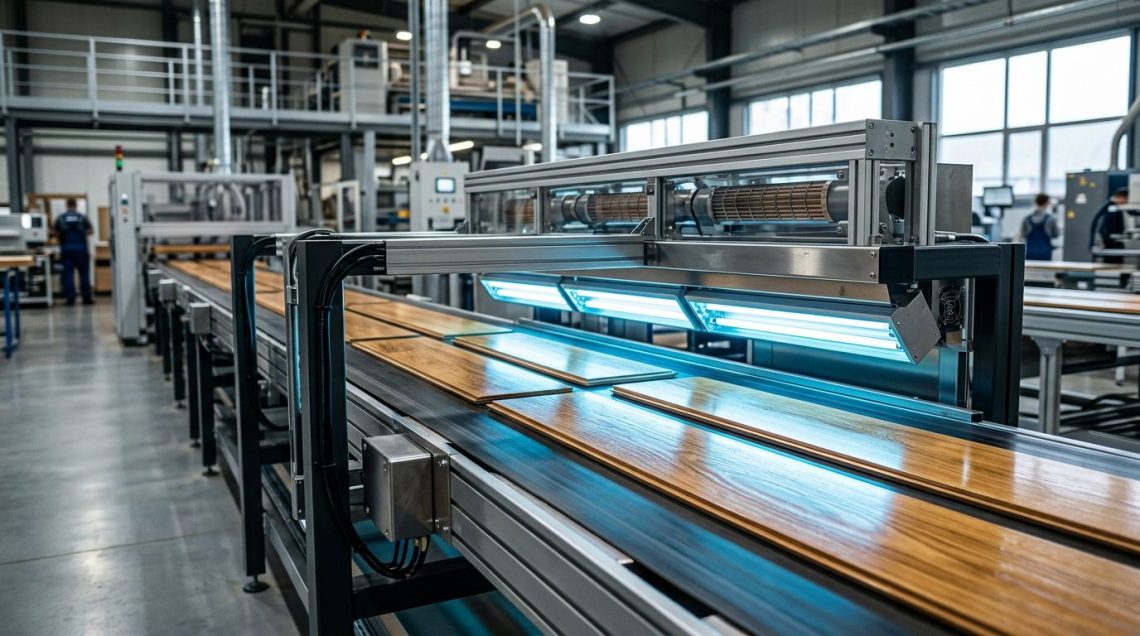
If you run or supply a factory-finished hardwood line, 2026 is shaping up to feel like a turning point. UV LED curing hardwood systems are moving from “nice upgrade” to “how we stay competitive.”
The reason is simple: customers still want real wood, but they also want tougher finishes, faster availability, and cleaner chemistry. At the same time, flooring manufacturing factories are under pressure to cut energy use and reduce rework without sacrificing appearance.
Below is what’s behind the shift, what it changes in the finish you ship, and how to keep your line and your people ready.
Why 2026 is the year UV LED curing moves from pilot to standard
Traditional UV lines have been around for years, but UV LED changes the feel of the whole operation. Think of older UV as a space heater that also cures coating, then think of LED as a focused flashlight that does the job without baking everything nearby.
Three forces are pushing adoption now.
First, speed and handling. UV LED curing happens almost instantly once boards pass under the lamps. That means less time waiting on cure windows and fewer “soft finish” surprises at the stacker. In practice, teams can tighten staging space because boards don’t need to sit around before packaging.
Second, energy and heat control. LED systems run cooler than many legacy UV lamp setups, which helps with dimensional stability and reduces risk on sensitive constructions. Plants also like LED’s instant on and off behavior. You don’t keep a system hot just to stay ready.
Third, process consistency. When the cure is predictable, scrap drops. You see fewer boards downgraded for scuffs, blocking, or imprinting, and the line becomes easier to balance.
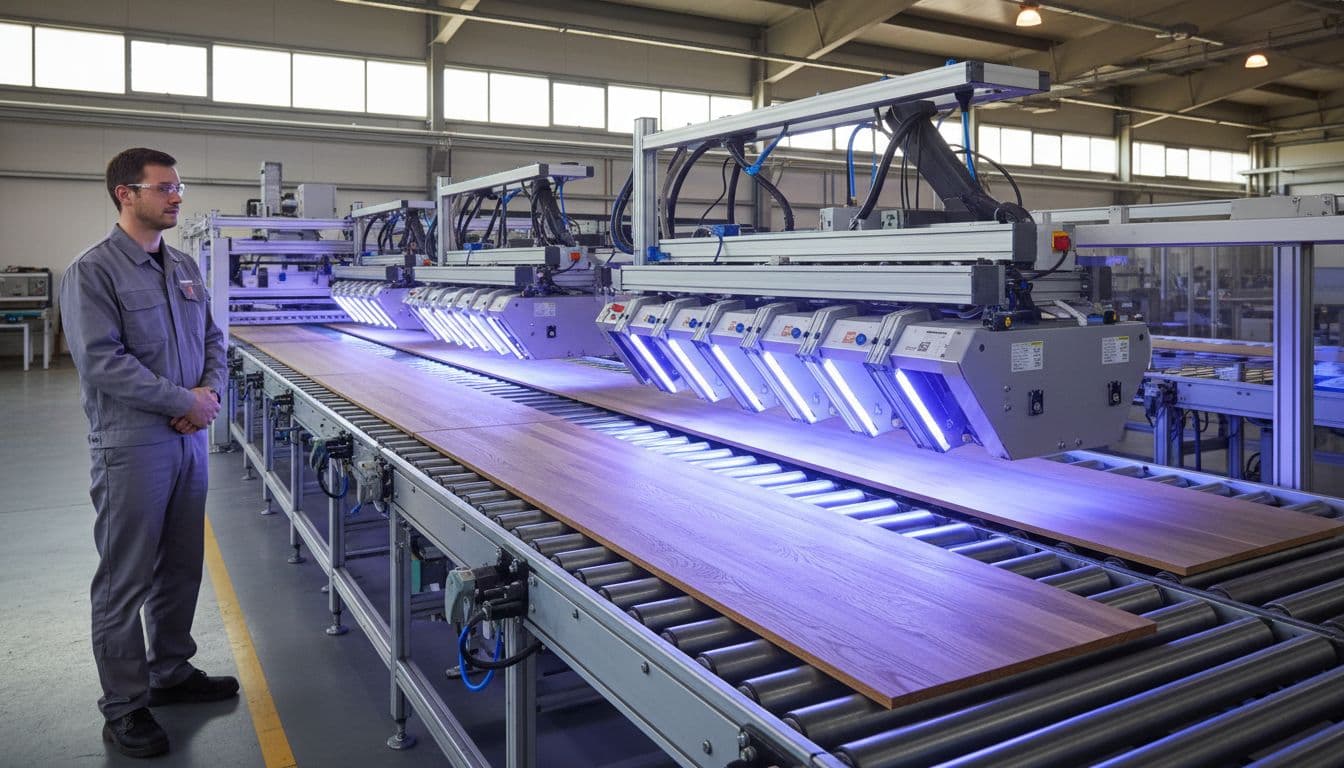
All of this lands at the same moment the market mood is cautiously improving. Recent flooring industry news has highlighted more optimism around wood, even while interest rates and slow housing turnover keep buyers picky. That combination favors manufacturers who can deliver high performance without adding days, steps, or callbacks.
A fast cure only helps if it’s a complete cure. UV LED rewards tight controls and punishes shortcuts.
What UV LED curing changes in wear, look, and “sellability” of hardwood
The best part of UV LED isn’t just how fast it cures. It’s what it lets you build.
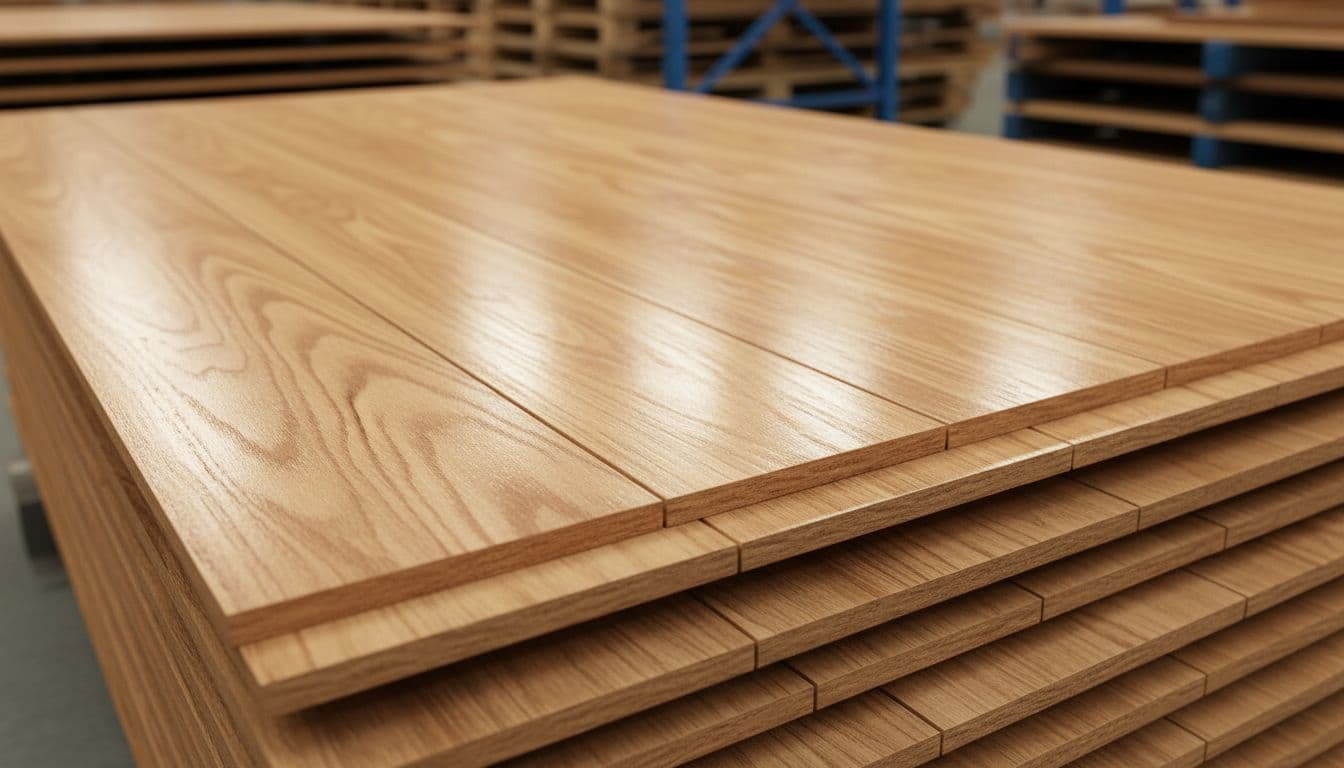
On the performance side, UV-cured coatings are known for strong abrasion and chemical resistance, which is why so many factory-finished products rely on UV systems. LED curing supports that same goal, but with better control over heat and line rhythm. When teams tune the chemistry to the light source, the finish can come off the line hard, stable, and ready to ship.
For a plain-language primer you can share with non-technical teams, this explanation of UV-cured floor finishing and why it’s changing the game does a solid job describing the “walk-ready” concept and why curing method matters.
On the design side, wood suppliers have been investing heavily in visuals and surface performance to keep hardwood exciting in a crowded hard-surface market. In 2026, that shows up as:
- Lower-gloss, more natural looks that still resist marking.
- Texture-first visuals (wire-brushed, saw marks, open grain) that need finishes that won’t pool or look plastic.
- More complex stain layers that require controlled curing so color stays consistent board to board.
That’s why UV LED discussions often sit right next to conversations about the newest flooring trends and products. If you can cure fast and keep a natural visual, you can chase today’s flooring trends without giving up durability.
One more 2026 reality: chemical scrutiny is rising across building products. In flooring industry news, manufacturers have talked about improving test methods to detect substances like PFAS in inputs when older protocols fall short. Even if PFAS is not your topic day to day, the message is clear. Buyers, regulators, and retailers are asking tougher questions. UV LED can support lower-VOC strategies, but it doesn’t remove the need for careful raw material controls.
What has to change inside the plant (equipment, coatings, QC, and training)
A UV LED project succeeds or fails in the details: lamp placement, coating selection, cure verification, and operator habits. LED is less forgiving of “we’ve always done it this way,” because the light output and wavelength profile differ from older lamp types.
Before you commit, align on what “done” means. Is your target mar resistance, scratch resistance, stain resistance, or all three? Are you protecting a deep brush texture that can shadow? Do you need a matte that stays matte?
Here’s a quick comparison that helps teams frame the retrofit conversation:
| Topic | Traditional UV (common legacy lines) | UV LED curing on hardwood lines |
|---|---|---|
| Start/stop behavior | Warm-up and cool-down cycles | Instant on/off |
| Heat on board | Often higher | Typically lower |
| Energy use | Higher overall draw | Often reduced due to efficiency and on/off control |
| Line integration | Established, but bulky in some layouts | Can be compact, retrofit-friendly in many cases |
| QC focus | Dose control, bulb aging, heat effects | Dose control, shadowing, chemistry matched to LED |
Even with the benefits, two “gotchas” show up repeatedly.
Cure validation has to be upgraded. If you change lamps, you can’t rely on yesterday’s assumptions. Plants commonly tighten their checks around adhesion, solvent resistance, and surface hardness, then track drift over time.
Coating systems may need reformulation. LED-compatible coatings often require the right photoinitiator package and layer build. Your coating partner should be part of the commissioning plan, not an afterthought.
If you want a technical view of how LED UV integrates into wood flooring production and retrofits, IST’s overview of LED UV systems for wood flooring is a useful reference point for capability discussions.
Also, keep the people side visible. As training groups expand 2026 course schedules, the industry is signaling that finishing knowledge is becoming a frontline skill again, not just an engineering function. That matters because a great system still fails when shift handoffs are sloppy.
Where the shift shows up first: annual flooring shows, product launches, and the news cycle
If you want to spot where UV LED is headed next, follow three streams: annual flooring shows, supplier announcements, and retailer feedback. Shows remain the fastest way to see coating and equipment stories collide with what buyers actually ask for.
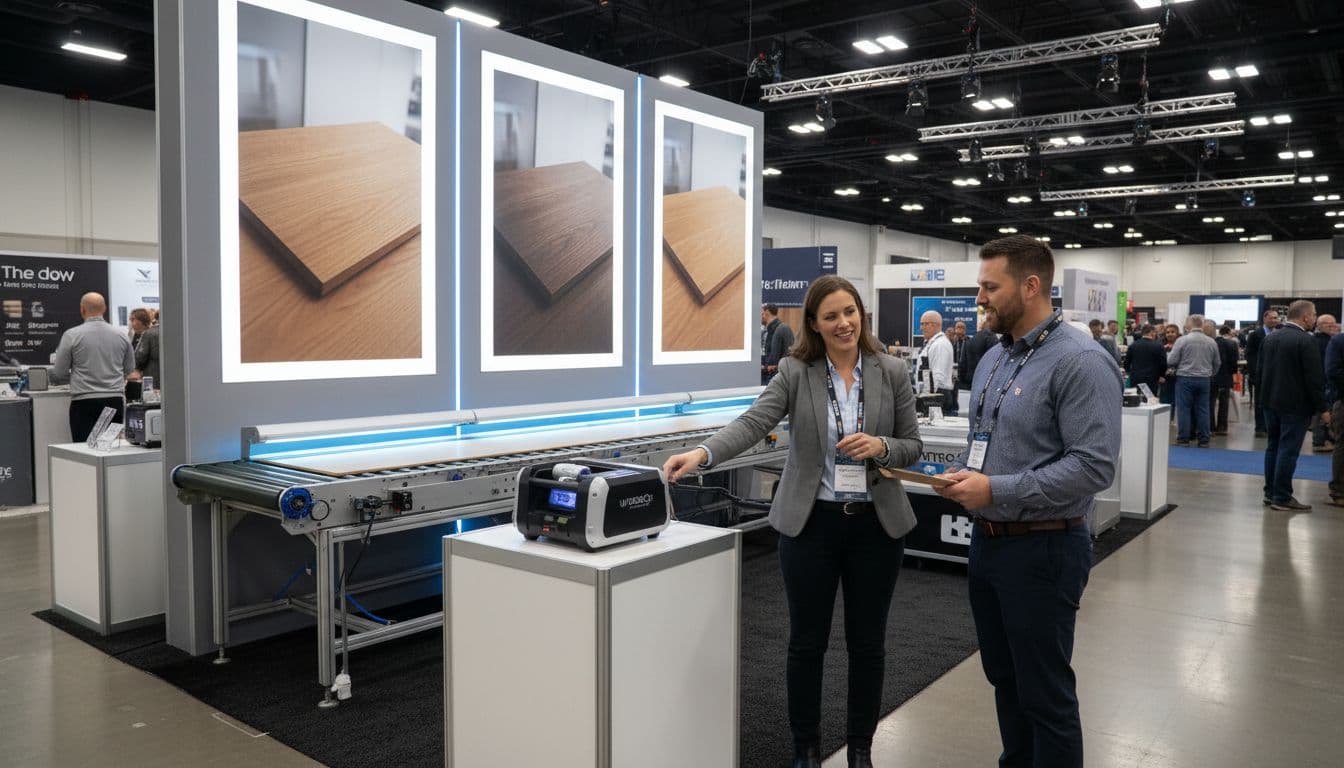
Regional markets and national expos are also where “feature talk” gets tested. A finish that survives a key scrape demo, hides micro-scratches under harsh lights, and still looks like real wood will earn attention quickly. That’s why manufacturers bring newest flooring products to shows with performance claims that sales reps can explain in one breath.
To stay grounded in what homeowners and designers are reacting to, it also helps to scan trend writeups from retailers and specialty sellers. These three are useful snapshots of what’s selling and why:
- 2026 hardwood flooring trends
- 2026 hardwood floor trend forecast
- 2026 design trends for pre-finished solid hardwood
Tie that back to flooring news and you get a clear pattern: wood is being pushed to look more natural while acting more like a tough, low-maintenance surface. UV LED curing is one of the manufacturing tools that can make that promise easier to keep.
Conclusion: What to do now if you’re planning a 2026 line update
The 2026 shift to UV LED curing hardwood is not about chasing a trend. It’s about making factory-finished boards easier to produce, easier to ship, and easier to sell. Start with your finish targets, then build the equipment and QC plan around them. Most importantly, treat training as part of the capital project, not a follow-up. The plants that connect performance, visuals, and process control will set the pace for the next wave of hardwood finishing.
Keep reading
More in Trends: 2026 Commercial Flooring Submittal Checklist, 2026 Antimicrobial Additive Claims In Flooring: A Verification Guide For Professionals, 2026 IXPE Underlayment Supply Watch for Floating LVP.