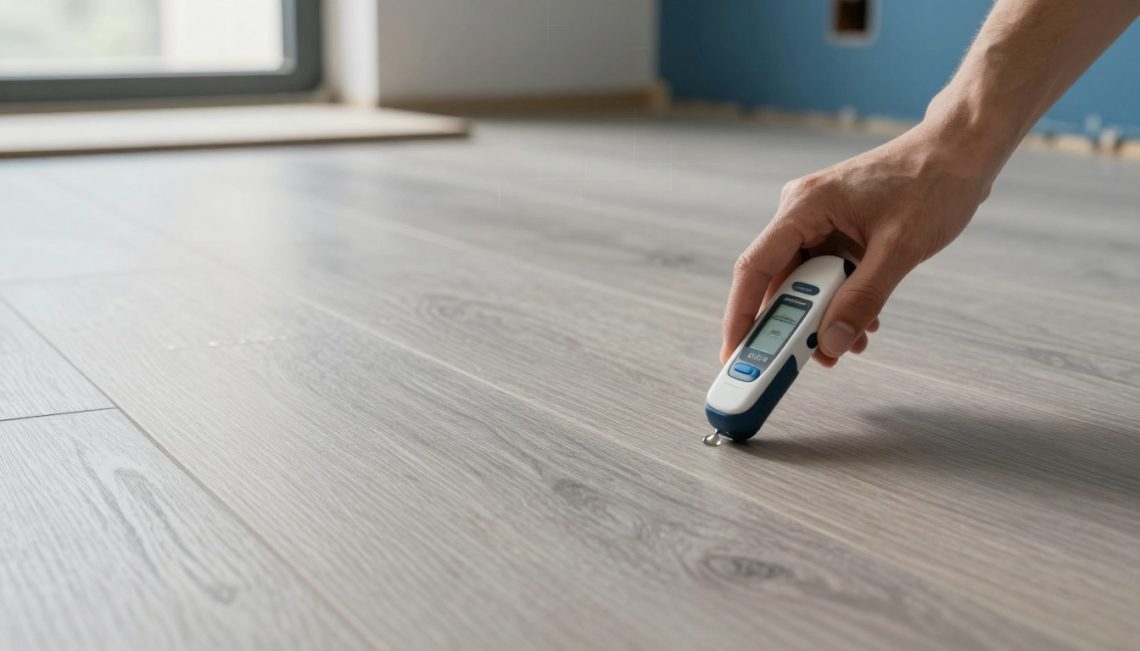
Moisture is the quiet troublemaker on LVP jobs. It doesn’t announce itself, it just shows up later as peaking seams, bubbles, loose adhesive, or that “mystery” odor the GC swears wasn’t there at turnover.
In January 2026, the good news is that LVP moisture testing is not a moving target. The core standards most specs call for are the same ones you’ve been using. The bad news is that claims are still tied to the same root cause: skipped testing, incomplete documentation, or using the wrong test for the slab.
This guide breaks down what contractors and flooring companies need to know for 2026, including the ASTM standards, what results actually mean for LVP, and the jobsite habits that keep your installs clean and defensible.
Why moisture testing is getting stricter (even without “new” standards)
Nobody wants a callback over a floor that looked perfect on day one. In the last year, more flooring industry news and installer chatter has centered on moisture related failures because LVP is still dominating many remodel and multi-family scopes.
At the same time, flooring trends are pushing faster project timelines. When schedules compress, prep steps get squeezed first, especially moisture testing. That’s how avoidable problems end up expensive.
Another 2026 theme is better verification. Manufacturers, inspectors, and even some flooring factories are paying closer attention to documented test results, not just verbal “we checked it.”
The 2026 standards you’ll see most in LVP specs
Most resilient flooring specs still point to two ASTM standards for concrete moisture. They don’t measure the same thing, and they aren’t interchangeable.
For a clear side-by-side of these methods, the Institute of Inspection, Cleaning and Restoration Certification’s testing education partner has a practical overview of ASTM F2170 vs F1869.
ASTM F2170 (in-situ RH) for concrete slabs
ASTM F2170 measures relative humidity inside the concrete, not just vapor leaving the surface. Many pros prefer it because it reflects what the slab will keep feeding upward over time, especially after the floor goes down.
Key points crews should remember in 2026:
- Drill to 40 percent slab depth when the slab dries from one side (the most common case).
- Use enough test locations for the floor area (common practice is multiple locations per 1,000 sq ft).
- Allow readings to equilibrate per the standard before recording “final” numbers.
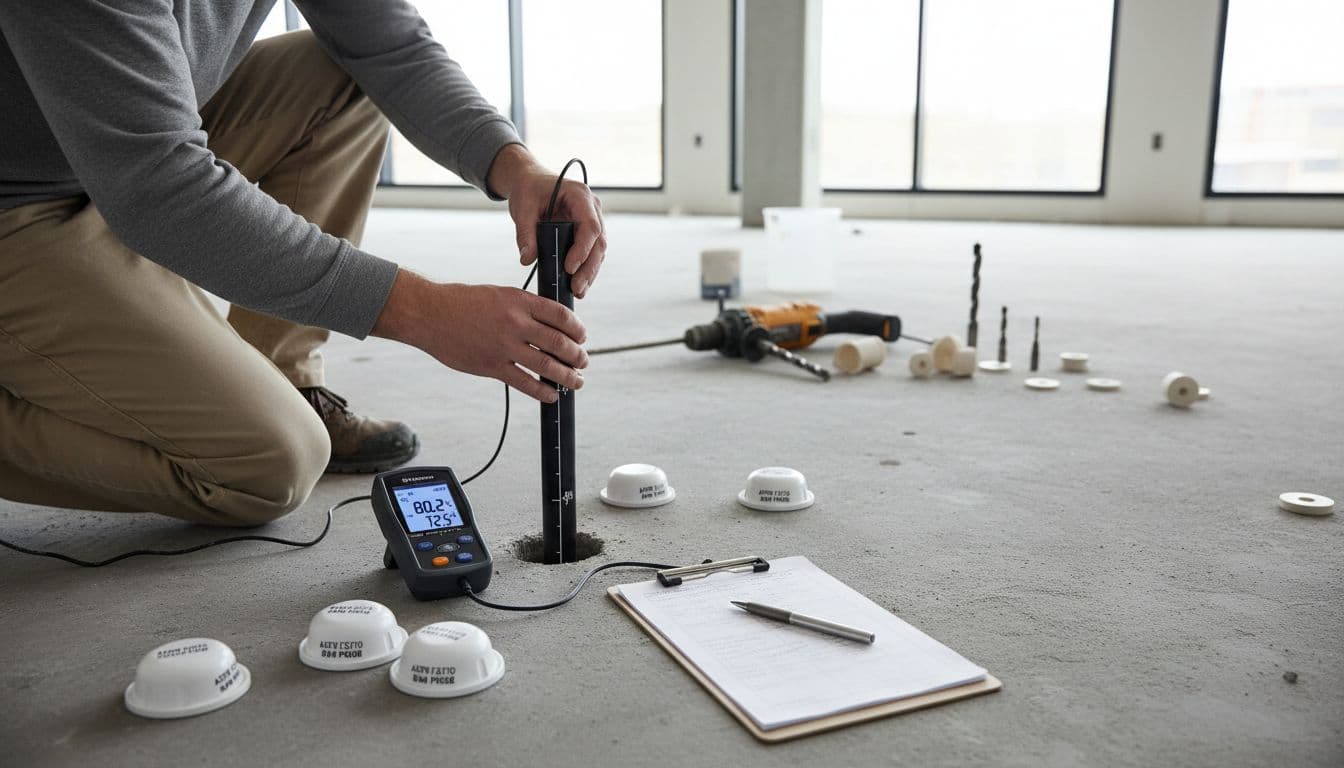
What’s “passing” for LVP? ASTM doesn’t set pass or fail limits for your flooring. The LVP and adhesive maker does. In 2026, many LVP systems still land around 75 to 85 percent RH, depending on whether it’s floating or glued and what underlayment is used. Always follow the product data sheet, not the jobsite rumor.
ASTM F1869 (calcium chloride) for MVER
ASTM F1869 measures moisture vapor emission rate (MVER) at the slab surface over a timed period (often 60 to 72 hours). It’s still widely used in bid specs, but it’s not ideal for every slab type.
If you want a helpful explanation of why different tests produce different numbers, FloorPrep’s breakdown is worth bookmarking: Concrete moisture emission vapor testing.
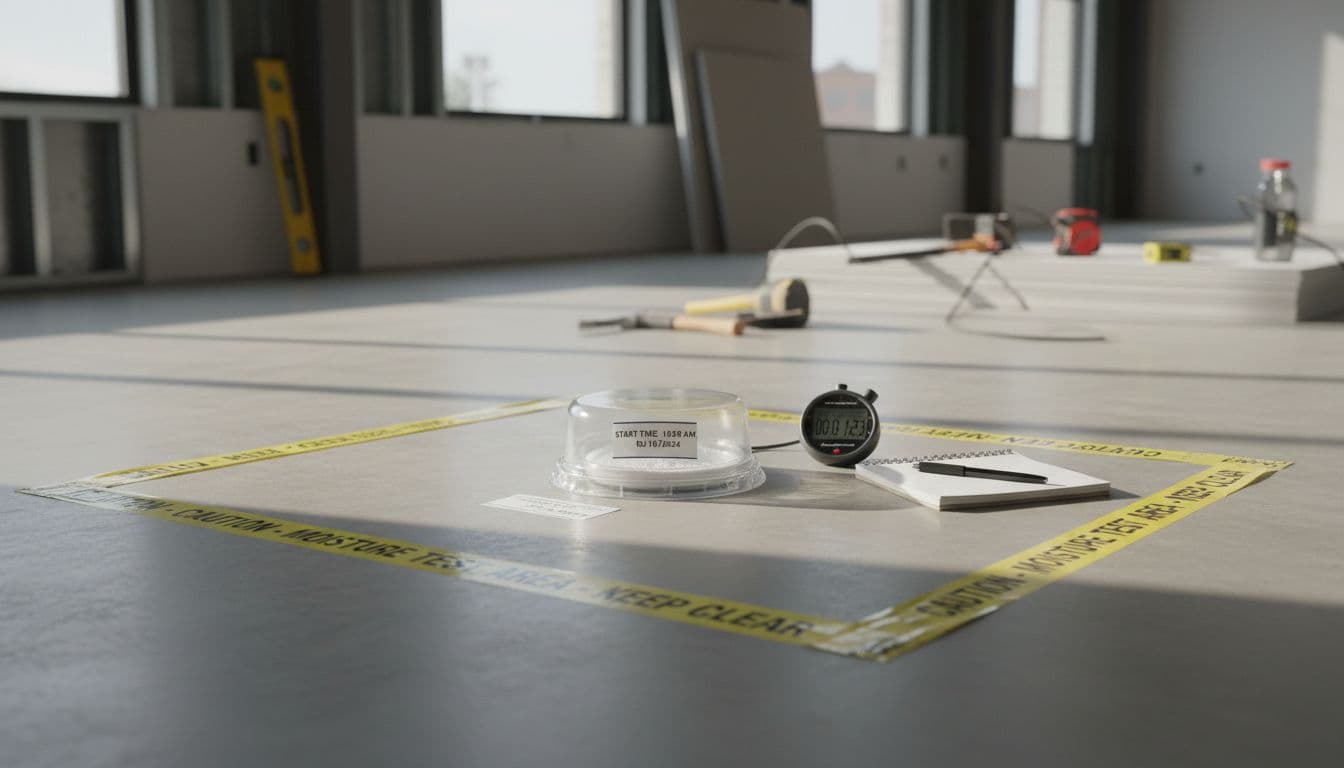
Many LVP and adhesive specs still reference 3 lbs per 1,000 sq ft per 24 hours as a common threshold, but again, your manufacturer’s limit is the one that matters.
For background on the method itself, see ASTM F1869 information.
Lightweight concrete and why RH testing often wins
One of the clearest 2026 jobsite patterns is more teams calling for RH testing when lightweight concrete is involved. Some sources warn that calcium chloride testing may not be acceptable for certain lightweight slabs.
If you’re working in commercial or multi-family where lightweight mixes show up, this overview explains the concern and why RH testing is commonly preferred: RH testing for lightweight concrete.
Practical takeaway: when the slab type is uncertain, confirm the mix design, then match your test method to what the spec and manufacturer will actually accept.
Wood subfloors: moisture meter basics that prevent LVP movement
Not every moisture problem starts in concrete. Wood subfloors can create the same symptoms: gaps, joint stress, and edge lift.
For wood, the “standard” is less about one ASTM test and more about good meter practice:
- Confirm subfloor moisture content is typically 12 percent or less (or per your manufacturer).
- Keep subfloor readings within 2 to 4 percent of the flooring system and site conditions.
- Check multiple areas, especially near exterior walls, plumbing runs, and crawlspace access points.
This is also where new flooring techniques show up on the job. More crews are using pinless meters for fast scanning and documentation, and then following up with pin meters in suspicious areas.
How to interpret results for LVP (not just record numbers)
Moisture results only help if you connect them to the install system.
Here’s a quick field table to keep your team aligned:
| Test method | What it measures | Best use case | Typical time | Common miss |
|---|---|---|---|---|
| ASTM F2170 (RH) | Moisture condition inside slab | Most resilient installs, including many LVP jobs | Often 24+ hrs to equilibrate per standard | Too few test locations |
| ASTM F1869 (MVER) | Vapor leaving slab surface | Specs that still call for MVER, some adhesive workflows | 60 to 72 hrs | Using it on the wrong slab type |
| Wood moisture meter | Moisture content in wood | Plywood/OSB, sleepers, raised floors | Minutes | Only checking the center of the room |
One more layer that gets ignored: ambient conditions. Some manufacturers still call for indoor RH and temperature to be in a normal living range before install and during occupancy. If the HVAC isn’t running, your “passing” slab can still become a problem floor.
A workflow that protects your install and your paperwork
Moisture testing should feel like setting a control line. Once it’s in place, everything else stays true.
A clean 2026 workflow looks like this:
Plan the tests early: Put moisture testing in the schedule, not in the “if we have time” bucket.
Test, then document: Photos of test locations, meter serial numbers, calibration status, and final readings. Save it to the job folder.
Match the fix to the cause: If results exceed limits, don’t guess. Options may include more dry time, a manufacturer-approved mitigation system, or switching the specified adhesive.
Re-test when needed: If mitigation is installed or conditions change, re-test and record it.
This is also smart flooring business practice. When claims happen, the contractor with clean documentation controls the conversation.
2026 flooring news and product trends that affect moisture decisions
Moisture testing isn’t happening in a vacuum. It’s tied to what’s selling and how it’s being built.
- Waterproof marketing is louder than ever, but “waterproof” doesn’t cancel slab moisture rules. If you want a consumer-facing example that’s useful for sales teams, this explainer on waterproof vs. water-resistant LVP helps reset expectations.
- Trade talk continues to push faster diagnostics, including pinless meters used on top of installed resilient to track problem areas. FLOOR Trends covered this approach in tracking moisture problems with pinless moisture meters.
- On the design side, newest flooring products and trends for 2026 still lean hard into LVP visuals, wide planks, and warmer neutrals, which increases the volume of installs where prep discipline matters. For a quick snapshot of consumer-facing demand, see 2026 flooring trends.
Separate from moisture, late 2025 reporting highlighted manufacturers investing in more rigorous materials testing (including PFAS detection methods), which signals a broader push toward measurable proof and compliance. That mindset is showing up on jobsites too.
The mistakes that still trigger LVP failures
Most LVP moisture failures don’t come from one big error. They come from small shortcuts stacked together.
Common ones:
- Testing only one spot, usually the driest spot
- Using surface meters as “proof” when the spec calls for ASTM tests
- Installing before HVAC stabilization
- Skipping documentation because “the slab looked fine”
- Assuming underlayment is a moisture barrier (some are, many aren’t)
Conclusion
In 2026, LVP moisture testing is less about chasing new rules and more about executing the existing ones every time. ASTM F2170 and ASTM F1869 remain the common standards, but your manufacturer’s limits, your slab type, and your paperwork decide whether the install holds up.
If you want fewer callbacks, treat moisture testing like a required tool, not an optional step. The floor will tell the truth later, so it pays to measure it now.