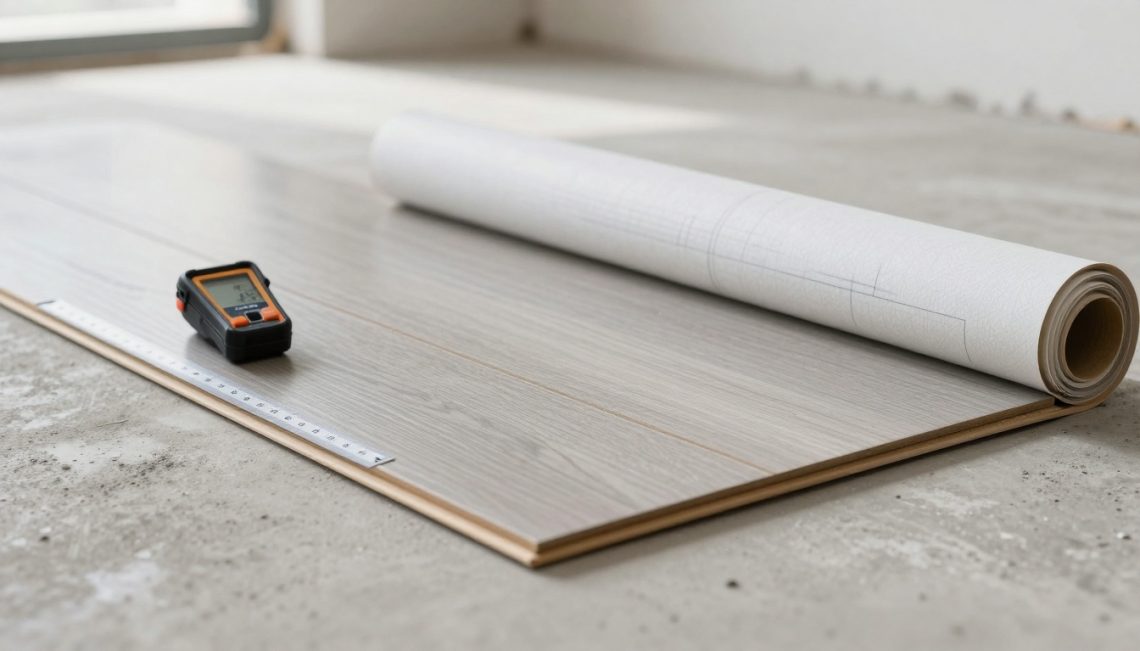
If you install LVP over concrete, you’ve seen it happen: the slab hits “28 days,” the GC wants floors down tomorrow, and your meter says “not so fast.” In 2026, that tension hasn’t gone away. What has changed is how teams talk about the concrete curing timeline and how they build install windows that survive real jobsite conditions.
This guide breaks down what’s current for 2026, what still hasn’t moved, and how to set timelines that protect your install, your warranty, and your margins in the flooring business.
2026 reality check: time is still a milestone, tests are the decision
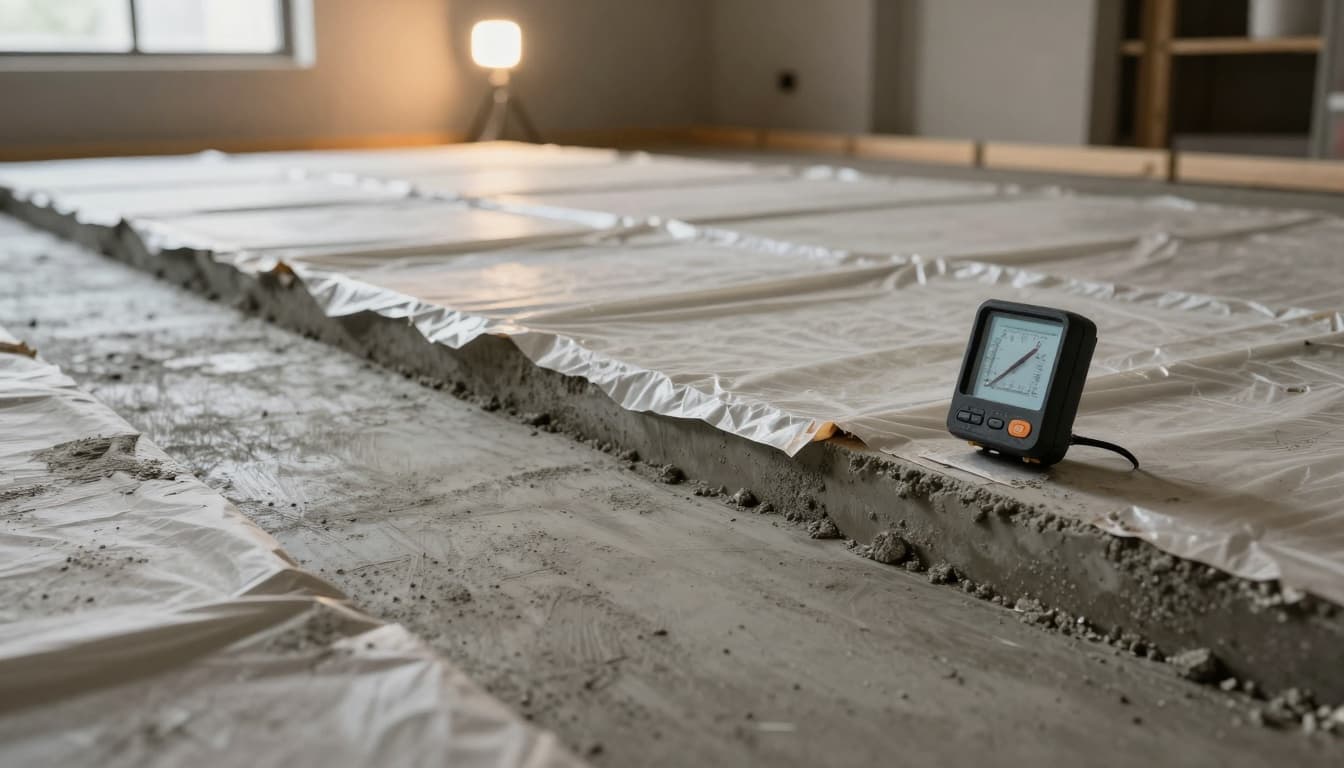
The big “update” in 2026 isn’t a new magic day count. It’s the continued shift away from calendar-only promises and toward field verification. Most crews still plan around 28 days for a standard slab to reach design strength, but dry enough for LVP is a separate question.
Think of curing like baking bread. The loaf can look done on the outside while the middle still needs time. A slab can hit strength and still hold moisture that breaks down adhesive, triggers peaking, or feeds mold under underlayment.
So when you hear “we’re on schedule,” ask one follow-up: On schedule for strength, or on schedule for flooring?
Concrete curing timeline basics (what to plan for in 2026)
Curing is hydration and strength gain. Drying is moisture leaving the slab. Both affect LVP, but drying drives most flooring failures.
A practical 2026 planning view for standard mixes looks like this:
- Day 1 to 2: Light foot traffic is often possible, but finishing damage is easy. Keep trades off if you can.
- Day 3 to 7: Early strength builds; curing practices matter a lot here (covers, curing compounds, controlled temp).
- Day 7 to 28: Strength continues; surface may look “ready,” while internal moisture may still be high.
- After day 28: You treat the slab as structurally mature, then confirm moisture and flatness before flooring.
Drying time is where schedules slip. Many installers still hear the old rule of “28 days per inch,” but real sites don’t behave like textbooks. HVAC start dates, ambient RH, slab thickness, and whether there’s a vapor retarder under the slab all change the outcome. Wagner Meters offers a helpful explainer on what actually affects drying time and what can (and can’t) speed it up: how long concrete takes to dry.
Fast-track mixes and admixtures are more common in 2026, especially on schedule-driven builds. They can accelerate early strength and access. They don’t erase the need to verify moisture before LVP.
Moisture testing is the “gate” for LVP installs in 2026
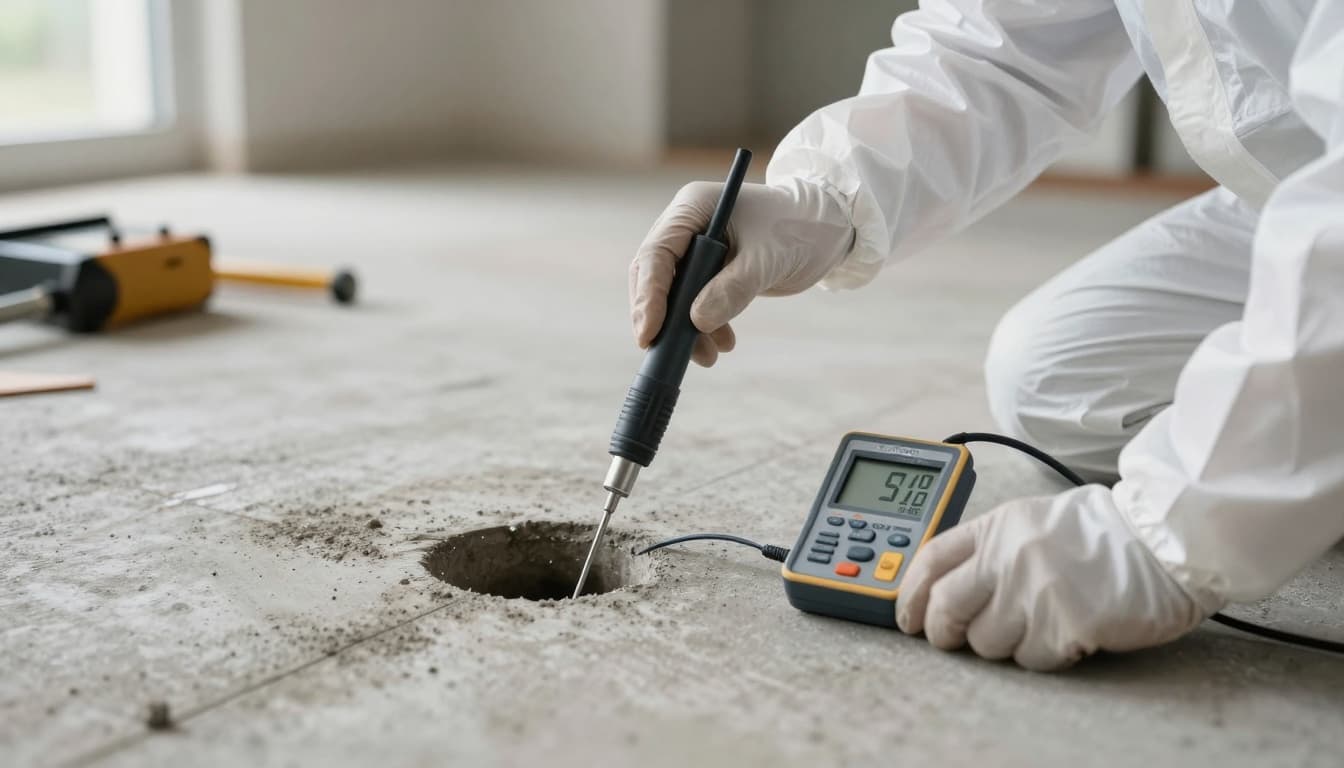
Most 2026 install disputes still come down to one thing: someone skipped, rushed, or misunderstood moisture testing.
For LVP over concrete, many specs lean on in-situ RH probing (commonly aligned with ASTM F2170) and sometimes MVER testing, depending on the system. The exact pass numbers are manufacturer-driven, and they vary by product, adhesive, and mitigation method.
One detail worth repeating to every PM: strength and moisture are not linked on the same timeline. A slab can be “hard” and still be wet enough to fail an adhesive install.
If you need a clean way to explain the 28-day concept to teams that install other hard surfaces, the Ceramic Tile and Stone Consultants (CTaSC) has an installer-facing answer that frames 28 days as a shrinkage and curing baseline, while still pointing back to manufacturer guidance: how long concrete should cure before installing tile. The same logic helps on LVP jobs: time is a starting point, not approval.
What this changes on your schedule
In 2026, better crews schedule moisture testing like an inspection, not like a suggestion.
A simple workflow that reduces rework:
- Pre-pour meeting: confirm vapor retarder, curing method, and HVAC plan.
- Test window set early: book RH test dates when the slab is accessible.
- Decision point: pass and install, or mitigate and install, or wait and re-test.
That’s one of the most practical new flooring techniques on busy projects: treat moisture as a scope item with dates, owners, and documentation.
The 2026 LVP installation timeline (floating vs glue-down)
LVP timelines in 2026 are getting tighter, but expectations are getting clearer. Builders want fast turnover. Installers want stable substrates. The compromise is planning steps in the right order and documenting the handoffs.
Here’s a scannable “job-ready” view you can hand to a superintendent:
| Phase | Typical timing | What “ready” looks like |
|---|---|---|
| Cure window (strength) | Around 28 days baseline (standard mixes) | No ongoing finishing issues, stable surface |
| Moisture verification | After cure window, before underlayment | RH/MVER within product limits |
| Interior conditions | Before material arrives | HVAC running, temp and RH stable |
| Acclimation (if required) | Per product instructions | Boxes staged, site within range |
| Install day(s) | After prep sign-off | Flatness met, clean slab, expansion gaps planned |
Floating installs often tolerate minor substrate movement better, but they still hate excess moisture and bad flatness. Glue-down installs can be less forgiving, because adhesive chemistry has hard limits.
On the ground, most timeline blowups happen when the slab “passes visually” and fails on moisture, or when baseboards and cabinetry create a pinch point and the crew loses the required expansion space.
Installing LVP correctly (and fast) once the slab is approved
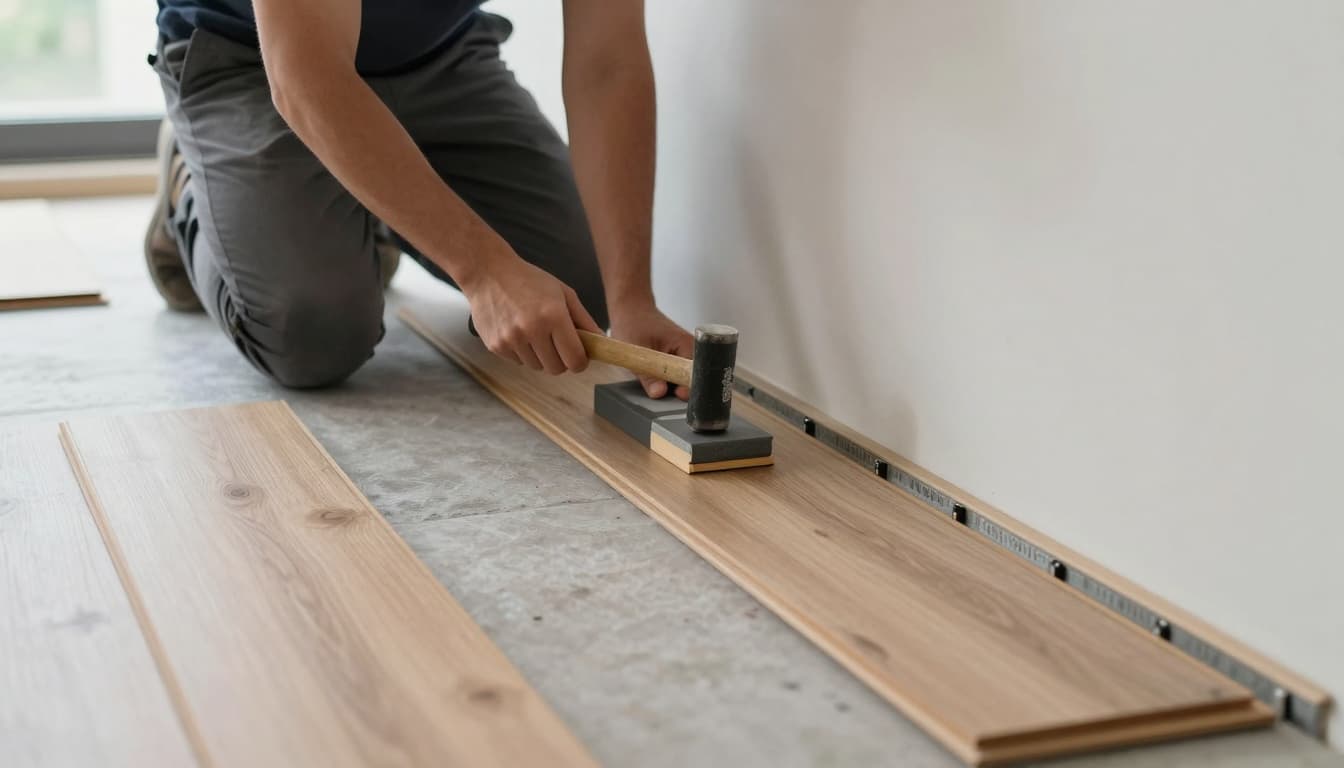
When the slab is signed off, speed comes from staging and consistency, not shortcuts.
A few 2026 practices that help crews hit deadlines without gambling:
- Pre-check flatness before underlayment goes down, then patch once (not twice).
- Stage transitions and trims early, so you don’t stop mid-run.
- Control expansion gaps with spacers on every wall run, not “most walls.”
- Document the readings (photos of meters and locations) and store them with closeout.
This is also where flooring factories are influencing installation pacing. Many newer click systems and wear layers are designed for faster set, fewer damaged locks, and better scratch performance. That’s good for labor, but it doesn’t change substrate rules.
Flooring industry news that affects timelines in 2026
In January 2026, contractors are juggling more than curing days. The broader flooring industry news cycle points to steady demand for hard surfaces, with manufacturers promoting performance improvements and new visuals across categories. Forecast chatter going into 2026 has leaned positive for laminate, cautious but steady for tile, and more optimistic for wood, even with rate pressure still affecting remodeling starts.
Compliance and training are also shaping schedules. Industry groups have promoted more installer education at the start of 2026, and manufacturers are paying closer attention to material chemistry and testing, including heightened awareness of PFAS screening in some supply chains. That filters down into submittals, adhesives, primers, and required documentation.
To keep up with flooring trends and buyer expectations, it helps to track what clients are asking for, not just what you like installing. A quick snapshot of consumer-facing demand is in this roundup: 2026 flooring trends. It’s not the whole story, but it reflects the finishes and colors pushing many of the newest flooring products and trends into the market.
Conclusion
The 2026 update isn’t a new number, it’s a clearer standard: the concrete curing timeline gets you to a checkpoint, and moisture testing decides the install. If you build your LVP installation timeline around cure, test, interior conditions, and documentation, you’ll avoid most call-backs.
Stay current on flooring news, keep your test records tight, and treat moisture as a scheduled scope item. That’s how crews protect quality while still meeting aggressive turn dates.