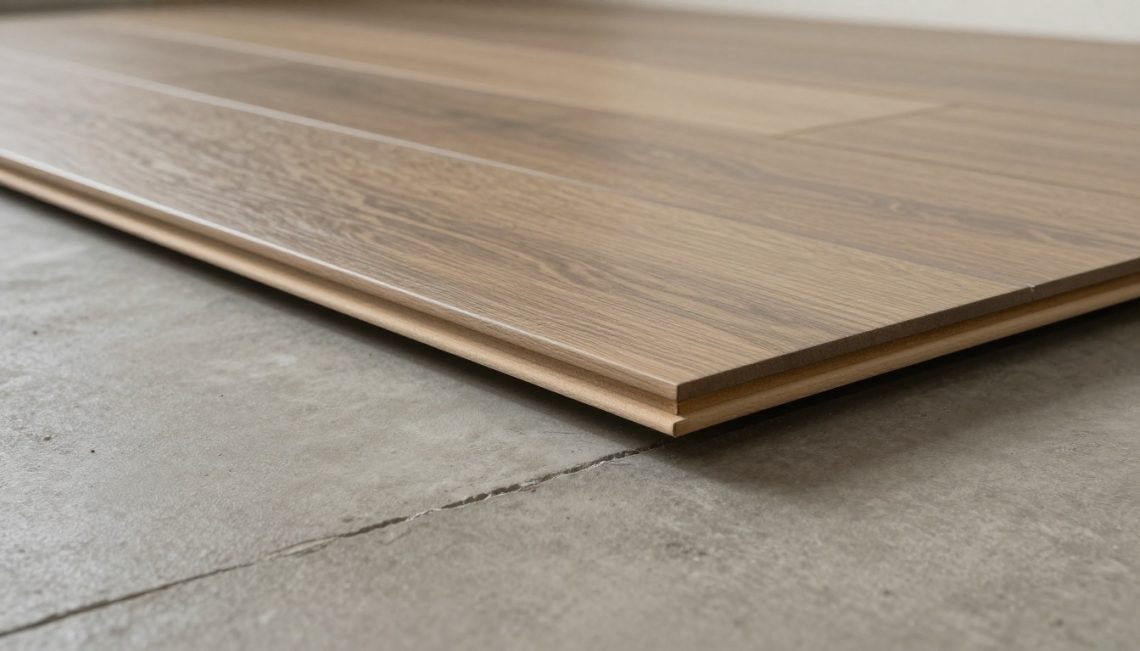
A click-lock LVP floor looks simple on day one. Then the slab starts doing what slabs do. A control joint opens a hair, a shrinkage crack telegraphs into a ridge, and the locking system takes the blame.
If you sell, spec, or support LVP control joints installs, this is the failure pattern to stop early. The key is knowing which concrete “lines” are harmless, which ones are active, and where a floating floor must break so it can move without pulling itself apart.
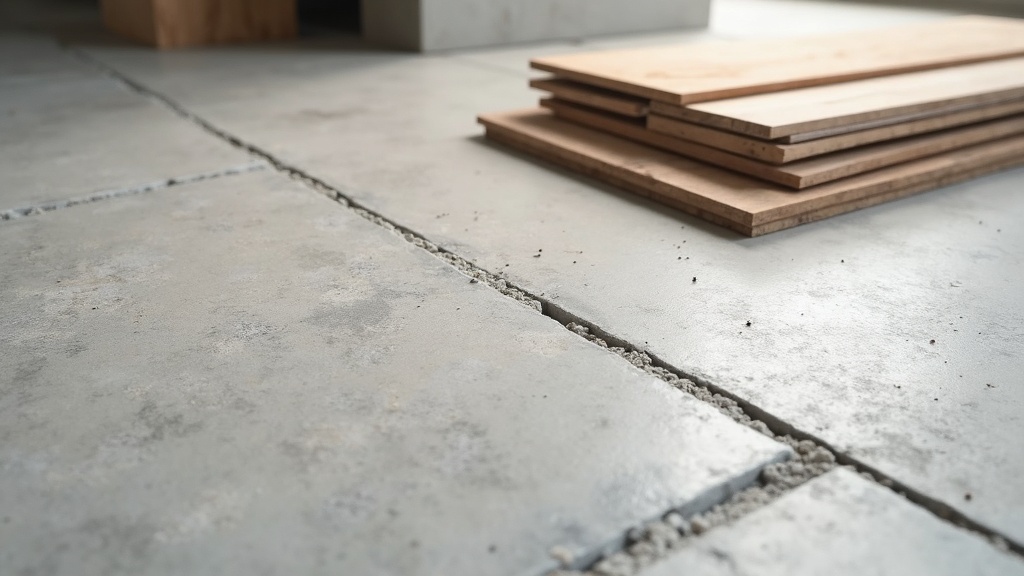
Control joints, expansion joints, and slab cracks: why click-lock LVP reacts
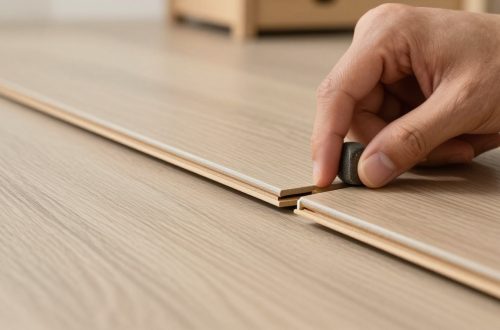
Concrete joints and cracks are not all the same, and click-lock LVP doesn’t “average them out.” It floats, so the planks act like one big sheet. When the slab moves or creates a high spot, that force transfers across many rows until the weakest point gives, often at a short end seam.
Control joints (saw-cuts) are planned weak points. They encourage shrinkage cracking to occur in a straight line. Many control joints stay fairly stable after the building is conditioned, but some still move seasonally, especially near exterior walls, sunny openings, or areas with moisture swings.
Expansion or isolation joints are different. They’re intended to separate slab sections or isolate columns, footings, and transitions. They are designed to move. A floating LVP floor can’t “lock across” that kind of movement for long.
Random cracks can be cosmetic shrinkage, or they can signal slab movement. The tell is not just the crack’s existence, it’s what it’s doing:
- Vertical displacement (lippage) creates a ridge that concentrates load. That’s where you see peaking, clicking, and seam splits.
- Ongoing width change turns the slab into a slow-motion spreader bar under the floor.
- Moisture vapor and alkalinity can weaken patches and create hollow spots, making joints feel soft underfoot.
If you want the concrete-side perspective on why slabs crack and how joints are intended to work, the American Concrete Institute’s guidance is a helpful baseline, see the excerpt from ACI 302.1R-15 on concrete floor slabs.
When to honor the joint vs bridge it: a practical decision guide for LVP control joints
A simple rule keeps teams out of trouble: honor movement, bridge stability. The hard part is proving which is which before the first plank clicks in.
Honor the joint when movement is expected
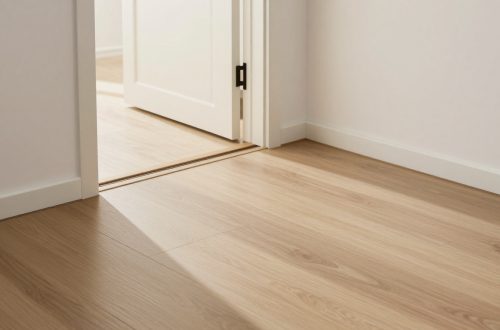
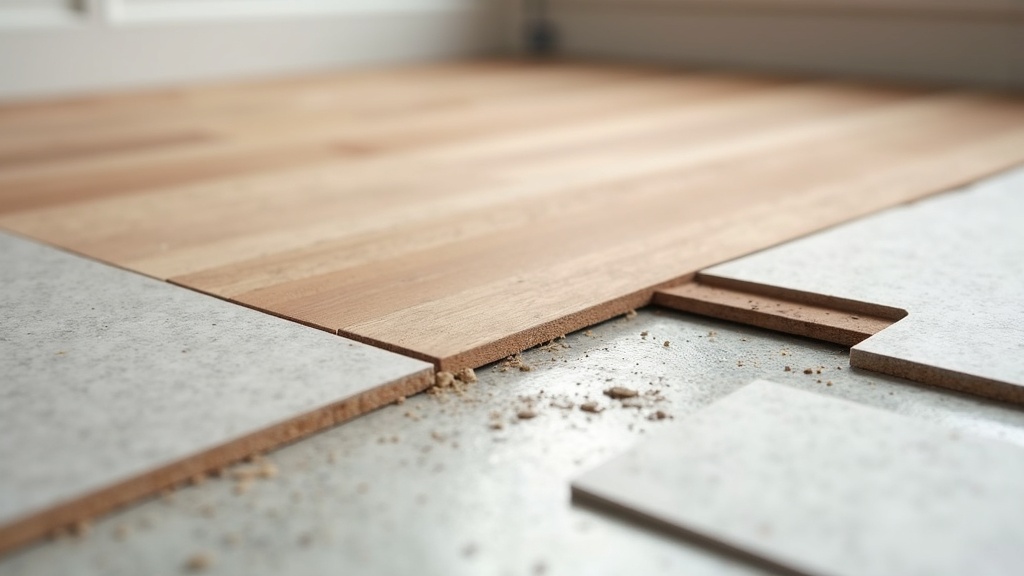
If the joint is an expansion or isolation joint, treat it like a boundary. The safest approach is to break the floating floor directly over it and cover the break with the correct transition or joint cover, leaving the manufacturer-required expansion space on both sides.
You should also honor a control joint (or crack) when you see signs of activity: repeated cracking in patch materials, seasonal gaps that open and close, or any vertical offset that can’t be flattened without aggressive concrete work.
Bridge the line when it’s truly stable
Bridging can work over a non-moving shrinkage crack or a quiet control joint if the surface can be made flat and supported. In practice, that means the joint is not acting like a hinge, and it’s not creating a high edge that the LVP has to bend over.
This table helps align sales, estimating, and installation conversations:
| Slab condition you see | What it does to click-lock LVP | Safer call |
|---|---|---|
| Expansion/isolation joint | Designed movement, gap changes | Honor it with a break and transition |
| Control joint with vertical offset | Creates a ridge and shear | Honor it, or correct slab flatness first |
| Tight control joint, no offset | Usually low movement | Bridge only if flatness is achieved |
| Hairline shrinkage crack, no offset | Often cosmetic | Bridge after patching and flattening |
| Crack with ongoing widening | Pulls floor apart over time | Honor it and investigate cause |
Manufacturer documents often spell out what they allow over joints, cracks, and patching compounds. Keep a few current guides bookmarked and match the job to the most conservative rule set. For an example of the kind of jobsite checks and concrete prep language many commercial lines use, review the FloorFolio Installation Guide (2025).
Prep and detailing that prevents a split click-lock floor (even when you bridge)
Most split floors aren’t caused by one mistake. They come from a stack of “almost fine” decisions: a little ridge left at a joint, a patch that’s slightly soft, a tight perimeter in one doorway, and heavy rolling traffic across the same seam.
Flatten first, then think about the joint
Click-lock LVP can handle minor texture, it can’t handle stress points. If a joint edge is higher than the other side, grinding and flattening usually beats trying to bury the problem in patch.
If you bridge a crack or control joint, use patch materials that cure hard and are approved for resilient flooring. Soft fills can compress under load, which makes the LVP flex, which works the locking profile like a paperclip.
Industry prep practices frequently point back to concrete preparation standards and jobsite conditions. The Resilient Floor Covering Institute includes references such as ASTM F710 in their installation practice documents, which are useful for aligning teams on minimum expectations, see RFCI recommended installation practice.
Leave the floor room to move, everywhere
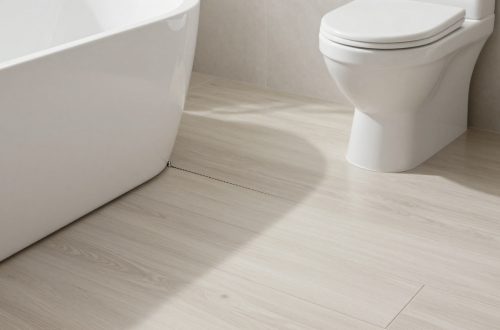
A floating floor that can’t float will try to “move” by separating. Keep perimeter and fixed-object clearances consistent, and don’t forget hidden pinch points like:
- tight spots under toe-kicks and island panels,
- heavy built-ins installed after the floor,
- long runs that dead-end into metal frames without expansion space.
Also confirm the underlayment system. Some attached pads mask minor imperfections, but they don’t fix a slab ridge. They can also change how load transfers across a joint, which matters when forklifts, pallet jacks, or carts are in play.
Stay current: joints meet the market in 2026
Locking systems, cores, and tolerances continue to evolve, and that shapes what “bridgeable” looks like in the field. A lot of the newest flooring trends and products focus on higher realism and stiffer constructions, which can reduce denting but can also be less forgiving over sharp transitions.
To keep up with flooring news and product direction, many teams still calibrate around annual flooring shows. Tile and stone education is front and center at events like Coverings 2026 show floor highlights, while broader hard-surface introductions and color direction often show up in Surfaces coverage such as this Surfaces expo review. Pair that with ongoing flooring industry news, and you’ll spot when newest flooring products shift locking geometry or thickness coming out of flooring manufacturing factories, which should change how you write install notes around slab joints and crack prep.
Conclusion
Click-lock LVP fails over concrete joints for predictable reasons: movement, ridges, and restraint. Treat LVP control joints as a decision point, not an afterthought. Honor joints that are designed to move, bridge only what you can flatten and support, and remove pinch points so the floor can float as one panel. If your teams align on those three habits, split seams turn from “mystery defects” into rare, preventable callbacks.
Keep reading
More in Trends: Flooring Storage Rules That Prevent Curling and Rework, 2026 Tack Strip Supply Watch for Carpet Replacement Season, Tile lippage control in 2026, clip systems vs old-school methods, how to pick clip size, trowel notch, and beat-in technique that stays flat.