If packaging feels like a background detail, 2026 is the year it starts showing up in the foreground. EPR packaging laws (Extended Producer Responsibility) are expanding, and they change who pays for packaging waste, how packaging gets reported, and what “compliant” shipping looks like.
For flooring dealers and manufacturers, that can mean new packaging materials, new line items on invoices, and more questions from customers about sustainability. It can also mean shipment delays when paperwork is missing, especially for orders bound for EPR states.

What 2026 EPR packaging laws cover, and why flooring shipments get pulled in
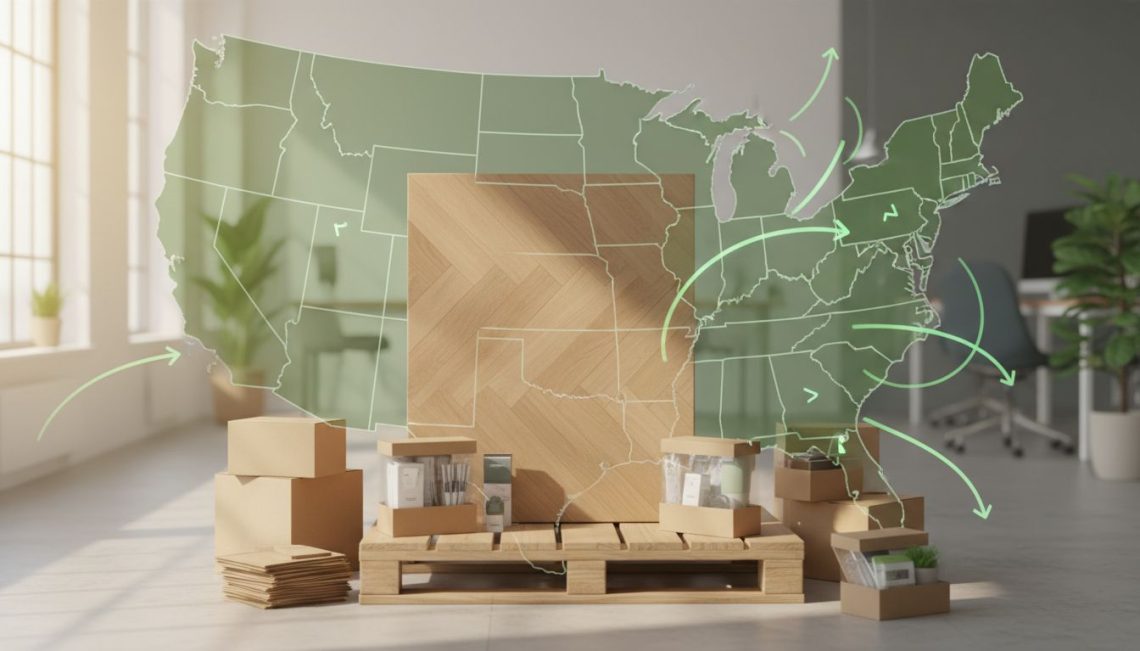
EPR shifts packaging disposal costs from the public to the companies that place packaging into a market. As of February 2026, packaging EPR programs are active or advancing across seven U.S. states (California, Colorado, Maine, Maryland, Minnesota, Oregon, and Washington), with more states considering bills. Because programs differ by state, compliance often becomes a shipping map problem, not a single national checklist.
Most flooring shipments use the exact materials these laws target: corrugated cartons, plastic stretch wrap, strapping, labels, and protective inserts. Even when the flooring itself is unchanged, the packaging around it becomes reportable data.
A common requirement is joining a Producer Responsibility Organization (PRO), then reporting packaging by weight and material type. Several 2026 summaries stress that EPR is moving quickly from policy talk to operational compliance, with tighter reporting and financial exposure for missteps. See EPR packaging laws moving from concept to compliance for a clear legal framing of how these obligations typically land on companies in the chain.
One more twist: “producer” doesn’t always mean the factory. Depending on the state and the sales model, the producer can be the brand owner, the importer, or sometimes the seller of record. That matters for drop-ship orders and private-label programs.
The practical shift is simple: packaging is becoming a tracked product attribute, similar to wear layer, thickness, or core type.
The shipment changes dealers will notice first (cartons, pallets, labels, and fees)
Dealers usually feel EPR in small, annoying ways before they see it in a big strategy deck. The first signs often show up at receiving.
Expect more variation in outer packaging, even for the same SKU. Suppliers are trying to reduce fee exposure by light-weighting boxes, right-sizing cartons, and removing hard-to-recycle components. That can affect how pallets stack, how corners crush, and how much product you can safely stage in a warehouse.
You may also see shifts like:
- More paper-based cushioning instead of mixed-material foam.
- Different wrap patterns, or reduced stretch film gauges.
- More printing on cartons that calls out recycling instructions or material types.
- “Eco-modulated” packaging updates that quietly roll into the newest flooring trends and products launch cycle.
On the commercial side, EPR-related costs can show up as separate charges, or baked into product pricing. Either way, dealers should prepare customers for small increases on freight-heavy orders, especially for bulky rigid core and tile.
Dealers also become producers in a few common scenarios:
- Private-label flooring where your brand is the one “placing” product into a state market.
- Import programs where you act as importer of record.
- Repack and reship operations that add new packaging before final sale.
This is also where the business conversation overlaps with installation realities. The industry is pushing harder on documentation and proof, not just for packaging, but for performance. The same “show your work” mindset applies on the jobsite too, including subfloor moisture testing for LVP installs, because claims and compliance both reward good records.
How flooring manufacturing factories will adjust, and what that means for lead times
Packaging changes do not happen in isolation inside flooring manufacturing factories. A new carton spec can trigger new tooling, new print plates, new case pack counts, and new pallet patterns. Those changes ripple into scheduling, QA checks, and supplier approvals.
In 2026, many plants will run two tracks at once: keep supply moving, while updating packaging systems for EPR reporting. That can create short-term friction:
- Longer changeover times on packaging lines during transitions.
- Temporary backorders if a compliant packaging component is delayed.
- More frequent lot-to-lot packaging variation, which complicates dealer merchandising and warehouse slotting.
EPR also increases the need for packaging material data from upstream vendors. If a supplier can’t verify resin type, recycled content, or weights, the flooring brand still carries reporting risk. That is why many compliance guides emphasize data discipline and consistent categorization across markets. A useful snapshot of where U.S. programs stand is State of paper and packaging EPR laws in the U.S., which highlights how programs can differ even when they share the same headline goal.
This compliance wave is arriving alongside broader material scrutiny in flooring industry news. In late 2025, Shaw reported developing a PFAS detection approach because older tests did not fit many non-water manufacturing inputs, a signal that measurement and traceability expectations are rising across the supply chain. See Shaw develops new testing method to detect PFAS in manufacturing materials.
The net effect for dealers: some “minor” packaging updates may land like product updates. That can include new case quantities, new barcode placements, or carton dimensions that change freight class behavior.
What dealers should do now, and where 2026 shows and training fit in
Preparation does not need to be complicated, but it should be intentional. Dealers who ship into multiple states should treat EPR like sales tax: routine, location-specific, and worth systemizing.
Here’s a simple planning table to align teams before busy season.
| Dealer reality in 2026 | What changes in shipments | What to ask suppliers and 3PLs |
|---|---|---|
| You sell into EPR states | Higher odds of packaging reporting requests | “Who is the producer of record by state, and are you registered with the PRO?” |
| You drop-ship to customers | More compliance sensitivity on labels and paperwork | “Will you provide packaging material breakdowns and weights per SKU?” |
| You private-label or import | You may carry direct EPR responsibility | “Can we get documentation templates and audit-ready reporting support?” |
| You promote sustainability in-store | Packaging claims will get fact-checked | “What changed in 2026 packaging, and can we train staff on it?” |
Two habits also help:
- Keep a one-page internal summary for sales staff explaining how EPR may affect quotes (especially freight and surcharges).
- Build a packaging question into new vendor onboarding, right next to warranty and claims procedures.
Staying current matters because EPR is not static. Many analysts expect more state activity in 2026, and compliance requirements can tighten quickly. For ongoing coverage of policy movement, EPR retains packaging policy spotlight in 2026 is a solid industry checkpoint.
Meanwhile, don’t ignore the value of face time and training. Annual flooring shows are where packaging changes often get explained in plain language, right next to discussions of flooring trends, merchandising, and the newest flooring products hitting racks. If your team needs education-heavy agendas, the tile side is leaning in, as shown in Coverings 2026 conference education lineup. Install training also supports fewer failures and fewer returns, and January programs like NTCA’s 2026 training schedule can strengthen crews as product systems change.
Conclusion
EPR packaging laws are turning packaging into a cost center, a data stream, and a compliance risk, all at once. Dealers should expect packaging changes, more documentation requests, and occasional friction in shipping until systems settle. The best move is to treat packaging like any other spec, track it, ask direct questions, and train teams using reliable flooring news sources and show education. In 2026, EPR packaging laws are not a side issue, they are part of how flooring moves.