If your team sells, specs, or ships LVP every day, you’ve felt it: LVP lead times don’t move in a straight line anymore. A popular color can be “easy” one month, then suddenly turns into a waiting game the next.
In 2026, more of that volatility comes from where LVP is made, not just how much is ordered. As domestic output grows and supply chains rebalance, the promise is simpler planning, but the reality is more nuanced.
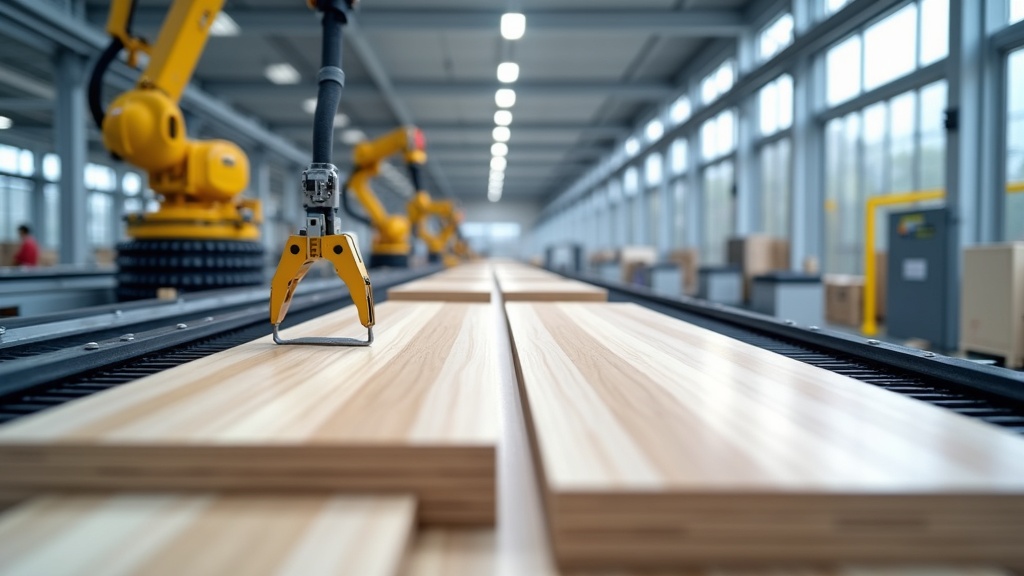
Photo: Unsplash
Why domestic LVP production is shifting in 2026 (and why it’s not just “Made in USA”)
Domestic LVP growth is not happening because one thing changed. It’s happening because several pressures stacked up, and flooring businesses got tired of guessing.
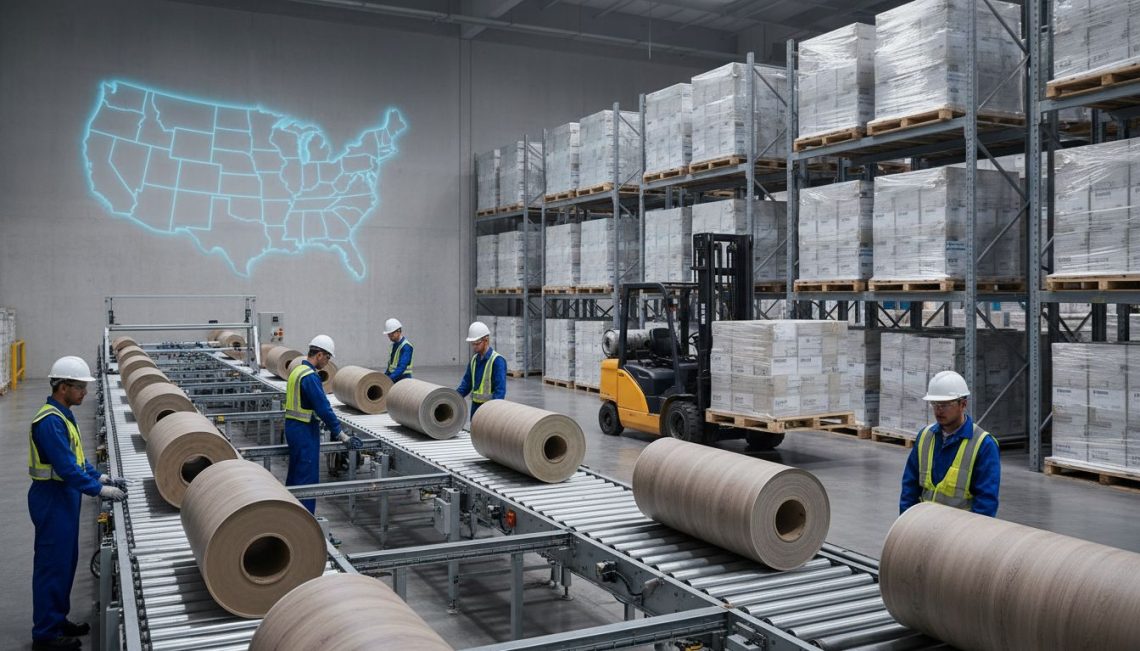
First, risk has a price. Import-heavy supply chains can run smoothly for long stretches, then break for reasons nobody on the sales floor controls. Compliance reviews, port congestion, and paperwork delays can turn into missed installs and rushed substitutions. Industry coverage has highlighted how domestic capacity is reshaping the resilient category, with manufacturers aiming for steadier supply and better control of schedules (and quality loops) (see domestic manufacturing reshaping resilient).
Second, policy and sourcing scrutiny still matter. Many buyers have learned the hard way that “available” is not the same as “cleared.” Trade enforcement and forced-labor compliance have pushed brands to tighten documentation and diversify sourcing. That dynamic has been a major driver behind domestic LVT investment (see drivers behind domestic LVT growth).
Demand patterns also support the shift. High rates have kept some homeowners in place longer, so remodeling stays important. Late 2025 data showed existing-home sales ticking up to about 4.13 million (annual rate) in November, while sentiment improved but stayed cautious. Meanwhile, median home sizes continue to shrink, which nudges buyers toward visual impact (wide planks, cleaner transitions) rather than sheer square footage coverage.
Domestic production reduces overseas uncertainty, but it doesn’t erase constraints. It moves them closer to home, where your team can see them sooner.
Finally, product expectations keep rising. The newest rigid-core constructions and more realistic embossing demand tighter process control. That is easier to manage when product, packaging, and changeovers sit closer together inside flooring manufacturing factories.
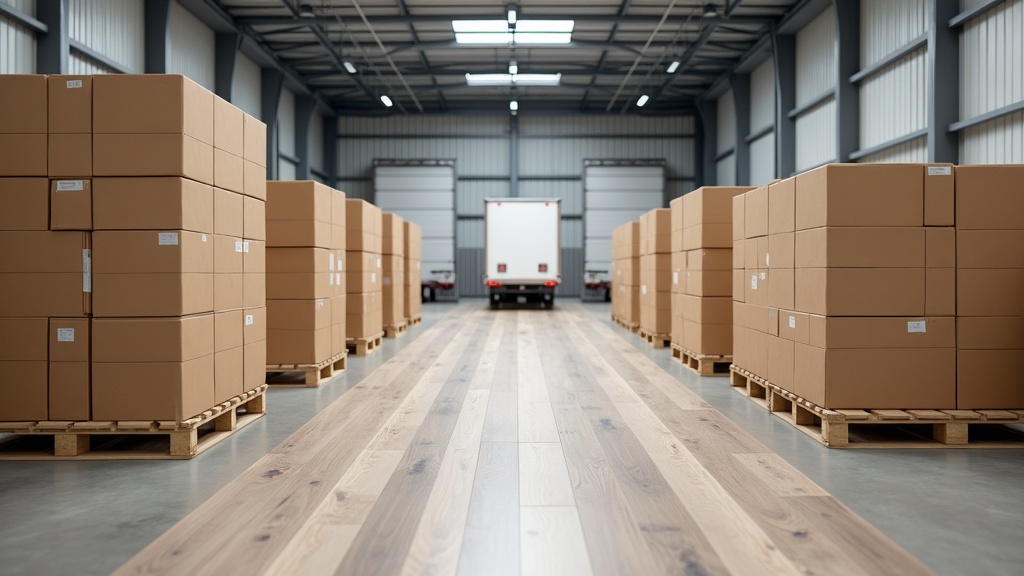
Photo: Unsplash
What domestic output changes about LVP lead times, and what it doesn’t
Domestic production can shorten timelines, but only for the parts of the process it actually controls.
Where LVP lead times often improve
When an LVP program is made domestically and stocked domestically, teams often gain back time in three places:
- Ocean transit and port variability: Less exposure to shipping rollovers and container swings.
- Customs and compliance holds: Fewer surprises tied to import clearance timing.
- Communication loops: Faster feedback on packaging, labeling, and spec corrections.
That matters most for core lines and high-volume visuals. If you sell a repeatable set of SKUs every week, domestic production can reduce the “maybe” in your delivery promise.
Where domestic manufacturing can still bottleneck
A factory in the U.S. doesn’t automatically mean instant availability. It can also mean new constraints:
- Film print schedules and emboss alignment still run in batches.
- Tooling, maintenance windows, and line uptime still decide output.
- Labor availability affects changeovers and packaging speed.
- Trucking capacity can pinch at the same time for everyone.
Also, domestic plants can prioritize the biggest programs first. That’s rational, but it can stretch lead times for small runs, private-label tweaks, or special trims.
Here’s a quick way to explain the shift to customers and internal teams without oversimplifying it:
| Lead-time driver | Imported LVP programs | Domestic LVP programs |
|---|---|---|
| Transit risk | Higher (ocean and ports) | Lower (mostly truck and regional freight) |
| Compliance clearance | Can be unpredictable | Usually more predictable |
| Batch production limits | Common | Common |
| New product changeovers | Can be slower across distance | Faster to coordinate, still limited by line time |
| “Hot SKU” shortages | Often tied to shipping lanes | Often tied to plant allocation and raw inputs |
The takeaway: domestic supply often makes lead times more predictable for everyday items, while specialty visuals still behave like specialty visuals.
That’s why 2026 planning needs a “SKU truth” mindset. Not every product in a catalog behaves the same way, even if it shares the same brand logo.
How to plan for 2026 lead times (without losing sales or margin)
The practical goal for 2026 is not “always shorter lead times.” It’s fewer surprises.
Start with the products that actually drive your business. Identify which SKUs are true keepers (high turns, low claims, stable demand). Then separate them from “showroom candy,” meaning the colors that sell once in a while, usually after a long sample journey.
A few tactics help across manufacturing, distribution, and retail:
- Build quotes that reflect reality: If your install calendar is tight, tie pricing and scope to delivery timing. This is where clear estimating protects you, especially when a substitution creates added prep or extra transitions. A helpful framework is this flooring job pricing markup method.
- Treat subfloor readiness like a lead-time tool: A product arriving “on time” still fails if moisture or flatness delays the start. For teams that live in turn schedules, align ordering with proper site checks, including subfloor moisture testing for LVP installs.
- Don’t stack assumptions in wet areas: If a job includes kitchens or baths, the underlayment and vapor plan must match the product rules, or the callback becomes the real schedule killer. See moisture-friendly underlayment choices.
Now layer in demand spikes. In early 2026, the industry’s annual flooring shows can still cause whiplash. A product that looks great under show lights can sell out quickly when dealers place orders at once. For example, coverage of January’s Las Vegas event points to a heavy focus on next-gen surfaces and innovation (see TISE 2026 show preview), and Surfaces reporting has reinforced how realism and retail-first merchandising continue to drive what gets pushed hardest (see Surfaces ’26 show takeaways).
That matters because flooring trends are shifting toward warm oaks, wider planks, matte looks, and more pattern work like herringbone. When the newest flooring trends and products hit showrooms, the newest flooring products often pull raw material and line time away from older visuals. Staying close to flooring news and broader flooring industry news helps you spot those swings before they land on your order board.
Conclusion
Domestic growth changes the shape of LVP lead times, but it doesn’t eliminate them. It replaces some import risks with factory scheduling realities and North American freight pressure. Teams that separate core SKUs from specials, and plan around the show-driven demand spikes, will promise dates they can keep. The best question to ask in 2026 is simple: are you selling what your supply chain can repeat, or what it can only “try” to deliver?