Laminate is back in the spotlight in early 2026, and it isn’t happening by accident. Shoppers want floors that look like wood, handle real life, and don’t wreck the budget. At the same time, dealers need categories that turn faster when big-ticket home projects slow down.
This comeback also has a different feel than past cycles. Today’s best laminates lean into laminate flooring trends that mimic natural materials, add water resistance, and cut glare with matte finishes. For stores and suppliers, the message is simple: get ahead of demand, or someone else will.
Why 2026 feels like a turning point for laminate
A lot of the push comes from the market conditions dealers have lived with for the past two years. High borrowing costs cooled housing turnover, and even as rates eased, many owners stayed put because they don’t want to give up older low mortgage rates. That keeps more spending in remodeling and replacement, where laminate has always had an advantage.
Trade reporting late in 2025 also pointed to a steadier U.S. economy than many expected. For example, U.S. GDP was reported up at a 4.3% annual rate in Q3 2025, and existing-home sales were slightly higher in November (as tracked by flooring trade outlets). That mix often supports “project, not move” decisions, especially when homeowners still need durable surfaces for kids, pets, and rentals.
Within flooring industry news, the tone around laminate also improved heading into 2026. Industry forecasts published at the end of 2025 described laminate as a category with momentum, even with competition from other hard surfaces. Wood suppliers sounded more optimistic too, largely because visuals and performance keep improving, which raises the bar across hard surface. Tile was framed as slower growth, which can push some shoppers toward wood looks at a better installed price.
For dealers, the “why now” is practical: laminate fits the customer who wants a real-looking upgrade without the stress of precious materials.
Laminate flooring trends shoppers will ask about in 2026

Photo by Max Vakhtbovych
Some categories sell on aspiration. Laminate sells on reassurance. In 2026, the reassurance comes from a short list of improvements customers can see and feel.
First, wide and long planks are becoming the default request because they read more like premium hardwood. Next, matte and low-sheen finishes are winning because they hide dust, footprints, and small scratches better than glossy looks. Mainstream consumer coverage has even called out laminate’s durability-focused style shift as a 2026 “trend,” which helps your sales team because the shopper walks in already convinced (see a 2026 laminate trend overview).
Water resistance is another big driver. Customers still ask for “waterproof,” so it helps to translate the claim into real terms: tight joints, edge sealing, spill time, and warranty details. The best sales conversations connect performance back to daily life, like mudroom shoes, dog bowls, and a teenager’s bathroom habits.
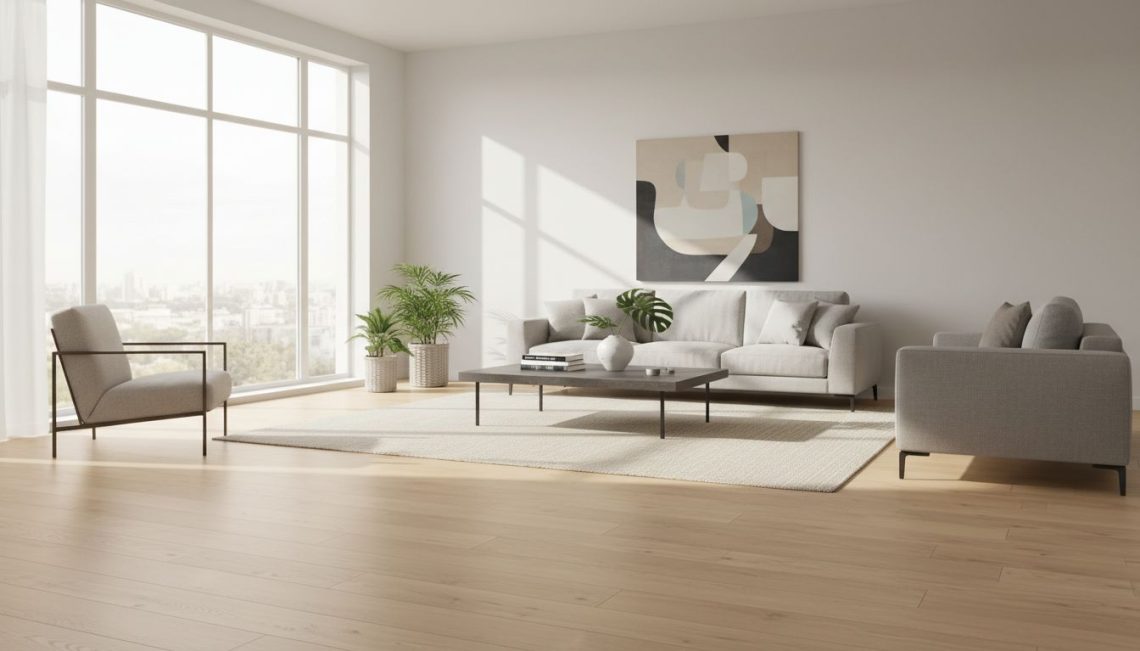
Color also shifted. Cool gray has faded, while warmer neutrals and natural oak tones keep rising. Broader home media has highlighted that warm woods and natural looks are among the top flooring trends for 2026 (see expert-picked 2026 flooring trends).
Here’s a simple way to frame the color conversation at the rack:
| 2026 laminate color direction | What it feels like | Where it sells best |
|---|---|---|
| White oak, pale blonde | Light, open, clean | Small homes, condos, open plans |
| Honey, golden brown | Warm, familiar, inviting | Traditional, farmhouse, family homes |
| Natural wood, matte | Calm, organic, not “stained” | Minimal, Scandinavian, modern |
| Greige, soft neutrals | Balanced, flexible | Whole-home updates, rentals |
The takeaway: these laminate flooring trends aren’t niche. They’re the safe middle that moves volume.
What dealers should do now: assortment, messaging, and annual flooring shows
If laminate is the “comfort food” of hard surface, your job is to serve it in a way that feels current. That starts with the rack, then the story, then the follow-through after install.
Assortment planning should match how people shop in 2026. Many customers want to compare laminate against vinyl and entry-level wood looks. So, present laminate as a performance-and-style choice, not as the compromise. It also helps to keep a tight good-better-best range and make sure each step up is obvious in hand.
A few practical moves work well right now:
- Merchandise by lifestyle, not by brand first, because shoppers lead with “pets” and “kids,” not factory names.
- Translate specs into benefits, like “low-sheen hides dust” or “sealed edges buy you cleanup time.”
- Create a laminate versus vinyl script, because shoppers will ask about dents, sound, and feel underfoot.
- Use installs in your showroom, since texture and realism sell better in person than on a screen.
This is also where annual flooring shows matter, especially when product changes are happening fast. Regional markets and national events give your team a way to touch surfaces, compare locking systems, and ask hard questions about claims. Several 2026 calendars emphasize in-person buying for exactly that reason, and dealers often report better decision-making when they can see texture and color under real lighting.
Stay close to flooring news while you plan. Your customers are watching social feeds, and they expect you to stock the newest flooring trends and products. In other words, they don’t want last year’s display when they’re asking about newest flooring products.
For a plain-English snapshot of what shoppers are gravitating toward, this retailer-focused trend roundup is useful: warm, realistic 2026 flooring trend summary.
If laminate is on the rebound, it won’t be because it’s “cheap.” It’ll be because it feels smart.
Signals to watch inside factories and on the claims sheet
Dealers don’t need to tour flooring manufacturing factories to see what’s changing, but they should watch for clues. When suppliers invest in deeper embossing, better print clarity, thicker cores, and stronger locking systems, you’ll feel it at the sample level. The category’s visuals keep improving because competition forces realism, even at mid-tier price points.
At the same time, claims scrutiny is rising. Questions about indoor air quality, testing, and chemical inputs aren’t limited to one product type anymore. Manufacturing-side testing methods are also evolving, which should prompt dealers to ask better questions about material inputs and documentation.
A simple habit helps: ask every laminate vendor for the same three items, then file them by line.
- Current warranty language (water, pet, and surface wear)
- Cleaning and maintenance guidance (what voids coverage)
- Emissions or low-VOC documentation, when available
Those basics protect you when customers compare categories or when a builder needs compliance paperwork fast.
Conclusion
Laminate’s 2026 comeback is built on real improvements, not nostalgia. Wide planks, matte finishes, warmer colors, and better water resistance are pulling shoppers back, and the best laminate flooring trends are easy to sell because they solve everyday problems. Dealers who refresh displays, sharpen their comparison story, and keep up with shows and product updates will capture that demand early. The question to ask this month is simple: will your laminate section look like 2026, or like leftovers from 2023?